
TL;DR:
- Training in combat sports demands gear that offers durability, fit, and sun safety, especially in Australia. Custom sportswear provides superior fit, fabric quality, and personalisation, justifying higher costs through long-term durability and safety. Ready-made gear offers quick availability and lower initial prices but may fall short in performance, fit, and safety over time.
When you train in Brazilian Jiu-Jitsu, MMA, or outdoor combat sports, your gear works as hard as you do. Rashguards, in particular, serve a clear function: compression support to reduce muscle fatigue, moisture management to keep you dry under pressure, and abrasion protection when the mat or ground is unforgiving. In Australia, where the UV index regularly reaches extreme levels, that list extends to include sun safety. Premium rashguards tested to AS 4399:2020 and rated UPF 50+ are not a luxury for outdoor athletes. They are a practical necessity. The real question many athletes are now asking is whether custom sportswear vs ready-made gear delivers better value across performance, durability, and personal style. This guide breaks it down honestly.
Table of Contents
- Key takeaways
- Custom sportswear vs ready-made gear: the core debate
- What ready-made sports gear does well
- Why custom sportswear is worth the investment
- Comparing performance, cost, durability, and style
- Personal style and team identity: the factor most athletes underestimate
- How to choose between custom and ready-made gear
- My take on where the sportswear debate actually sits
- Combatra's custom and performance gear for serious athletes
- FAQ
Key takeaways
| Point | Details |
|---|---|
| Ready-made suits urgent needs | Off-the-shelf gear is available immediately and suits budget-conscious or time-sensitive purchases. |
| Custom gear improves fit and function | Personalised sportswear is designed for your body and sport, reducing discomfort and returns. |
| Cost comparison is more nuanced than price tags | Custom gear may cost more upfront but delivers better durability and fewer replacements over time. |
| Team identity drives custom demand | Personalised names, logos, and colours build team unity and athlete motivation. |
| Fabric safety matters | PFAS-free, certified fabrics in custom gear protect athlete health during frequent, intense training. |
Custom sportswear vs ready-made gear: the core debate
This is the question Combatra hears from athletes and academy coaches regularly. Both options have genuine merit, and neither is universally better. What separates a smart decision from a costly one is understanding exactly what you need before you spend a dollar.
Ready-made gear gets a lot of attention because it is everywhere and it is fast. Custom sportswear has historically been seen as expensive and complicated. But in 2026, the gap between those two perceptions is narrowing quickly. Manufacturing technology, fabric innovation, and shifting consumer expectations have changed what custom actually means for athletes at every level.
What ready-made sports gear does well
Ready-made sports gear has a clear and legitimate place in any athlete's wardrobe. The most obvious benefit is availability. You can order online tonight and train in new gear by the weekend. For athletes who need a quick replacement before a competition or are testing a new sport before committing to a full kit, that speed matters.
Cost is the other major draw. Off-the-shelf apparel is generally priced lower because it is manufactured at volume with standardised patterns. E-commerce platforms now offer advanced sorting tools that let you compare moisture-wicking fabrics, compression ratings, and cushioning options across dozens of brands in minutes. That level of price and feature transparency is genuinely useful.
Ready-made gear from reputable brands also incorporates solid performance technology. Moisture-wicking polyester blends, flatlock stitching, and four-way stretch fabrics are standard in mid-range products. For recreational athletes or those just starting their training, this level of performance is often sufficient.
The limitations show up over time. Standard sizing does not accommodate every body shape, particularly in combat sports where athletes carry muscle mass in unusual proportions. A size medium rashguard might fit your chest and be too loose at the waist, or vice versa. You also have no control over colour, branding, or personalisation. For academies wanting a unified team look, that is a hard ceiling.
- Best for individual athletes on a budget or trying a new discipline
- Suitable for emergency replacements when lead times for custom gear are not viable
- Good entry point for recreational or casual outdoor training
- Works well when standard sizing aligns with your body shape
Pro Tip: When buying ready-made gear online, always check the returns and exchange policy before you purchase. Fit variation across brands and washing effects on compression fabrics mean your first choice may not be your right choice.
Why custom sportswear is worth the investment
Custom sportswear has moved well beyond screen-printed logos on generic blanks. Today, personalised sportswear options for athletes include precision-cut patterns matched to specific sports, performance fabrics chosen for the training environment, and design elements that reflect a team's identity at a professional level.
The fit advantage is significant. When gear is designed to your measurements or body type, it moves with you rather than against you. For BJJ athletes working from guard or wrestlers shooting double legs, even small fit improvements translate to less distraction and better performance. You are not adjusting your rashguard between rounds. You are focused on training.
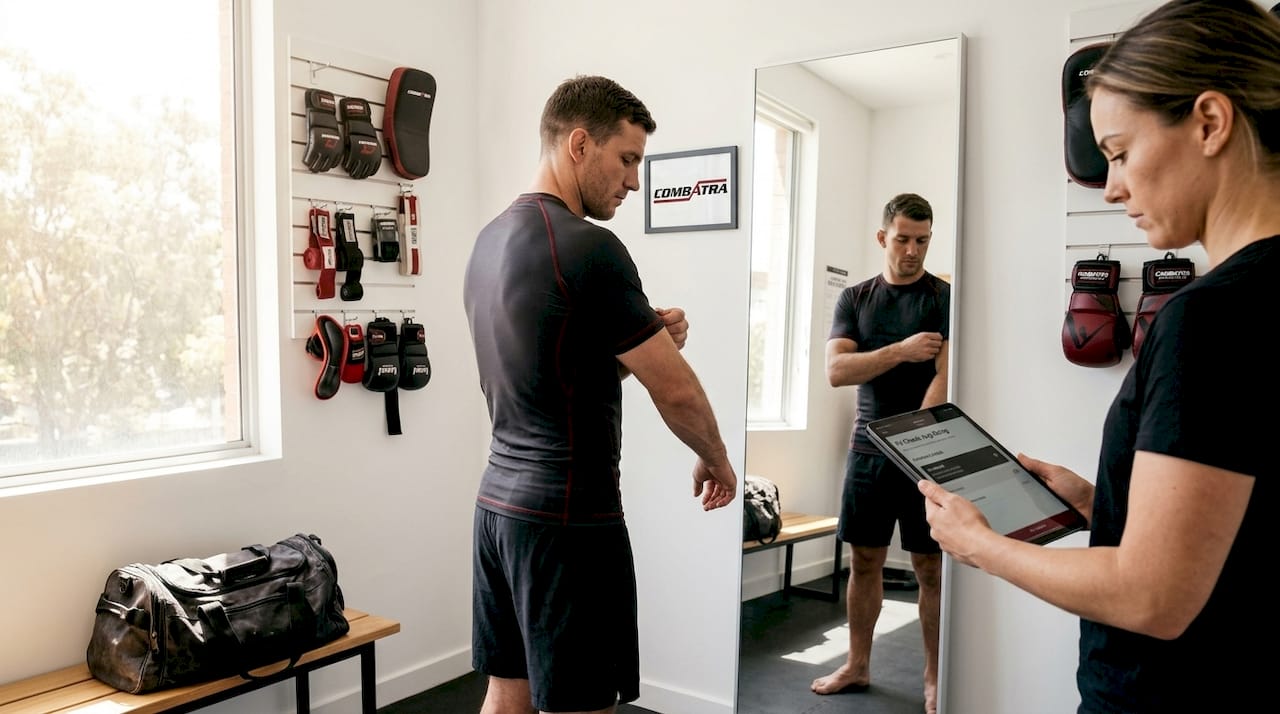
Customisation also addresses a growing safety concern. Many standard ready-made activewear products use PFAS-based moisture-wicking coatings. Research shows these chemicals can be absorbed through skin during intense workouts, which is a genuine risk for athletes training daily. Custom orders allow you to specify PFAS-free fabrics certified by standards like OEKO-TEX or bluesign, putting health back in your hands.
From a production standpoint, seamless activewear manufacturing has lowered the barrier for custom orders significantly. Brands can now order as few as 300 pieces without the large minimum quantities that once made custom gear inaccessible for smaller academies. Lead times have dropped too, with seamless production cutting time-to-market by 30 to 40% compared to traditional cut-and-sew methods.
Key advantages of custom athletic wear:
- Precise fit reduces movement restriction and skin irritation during prolonged training
- Full control over fabric selection, including UPF-rated and PFAS-free materials
- Personalisation with names, numbers, colours, and academy logos
- Stronger emotional connection to gear, which research links to lower return rates
- Better suited for sun-exposed outdoor training with certified UV-protection fabrics
Pro Tip: When placing a custom order, ask for an itemised quote that separates fabric, labour, and decoration costs. Factories that bundle everything into one price often cut corners on fabric quality to protect their margins.
Comparing performance, cost, durability, and style
Here is how custom and ready-made gear stack up across the factors that matter most to Australian athletes.
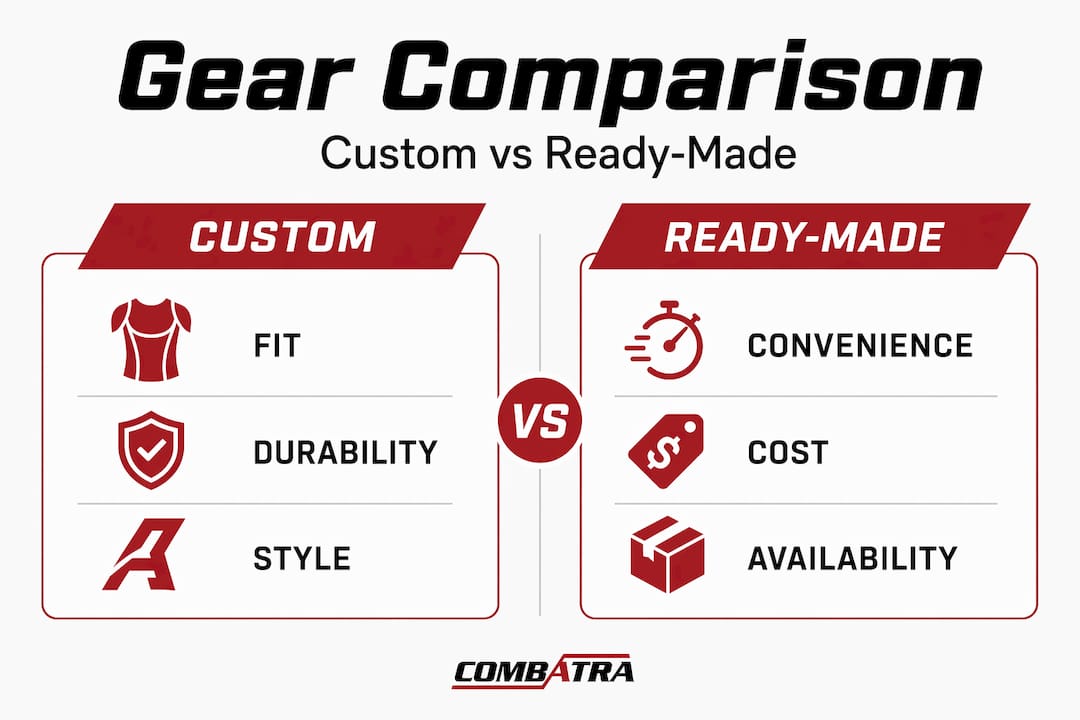
| Factor | Custom sportswear | Ready-made gear |
|---|---|---|
| Fit | Tailored to body type or sport-specific pattern | Standard sizing, may not suit all builds |
| Cost upfront | Higher per unit, especially at low volumes | Lower initial spend |
| Long-term value | Greater durability, fewer replacements needed | Variable, depends on brand and use |
| Lead time | 3 to 8 weeks typical | Immediate or 1 to 5 days shipping |
| Personalisation | Full control: names, logos, colours, patterns | Limited to available stock designs |
| Fabric safety | Specifiable: PFAS-free, UPF-rated, certified | Varies widely, often undisclosed |
| Team suitability | Excellent for academies and clubs | Difficult to achieve uniform look |
| Environmental impact | Seamless manufacturing cuts fabric waste by 30 to 40% | Variable, often higher waste in mass production |
The cost conversation requires nuance. Fabric is the largest cost component in any custom order, followed by labour and decoration. When buyers do not specify fabric sourcing clearly, factories substitute lower-grade materials to protect their margins. That is where custom gear gets a bad reputation for poor durability. The product failed because the buyer did not control the inputs, not because custom is inherently inferior.
Ready-made gear wins on convenience. That is inarguable. But for athletes who train four or five times a week, a rashguard that lasts 18 months of hard use delivers better value per session than a cheaper piece replaced every five months.
Pro Tip: If you are ordering custom rashguards for your BJJ team, request fabric certification documents from the supplier. If they cannot provide them, that tells you everything you need to know about the quality of their materials.
Personal style and team identity: the factor most athletes underestimate
Performance specs matter. But talk to any athlete about gear they love, and the conversation quickly shifts to how it makes them feel. There is real psychology behind this. Personalised gear with names, numbers, and logos builds team unity and boosts individual confidence in measurable ways. Athletes who feel proud of their kit show up differently.
For academies and clubs, this is where custom sportswear creates value that ready-made simply cannot match. A team that walks onto the mat in coordinated, branded gear carries a different energy than one in mismatched off-the-shelf pieces. That unity is not superficial. It reflects shared identity and belonging.
Personalisation is now an expectation in sports retail, not a premium. Consumers expect to see their name on their gear, to choose their colours, to express something about who they are through what they wear. Custom sportswear meets that expectation directly.
Popular personalisation elements athletes use:
- Academy or club name and logo placement
- Athlete name and competition number on rashguards and shorts
- Colour schemes matching team or country identity
- Sublimated patterns unique to the club or fighter
- UV-protective fabrics chosen for outdoor or summer training environments
If you are building a team kit for the first time, the guide on how to build a custom sportswear kit walks through every decision point from design to delivery.
How to choose between custom and ready-made gear
The right choice depends on your specific situation. Here is a numbered process to work through before you spend money.
- Assess your urgency. If you need gear within a week, ready-made is your only realistic option. If you have three to eight weeks, custom becomes viable.
- Define your budget realistically. Custom costs more upfront per unit but less over time if durability is higher. Calculate cost per training session, not just purchase price.
- Consider your team size. Individual athletes can get excellent value from quality ready-made gear. Academies with ten or more athletes almost always benefit from custom orders for identity and fit consistency.
- Evaluate your training environment. Outdoor or summer training in Australia demands UPF-rated fabrics. Not all ready-made gear provides verified sun protection. Custom orders let you specify this directly.
- Check return and trial options. Size guidance and easy exchanges are important when buying ready-made online, particularly given variation across brands after washing.
- Consider a hybrid approach. Invest in custom rashguards and fight shorts for competition and regular training. Use quality ready-made basics for recovery sessions or general conditioning work.
- Review factory credentials before ordering custom. Ask for itemised quotes, fabric certifications, and sample swatches. A credible supplier welcomes these questions.
My take on where the sportswear debate actually sits
I've spent years watching athletes make the same mistake. They see the upfront price of custom gear and opt for ready-made, cycle through three or four cheaper products in the same timeframe, and end up spending more. The maths rarely favour the shortcut.
In my experience, the bigger issue is not cost. It is that most athletes have never been shown what good custom gear actually feels like. When a rashguard is built for your body shape, sits correctly through a full grappling session, and carries your academy's colours, training changes. The gear becomes part of your identity, not just equipment you happen to be wearing.
What I've learned about fabric choices is equally important. The shift away from PFAS coatings is not a marketing trend. It is a genuine health consideration for athletes training daily. Specifying certified, safe fabrics when ordering custom gear is one of the highest-value decisions a serious athlete can make.
My recommendation for most athletes: start with one quality custom piece, a rashguard or fight shorts, and compare it honestly to what you have been wearing. The difference in fit, feel, and durability tends to make the decision obvious from that point forward. Ready-made still has a place in a smart sportswear wardrobe. But custom gear, done properly, earns its keep.
— ZZA
Combatra's custom and performance gear for serious athletes
Combatra builds performance gear for athletes who train hard and train often. Every product is designed for combat sports conditions: BJJ, MMA, Karate, and outdoor training where UV exposure and movement demands are non-negotiable.
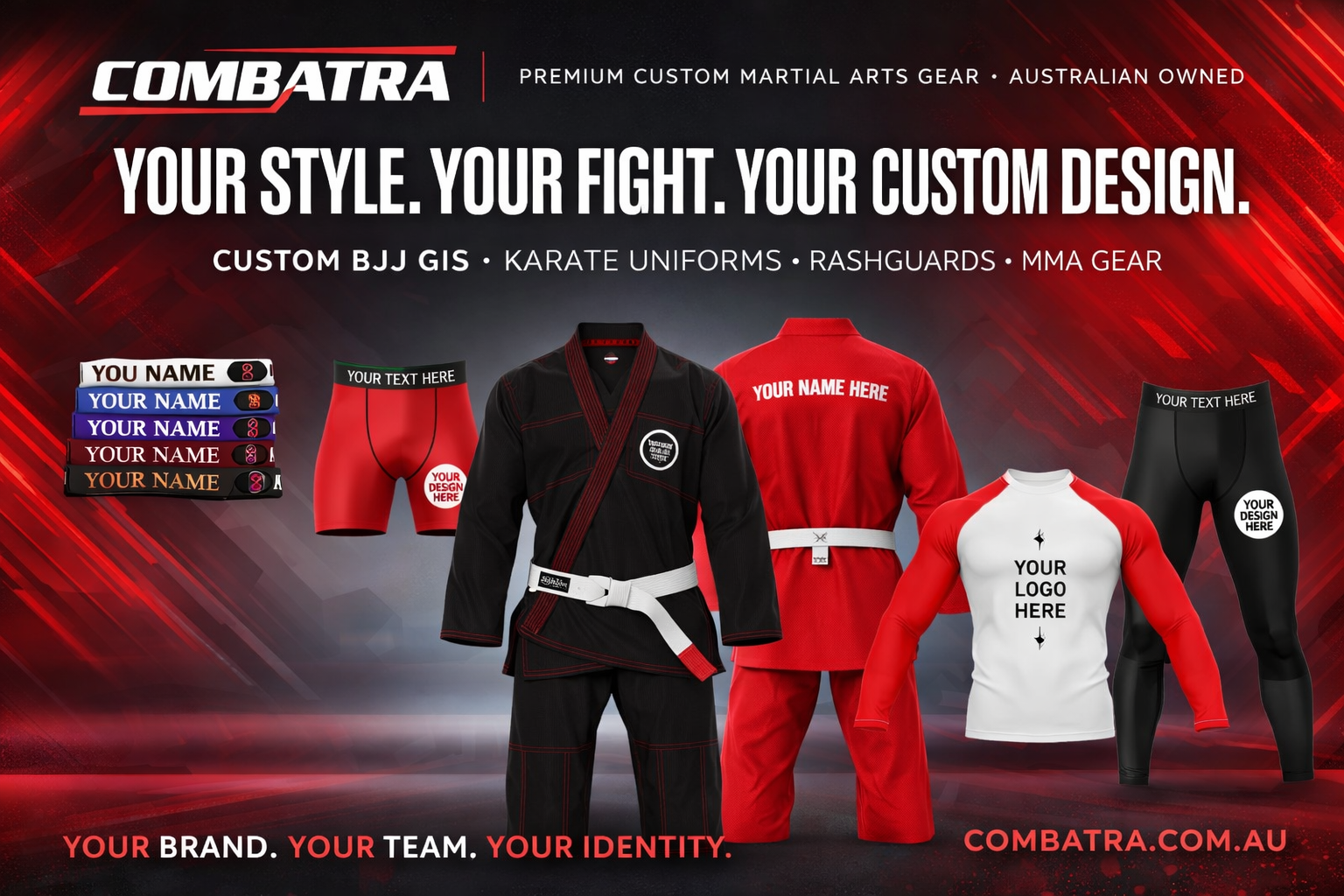
Combatra's customisable MMA fight shorts and rashguards with UPF 50+ protection are available for personalisation with your name, logo, and colours. Fabrics are selected for durability and sun safety, free from harmful PFAS coatings. Whether you are outfitting an individual athlete or an entire academy, Combatra works with you to produce gear that performs at the level you train.
FAQ
Is custom sportswear worth the extra cost?
For athletes training regularly, custom sportswear typically delivers better long-term value through improved fit, fabric quality, and durability. The higher upfront cost per unit is often offset by fewer replacements and a lower cost per training session over time.
How long does it take to receive custom sports gear?
Most custom sportswear orders take three to eight weeks from design approval to delivery, depending on the manufacturer and order size. Seamless manufacturing technology has reduced production lead times by 30 to 40% compared to traditional methods.
What are the main benefits of ready-made sports gear?
Ready-made gear offers immediate availability, lower upfront cost, and broad size ranges. It suits athletes with urgent replacement needs or those testing a new sport before committing to a full custom kit.
Can I order custom sportswear for a small team?
Yes. Advances in seamless manufacturing mean minimum order quantities have dropped significantly, with some suppliers accepting orders from as few as 300 pieces. Smaller academies and clubs now have genuine access to custom gear at reasonable cost.
Why does fabric choice matter more in custom gear than ready-made?
Custom orders allow you to specify PFAS-free, UPF-rated fabrics that meet Australian sun safety standards. With ready-made gear, fabric composition and safety certifications are rarely disclosed clearly, which matters for athletes training outdoors or at high frequency.