

TL;DR:
- Custom sportswear provides a better fit that minimizes skin exposure during movement, offering more reliable sun protection. Fabric technology in custom garments maintains UPF ratings under real outdoor conditions, resisting stretching, wetness, and repeated washing. Combining tailored fit with high-performance fabrics makes custom gear superior to off-the-shelf options and sunscreen for outdoor athletes.
You've invested in a premium shirt rated UPF 50+, applied sunscreen before heading out, and still come home with a sunburnt strip across your lower back or a red patch on your shoulder. It's a frustratingly common experience for outdoor athletes. Standard off-the-shelf sportswear is designed for a generic body, not your body, and during dynamic outdoor training, even well-rated gear can fail in ways you don't notice until the damage is done. Custom sportswear changes that equation by matching your specific shape, movement patterns, and training demands so every centimetre of skin that should be covered, stays covered.
Table of Contents
- Why fit matters: gaps, movement and coverage outdoors
- Fabric technology: what makes custom sportswear protective
- UPF ratings: lab tests vs. reality and why custom still wins
- Real-world sun safety: custom sportswear vs. sunscreen and off-the-shelf
- What most athletes get wrong about outdoor sun protection
- Upgrade your protection with custom sun-smart gear
- Frequently asked questions
Key Takeaways
| Point | Details |
|---|---|
| Custom fit prevents exposure | Tailored sportswear reduces skin gaps during movement for safer sun coverage. |
| Advanced fabrics enhance protection | Custom garments allow you to choose UPF 50+, moisture-wicking materials optimised for performance. |
| UPF must endure real use | Lab ratings are not enough—choose custom gear engineered to maintain UV protection during sweat and stretch. |
| Physical barriers beat sunscreen alone | Relying only on sunscreen is risky; custom UPF clothing provides more consistent, long-term protection. |
Why fit matters: gaps, movement and coverage outdoors
Fit is arguably the most underestimated factor in outdoor sun safety. When you sprint, reach overhead, lunge, or grapple, your clothing moves with you, and not always in the right direction. A standard shirt that covers your torso while standing still can ride up significantly at the back when you're cycling or doing ground work. That brief, repeated exposure is cumulative. Over a two-hour session, those moments add up to meaningful UV dose.
Understanding sun safety for outdoor activities helps explain why consistent physical coverage matters as much as SPF or UPF ratings. The skin doesn't differentiate between one long exposure and many short ones. Total dose is what drives damage.
Here is where the critical advantage of custom gear becomes clear. Custom sportswear allows precise tailoring of fit, reducing gaps in coverage during movement that expose skin to UV rays, unlike off-the-shelf garments. A rashguard cut to your torso length, arm circumference, and shoulder width simply does not ride up or gap the same way a mass-produced garment does.
When thinking about choosing UV clothing for outdoor sessions, these are the common fit-related problems to look for:
- Shirts riding up at the waist during forward bending or lifting
- Sleeve hems pulling back to expose the inner forearm during overhead movements
- High necklines drooping forward when you look down, exposing the back of the neck
- Compression garments losing structural tension after repeated washing, reducing fabric density and UPF
- Side seams shifting toward the front or back, creating an unprotected strip along the ribs
"A garment rated UPF 50+ in a lab is only as protective as its ability to stay in place on a real moving body."
Pro Tip: When assessing coverage during training, do a full movement check in front of a mirror before your first outdoor session. Raise your arms, bend forward, and rotate your torso. Any skin that appears is skin at risk.
The decision between compression vs loose clothing also plays into coverage reliability. Compression garments stay in place better during dynamic movement, which is one reason they're increasingly preferred by outdoor athletes for sun safety. Custom compression gear takes that advantage further by calibrating the hold for your exact measurements.
Fabric technology: what makes custom sportswear protective
Fit gets you consistent coverage. Fabric technology determines the quality of that coverage. This is where custom sportswear creates a measurable performance gap over generic options.
When you choose custom, you select fabrics matched to your specific training environment. A runner training in the Queensland summer has very different needs from a rock climber in South Australia. Custom designs enable strategic placement of mesh ventilation panels, high-coverage elements like full sleeves and high necklines, while incorporating UPF 50+ fabrics, moisture-wicking, and 4-way stretch for prolonged outdoor performance.
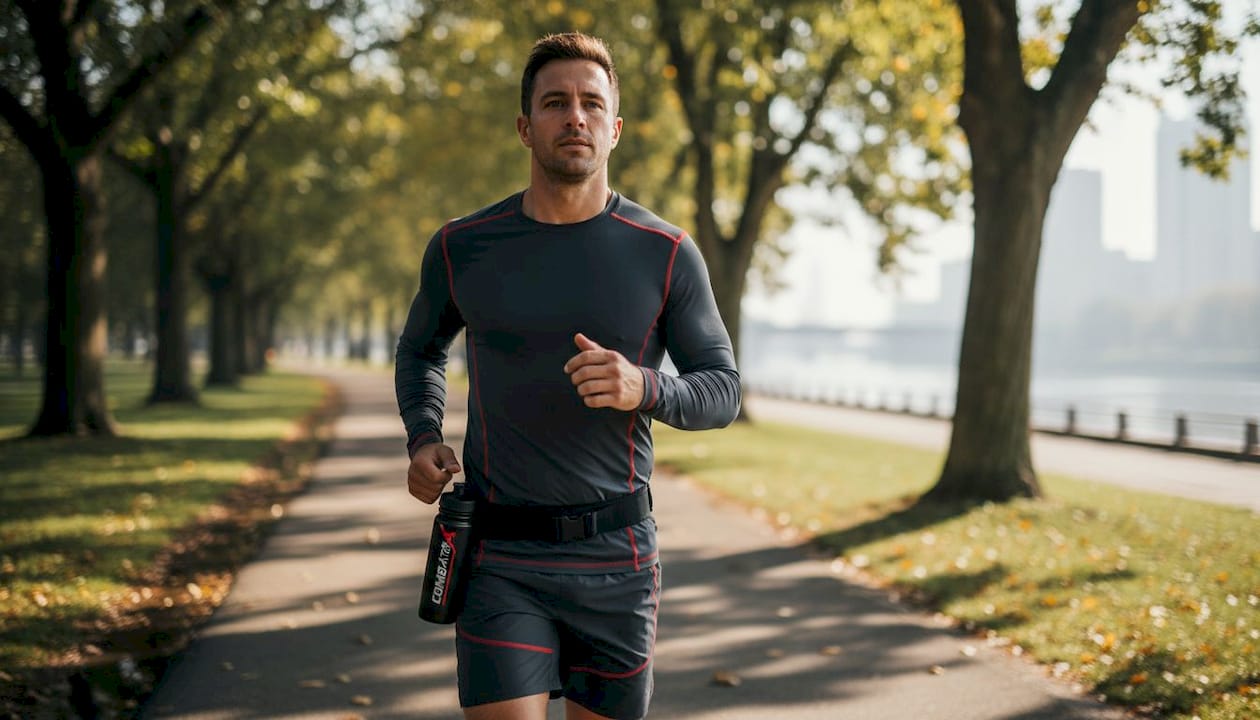
Understanding what's actually in your gear is critical. Here's how key fabric attributes compare for outdoor athletic use:
| Feature | Custom UPF sportswear | Standard UPF clothing | Cotton activewear |
|---|---|---|---|
| UPF rating | 50+ (engineered) | 30 to 50+ (variable) | 5 to 15 (unreliable) |
| Stretch retention | High (4-way, stays taut) | Moderate | Low |
| Wet UPF performance | Minimal drop | Moderate drop | Significant drop |
| Moisture management | High (designed for output) | Moderate | Poor |
| Ventilation options | Custom panel placement | Fixed design | None |
| Durability under UV | High (UV-stable dyes) | Moderate | Low |
The moisture-wicking property deserves particular attention. Moisture-wicking fabrics in custom sportswear reduce sweat buildup by up to 30% compared to cotton, maintaining UPF integrity better because synthetics drop minimally when wet versus cotton's significant decline. This matters enormously during a long run or an outdoor circuit session where you're sweating heavily from the 20-minute mark onward.
Here's a practical breakdown of how to prioritise fabric features when designing or selecting custom outdoor sportswear:
- Start with UPF rating. Specify UPF 50+ fabric as a non-negotiable minimum. Ask for the fabric certification, not just the brand's claim.
- Specify 4-way stretch. This maintains structural integrity and coverage under full movement.
- Request moisture-wicking synthetics. Polyester and nylon blends outperform cotton significantly during high-output training.
- Discuss ventilation panel placement. Strategic mesh panels at the underarm and back yoke reduce heat buildup without sacrificing UV coverage on high-exposure zones.
- Confirm UV-stable dyes. Some dyes degrade under repeated UV exposure, reducing fabric protection over time. Quality custom manufacturers use UV-stable formulations.
Learning more about UPF 50 clothing and what specific fabric attributes contribute to real-world protection will help you make sharper decisions when specifying your custom kit.
Pro Tip: Ask your custom sportswear supplier for the fabric's wet UPF specification, not just the dry rating. For outdoor athletes, the wet figure is closer to your real-world experience.
Fabric resistance outdoors also contributes to long-term protection quality. Fabrics engineered to resist abrasion and UV degradation maintain their protective properties over far more wash cycles and training sessions than standard activewear.
Knowing how to spot high-quality UV clothing before you buy is a skill worth developing. Look for independent fabric testing certification, documented wet UPF performance, and construction quality that holds its shape after repeated washing.
UPF ratings: lab tests vs. reality and why custom still wins
UPF ratings are tested under controlled laboratory conditions. The fabric is flat, dry, and unstretched. That bears almost no resemblance to how you actually use your training gear.
In real outdoor training, your garment is wet, stretched, and under tension simultaneously. Dynamic UPF testing under conditions like wetting, stretching, and repeated washing reveals that static lab tests can overestimate real protection by a significant margin for athletes under strain.
Here's a summary of how protection can shift from lab to field:
| Condition | Effect on UPF |
|---|---|
| Dry, flat (lab test) | Rated value (e.g., 50+) |
| Stretched to 50% | Can drop by 20 to 35% |
| Wet from sweat or rain | Can drop by 10 to 25% |
| Combined stretch and wet | Can drop by 30 to 45% |
| After 40 wash cycles | Can drop by 15 to 20% |
Over 75% of technical sports tops achieve UPF 40 to 50+ in bench tests, but protection falls with stretch and sweat. Custom engineering using tight weaves and polyester blends mitigates this for real-world outdoor training.
This is where custom gear has a structural advantage. When your garment is designed specifically for athletic use with tighter weave construction and blended fabrics, the gap between the lab rating and your field experience narrows considerably. The fabric is built to maintain protection, not just achieve a tick on a certification test.
Key factors that separate custom performance from standard gear in real conditions:
- Weave density: Tighter construction limits UV transmission even under stretch
- Fabric weight: Purpose-built athletic fabrics balance protection with breathability rather than sacrificing one for the other
- Blend composition: Polyester and elastane blends retain UPF under tension better than single-fibre weaves
- Construction finish: Flatlock seams and reinforced stress points prevent stretch-related coverage gaps over time
Understanding how UV clothing works at a structural level helps you evaluate whether a garment will actually perform for you or simply look the part on the label. When choosing gear for all-day outdoor sport, the real-world performance gap becomes even more important.
Real-world sun safety: custom sportswear vs. sunscreen and off-the-shelf
Let's put three options side by side: custom UPF sportswear, standard off-the-shelf UPF gear, and sunscreen as your primary protection method.
| Protection method | Reliability during training | Reapplication needed | Fit/coverage quality | Long-session suitability |
|---|---|---|---|---|
| Custom UPF sportswear | Very high | No | Tailored, consistent | Excellent |
| Standard UPF clothing | Moderate to high | No | Generic, variable | Good with caveats |
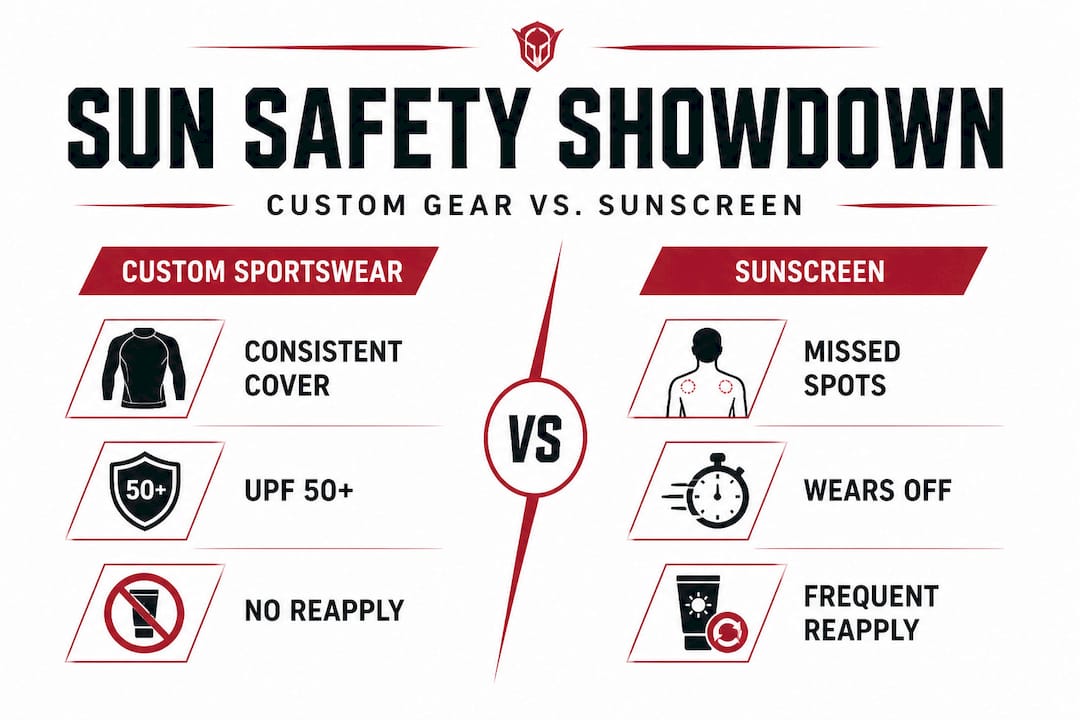
| Sunscreen alone | Low to moderate | Every 80 to 90 min | Dependent on application | Poor |
Sunscreen is, without question, a valuable tool. But serious outdoor athletes know its limits. It wears off with sweat, gets missed during rushed pre-session application, and rarely gets reapplied mid-session. The reality is that fewer than 50% of people apply sunscreen correctly, making custom physical barriers a more reliable choice for consistent protection. The article also notes that while standard UPF gear can be sufficient if certified to strict standards, the adherence problem with sunscreen makes custom coverage preferable for reliability.
"A physical barrier that moves with your body is always on. Sunscreen is only on when you remember to apply it correctly."
Here is how to use all three methods strategically for outdoor training:
- Custom UPF garment as your primary barrier. Cover as much high-exposure skin as practically possible with properly fitted UPF 50+ custom gear.
- Sunscreen for exposed areas only. Apply to face, hands, and any areas the garment cannot cover. Reapply every 90 minutes or after heavy sweating.
- Standard UPF gear as backup. Acceptable for moderate-duration sessions if the fit is verified and fabric quality is confirmed.
- Avoid cotton for long sessions. As the table above shows, cotton's protective properties collapse when wet, making it a poor choice for outdoor training.
Comparing UPF clothing vs sunscreen in a side-by-side analysis consistently demonstrates that physical barriers outperform topical protection under real athletic conditions, particularly during sessions lasting more than one hour.
Pro Tip: Schedule your sunscreen application 20 minutes before stepping outside to allow it to bind to the skin properly. This improves its baseline effectiveness before you start sweating.
When it comes to weatherproof performance outdoors, garment reliability under changing conditions reinforces why custom-built solutions consistently outperform reactive ones.
What most athletes get wrong about outdoor sun protection
Here is an honest observation based on how athletes actually train and protect themselves: most people believe they have their sun safety handled because they own a UPF-rated shirt and keep a sunscreen tube in their bag. That belief is not quite accurate, and it's worth challenging directly.
Generic UPF tops do provide protection. But they are engineered for an average body size and an average movement range. The moment you're outside that average, coverage reliability drops. Most athletes are not average. They have specific proportions, specific training demands, and specific exposure patterns.
Sunscreen compounds the false confidence problem. It is applied quickly before training starts, rarely reapplied during sessions, and almost never covers every exposed area comprehensively. Over years of consistent outdoor training, those gaps accumulate.
The athletes who take long-term skin health seriously are the ones who treat it the same way they treat their training load. Deliberate. Personalised. Consistent. That means choosing gear built for hot weather UV protection with the right fabric and cut for their body and training style, not just grabbing the first UPF shirt on the shelf.
Custom sportswear is not a premium indulgence. For outdoor athletes who train regularly in sun-exposed conditions, it is a practical, effective health decision. The investment in gear that fits correctly and maintains real-world UPF performance across hundreds of sessions is far more valuable than the false security of a generically rated garment.
The uncomfortable truth is this: most outdoor athletes are underprotected and don't know it. The gap between lab-certified protection and field-actual protection is real, measurable, and addressable with the right kit.
Upgrade your protection with custom sun-smart gear
If this article has made one thing clear, it's that effective sun protection during outdoor training is specific, not generic. Your body, your training, and your exposure patterns deserve gear that's built for them.
At Combatra, we design sun protective rashguards specifically for athletes who train outdoors in real conditions. Our gear combines UPF 50+ rated fabrics with custom fit, 4-way stretch, and moisture-wicking performance so your protection doesn't drop off when the session gets intense. If you want a reliable, personalised starting point, the customisable black compression rash guard is a practical choice built to move with you. Add your name, logo, or team colours and get coverage that actually holds up when it matters.
Frequently asked questions
How does custom sportswear protect better than standard options?
Custom sportswear offers a precisely tailored fit that reduces gaps in coverage during movement, alongside advanced fabrics that maintain UPF performance under real training conditions, unlike off-the-shelf garments designed for a generic body.
What UPF rating should I look for in outdoor training gear?
Aim for UPF 50+, which blocks 98% of UV rays, but confirm the rating holds under the stretch, sweat, and washing cycles typical of regular outdoor training, as static lab tests can overstate real-world performance.
Do I need sunscreen if I wear custom UPF sportswear?
Yes, apply sunscreen to any exposed areas that your garment cannot cover. Fewer than half of people apply sunscreen correctly, which is why custom UPF clothing serves as the primary and more reliable barrier for covered skin.
Is moisture-wicking fabric important for sun-protective sportswear?
Absolutely. Moisture-wicking synthetics reduce sweat buildup by up to 30% compared to cotton and maintain UPF performance when wet, whereas cotton loses significant protective effectiveness as soon as it becomes saturated.