
TL;DR:
- Wearing UV protection clothing is essential for outdoor athletes in Australia to prevent cumulative skin damage from UVA and UVB rays. High-quality UPF 50+ garments offer reliable, long-lasting protection, unlike standard sportswear that allows significant UV transmission and loses effectiveness when wet. Combining UV clothing with sunscreen on exposed areas provides the most comprehensive sun defense during outdoor training.
When you're training outdoors in Australia, the gap between UV clothing vs regular sportswear is not just a technical detail. It can be the difference between skin that stays healthy over a lifetime of training and cumulative damage that adds up session by session. A standard white cotton t-shirt typically offers UPF as low as 5, meaning around 20% of UV radiation passes straight through to your skin. Premium rashguards engineered for combat sports and outdoor athletes, like those lab tested to AS 4399:2020 with a UPF 50+ rating, block 98% of that same radiation. That difference matters every single session.
Table of Contents
- Key takeaways
- UV clothing vs regular sportswear: how UV radiation affects you
- What makes UV clothing different: fabric and construction
- Performance benefits of UV clothing for outdoor athletes
- Choosing UV clothing over regular sportswear: what to consider
- Common myths about UV clothing and regular sportswear
- My honest take on UV clothing for athletes
- Protect your training with Combatra UV performance gear
- FAQ
Key takeaways
| Point | Details |
|---|---|
| UPF vs regular fabric protection | Standard sportswear can allow up to 20% UV transmission; UPF 50+ fabrics reduce that to just 2%. |
| Fabric and weave determine UPF | Tightly woven polyester and nylon blends in UV clothing outperform loose cotton in blocking UV rays. |
| Wet fabric loses protection fast | Regular sportswear can drop to UPF 3 when wet, while quality UV garments maintain their rating. |
| Layering clothing with sunscreen | Combining UPF clothing with broad-spectrum sunscreen on exposed skin gives the strongest sun defence. |
| UV clothing is a long-term investment | High-quality UPF fabrics retain their rating after 50+ washes, making them cost-effective over time. |
UV clothing vs regular sportswear: how UV radiation affects you
Understanding why UV clothing and regular sportswear perform so differently starts with understanding what UV radiation actually does to your skin during training.
UV radiation arrives in two forms: UVA and UVB rays. UVA rays penetrate deeper into the skin and are the primary cause of premature ageing and long-term skin damage. UVB rays are responsible for sunburn and play a significant role in skin cancer development. Both are present year-round in Australia, and both are capable of passing through standard fabric.
Australia has some of the highest UV indexes recorded anywhere in the world. For athletes training outdoors, whether that's running, cycling, or practising martial arts in an open environment, cumulative UV exposure across a season is substantial. The risk is not just sunburn after one session. It is the steady accumulation of skin damage across months and years of outdoor training.
Clothing works as a physical barrier between UV radiation and your skin. Not all fabrics are equal in how well they perform that job. The UPF rating tells you how much UV radiation a fabric blocks. A garment rated UPF 50+ blocks 98% of UV rays, while most standard sportswear sits well below this threshold. Dermatologists recommend layering UPF clothing with a broad-spectrum SPF 30+ sunscreen on any uncovered skin for the most reliable protection.
It is also worth clarifying that SPF and UPF measure different things. SPF applies to sunscreen and primarily measures protection against UVB rays, unless labelled broad spectrum. UPF, on the other hand, measures protection against both UVA and UVB simultaneously. This makes UPF a more complete measure of sun protection from fabric.
What makes UV clothing different: fabric and construction
The physical differences between UV protective clothing and regular sportswear are real and measurable. They come down to material selection, fabric weave, design coverage, and durability.
Materials and weave density
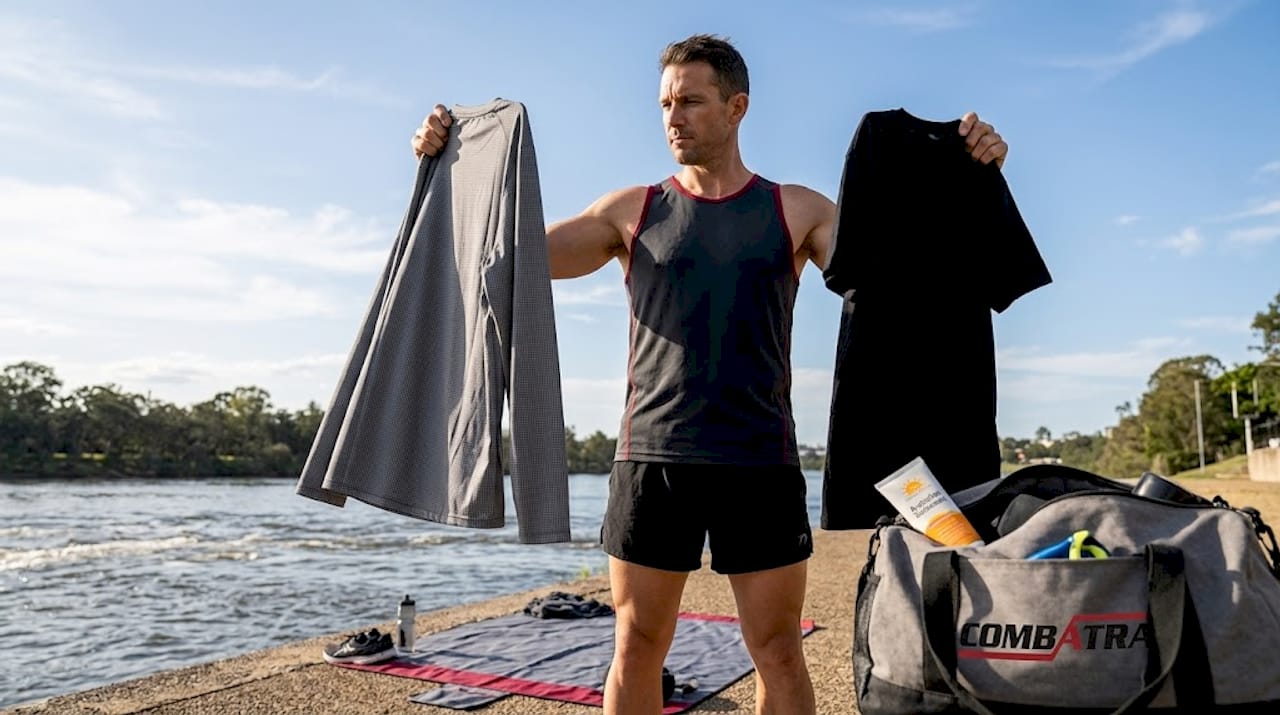
UV protective garments are typically constructed from tightly woven polyester, nylon, or spandex blends. These synthetics have a molecular structure that is naturally better at absorbing and scattering UV radiation than natural fibres like cotton. Regular sportswear, including many widely sold training shirts and shorts, often uses cotton or cotton-blend fabrics that leave significant gaps in the weave. Those gaps allow UV radiation to pass through to the skin.
The density of the weave matters as much as the material. A tighter weave means fewer pathways for UV rays to penetrate. Specialised UV fabrics are engineered with this in mind from the start, not as an afterthought. This is why UPF-rated sportswear uses fabric blends and weaving techniques that maintain UV blocking even when the fabric is stretched or under load during exercise.
Colour and coverage
| Feature | UV protective clothing | Regular sportswear |
|---|---|---|
| Fabric material | Polyester, nylon, spandex blends | Cotton, cotton-polyester blends |
| UPF rating | UPF 40 to UPF 50+ | Typically UPF 5 to UPF 15 |
| Protection when wet | Maintains UPF rating | Can drop to UPF 3 |
| Coverage design | Long sleeves, high necks, full torso | Fashion-driven, variable coverage |
| Wash durability | Retains UPF after 50+ washes | UV protection may degrade faster |
Colour also plays a role in both clothing types. Dark and vivid colours absorb more UV radiation, which increases UPF in any fabric. A dark polyester training top will generally outperform a pale cotton equivalent. However, colour alone does not compensate for a low-grade fabric or loose weave. A dark cotton shirt is still far less protective than a properly engineered UPF 50+ garment.
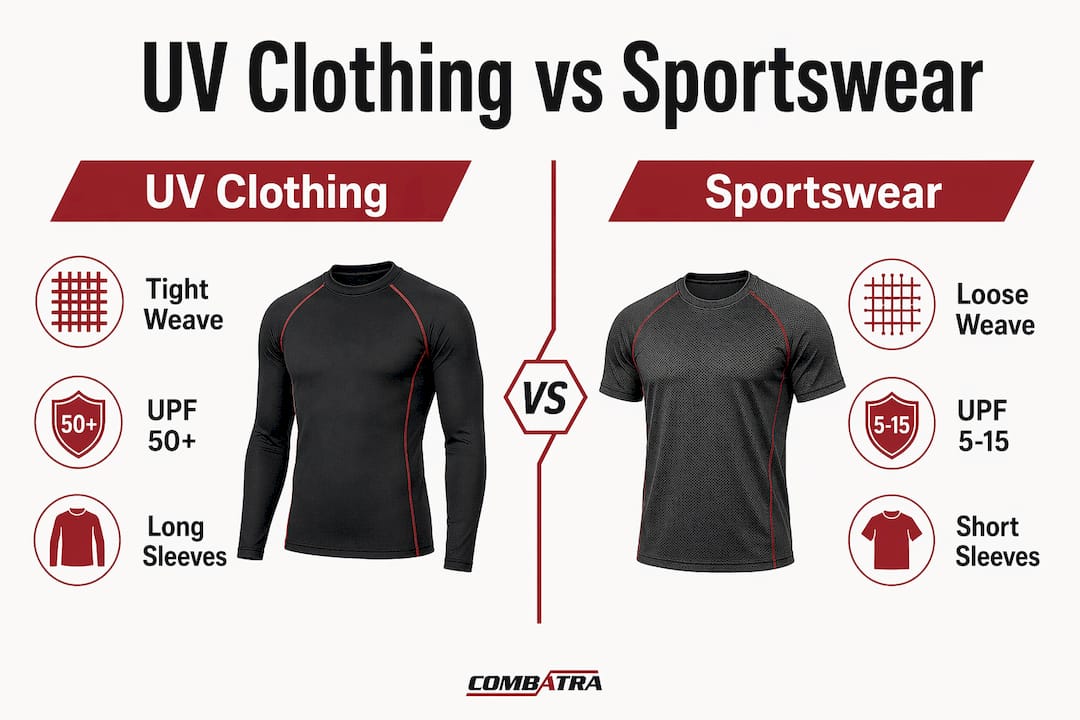
Coverage design in UV clothing is intentional. Long sleeves, high necklines, and extended hem lengths are built into the garment's purpose. Regular sportswear prioritises aesthetics and comfort trends, which often means shorter sleeves, lower necklines, and less overall skin coverage.
Pro Tip: When checking a UV garment's credentials, look for the AS 4399:2020 standard on Australian products or EN 13758-1 for European-certified gear. A minimum UPF 40 is required for a garment to be classified as UV protective.
Performance benefits of UV clothing for outdoor athletes
Understanding the benefits of UV sportswear comes down to practical performance as much as skin health. Here is what changes when you switch from regular sportswear to UV-rated gear.
- Consistent, hands-free protection. UPF clothing blocks both UVA and UVB consistently without requiring reapplication. Sunscreen loses effectiveness as you sweat, rub your skin against a training partner, or simply forget to reapply every two hours.
- No residue or interference. Sunscreen on your hands and forearms creates problems in grappling sports. It reduces grip, transfers to training partners, and can irritate the eyes. UV clothing removes that problem entirely.
- Moisture-wicking and cooling performance. Quality UV garments are designed with athlete performance in mind. Breathable, quick-dry fabrics manage sweat effectively, keeping you cool during long outdoor sessions without the discomfort of a saturated cotton top.
- Reliable protection across varied conditions. Regular sportswear loses significant UV protection when wet. Wet white cotton can drop to UPF 3, offering almost no barrier against UV. UV-rated garments are tested in wet conditions and maintain their rating.
- Reduced long-term skin damage. Sustained UV protection from UPF clothing reduces cumulative damage, helping prevent both acute burns and long-term skin health issues including skin ageing and increased cancer risk.
Pro Tip: Look for a rashguard built specifically for your sport. A UV rashguard for athletes is engineered to move with your body, resist stretch-related protection loss, and perform across the full duration of training.
Is UV sportswear worth it for regular outdoor athletes? The answer is straightforward. If you train outside consistently, UV protective clothing is not a luxury item. It is a performance tool that protects your long-term health without adding friction to your training routine.
Choosing UV clothing over regular sportswear: what to consider
Knowing the difference between UV and regular sportswear is one step. Making a smart purchase decision is another. Here is how to approach the choice.
- Assess your exposure time. If you train outdoors for more than 30 to 40 minutes during daylight hours, especially between 10am and 3pm, you are in UV exposure territory where regular sportswear is not enough.
- Check the UPF certification. Look for a confirmed UPF rating on the product, not just a brand claim. Certified garments are tested with spectrophotometers on both dry and wet fabric samples. That testing process is what gives the rating credibility.
- Consider coverage and fit. A UV garment that rides up, leaves gaps at the waist, or has short sleeves is not delivering full protection. Look for full torso coverage, close-fitting sleeves, and designs that account for your sport's range of motion.
- Factor in wash durability. A high-quality UV garment will maintain its UPF 50+ rating across dozens of wash cycles. Ask or check whether the product specifies durability testing. Cheap alternatives may degrade after only a few washes.
- Layer with sunscreen for exposed areas. UV clothing covers a lot of skin, but your face, neck, and hands often remain exposed. Using both UPF clothing and sunscreen together gives you the strongest overall protection strategy. Neither alone is as effective as both combined.
For guidance on choosing UV clothing for sport, matching garment type to your training environment makes a significant difference in day-to-day comfort and protection.
Common myths about UV clothing and regular sportswear
A few persistent misunderstandings get in the way of athletes making informed choices. It helps to clear them up directly.
- "Dark or long sleeves mean UV protection." Not true. A dark cotton long-sleeve top may offer more protection than a white one, but it still falls far short of a certified UPF 50+ garment. Colour and length are factors, but they do not substitute for proper fabric engineering.
- "SPF sunscreen covers everything." SPF primarily protects against UVB rays. Standard SPF sunscreen requires reapplication every two hours and after sweating or water contact. UPF clothing offers reliable broad-spectrum coverage without any of those limitations.
- "Wet fabric still protects." Regular sportswear loses significant protection when wet. A wet cotton shirt can drop to UPF 3, compared to UPF 5 when dry. Certified UV garments maintain their rating under wet conditions because they are tested for it.
- "Stretching UV clothing reduces its protection." Low-quality UV garments can lose protection when stretched, but quality-certified fabrics use specialised weave construction that maintains UV blocking under movement and stretch.
- "UV clothing is too hot for Australian summers." Modern UV sportswear uses breathable, moisture-wicking synthetics designed specifically for heat management. Many athletes find that quality UV garments feel cooler than cotton because they wick sweat rather than absorbing it.
My honest take on UV clothing for athletes
I've spent a lot of time watching athletes manage sun exposure in training environments, and the pattern I see most often is this: people rely entirely on sunscreen, apply it once before training, and then forget about it for the next two hours while they sweat through an outdoor session.
From my experience, that approach leaves a significant gap in protection. The honest reality is that sunscreen alone is not enough for athletes training outdoors across a full season. The application is inconsistent, the reapplication rarely happens on schedule, and the contact that comes with combat sports strips it faster than most people expect.
What I've found consistently reliable is the combination of a quality UPF 50+ rashguard covering the torso and arms, paired with sunscreen on the face, neck, and hands. That layered approach removes the guesswork. The garment does its job every session, without any effort from you.
My recommendation for anyone training outdoors regularly in Australia is to treat UV clothing the same way you treat your other performance gear. Choose quality, check the certification, and buy something built for your specific sport. A rashguard built for BJJ or MMA is not the same as a generic long-sleeve top from a surf brand. The movement range, compression, and UV protection need to work together. Combatra builds gear with exactly that in mind, and it makes a real difference when you are deep into a training session and not thinking about sunscreen reapplication.
— ZZA
Protect your training with Combatra UV performance gear
Combatra designs performance sportswear specifically for athletes who train hard and spend real time outdoors. Every rashguard, compression top, and training garment in the Combatra range is engineered with UPF 50+ protection built into the fabric, not added as a coating that wears off. Whether you train in BJJ, MMA, Karate, or outdoor fitness, Combatra gear is made to move with you while shielding your skin across the full duration of your session.
For women training outdoors, Combatra's performance sports bras combine comfort, support, and UV-rated fabric for sessions that go the distance. Explore the full Combatra range to find gear that matches your training demands and keeps your skin protected every time you step outside.
FAQ
What is the main difference between UV clothing and regular sportswear?
UV clothing is made from tightly woven synthetic fabrics engineered to block both UVA and UVB rays, typically rated UPF 40 to UPF 50+. Regular sportswear uses standard fabrics like cotton that may only offer UPF 5 to UPF 15, leaving skin significantly more exposed.
Should I buy UV clothing if I already use sunscreen?
Yes. Sunscreen and UV clothing serve complementary roles. Sunscreen degrades during sweating and requires reapplication every two hours, while UPF clothing provides consistent protection without any maintenance during training.
Does regular sportswear lose UV protection when wet?
Yes. A regular white cotton shirt can drop from UPF 5 down to UPF 3 when wet, offering almost negligible protection. Quality UV-rated garments maintain their UPF rating in wet conditions because they are tested for it.
How do I know if a UV garment is genuinely protective?
Look for a certified UPF rating backed by laboratory testing, such as AS 4399:2020 in Australia. A minimum UPF 40 is required for a garment to be officially classified as UV protective, with UPF 50+ being the highest certification available.
Is UV sportswear worth it for Australian athletes?
Yes, particularly given Australia's high UV indexes. UV sportswear provides reliable, all-session protection without the reapplication hassle of sunscreen, and high-quality garments retain their UPF rating across 50 or more wash cycles.