
TL;DR:
- Genuine sun protection depends on UPF-rated fabrics, not just fabric length or thickness. Arm sleeves protect mainly the arms and wrists, while long sleeve shirts cover more of the torso and shoulders, but sunscreen remains essential for exposed skin. Combining UPF clothing with sunscreen provides comprehensive protection tailored to activity and conditions.
Most athletes assume that more fabric automatically means better sun protection. It seems logical. But not all fabrics block UV equally, and a thick cotton shirt can actually let through more ultraviolet radiation than a lightweight, purpose-built UPF garment. Whether you are cycling on an exposed trail, training outdoors, or competing under a blazing Australian sun, choosing between UV arm sleeves and long sleeve shirts comes down to more than just personal preference. This guide breaks down the science, the coverage gaps, the comfort factors, and the situations where each option truly performs best.
Table of Contents
-
Our take: What most guides miss about sun protection for athletes
-
Find premium UV protection gear for your next outdoor adventure
Key Takeaways
| Point | Details |
|---|---|
| UPF rating is essential | Only UPF-rated clothing guarantees reliable sun protection, not just sleeve length. |
| Coverage determines safety | Clothing protects only covered skin; sunscreen is needed for exposed areas. |
| Arm sleeves offer flexibility | UV arm sleeves can be easily removed and are ventilated, ideal for hot conditions. |
| Long sleeves provide full coverage | Long sleeve shirts safeguard more upper body but may be warmer in hot weather. |
| Best protection blends gear | Combining UPF sleeves and shirts maximises sun safety and comfort for athletes. |
Understanding UPF ratings and sun protection
Let’s clear up the most common source of confusion first. When you shop for sun-protective clothing, the label to look for is UPF, which stands for Ultraviolet Protection Factor. UPF measures how much UV radiation a fabric allows to reach your skin. A garment rated UPF 50+ blocks 98% of UV rays, leaving only 2% to pass through. That is a significant difference compared to an unrated cotton T-shirt, which may only block around 20 to 30 percent of UV radiation.
Here is the key insight: UPF-rated fabrics are what determine effective sun protection, not the length or amount of fabric. A long sleeve shirt with no UPF rating can leave your arms far more exposed than a quality UPF 50+ arm sleeve. Both arm sleeves and long sleeve shirts can provide reliable sun protection when they are genuinely UPF-rated, because UPF indicates how much UV radiation the fabric blocks, not just how much skin it covers.
What makes a garment genuinely sun-safe? Here are the key factors to check:
-
UPF rating clearly labelled on the tag or product description (look for UPF 30, 40, or 50+)
-
Fabric weave and density (tighter weaves block more UV radiation)
-
Fibre type (polyester and nylon typically outperform cotton for UV defence)
-
Colour (darker and more vibrant colours generally absorb more UV)
-
Fit (stretched or wet fabric can reduce UPF effectiveness)
-
Certification (look for standards such as AS/NZS 4399, the Australian and New Zealand standard for sun-protective clothing)
“The UPF rating tells you how much UV radiation is actually blocked by the fabric, regardless of whether it is a sleeve, shirt, or other garment. Certification and material quality are what matter most.”
Understanding this removes the guesswork. Once you know both arm sleeves and long sleeve shirts can be equally protective at UPF 50+, the comparison shifts to coverage, comfort, and how each option fits your training lifestyle.
Coverage and exposed skin: What does each choice protect?
With UPF rating in mind, the next practical question is how much skin each option actually covers. This matters because clothing only protects the areas it covers, meaning you still need sunscreen or other protection for any exposed skin, whether you choose arm sleeves or a long sleeve shirt.
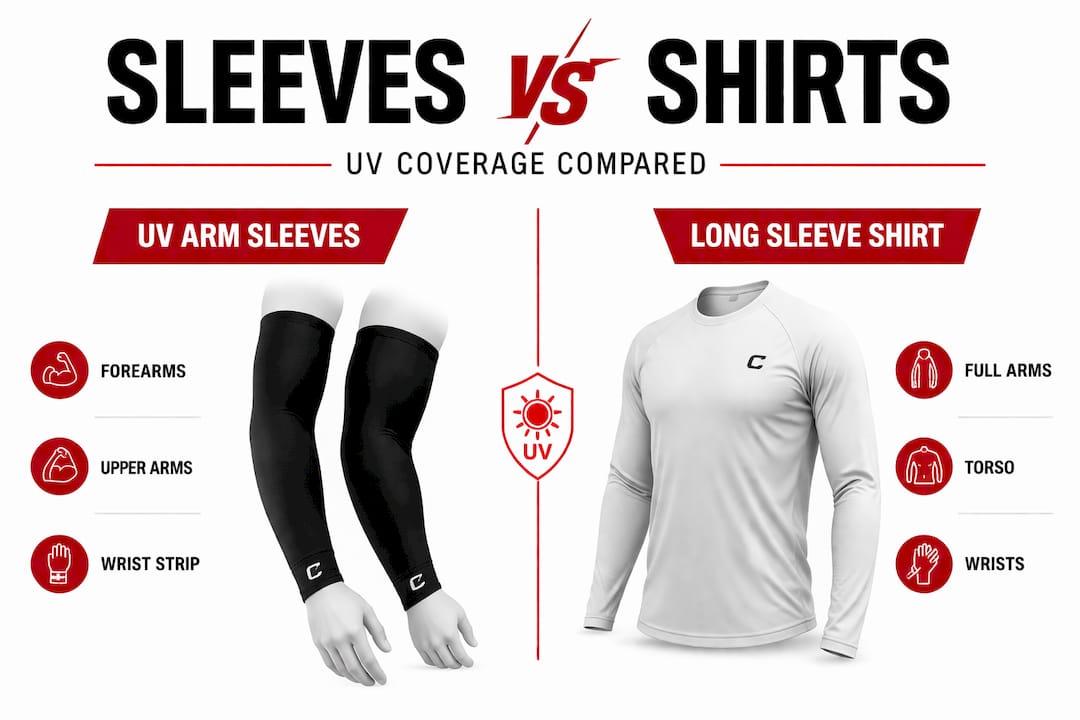
Here is a straightforward comparison of what each option covers and where it leaves gaps:
| Area of the body | UV arm sleeves | Long sleeve shirt |
|---|---|---|
| Upper arms | Yes | Yes |
| Forearms | Yes | Yes |
| Wrists | Partial (varies by sleeve length) | Yes |
| Shoulders | No | Yes |
| Upper chest and back | No | Yes |
| Torso | No | Yes |
| Neck | No | No (unless collar is high) |
| Face | No | No |
| Hands | No | No |
Arm sleeves are focused entirely on the arms and, to varying degrees, the wrists. They leave the shoulders, torso, chest, and back fully exposed. Long sleeve shirts cover all of those areas, giving you broader upper body protection from a single garment. However, both options leave your face, neck, and hands unprotected, which means sunscreen is still non-negotiable regardless of your clothing choice.
For outdoor athletes choosing sun protection, here is a simple process to ensure full coverage:
-
Choose UPF 50+ rated clothing as your base layer of protection.
-
Apply broad-spectrum SPF 50+ sunscreen to all exposed skin, including face, neck, ears, and hands.
-
Consider a wide-brim hat or neck gaiter for areas clothing cannot reach.
-
Reapply sunscreen regularly, particularly after sweating or swimming.
-
Pair your sleeve or shirt with UV protection clothing for all-day sport to build a complete sun safety system.
Pro Tip: Pay close attention to your wrists and hands. Many arm sleeves end just above the wrist, leaving a strip of skin exposed during activities like cycling, paddling, or throwing. Check the sleeve length carefully before purchasing, and carry sunscreen for that gap.
The honest answer is that if you are spending a full day outdoors, a long sleeve shirt covers more skin with less effort. But arm sleeves used correctly, alongside sunscreen and other protective accessories, can be just as effective for arm protection specifically.
Comfort, performance and practicality
Beyond coverage, let’s consider day-to-day comfort and practicality for active people. This is often where athletes make their final decision, and it is entirely reasonable to factor in how gear feels under pressure.
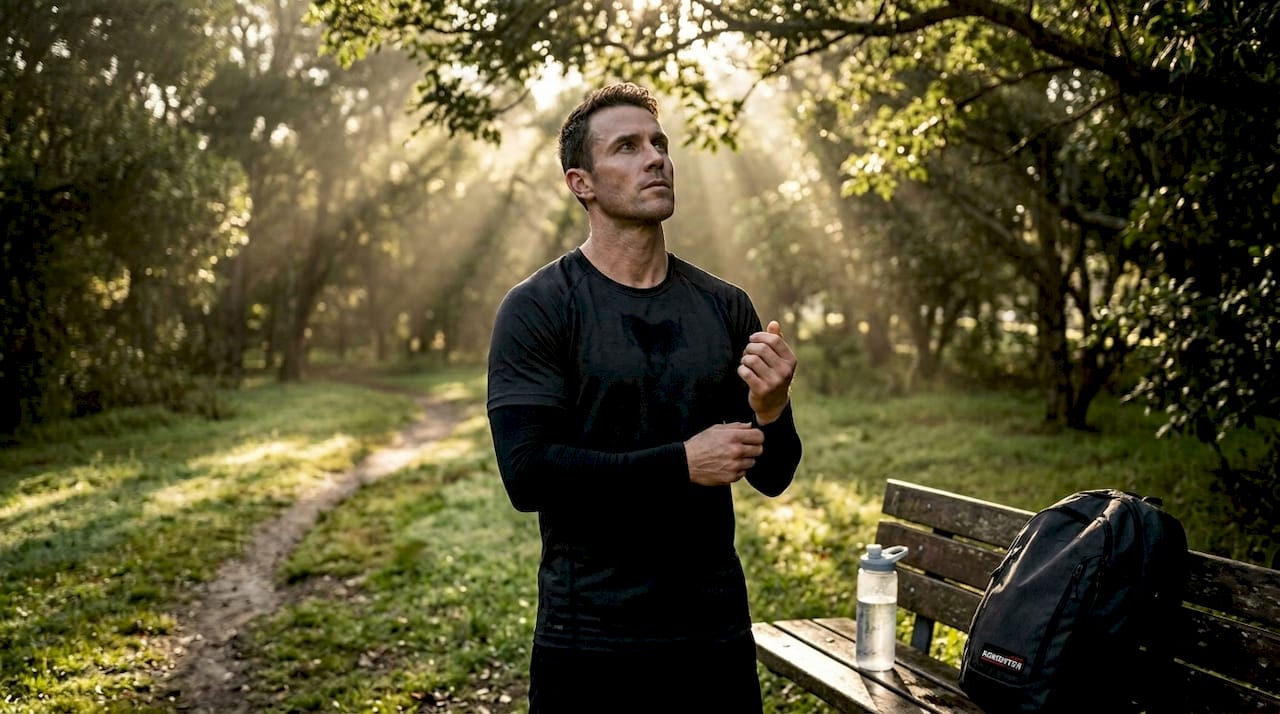
Arm sleeves are highly adaptable. You can slip them on and off in seconds, which is ideal when you move between shaded and exposed environments. During a cycling race, you might wear arm sleeves on an early cool and exposed stretch, then roll them down once you reach shaded trails. That flexibility has real value. They also tend to feel lighter and less restrictive around the torso, which some athletes prefer for freedom of movement.
Long sleeve shirts, by contrast, give you consistent upper body coverage without thinking about it. You put it on and it covers your shoulders, chest, and arms in one step. For athletes who want a simple, reliable approach, this consistency is a genuine advantage. The trade-off is that removing coverage mid-activity means removing your entire top, which is not always practical.
Here are the key practical factors to weigh up for each option:
-
Comfort in heat: Arm sleeves allow more ventilation across the torso. Long sleeve shirts made from moisture-wicking UPF fabric can manage heat well, but they cover more surface area.
-
Ease of use: Arm sleeves are faster to put on and take off during breaks. Long sleeve shirts are a single, complete garment.
-
Layering: Arm sleeves can be worn under or over other garments. Long sleeve shirts may feel bulky when layered.
-
Laundry and maintenance: Both are easy to care for. Look for garments that maintain their UPF-rated fabric performance through regular washing without significant degradation.
-
Versatility: Arm sleeves can be paired with any top, including a favourite training shirt. Long sleeve shirts are a standalone choice.
Pro Tip: If your training sessions involve unpredictable weather or you move between indoor and outdoor environments, arm sleeves are the more adaptable choice. Keep them in your kit bag and reach for them the moment conditions change.
For athletes focused on specific training disciplines, UV arm sleeves for sports often pair well with structured UV training outfit ideas to balance protection with performance.
When is each option best? Situational recommendations
Now, let’s translate these insights into action with practical advice for every athlete and outdoor enthusiast. The best choice is not universal. It depends on your sport, the duration of exposure, the climate, and how much skin you want covered at any given time.
Here is a straightforward guide based on activity type:
-
Cycling and open-water sports: Arm sleeves are particularly well suited here. They allow full arm movement without restricting your torso, and the exposed shoulder and chest area can be managed with sunscreen. Look for best fabric for UV protection in hot weather conditions.
-
Trail running and hiking: Long sleeve shirts are worth considering for full-day activities where consistent coverage reduces your reliance on frequent sunscreen reapplication.
-
Team sports and outdoor training sessions: Arm sleeves offer flexibility between drills, warm-up, and rest periods. They can be added or removed without disrupting your kit.
-
Beach and water activities: A long sleeve rash-style shirt or UPF-rated swimwear provides the most reliable protection during prolonged water exposure, since arm sleeves may shift or slip when wet.
-
Mixed conditions (urban to outdoor): Arm sleeves are easier to pack and add when you step outside. If your commute takes you through sun exposure before training, having arm sleeves in your bag gives you instant defence.
“Both UV arm sleeves and long sleeve shirts can deliver excellent sun protection, but the right choice depends on how much coverage you need and how long you’ll be outdoors. Use both UPF clothing and sunscreen for the most complete approach.” Adapted from expert guidelines on sun protection clothing.
It is also worth remembering that these options do not have to be mutually exclusive. For maximum protection across a full-day event, you might wear a long sleeve shirt in the morning and switch to arm sleeves with a vest once temperatures rise. The best UV protection clothing for outdoor workouts is the combination that actually gets worn. Gear that sits in your bag because it is too uncomfortable does nothing to protect you. Similarly, custom sportswear designed for sun safety lets you build a kit that works for your specific activities without compromising on protection or performance.
Our take: What most guides miss about sun protection for athletes
Most sun protection guides focus on one choice. Arm sleeves or long sleeve shirt. They treat it as a binary decision and leave you to choose sides. But in practice, experienced athletes rarely rely on a single garment to handle all their protection needs across every condition. The real strategy is flexibility.
Here is what we have seen: athletes who use a combination of UPF-rated arm sleeves and long sleeve shirts, matched to the conditions on a given day, consistently stay better protected than those who commit to just one approach. A cyclist who wears arm sleeves and a jersey on a cool morning, but swaps to a long sleeve UPF shirt for a midday hike, is managing their exposure thoughtfully. That is not complicated. It is just smart kit planning.
The other thing most guides skip is the value of UPF clothing versus sunscreen as layered tools rather than alternatives. Sunscreen degrades, sweats off, and often gets missed in application. UPF clothing does not. Using both gives you a reliable safety net. When you combine a UPF 50+ long sleeve shirt with arm sleeves and sunscreen on exposed skin, you are not overdoing it. You are simply being thorough.
Custom sportswear adds another dimension. When your gear is built for your sport, your body, and your conditions, it feels better and gets used consistently. Gear you enjoy wearing is gear that protects you every session.
Find premium UV protection gear for your next outdoor adventure
Choosing the right UV protection gear does not have to be complicated, and you do not have to settle for gear that performs in only one condition. At Combatra, we build performance-first UV protection for athletes who train hard and spend real time outdoors.

Our rashguards for sun protection are built with UPF 50+ certified fabric that blocks 98% of UV radiation while moving with your body. The black compression rash guard is a popular choice for athletes who want full upper body coverage with a performance fit. Pair it with our compression pants for training sessions where full coverage and muscle support matter. Every piece can be customised with your name, team colours, or logo, making it easy to gear up for both individual training and squad sessions.
Frequently asked questions
How do I tell if arm sleeves or shirts are actually UPF-rated?
Always check for clearly marked UPF ratings such as UPF 50+ on product tags or descriptions. Genuine sun-protective apparel will state its certification, so avoid products that only use vague terms like “sun protection” without a specific UPF number.
Do I still need sunscreen if I’m wearing UPF sleeves or a long sleeve shirt?
Yes, broad-spectrum sunscreen should still be applied to all exposed skin, including your face, neck, and hands. Clothing only protects the areas it covers, so sunscreen fills in the gaps no garment can reach.
Which is cooler to wear in hot weather: UV arm sleeves or long sleeve shirts?
UV arm sleeves tend to offer better ventilation because they leave the torso open, making them a practical choice in hot training conditions. That said, moisture-wicking UPF-rated shirts designed for sport can also manage heat effectively when built from performance fabrics.
How often should I reapply sunscreen when using UV arm sleeves?
The recommended reapplication interval is every two hours, or more frequently if you are sweating heavily or have been in the water. Even if your arms are covered, apply sunscreen to all uncovered areas on the same schedule.
Can you layer UV arm sleeves under a long sleeve shirt for extra protection?
Yes, layering UPF-rated apparel can increase UV protection and gives you flexibility to adjust coverage based on weather, activity intensity, or the time of day.