

TL;DR:
- Australia faces some of the world's highest UV radiation levels, making protective gear essential for outdoor athletes. UV sleeves with UPF 50+ ratings provide reliable, long-lasting protection, moisture-wicking support, and better heat regulation than sunscreen, especially during extended sessions in intense sunlight. Proper layering, choosing certified sleeves, and using pre-wetting techniques optimize comfort and safety, making UV clothing a crucial part of Australian outdoor training routines.
Australia sits under one of the harshest UV environments on the planet. UV radiation levels here can reach extreme readings even on overcast days, putting outdoor athletes at serious risk of sunburn, heat exhaustion, and long-term skin damage. UV sleeves have moved well beyond niche cycling gear into mainstream athletic kit, and for good reason. This guide walks you through everything you need to know, from how they work to how to wear them effectively, so you can train smarter and stay protected all season long.
Table of Contents
- Understanding UV sleeves and their benefits
- Gear up: What you need to stay cool and protected
- Step-by-step: How to use UV sleeves for optimal cooling
- Troubleshooting: Avoiding common cooling and protection mistakes
- What we've learned from training in the Australian sun
- Enhance your protection and performance with Combatra
- Frequently asked questions
Key Takeaways
| Point | Details |
|---|---|
| UV sleeves provide consistent protection | Unlike sunscreen, sleeves block UV rays reliably throughout your activities. |
| Choose high UPF fabrics | Always pick sleeves rated UPF 50+ for strong sun defence and comfort. |
| Combine cooling strategies | Use sleeves with other cooling gear and regular hydration to keep safe. |
| Avoid common sun mistakes | Don’t rely on sunscreen alone or neglect gear fit—get optimal protection. |
Understanding UV sleeves and their benefits
UV sleeves are close-fitting fabric tubes worn over the arms, specifically engineered to block ultraviolet radiation from reaching the skin. They're typically made from tightly woven synthetic fibres such as polyester, nylon, or spandex blends. The tight weave and sometimes the addition of UV-absorbing chemicals in the fabric give them their protective rating, expressed as UPF (Ultraviolet Protection Factor). A UPF 50+ rating means the fabric blocks more than 98% of UV radiation from passing through.
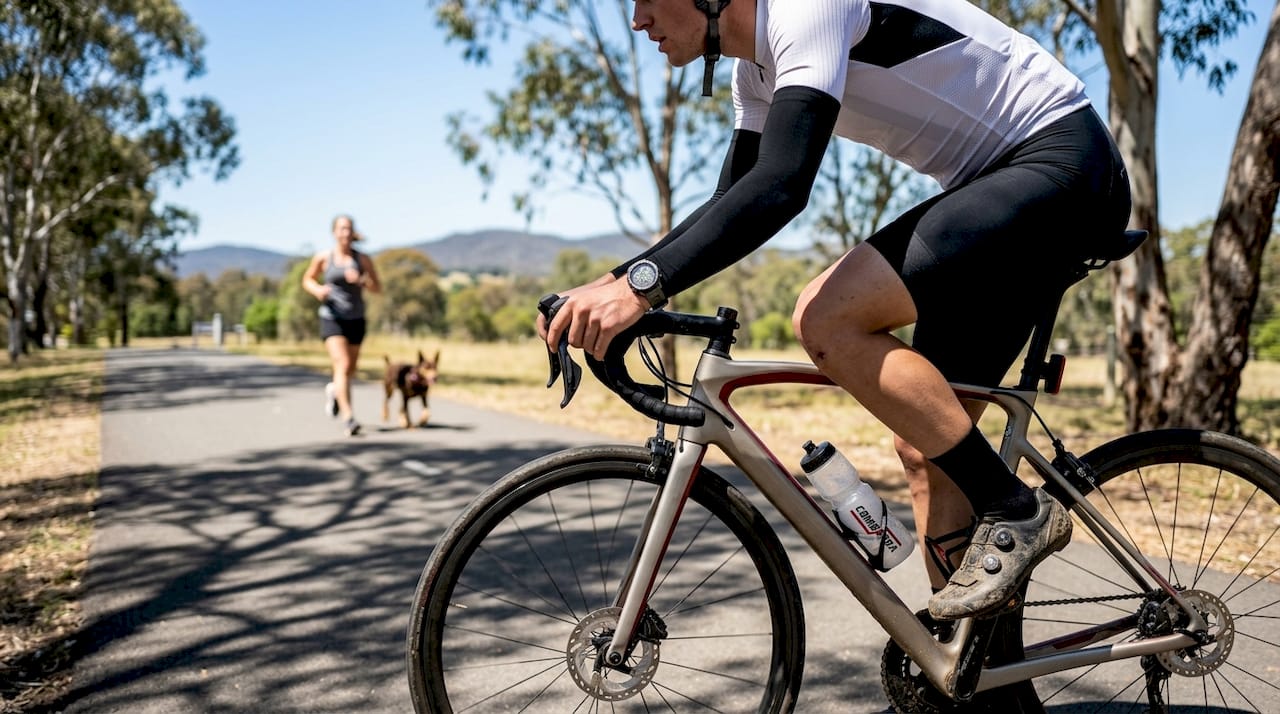
For Australian athletes, UPF clothing outperforms sunscreen in several real-world situations. Sunscreen degrades with sweat, water, and friction. After 40 to 80 minutes of vigorous activity, most topical sunscreens have lost significant effectiveness unless you reapply meticulously. UV sleeves, by contrast, maintain their protection rating regardless of how much you sweat.
Understanding the science behind UV clothing helps you make smarter gear choices. Fabric construction, colour density, and fibre type all play a role in how much UV radiation is blocked. Darker, more densely woven fabrics typically offer higher protection, but modern UV sleeves are engineered to be lightweight and pale-coloured while still achieving UPF 50+ ratings.
Here's a quick comparison of UV sleeves versus sunscreen for active outdoor use:
| Feature | UV sleeves | Sunscreen |
|---|---|---|
| Longevity of protection | All day with a single application | 40 to 80 minutes before reapplication needed |
| Sweat resistance | Full, unaffected by sweat | Degrades significantly with sweat |
| Ease of use | Pull on once | Requires repeated application |
| Cooling effect | Yes, with moisture-wicking fabric | None |
| Coverage consistency | Uniform | Patchy if applied unevenly |
| Cost over time | One-off purchase | Ongoing expense |
There's a reason athletes are choosing UV clothing over sunscreen as their primary defence. The benefits extend beyond protection alone:
- Moisture-wicking properties pull sweat away from the skin, helping regulate body temperature
- Compression fit can support forearm muscles and improve circulation during repetitive movements
- Cooling effect from evaporation means your arms feel cooler than they would without sleeves
- No greasy residue on hands or equipment, which matters in sports like rock climbing, archery, or paddle sports
- Reusable and washable, making them more sustainable and cost-effective than sunscreen over a season
Whether you're checking out UV arm sleeve options for the first time or upgrading your current gear, understanding these fundamentals puts you in a much better position to choose correctly.
Gear up: What you need to stay cool and protected
Now that you know the benefits, let's get you properly equipped for the sun. Effective sun protection in Australian outdoor sport isn't just about sleeves. It's a system, and every component matters.
Here's the essential gear list for any outdoor athlete:
- UPF 50+ UV sleeves rated for your specific activity
- Wide-brim hat or helmet with sun skirt for head, face, and neck protection
- UV-rated base layer or rashguard to protect the torso
- UV-rated legwear or compression tights for lower body coverage
- Sunscreen SPF 50+ for exposed areas like the face and neck
- UV-rated sunglasses to protect eyes from radiation
- Hydration pack or water bottle to maintain fluid levels throughout activity
- Electrolyte supplementation for longer sessions exceeding 90 minutes
When choosing sleeves specifically, selecting effective UV arm sleeves comes down to matching sleeve type to your sport. Not all sleeves are built the same, and the wrong choice can leave you uncomfortable or under-protected.
| Sleeve type | UPF rating | Best for | Key feature |
|---|---|---|---|
| Lightweight cooling sleeve | UPF 50+ | Running, cycling, golf | Breathable mesh panels |
| Compression sleeve | UPF 50+ | Martial arts, crossfit, gym | Muscle support and compression |
| Long-sleeve rashguard sleeve | UPF 50+ | Paddling, surfing, swimming | Water-resistant quick-dry fabric |
| Thermal UV sleeve | UPF 30 to 50 | Hiking, camping in cooler weather | Warmth plus light UV protection |
| Multi-sport performance sleeve | UPF 50+ | General outdoor training | Versatile moisture-wicking blend |
Building a proper summer training outfit involves layering these pieces strategically so that coverage is continuous with no gaps between sleeves, gloves, collar, and hat.
If you're doing multi-hour outdoor sessions, pairing UV protection with smart recovery strategies matters too. Combining hot weather training with heat and cold recovery therapy can significantly reduce muscle fatigue and heat stress after long days outdoors.
When choosing all-day sport UV clothing, prioritise garments with flat-lock seams to prevent chafing, four-way stretch for full range of motion, and anti-odour treatments for comfort across multi-hour sessions.
Pro Tip: Always check your sleeve's UPF rating label before purchasing. A sleeve marketed as "UV protective" without a certified UPF 50+ rating may offer far less protection than you expect. Look for independently tested and certified fabric ratings, not just marketing claims.
Step-by-step: How to use UV sleeves for optimal cooling
With your gear assembled, here's the best way to actually use UV sleeves to stay cool and protected. Getting the most out of your sleeves requires more than just pulling them on.
Step 1: Choose the right sleeve for your session Match your sleeve to the session length, intensity, and conditions. For a two-hour trail run in summer, a lightweight cooling sleeve with mesh ventilation panels is ideal. For an early morning cycle in cooler temperatures, a multi-sport sleeve with a slightly heavier weave will work better.
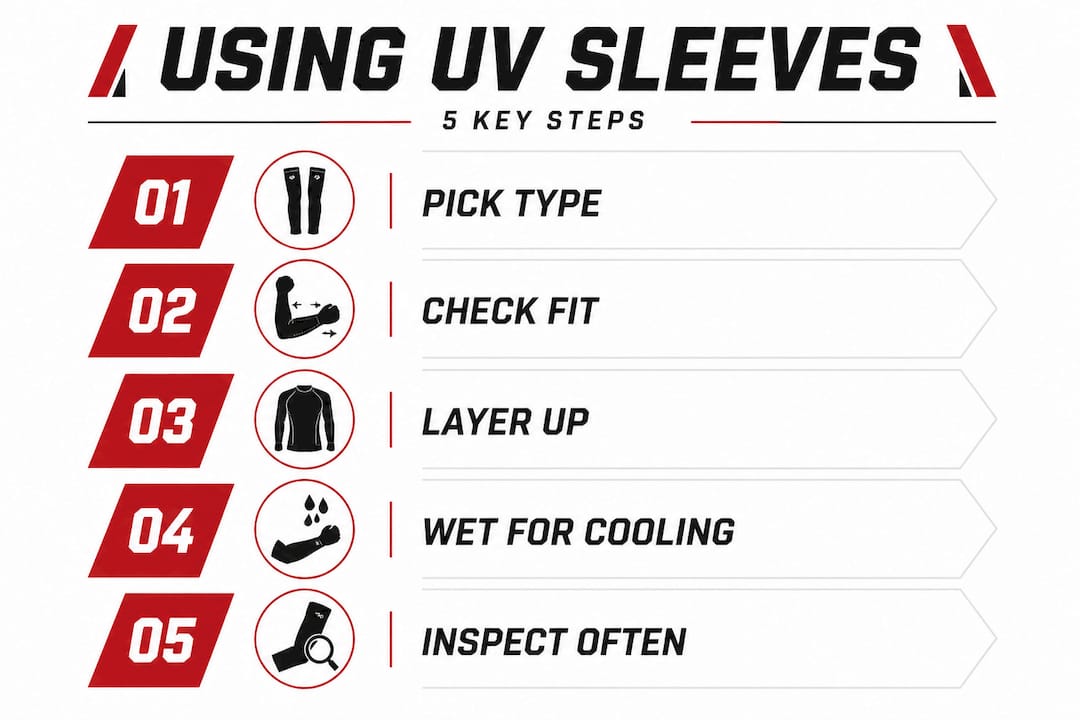
Step 2: Check the fit before you go Pull the sleeve fully up the arm so it sits snug but not tight. It should cover from wrist to upper arm without bunching or slipping. If it rolls down during movement, it's either too large or the grip band at the top is worn out. A sleeve that slips exposes your skin to radiation intermittently, which defeats its purpose.
Step 3: Layer logically with other gear Your sleeves should connect seamlessly with your rashguard or base layer sleeves. A gap at the shoulder or wrist is a UV entry point. Tuck the top of the sleeve under a short-sleeved shirt or overlap it with a long-sleeved base layer so there's no exposed skin at the transition zone.
Step 4: Wet your sleeves before intense sessions In extreme heat, lightly wetting your sleeves with water activates the evaporative cooling effect. As the fabric dries against your skin, it draws heat away from your body. This is particularly effective with moisture-wicking synthetic fabrics. A summer UV training strategy that includes pre-wetting your sleeves can reduce perceived effort in sessions above 35°C.
Step 5: Inspect after each session UV sleeves degrade over time with washing and extended exposure to the sun. After each session, check for signs of fabric thinning, pilling, or discolouration. A sleeve that has lost its structural integrity may also have reduced UPF effectiveness. Most quality sleeves maintain their UPF 50+ rating for 30 to 40 washes.
For sport-specific guidance, UV gear choices for golfers differ from UV gear for hikers and UV options for campers. Golfers need unrestricted swing movement, hikers need durability across varied terrain, and campers need multi-day resilience. Each use case calls for a slightly different construction and weight.
UPF 50+ rated fabric blocks at least 98% of UV radiation, meaning less than 2% reaches the skin. That's a meaningful difference compared to bare skin, which has a natural UV protection factor of roughly 1 to 3 depending on skin tone.
For long outdoor days, incorporating thermal therapy recovery into your post-session routine helps your body process the physiological stress of extended heat exposure and physical effort.
Pro Tip: Rotate between two or three pairs of sleeves rather than relying on one. This allows each pair to fully dry between sessions, reduces odour buildup, and extends the lifespan of your gear. Compression fabrics in particular benefit from a full rest between uses to regain their elasticity.
Troubleshooting: Avoiding common cooling and protection mistakes
Even with the best approach, mistakes can slip in. Here's how to avoid the most common ones and keep your protection consistent.
Common mistakes outdoor athletes make with UV sleeves:
- Choosing sleeves that are too thin or too loosely woven. Not all sleeves labelled "UV protective" are created equal. A thin, loose knit may only offer UPF 15 to 20, leaving you far more exposed than you realise.
- Relying solely on sunscreen and skipping sleeves. Sunscreen alone is not sufficient for multi-hour outdoor sessions, particularly in Australian summer conditions where UV indices regularly exceed 11 (the extreme category).
- Leaving gaps between coverage zones. The wrist, inner elbow, and shoulder junction are common exposure points that athletes overlook when layering gear.
- Wearing sleeves that have degraded without replacing them. Fabric that has thinned, faded significantly, or pilled extensively may no longer provide the rated UPF protection.
- Ignoring reflected UV. Water, sand, and concrete reflect UV radiation upward, meaning UV exposure can reach under sleeves, visors, and hats. This is particularly relevant at the beach, on boats, or in open-stadium sports.
- Not hydrating enough. UV sleeves help reduce heat load, but they don't replace adequate fluid intake. Dehydration accelerates heat stress and impairs performance independent of UV exposure.
As UPF clothing clearly demonstrates advantages over sunscreen in athletic contexts, the key shift in thinking is treating UV clothing as your primary defence and sunscreen as a supplement for exposed areas rather than your main protection layer.
Sun exposure warning: The Australian Radiation Protection and Nuclear Safety Agency (ARPANSA) classifies UV index above 3 as requiring sun protection measures. In Australia, UV levels above 3 occur year-round in most states, including during winter. Do not assume cool or overcast conditions mean low UV risk. UV radiation is not heat and is not visible. You can sustain serious UV damage on a 20°C cloudy day.
Supporting your recovery after hot outdoor sessions is just as important as protecting yourself during them. Adding a cold plunge routine post-session can assist in reducing core temperature and managing heat-induced inflammation.
For specific protection guidance in your sport, reviewing UV clothing for safer training will help you close any remaining gaps in your approach.
What we've learned from training in the Australian sun
Here's a perspective that most sun protection guides don't offer: wearing UV sleeves isn't just about avoiding sunburn. It's about making your performance more reliable.
Sunburn doesn't just hurt after the session. It begins impairing your body's thermoregulation during the session, often before you've even noticed the skin reddening. When your skin is stressed by UV exposure, your body diverts blood flow toward surface cooling, pulling resources away from working muscles. That means reduced endurance, slower reaction times, and higher perceived effort, all without you being aware of the cause.
We've spoken to athletes across running, cycling, golf, and martial arts training who all report the same thing once they switch to consistent sleeve use: their outdoor sessions feel more manageable. Not because the conditions changed, but because their bodies weren't fighting UV-induced heat stress at the same time as managing physical output.
The conventional advice has always been "put on sunscreen before you go out." That's still worth doing for exposed areas. But for Australian conditions, it's an incomplete solution. Sunscreen degrades too quickly under genuine athletic effort. Real-world UV sleeve results consistently show that athletes who swap to UPF 50+ sleeves report both better comfort and fewer post-session skin issues compared to sunscreen-only approaches.
The uncomfortable truth is that many athletes are training with far less UV protection than they think they have. A single morning application of SPF 50 does not cover a four-hour outdoor session. UV sleeves, worn correctly and paired with a hat and sun-protective base layer, close that gap in a way that sunscreen simply cannot.
Our position is clear: sleeves are not optional extra gear for Australian outdoor athletes. They're fundamental kit, as essential as a quality pair of shoes.
Enhance your protection and performance with Combatra
At Combatra, we build UV protection gear for athletes who train hard and spend real time outdoors.
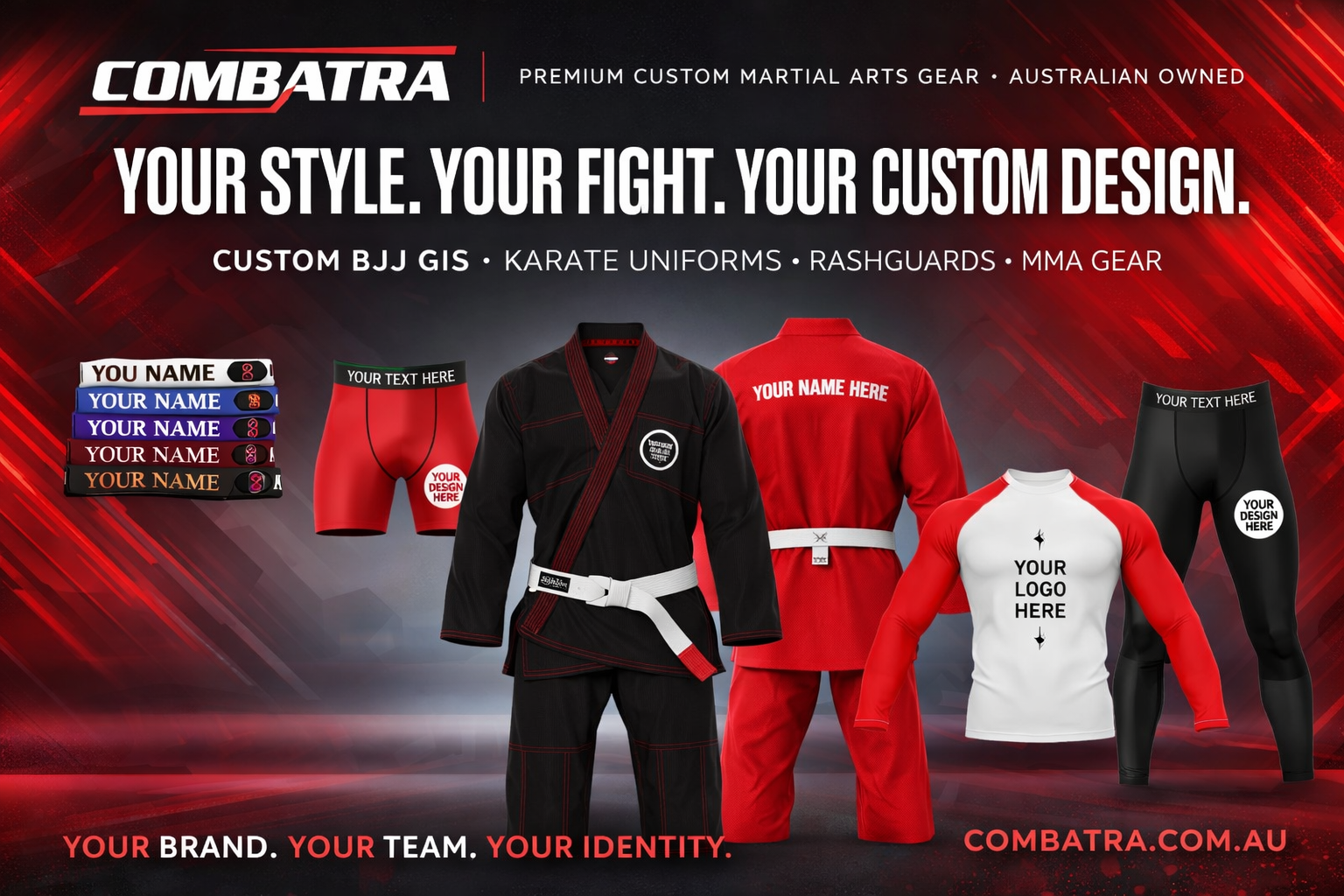
Our UPF 50+ arm sleeves are engineered for Australian conditions, using moisture-wicking, breathable fabric that supports performance across running, cycling, martial arts, golf, hiking, and team sport. Every piece is designed for full range of motion, durability through repeated washing, and consistent UV protection across long sessions. If you're building out a complete outdoor training kit, our rashguards deliver full upper body UV protection with the same performance standards, and our compression pants complete the lower-body coverage. You can personalise any piece with your name, team logo, and colours, making Combatra the right choice for individual athletes and full squads alike. Gear that protects you and represents you, built for Australian conditions from the ground up.
Frequently asked questions
What makes UV sleeves better than sunscreen for athletes?
UV sleeves offer consistent UPF protection without needing reapplication and do not wash off with sweat, making them far more reliable for active, multi-hour outdoor sessions.
How do I choose the right UV sleeve for my sport?
Look for a certified UPF 50+ rating, moisture-wicking fabric, and a compression fit that matches your arm size and activity type, as detailed in this sleeve selection guide.
Can I wear UV sleeves all day during outdoor sports?
Yes. Quality UV sleeves made from breathable, moisture-wicking fabric are designed for extended all-day wear and maintain their UPF rating throughout continuous use.
What else should I wear to stay cool alongside UV sleeves?
Combine your sleeves with a sun-protective hat, a UPF-rated base layer, and consistent hydration, as outlined in this summer training outfit guide, for full coverage and heat management.
Recommended
- Stay cool and protected in the Australian sun without sunscreen
- Do long sleeve rashguards keep you cooler in the sun?
- Top 7 What to Wear for Running in the Sun in Australia UV Protection G
- How to prevent sunburn while training outdoors in Australia
- Cycling Eyewear Selection Guide for Enhanced Safety