

TL;DR:
- Training outdoors in Australia requires careful timing, proper clothing, and hydration to prevent heat illness during extreme summer conditions. Early morning or late afternoon sessions with lightweight, UPF 50+ gear and gradual heat acclimation improve safety and performance. Recognizing heat stress symptoms and using smart gear are essential for effective, safe outdoor training in high UV and temperatures.
Training outdoors in Australia demands more than just fitness. With summer temperatures regularly exceeding 40°C and some of the highest UV levels on the planet, knowing how to train outdoors without overheating in Australia is a genuine performance skill. Heat exhaustion and heatstroke are real risks, not worst-case scenarios. The right rashguard plays a bigger role here than most athletes realise. Beyond compression support, sweat management, and abrasion protection, a quality rashguard tested to AS 4399:2020 provides UPF 50+ sun protection that shields your skin during prolonged outdoor sessions. This guide covers timing, clothing, hydration, and acclimation so you can train hard and train safely.
Table of Contents
Key takeaways
| Point | Details |
|---|---|
| Time your sessions wisely | Train before 9am or after 4pm to avoid peak heat and UV intensity. |
| Clothing choices matter | Lightweight, light-coloured, breathable gear with UPF 50+ protection reduces heat absorption significantly. |
| Hydration starts before training | Drink fluids before you feel thirsty and monitor urine colour as a real-time hydration marker. |
| Acclimation takes time | Allow 10 to 14 days of gradual heat exposure to build tolerance safely without risking illness. |
| Know your warning signs | Dizziness, nausea, and confusion signal heat stress. Stop immediately, seek shade, and cool down. |
How to train outdoors without overheating in Australia
Australia’s heat is not just uncomfortable. It is physiologically demanding in ways that can derail your training progress or land you in an emergency room. Managing your outdoor workout strategy starts with understanding when the danger peaks and planning around it.
Choosing the right training time
The single most effective adjustment you can make is shifting your training window. Early morning sessions between 5am and 9am offer the lowest ambient temperature and the least UV exposure of the day. Late afternoon and evening sessions from 4pm to 7pm are the next best option, though stored ground heat and radiant surfaces can still create challenging conditions.
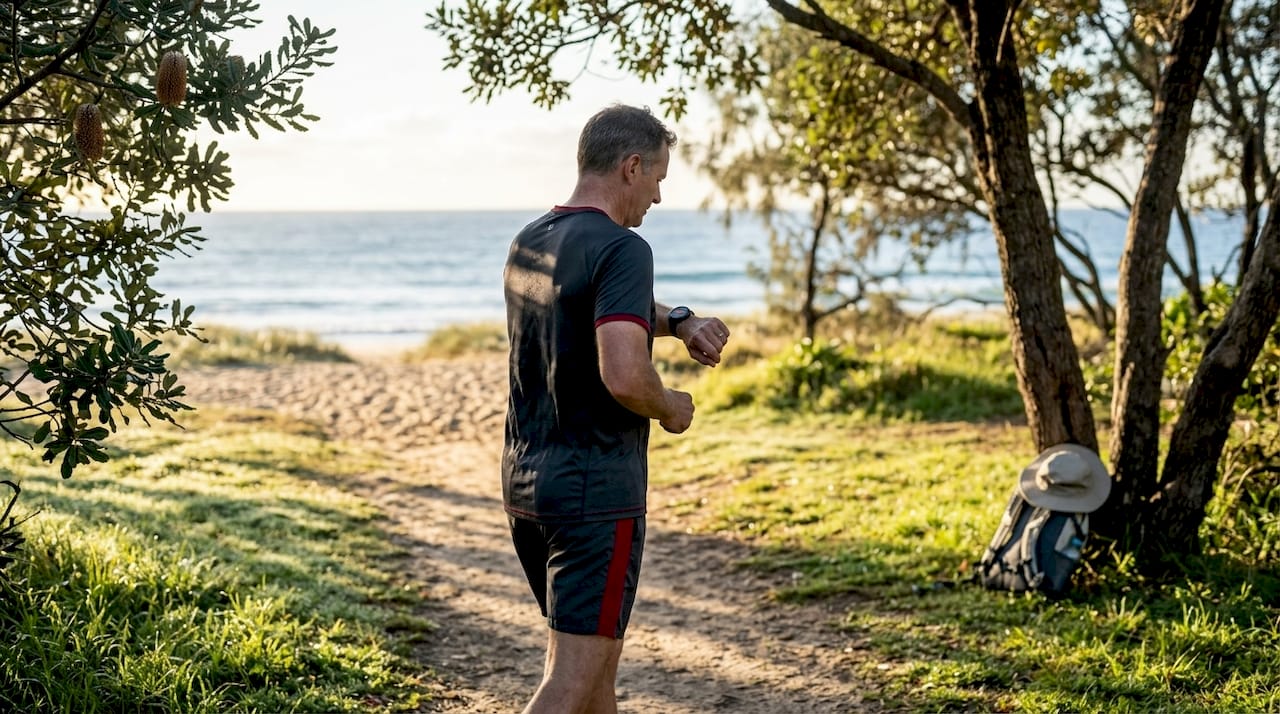
Midday training between 10am and 3pm carries the highest risk. UV levels reach their peak and air temperature is at its highest, which accelerates dehydration risk and shortens the time before heat stress sets in.
A practical way to assess conditions before heading out is to check the wet bulb globe temperature, or WBGT. Unlike a standard thermometer, WBGT accounts for humidity, wind speed, solar radiation, and air temperature together. Many sports medicine organisations use WBGT thresholds to guide training decisions, and several weather apps now include it.
| Training window | Temperature risk | UV risk | Recommended? |
|---|---|---|---|
| 5am to 9am | Low | Low to moderate | Yes |
| 10am to 3pm | High | Very high | Avoid |
| 4pm to 7pm | Moderate | Low to moderate | Yes with precautions |
| After 7pm | Low | Minimal | Yes |
-
Check the Bureau of Meteorology forecast and UV index before every session.
-
Choose routes with shade: tree-lined paths, covered tracks, and forested trails.
-
Train with airflow in mind. Open spaces with a breeze are safer than still, enclosed areas.
-
Avoid training on days with a heat health alert issued for your state.
Gear that keeps you cooler
What you wear during heat training is not a minor detail. It is a core part of your heat management for workouts. Lightweight, light-coloured clothing with a loose weave allows air to reach the skin, which supports the body’s natural cooling through evaporation.
Rashguards deserve specific attention here. A well-designed rashguard wicks sweat away from the skin, reduces friction and abrasion during ground-based or contact training, and provides the compression support that helps blood circulation during intense output. For outdoor training in Australia specifically, a rashguard rated UPF 50+ blocks over 98% of UV radiation, which is critical given the country’s UV index regularly reaches extreme or severe levels. You can read more about hot weather training clothing to find options suited to Australian conditions.
Avoid heavy cotton, dark fabrics, and anything that traps heat against your body. Cotton absorbs sweat without releasing it, which turns your clothing into an insulating layer rather than a cooling one.
Accessories to include:
-
A wide-brim hat or cap to reduce direct sun on your face and neck.
-
UV-rated arm sleeves for additional sun protection without added bulk.
-
Polarised UV-blocking sunglasses to reduce glare and eye fatigue.
-
Light-coloured shoes, as dark soles absorb heat from hot ground surfaces.
Pro Tip: Dampen your hat or a buff with cool water before heading out. As it evaporates, it creates a localised cooling effect around your head that can noticeably reduce perceived heat during the first 20 to 30 minutes of your session.
Hydration strategy for hot weather training
Thirst is a lagging indicator. By the time you feel thirsty during outdoor exercise in the heat, you are already mildly dehydrated. That level of dehydration reduces your cognitive function, reaction time, and physical output before you even register a problem.
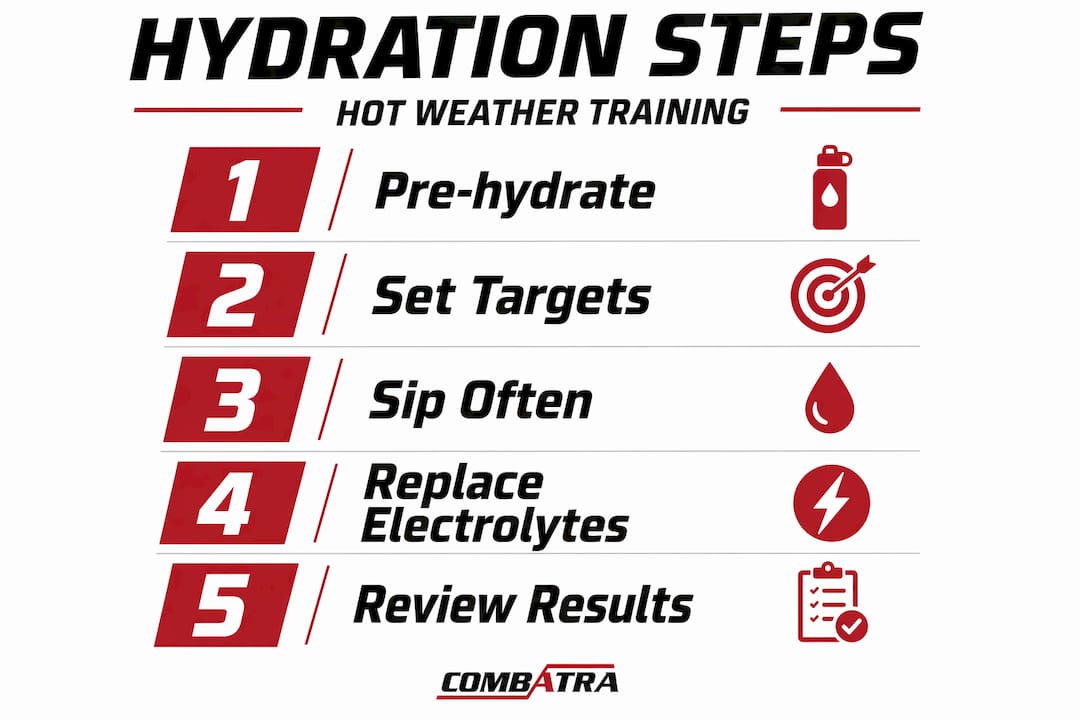
Monitoring hydration markers gives you real-time data without relying on thirst. Urine colour is the most accessible tool. Pale straw yellow indicates adequate hydration. Dark amber means you need to drink now. Weighing yourself before and after a session tells you how much fluid you lost. Every kilogram of body weight lost equals roughly one litre of fluid deficit.
For shorter sessions under an hour, water is usually sufficient. For sessions beyond 60 minutes in the heat, electrolyte replacement becomes necessary. Sweat carries sodium, potassium, and magnesium. Replacing fluid without replacing electrolytes can lead to hyponatraemia, a dangerous drop in blood sodium levels.
-
Drink 400 to 600ml of water two hours before training.
-
Consume 150 to 250ml every 15 to 20 minutes during sessions in the heat.
-
Rehydrate with electrolytes post-session for anything longer than 45 minutes.
-
Avoid caffeine and alcohol for at least two hours before outdoor training in hot conditions.
One hydration mistake athletes make is reaching for ice-cold fluids during heat sessions. While they feel good, very cold drinks can blunt the adaptation signals your body sends during heat training. Room-temperature or mildly cool drinks are preferable when you are deliberately building heat tolerance.
Pro Tip: Prepare a measured water bottle the night before and mark it with time-based hydration targets. This removes the guesswork during training when your focus should be on your movement, not your fluid count.
Building heat tolerance gradually
Heat acclimation is the process of progressively exposing your body to hot training conditions so it adapts physiologically. Your body learns to sweat earlier and more efficiently, increases blood plasma volume, and reduces heart rate at a given workload. These are not small gains. They directly translate to better performance and a lower risk of heat illness during outdoor exercise.
Full acclimation takes 10 to 14 days, but meaningful progress is typically visible within the first week for experienced athletes. The key is discipline in the early days. Pushing too hard too fast is one of the most common mistakes, and it substantially increases heatstroke risk.
Here is a safe progression approach:
-
Days 1 to 3: Train at 50% of your normal intensity. Focus on getting used to the conditions rather than performance.
-
Days 4 to 7: Increase to 65 to 70% intensity. Monitor your heart rate closely. If it climbs higher than expected for the effort, pull back.
-
Days 8 to 11: Work at 75 to 85% intensity. You should notice improved comfort and lower heart rate responses compared to day one.
-
Days 12 to 14: Return to normal training intensity. Your body is now adapted to the heat load.
Safety first: Decoupling intensity from heat exposure is the most effective and safest strategy. Train at a lower intensity during hotter periods, and only increase effort as your tolerance improves. This approach, confirmed by sports performance research, maximises adaptation while protecting your health.
Some athletes use alternative heat exposure methods like overdressing for brief sessions or using a sauna post-workout. These can accelerate adaptation but carry higher risk. Do not attempt them without first building a base of natural acclimation and without clear awareness of your individual heat tolerance.
Recognising and responding to heat stress
Safe outdoor exercises in Australia depend on knowing what your body is telling you. Heat stress does not always arrive with loud, obvious signals. Sometimes the first sign is subtle: mild confusion, a slight headache, or feeling less coordinated than usual during a drill.
Common symptoms of heat stress and heatstroke include dizziness, nausea, muscle cramps, rapid heartbeat, excessive sweating that suddenly stops, confusion, slurred speech, and loss of consciousness. Any combination of these during training is a stop-now signal.
-
https://blog.combatra.com.au/blog/stay-cool-protected-australian-sun-without-sunscreenMild heat stress: Stop training. Move to shade. Drink water slowly. Rest for at least 20 minutes before reassessing.
-
Moderate heat exhaustion: Lie down with feet elevated. Apply cool, damp cloths to neck, armpits, and wrists. Rehydrate with electrolytes.
-
Severe heatstroke: Call 000 immediately. This is a medical emergency. Continue cooling the person while waiting for help.
Simple interventions like shade breaks and lighter clothing can dramatically reduce heat illness incidence during training. Do not skip rest intervals when training in the heat. A two-to-three-minute break every 20 minutes is not a weakness. It is a strategic tool that keeps you training consistently across weeks, not sidelined after one bad session. You can also explore strategies to stay protected in the sun without relying on sunscreen alone.
Heat affects concentration and reaction time, which matters for safety during contact or technical training. If your focus drops noticeably, that is a physiological warning. Respect it.
My take on training in Australian heat
I’ve worked with enough outdoor athletes in Australia to notice a consistent pattern. The ones who struggle most in summer are not the least fit. They are the ones who refuse to change how they train when the environment changes.
In my experience, the biggest mistake is treating heat as an obstacle to push through rather than a variable to work with. I’ve seen experienced athletes drop their performance significantly in week one of summer, then outperform their cool-weather numbers by week three simply because they committed to a proper acclimation schedule and adjusted their gear and timing.
What I’ve learnt is that individual heat tolerance varies far more than most people expect. Two athletes with identical fitness can have wildly different responses to the same conditions. This is why I always recommend tracking how you feel across the first two weeks of heat training rather than comparing yourself to a training partner. Your adaptation timeline is yours.
The other shift I advocate strongly is treating hydration and gear selection as non-negotiables rather than optional extras. Those who see them as peripheral tend to cut corners on hot days. Those who see them as core training variables treat them with the same discipline they apply to technique and conditioning. That mindset difference shows up clearly in health outcomes and performance across an Australian summer.
— ZZA
Gear built for Australian heat training

Training smart in Australian heat means having gear that works as hard as you do. Combatra’s performance range is built specifically for these conditions. The rashguards deliver compression support, moisture-wicking performance, and abrasion resistance in one piece. More importantly, they are rated UPF 50+, so your skin is protected during every outdoor session without needing to layer on sunscreen over exposed arms.
For lower-body coverage, the Combat Sponge MMA Shorts offer lightweight, breathable construction designed for mobility and cooling during intense training. Women training outdoors in the heat will find Combatra’s sports bras for active women combine moisture management with secure support. All products can be personalised with your name, club colours, or logo.
Heat training is too demanding to do in the wrong kit. Explore Combatra’s full range at combatra.com.au and find gear that performs in real Australian conditions.
FAQ
What is the best time to train outdoors in Australian summer?
The safest windows are early morning between 5am and 9am, or late afternoon from 4pm to 7pm. These times avoid peak UV intensity and the highest ambient temperatures of the day.
How long does heat acclimation take?
Full heat acclimation typically takes 10 to 14 days of gradual exposure. Experienced athletes often notice meaningful improvement within the first six to seven days, but training intensity should remain low in the early phase to avoid heat illness.
What should I drink during outdoor training in the heat?
Water is sufficient for sessions under 60 minutes. For longer or more intense sessions, an electrolyte drink is needed to replace sodium and potassium lost through sweat. Avoid very cold fluids if you are deliberately building heat tolerance.
What are the early warning signs of heatstroke?
Early signs include dizziness, nausea, headache, and a sudden drop in coordination or concentration. If sweating stops abruptly or confusion develops, this is a medical emergency. Call 000 and begin cooling immediately.
Does clothing choice really affect heat during training?
Yes, significantly. Lightweight, light-coloured, breathable fabrics support skin cooling through evaporation. A UPF 50+ rashguard also reduces the heat load from direct UV radiation, which contributes to overall body temperature rise during outdoor sessions.