
TL;DR:
- Australia’s high UV levels require consistent sun protection during outdoor training.
- UPF 50+ clothing and reapplication of broad-spectrum sunscreen are essential for effective protection.
- Building a community culture around sun safety improves long-term skin health for athletes.
Training outdoors in Australia means dealing with one of the harshest UV environments on the planet. Whether you're running drills on a concrete court, sparring under open skies, or grinding through a morning session at your local club, your skin is under constant attack. Sunburn isn't just painful the next day. It accumulates over time, raising your risk of skin cancer and slowing your recovery between sessions. This guide walks you through every layer of sunburn prevention, from understanding Australia's UV patterns to building a training kit that actually works when you're sweating hard.
Table of Contents
- Understanding your sunburn risk and the Australian UV landscape
- What to wear: Building your protective kit for outdoor training
- How to apply and maintain effective sun protection during workouts
- Verify and improve: Policies, education, and community habits
- What most athletes get wrong about sun protection outdoors
- Level up your sun-smart training gear
- Frequently asked questions
Key Takeaways
| Point | Details |
|---|---|
| Check UV Index daily | Knowing daily UV levels helps you train at safer times and avoid peak exposure. |
| Wear UPF 50+ gear | Specialised clothing blocks most UV and won't lose effectiveness with sweat or movement. |
| Combine clothing and sunscreen | Use both together for comprehensive protection, especially face, neck, and hands. |
| Reapply sunscreen regularly | Heavy sweat removes sunscreen, so apply again after intense sessions for continued defence. |
| Promote community habits | Group education and clear sun-safe policies drive real, lasting changes for athlete health. |
Understanding your sunburn risk and the Australian UV landscape
Australia sits close to the equator and beneath a thinner ozone layer than most of Europe or North America. That combination means UV radiation here is significantly more intense, even on overcast days. You can't see UV, you can't feel it until the damage is done, and it doesn't require direct sunshine to harm you.
The UV Index (UVI) is the standard measure of UV radiation strength. A reading of 1 to 2 is low, while anything above 11 is extreme. In most Australian cities, the UVI regularly hits 10 or higher during summer months. Even in winter, readings of 3 or above are common, which is the threshold at which sun protection becomes necessary.
Key UV facts for Australian outdoor athletes:
- UV peaks between 10am and 4pm in most parts of Australia
- Reflective surfaces like concrete, sand, and water can increase UV exposure by up to 80%
- Cloud cover blocks heat but not UV. You can burn on a cool, cloudy day
- Higher altitude training locations intensify UV exposure further
- Outdoor workers in Australia face some of the highest UV exposure of any workforce globally
You should check UV Index daily using the SunSmart app, BOM app, or Cancer Council website, and apply protection whenever the UVI reaches 3 or above.
| UV Index level | Risk category | Action needed |
|---|---|---|
| 1 to 2 | Low | Minimal protection required |
| 3 to 5 | Moderate | Sun protection recommended |
| 6 to 7 | High | Protection essential |
| 8 to 10 | Very high | Extra protection required |
| 11+ | Extreme | Avoid outdoor exposure where possible |
A simple pre-session habit can save you a lot of pain. Before you head out, check the UV forecast. If it's 3 or above, treat it as a high-risk session and plan your protection accordingly. This is especially relevant for martial artists and combat sports athletes who train outdoors regularly. Our guide to staying cool and protected outdoors covers more strategies for managing heat and UV together.
What to wear: Building your protective kit for outdoor training
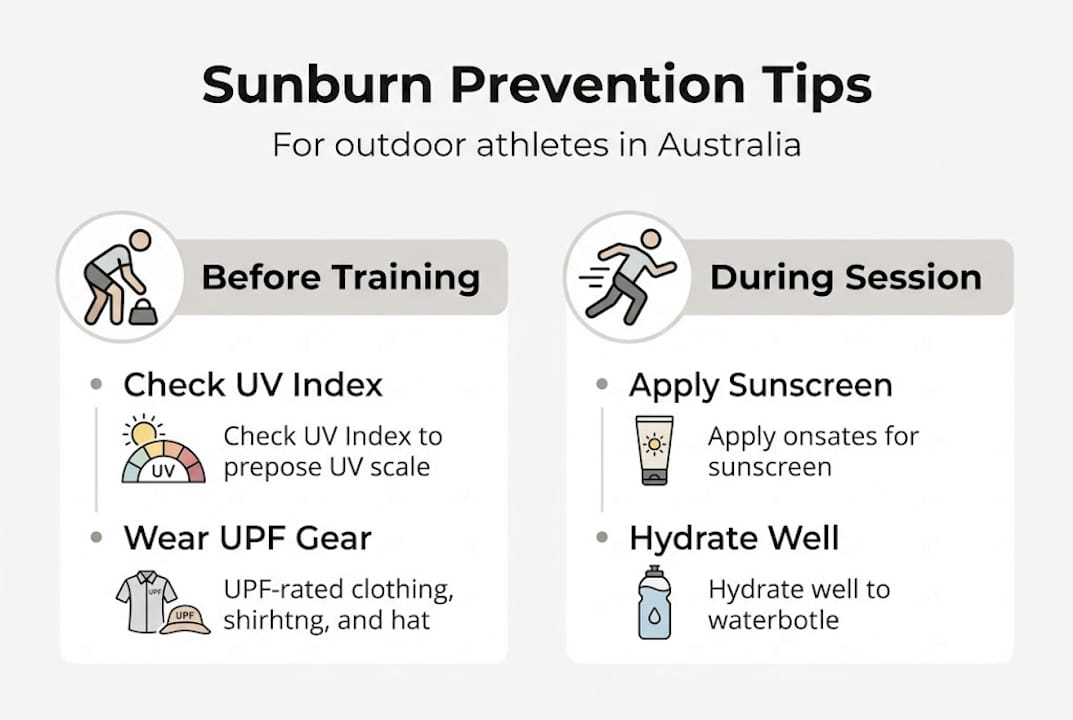
With a clear view of the sun risk, the next step is choosing the right training kit to block UV, even during your toughest sessions.
Clothing is your first and most reliable line of defence. Unlike sunscreen, a well-made garment doesn't sweat off, doesn't need reapplication, and won't miss a spot. The key rating to look for is UPF, which stands for Ultraviolet Protection Factor. A UPF 50+ garment blocks more than 98% of UV radiation, making it far more consistent than most sunscreen applications during intense exercise.
Essential gear checklist for outdoor training:
- UPF 50+ rashguard or long-sleeve top: Your most important piece. Covers the torso, shoulders, and arms
- UPF-rated arm sleeves: Ideal for sports where a full top feels restrictive
- Wide-brim hat or cap: Protects the face, ears, and back of the neck
- UV-blocking sunglasses: Protects eyes from UV-related damage, including cataracts
- UPF-rated leggings or shorts: Covers the legs during ground work or running drills
For high-exposure sports and martial arts, UPF clothing for athletes should be your foundation. It provides consistent protection without reapplication, maintains its UPF rating when stretched or wet, and performs across long training sessions.
| Protection method | Reliability during sweat | Reapplication needed | Coverage consistency |
|---|---|---|---|
| UPF 50+ clothing | High | No | Consistent |
| SPF 50 sunscreen | Moderate | Every 2 hours | Variable |
| Standard cotton tee | Low | N/A | Poor |
A common mistake athletes make is assuming a regular cotton t-shirt offers meaningful UV protection. Most do not. Standard cotton provides a UPF of around 5 to 10, which is nowhere near adequate for outdoor training in Australia. Purpose-made UPF 50 protection gear is a completely different category.
When it comes to layering, there's often a concern about overheating. Modern UPF training garments are designed with breathable, moisture-wicking fabrics that manage heat effectively. You can also explore the differences in compression vs loose clothing for sun protection to find what suits your training style. For a broader overview of options, check out the best UV protection workout gear available for outdoor athletes.
Pro Tip: Put your UPF rashguard on before you leave the house. UV exposure begins the moment you step outside, not just when you start training.
How to apply and maintain effective sun protection during workouts
With the right clothing sorted, successful sunburn prevention also relies on how and when you use sunscreen during real-world training.
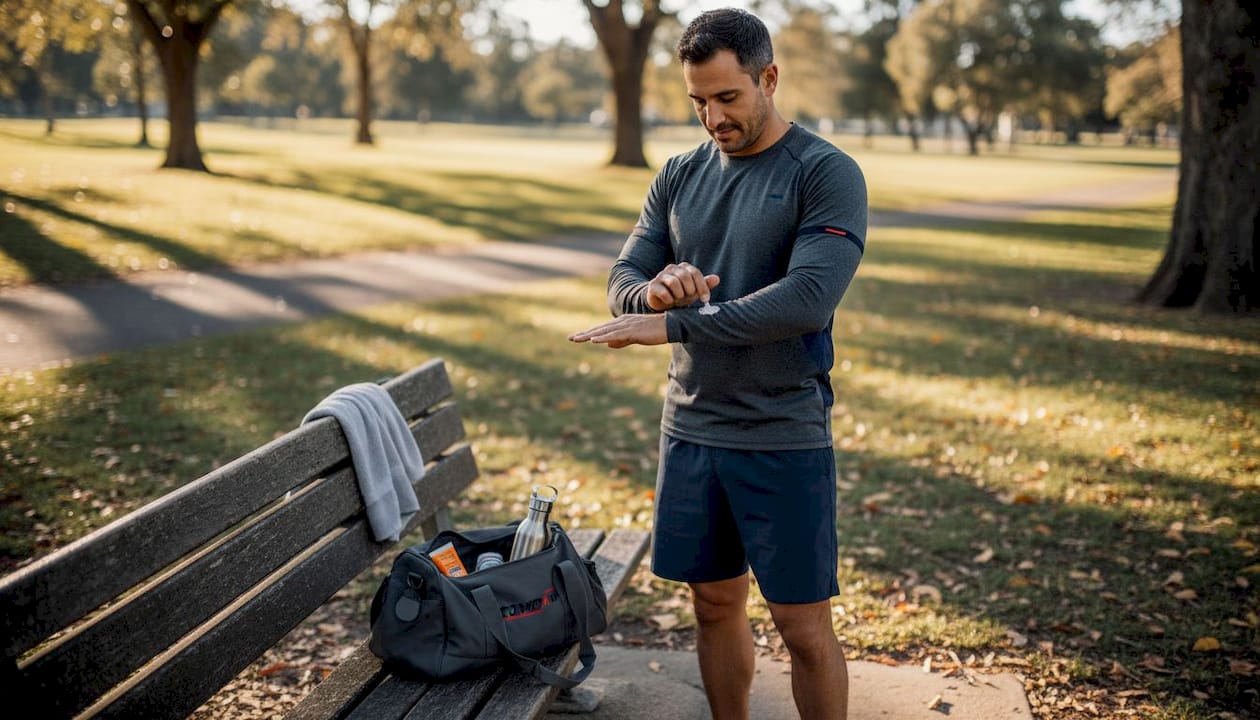
Sunscreen fills the gaps your clothing can't cover: your face, neck, ears, and hands. Choosing the right product matters. Look for broad spectrum SPF 50+ formulas that are water-resistant and sweat-resistant. Mineral-based sunscreens containing zinc oxide or titanium dioxide tend to hold up better under physical activity than chemical alternatives.
Step-by-step sunscreen routine for outdoor training:
- Apply sunscreen 20 minutes before heading outside. This allows it to bond properly with your skin
- Use a generous amount. Most people apply far too little. A teaspoon for the face and neck is the right starting point
- Cover all exposed areas: ears, back of the neck, tops of the hands, and any skin not covered by your UPF gear
- Reapply every 2 hours, or immediately after heavy sweating
- Keep a small tube in your training bag so reapplication is always possible
"Reflective surfaces like sand, concrete, and water can significantly amplify UV exposure during training. Sweat and physical contact reduce sunscreen effectiveness faster than most athletes expect, making reapplication critical during intense sessions."
Hydration is also part of your sun-safe strategy. Heat stress and UV exposure often occur together. Aim to drink around 200ml of water every 15 to 20 minutes during outdoor sessions. Dehydration accelerates the impact of heat and reduces your body's ability to manage UV-related stress.
For athletes training near water or on reflective surfaces, UV exposure can be substantially higher than the UV Index suggests. Long sleeve rashguards are particularly effective in these environments. If you're a runner or road athlete, the running UV protection guide has targeted advice for your specific conditions.
Pro Tip: Set a timer on your phone to remind you to reapply sunscreen mid-session. It sounds simple, but most athletes skip reapplication because they forget, not because they don't care.
Verify and improve: Policies, education, and community habits
Applying all these strategies personally is powerful, but embedding good habits in your sporting community multiplies the benefits.
When a martial arts club, gym, or sports team has a clear sun-safe policy, individual compliance goes up. It removes the social awkwardness of being the only one applying sunscreen or wearing a rashguard. It normalises protection as part of the training culture, not an optional extra.
Practical ways to build sun-safe habits in your club:
- Post UV forecasts on club noticeboards or group chats each morning
- Keep a shared sunscreen station near the training area
- Schedule outdoor sessions before 9am or after 4pm where possible
- Run a short workshop or demo session on sun protection for new members
- Include sun-safe gear in club uniform requirements
- Use posters or signage to reinforce key messages at the venue
The evidence for these approaches is strong. Sun-safe workplace and sports policies return $3.20 for every $1 invested in prevention, when accounting for reduced skin cancer treatment costs and lost productivity. Training and education programmes see 96% of participants rating them as useful, with measurable improvements in protective behaviour.
These aren't abstract statistics. They reflect what happens when groups take sun safety seriously together. Athletes who train in clubs with strong sun-safe cultures are more consistent in their habits and less likely to suffer cumulative UV damage over a career.
For sport-specific guidance, the UV protection advice for cyclists offers a useful parallel for any athlete spending extended periods outdoors. The principles transfer directly to martial arts, running, and field sports.
Building community habits takes time, but the long-term payoff is significant. Skin cancer is the most common cancer in Australia, and the majority of cases are preventable with consistent protection. Your club has a real opportunity to make a difference.
What most athletes get wrong about sun protection outdoors
Here's the honest truth: most athletes treat sunscreen as their entire sun protection strategy, and then wonder why they still burn. The problem isn't the sunscreen itself. It's the assumption that a single morning application will hold up through two hours of intense training, sweating, and physical contact.
Official health advice is correct in principle but often impractical in execution for athletes. Reapplication every two hours sounds simple until you're mid-session with no break in sight. This is precisely why UPF clothing for athletes should be your foundation, not an afterthought. Clothing doesn't degrade under sweat. It doesn't need reapplication. It works continuously.
The most effective athletes we see combine both: UPF 50+ garments covering the body, sunscreen on exposed skin, and a realistic reapplication habit for longer sessions. They also work on shifting the culture in their training group, because individual habits are easier to maintain when everyone around you is doing the same. That's not idealism. That's what the data shows actually works.
Level up your sun-smart training gear
If you're ready to build a training kit that genuinely protects you from Australia's UV, Combatra has you covered. Our range is designed specifically for athletes who train hard outdoors, combining UPF 50+ sun protection with the performance and durability combat sports demand.
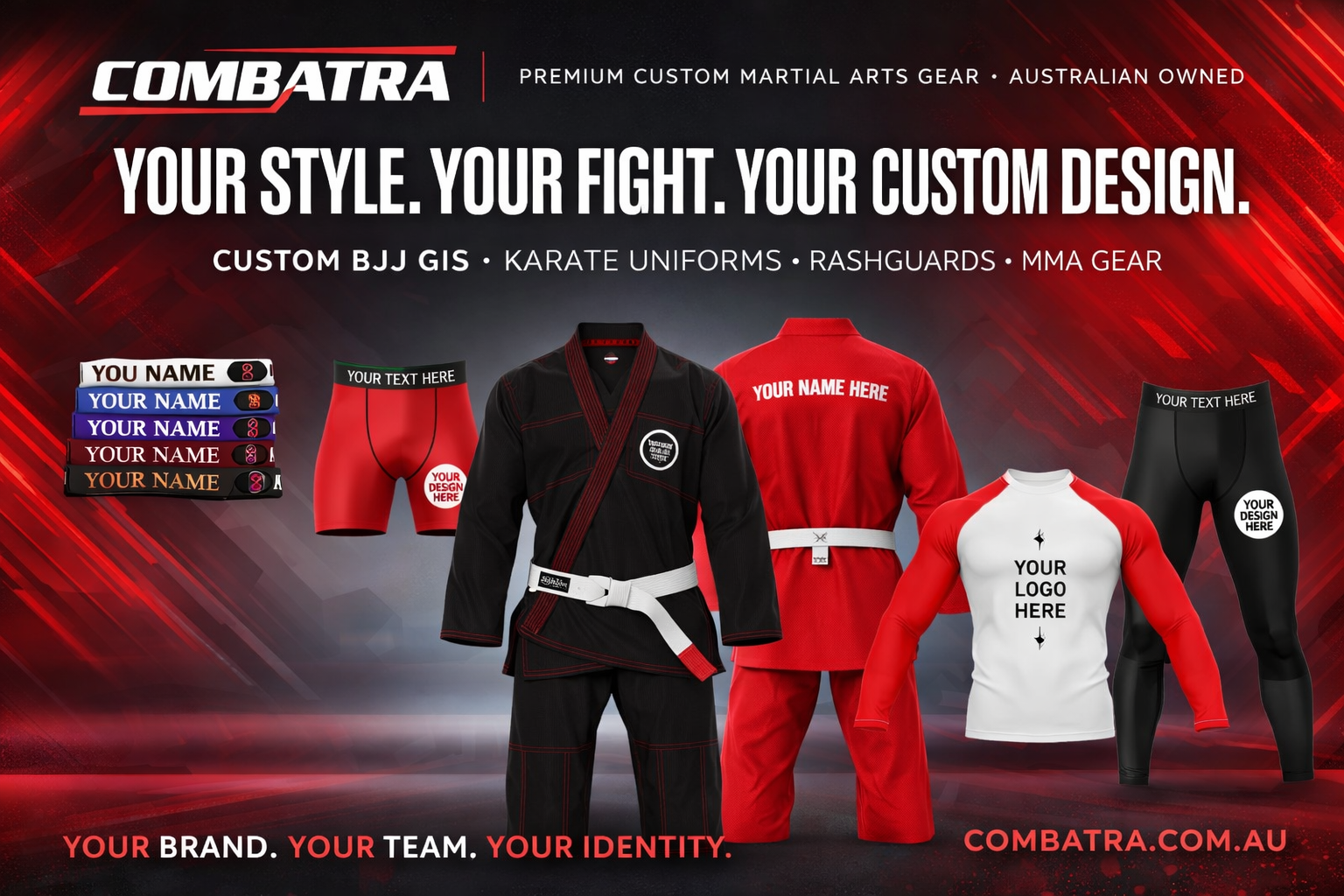
From training shorts built for movement and breathability to sports bras engineered for long outdoor sessions, every piece in our range is made to perform under real conditions. You can also pair your kit with jiu jitsu gi pants for full coverage during ground-based training. All gear is available for personalisation with your name, academy logo, or custom colours. Explore the full range at Combatra and train with the confidence that your skin is protected.
Frequently asked questions
What time of day is safest to train outdoors in Australia?
The safest times are early morning before 9am and late afternoon after 4pm, when UV levels are at their lowest. Scheduling sessions outside peak UV hours is one of the simplest and most effective prevention strategies available.
How often should I reapply sunscreen during high-intensity outdoor workouts?
Reapply every 2 hours as a minimum, or immediately after heavy sweating or swimming, as sweat breaks down sunscreen faster than most athletes realise. Keeping a tube in your training bag makes this habit much easier to maintain.
Is UPF clothing enough on its own to prevent sunburn?
UPF clothing offers the strongest baseline protection, but you should still apply sunscreen to exposed areas like the face, neck, and hands. The two methods work best together.
Are casual gym t-shirts effective at blocking UV during outdoor training?
Most casual cotton shirts offer very low UV protection, often as little as UPF 5 to 10. UPF 50+ gear blocks more than 98% of UV radiation and is the only reliable option for outdoor training in Australian conditions.