
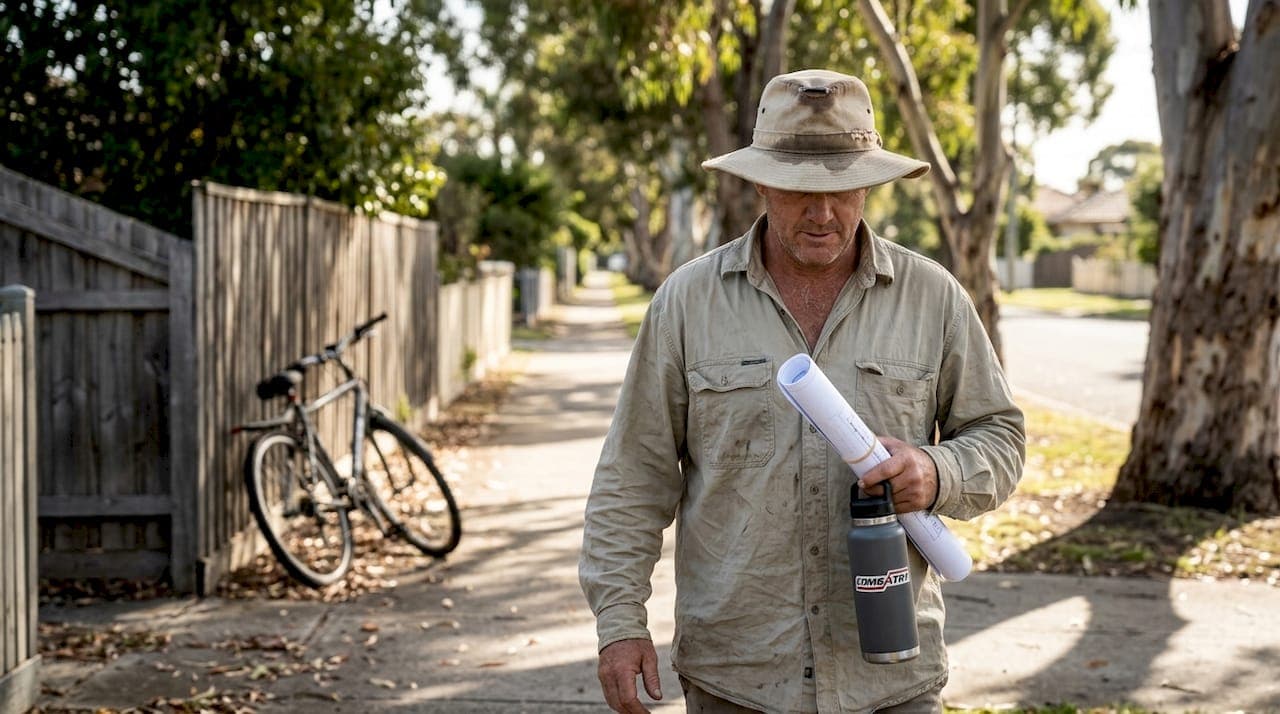
Australia has some of the most intense UV radiation on the planet, and spending time outdoors without sunscreen can feel like a risky move. But for those with skin sensitivities, allergies, or simply a preference for non-chemical protection, there are proven ways to stay cool and safe. This guide covers practical, evidence-backed strategies, from the right gear to smart scheduling, hydration routines, and shade tactics, so you can enjoy outdoor activity with confidence. No sunscreen required.
Table of Contents
- What you need: Tools and essentials for sun-safe outdoor work
- Smart scheduling: Beat the heat with strategic timing
- Hydration and breaks: Your internal cooling system
- Shade and active cooling: Tactics for instant relief
- Troubleshooting and success checks: Signs you're staying cool safely
- Why sun protection is more about strategy than just sunscreen
- Performance gear to help you stay cool in the sun
- Frequently asked questions
Key Takeaways
| Point | Details |
|---|---|
| Gear up smart | The right light, loose clothing and UPF-rated fabrics keep you cool and protected without sunscreen. |
| Time your exposure | Avoid outdoor activities during the hottest hours (11am–3pm) to reduce sun and heat stress. |
| Stay hydrated | Drink water consistently, every 15–20 minutes, to maintain cooling and prevent dehydration. |
| Create instant shade | Use portable shade like tents and awnings to minimize sun exposure wherever you are. |
| Monitor for heat stress | Watch for early warning signs and act quickly to protect your health during outdoor activity. |
What you need: Tools and essentials for sun-safe outdoor work
Before heading outside, getting the right gear and materials ready sets the foundation for staying sun-smart without relying on chemical sunscreen. What you wear and carry matters more than most people realize.
Essential gear checklist:
- Wide-brim hat (minimum 7.5cm brim for face, neck, and ear coverage)
- UV-blocking sunglasses rated to Australian Standard AS/NZS 1067
- Lightweight, breathable, loose-fitting clothing in light colors
- UPF-rated fabrics for extended exposure
- Insulated water bottle (at least 1 liter capacity)
- Portable shade solution such as a compact tarp or pop-up awning
Clothing choice is critical. Lightweight, loose, light-colored clothing keeps you cool and provides physical UV blockage without any chemical product. Dark, tight fabrics trap heat and offer less comfort during sustained activity.
Standard clothing vs. UPF-rated clothing:
| Feature | Standard clothing | UPF 50+ clothing |
|---|---|---|
| UV blockage | Variable (10-50 UPF) | Blocks 98%+ of UV rays |
| Breathability | Depends on fabric | Engineered for airflow |
| Durability | General use | Built for active, outdoor use |
| Cooling performance | Inconsistent | Optimized for heat management |
A regular cotton t-shirt might offer UPF 5 to 15, which is far below what you need for extended Australian sun exposure. Purpose-built UPF-rated clothing options are engineered to maintain protection even when wet or stretched. You can also explore sun-safe clothing tips and learn more about UPF 50+ rashguard benefits for active outdoor use.
Caps only protect the top of your head. A wide-brim hat covers your face, ears, and the back of your neck, which are the areas most exposed during outdoor work or training.
Pro Tip: Synthetic, quick-dry fabrics like polyester blends retain far less heat than cotton and dry faster after sweat, keeping you more comfortable during long outdoor sessions.
Smart scheduling: Beat the heat with strategic timing
Having the right gear is only part of the equation. When you head outside can make an even bigger difference to how safe and comfortable you stay.
UV radiation and air temperature peak between 11am and 3pm across most of Australia. During this window, even shade provides limited protection from radiant heat bouncing off surfaces. Schedule outdoor activity outside the 11am to 3pm peak to significantly reduce your UV and heat exposure.
Time of day vs. UV risk and cooling strategies:
| Time of day | UV risk level | Recommended strategy |
|---|---|---|
| Before 9am | Low | Ideal for high-intensity work or training |
| 9am to 11am | Moderate | Clothing and hat essential, take breaks |
| 11am to 3pm | High to extreme | Avoid or minimize; use full shade and cooling |
| 3pm to 5pm | Moderate to high | Limit exposure, monitor UV index |
| After 5pm | Low | Safe for most outdoor activity |
Heat illness, including heat exhaustion and heat stroke, occurs most frequently during midday hours when both UV and ambient temperature are at their highest. Planning your day around this fact is the single most effective control available.
Steps for heat-conscious scheduling:
- Check the UV index each morning using the Bureau of Meteorology app or SunSmart app.
- Plan high-effort tasks or training sessions before 10am or after 4pm.
- Schedule mandatory shade breaks every 30 to 45 minutes during mid-morning activity.
- Set phone alarms to remind yourself to hydrate and rest.
- Reschedule non-essential outdoor tasks if the UV index exceeds 10.
Rescheduling is the top-tier control in any sun and heat safety hierarchy. No amount of clothing or hydration fully compensates for sustained exposure during peak hours.
Hydration and breaks: Your internal cooling system
When planning is set, the next vital control is internal. How you fuel and cool your body during activity determines how well you perform and how safe you stay.
Your body cools itself primarily through sweat evaporation. That process only works if you stay adequately hydrated. Drink 2 to 3 liters of cool water throughout the day, aiming for around 200ml every 15 to 20 minutes during active outdoor time, even if you do not feel thirsty.
Hydration and break schedule:
- Drink 500ml of water 30 minutes before heading outside.
- Set a timer for every 15 to 20 minutes and drink 200ml each time.
- After 45 minutes of activity, take a 10-minute break in shade.
- During your shade break, drink an additional 200 to 300ml.
- Repeat the cycle throughout your session.
Never wait until you're thirsty to drink water. Thirst is already a sign of early dehydration, and in hot Australian conditions, it can escalate quickly.
Humidity adds another layer of difficulty. When the air is already saturated with moisture, sweat cannot evaporate efficiently, which means your body temperature rises faster than normal. In humid conditions, shade breaks are not optional. They are a mandatory reset for your core temperature. Learn more about hydration during outdoor training and how gear choices affect overheating risk.
Pro Tip: Check your urine color as a simple dehydration gauge. Pale yellow means you are well hydrated. Dark yellow or amber means you need to drink more immediately.
Shade and active cooling: Tactics for instant relief
Even with proper breaks and hydration, the right use of shade and hands-on cooling techniques can be your game changer outdoors.
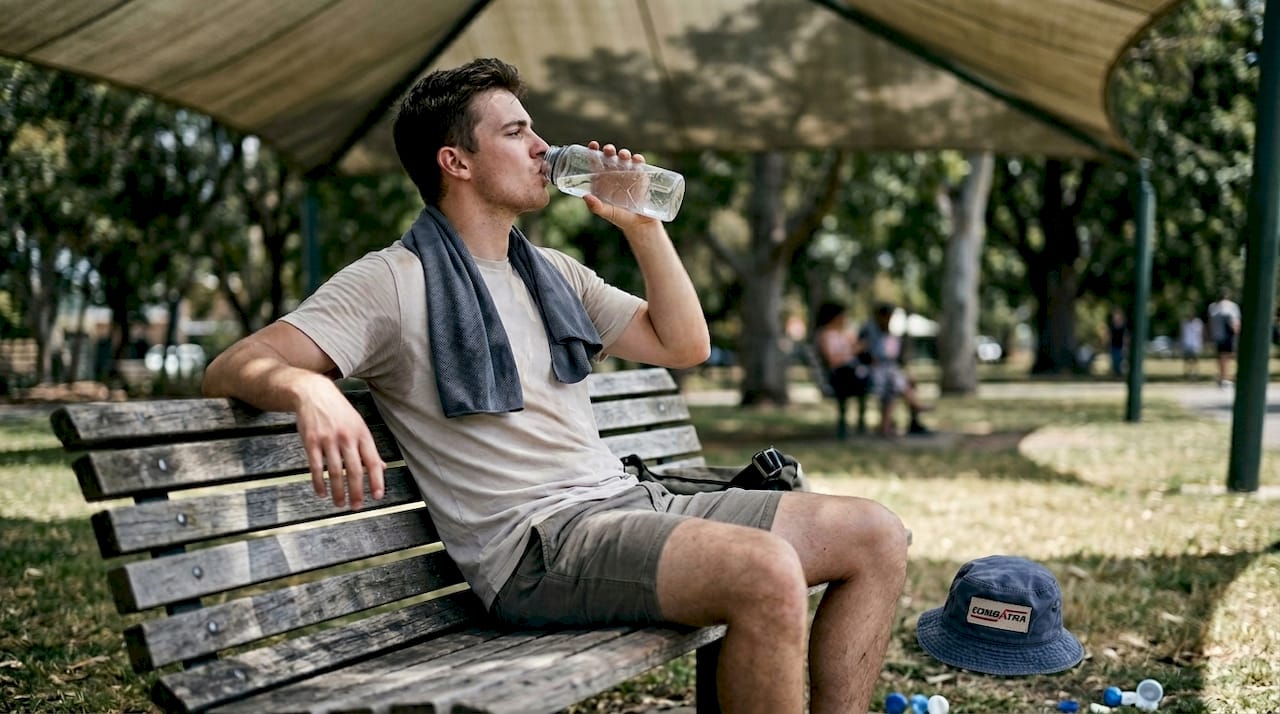
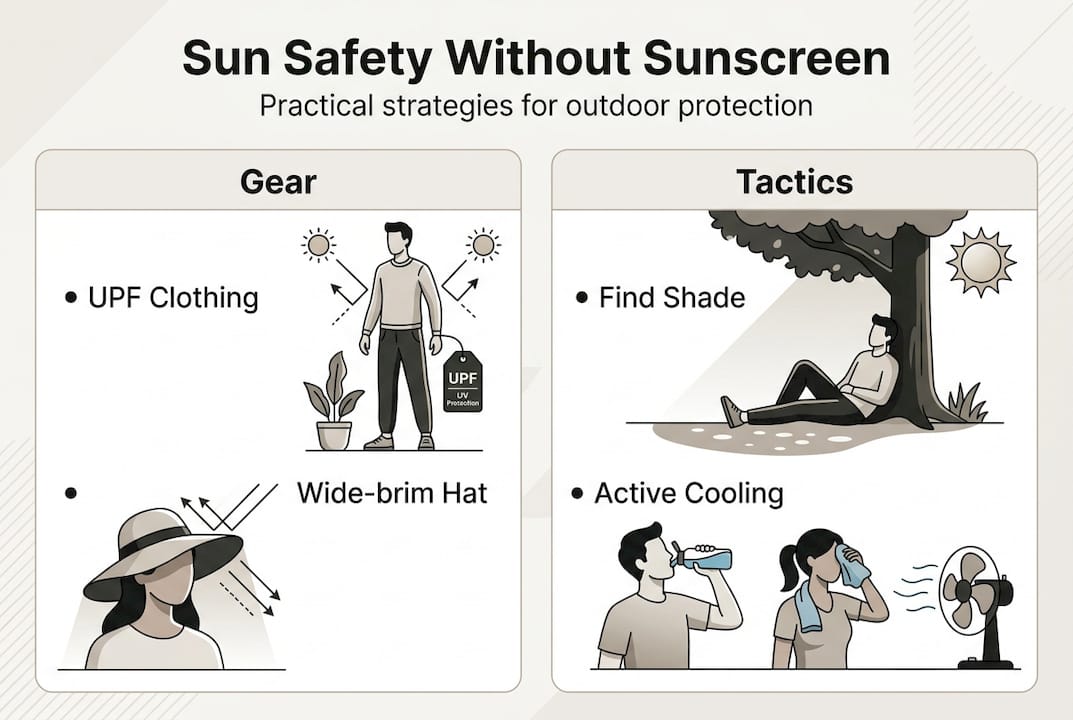
Shade reduces both UV exposure and radiant heat load. Seek or create shade using structures like tents, awnings, or tarps to cut direct sun exposure and reduce the heat your body absorbs.
Shade solutions for outdoor activity:
- Natural shade: Trees and vegetation provide good UV protection and cooler air temperatures underneath.
- Portable shade: Compact pop-up canopies, tarps, and beach shelters are lightweight and fast to set up.
- Wearable shade: Wide-brim hats and umbrella hats create personal shade that moves with you.
- Group shade: For team training or group outdoor work, a large tarp strung between anchor points covers multiple people efficiently.
Once you are in shade, active cooling accelerates your body's recovery. Cool your body actively with cool showers, wet towels applied to the neck, ice packs on pulse points, or a mist spray bottle during breaks.
Active cooling methods ranked by speed of effect:
- Ice packs or cold wet cloth on neck, wrists, and inner elbows
- Mist spray with a fan
- Cool water immersion for hands and forearms
- Cool shower or hose-down
- Air-conditioned rest area
Pro Tip: Your pulse points, including the wrists, neck, and inner elbows, are where blood vessels run close to the skin. Cooling these spots lowers your overall body temperature faster than cooling other areas.
Combining shade, breathable clothing, and active cooling gives you layered protection. Each layer reinforces the others, and together they outperform any single strategy alone. Check out our guide on best summer rashguards for gear that works alongside these tactics.
Troubleshooting and success checks: Signs you're staying cool safely
You have put the strategies in place. Now it is important to recognize the signs that your approach is working, and to know when you need to adjust.
Early warning signs of overheating:
- Nausea or stomach discomfort
- Headache, especially at the temples
- Dizziness or light-headedness
- Stopping sweating despite continued activity
- Skin that feels hot and dry to the touch
- Rapid heartbeat or shortness of breath
If any of these appear, stop activity immediately, move to shade, and begin cooling and hydration. Outdoor workers face elevated heat stress from radiant sun and humidity impairing sweat evaporation, which is why engineering shade takes priority over personal protective measures alone.
If you feel unwell in the heat, stop immediately and seek shade. Do not push through heat illness symptoms.
Success checklist: Signs your cooling strategy is working:
- Urine is pale yellow, not dark
- Skin feels cool or neutral to the touch after breaks
- No headache or nausea during or after activity
- Sweat is present and consistent throughout the session
- Activity feels sustainable, not forced
If your cooling efforts are not enough, escalate quickly. Move indoors or to an air-conditioned space, apply ice packs, and if symptoms worsen or include confusion or loss of coordination, seek emergency medical help. Knowing your limits is not weakness. It is smart outdoor practice.
Why sun protection is more about strategy than just sunscreen
Here is an honest perspective that few sources emphasize. The standard advice puts sunscreen at the center of sun safety, but Australian workplace safety guidelines and experienced outdoor enthusiasts consistently show that planning, clothing, shade, and hydration deliver more reliable and scalable results.
Sunscreen has a role, but it expires, washes off, gets missed in patches, and requires reapplication every two hours. A well-chosen UPF 50+ shirt does not wash off. Shade does not need reapplying. A consistent hydration routine does not expire. These controls are more dependable under real conditions.
Our experience at Combatra is that once people shift their mindset from products to systems, they feel genuinely in control. You stop worrying about whether you applied enough sunscreen and start trusting a routine that works every time. The real-world sun-safe strategies used by martial artists and outdoor athletes prove this point.
Most people underestimate how much routine and gear can do. Once you have used these strategies consistently, sunscreen becomes optional rather than essential. True freedom from heat stress and sunburn comes from mastering fundamentals that never run out.
Performance gear to help you stay cool in the sun
Ready to upgrade your sun-safe kit? The strategies in this guide work best when your gear is built for the job.
Combatra's breathable compression rashguards are rated UPF 50+ and engineered for movement, airflow, and long-duration sun exposure, making them a practical upgrade from standard activewear. Pair them with lightweight training shorts designed for Australian heat, and you have a complete sun-safe kit that performs under real conditions. Explore the full range of Australian performance gear to find options that match your outdoor activity, whether you train solo or as part of a team. The right gear makes every strategy in this guide more effective and more sustainable.
Frequently asked questions
Are long-sleeve shirts effective at keeping you cool without sunscreen?
Yes, lightweight, loose, light-colored long-sleeve shirts both cool the body and physically block UV, reducing sunburn risk without any sunscreen. The key is choosing breathable, porous fabrics that allow airflow.
What's the safest time of day to work outside in Australia without sunscreen?
The safest hours are before 11am or after 3pm, when UV and heat are at their lowest. Plan activity to avoid the 11am to 3pm peak window for the greatest reduction in risk.
How much water should you drink while working outside?
Drink at least 200ml every 15 to 20 minutes during outdoor activity, targeting 2 to 3 liters total per day. Do not wait for thirst as your cue.
Can you stay cool and avoid sunburn just with shade and clothing?
Yes, using shade structures combined with full-coverage, breathable clothing is proven to minimize sun exposure and maintain comfortable body temperature effectively.
What are warning signs you're overheating outside?
Early signs include nausea, headache, dizziness, or stopping sweating during activity. Move to shade, hydrate, and apply active cooling immediately if any of these occur.
Recommended
- Sun Protection for Martial Artists in Australia: Step-by-Step Guide
- Top 6 Best Rashguards for Australian Summer Training 2026
- BJJ Rashguards Australia 2026: 40% Infection Cut & Fit
- UPF 50+ Rashguards: Superior Sun Protection Explained
- 7 Best Appropriate Work Clothes for Hot Weather Comfort – WorkWearComfort