
TL;DR:
- Outdoor athletes face significant UV risks year-round, requiring more than basic sun protection strategies. Proper gear, scheduling, and reapplication routines are essential to prevent sunburn during high-intensity training in Australian conditions. Combining UPF apparel, timely sunscreen use, shade, and protective accessories creates a comprehensive protection approach that effectively reduces UV exposure.
You can do everything right before a training session, eat well, warm up properly, pack your gear, and still walk away with a painful sunburn because your sun protection routine wasn't built for high-intensity outdoor sport. Australian conditions are unforgiving, and the standard advice of "slip, slop, slap" often falls short when sweat, friction, and long training hours enter the picture. This guide covers the practical strategies that actually work for outdoor athletes, from choosing the right gear and scheduling your sessions to mastering sunscreen application and building a routine you can verify.
Table of Contents
- Understanding Australian UV risk for athletes
- Preparing for training: Sun-safe gear and scheduling
- Mastering sunscreen application for athletes
- Combining protection: The five-layer approach
- Checking and troubleshooting your sun safety routine
- The uncomfortable truth about sun safety for athletes
- Stay sun safe with Combatra gear
- Frequently asked questions
Key Takeaways
| Point | Details |
|---|---|
| Year-round UV risk | Australian athletes face significant UV exposure even in winter and cloudy conditions. |
| Layered protection wins | Using five forms of sun protection—clothing, sunscreen, hat, shade, sunglasses—delivers maximum defence. |
| Sunscreen reapplication is essential | Sweat and friction quickly reduce sunscreen effectiveness, so frequent application is vital during outdoor sport. |
| UPF clothing is a game-changer | UPF-rated gear offers reliable coverage and simplifies sun safety routines for athletes. |
| Combine planning and practice | Smart scheduling, regular self-checks, and effective gear choices improve sun protection outcomes. |
Understanding Australian UV risk for athletes
Most athletes accept that summer sessions carry sun risk. Far fewer realise that UV conditions remain significant for much of the year, including winter. That changes how you need to plan.
The UV index is a scale that measures the intensity of UV radiation reaching the earth's surface. A reading of 3 or above is enough to cause skin damage in unprotected skin. In most Australian cities, the UV index regularly exceeds 3 from spring through autumn, and many winter days still reach damaging levels depending on location and time of day.
For athletes, this matters more than for the general population. You're outside longer, often during peak UV hours between 10am and 3pm, and your movement patterns create gaps in coverage that wouldn't exist if you were standing still.
"UV radiation can reach your skin from multiple directions, not just directly overhead. Surfaces like concrete, sand, water, and even grass reflect and scatter UV rays, meaning you're being exposed from below and from the sides as well."
This is a detail that trips up many athletes training outdoors. You might sit under a gazebo or wear a cap and feel protected, but reflected and scattered UV can still reach exposed skin even in shaded environments. A hat covers the top of your head. It doesn't cover your neck, ears, or lower face from UV bouncing off the ground.
Common misconceptions athletes carry into outdoor training:
- "It's overcast, so I don't need sunscreen" (clouds block light but not most UV)
- "I'm only out for 45 minutes, so it doesn't matter" (UV damage accumulates quickly at high index levels)
- "I'm wearing a singlet and hat, so I'm covered" (significant skin area remains exposed)
- "I applied sunscreen before I left home, so I'm set for the session" (sweat and friction break down coverage fast)
Understanding these gaps is the first step toward genuinely preventing sunburn outdoors. The second step is building your preparation properly.
| UV index level | Risk category | Action required |
|---|---|---|
| 1 to 2 | Low | No protection needed for most |
| 3 to 5 | Moderate | Cover up, apply sunscreen |
| 6 to 7 | High | Reduce time outdoors at peak |
| 8 to 10 | Very high | Limit outdoor exposure, full cover |
| 11 and above | Extreme | Avoid outdoor exposure at peak |
Preparing for training: Sun-safe gear and scheduling
The right gear makes sun safety easier to maintain across a full training session. Clothing that's purpose-built for UV protection removes the guesswork, and scheduling adjustments can dramatically reduce your exposure risk.
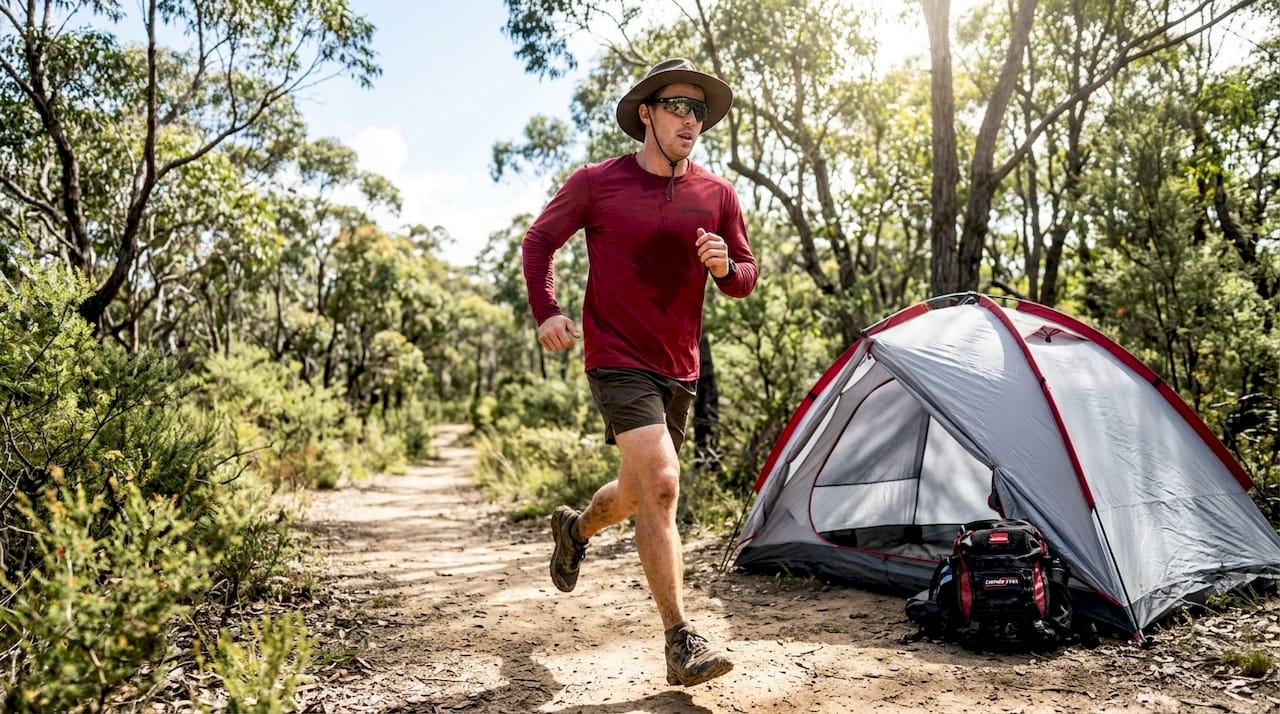
UV-protective clothing with a high UPF rating (UPF 50+) and close-weave fabric is the gold standard for outdoor athletes. UPF (Ultraviolet Protection Factor) measures how much UV radiation passes through fabric. A UPF 50+ garment blocks more than 98% of UV rays, meaning skin beneath the fabric is well protected even over long training sessions. A regular cotton t-shirt often provides only UPF 5 to 15, which is far less effective, especially when wet from sweat.
Your UV protection gear guide should include the following essentials for outdoor training:
- UPF 50+ shirt or rashguard: Covers the torso and arms, where large skin surface areas are otherwise exposed
- Training shorts or compression wear: Look for close-weave fabrics that maintain UPF rating even when stretched during movement
- Wide-brim hat or cap with neck flap: Standard caps don't protect ears or the back of the neck
- Sports sunglasses: UV-blocking lenses protect your eyes and the sensitive skin around them; sports sunglasses for athletes are designed to stay secure during high-intensity movement
- Sunscreen for exposed gaps: Face, ears, neck, hands, and any skin not covered by rated fabric
Scheduling is just as important as gear. In New South Wales and most other states, the guideline is to protect skin when the UV index is 3 or above. You can check the daily UV forecast through the Bureau of Meteorology or the SunSmart app, which provides hourly UV index predictions for your location.
If your sport or training programme allows flexibility, schedule your outdoor sessions before 10am or after 3pm to avoid peak UV hours. This single adjustment reduces your UV exposure significantly without compromising session quality.
Comparison: Fabric UV protection at a glance
| Fabric type | Typical UPF rating | Notes for athletes |
|---|---|---|
| Standard cotton tee | 5 to 15 | Drops further when wet with sweat |
| Polyester sportswear (generic) | 15 to 30 | Variable, check label |
| UPF 50+ rated rashguard | 50+ | Maintains rating when wet and stretched |
| Close-weave UPF shorts | 50+ | Important for leg coverage during outdoor sport |
For a deeper look at how fabric choices affect protection, the UPF 50 clothing explained resource covers the science in practical terms.
Pro Tip: If your training venue has limited shade, invest in a portable shade shelter or UV-blocking umbrella for rest periods. Even a few minutes under proper shade between rounds or drills significantly reduces cumulative UV exposure over a session.
Mastering sunscreen application for athletes
Sunscreen is not backup protection. For outdoor athletes, it's a core part of your routine, and it needs to be applied strategically to actually work.
Apply sunscreen 20 minutes before going outdoors and reapply every two hours or after sweating heavily, swimming, or towel-drying. That's the Cancer Council's guidance, and for athletes it means building reapplication into your session structure, not treating it as an afterthought.
Here's a step-by-step routine that works for high-intensity outdoor training:
- Choose the right product: Use SPF 50+ broad-spectrum, water-resistant sunscreen. Water-resistant doesn't mean waterproof, but it does provide better durability under sweat.
- Apply generously before you dress: Cover all skin that won't be protected by UPF-rated clothing. A teaspoon per body area (face, each arm, each leg, front torso, back) is the standard quantity for adequate coverage.
- Target the gap zones specifically: Ears, the back and sides of the neck, the tops of hands, and any areas where your clothing moves during exercise (waistbands shift, sleeves ride up).
- Allow 20 minutes for absorption before you begin your warmup.
- Carry a small bottle and set a timer: Reapply every two hours, or sooner if you're sweating heavily. Keep the bottle in your kit bag, not buried at the bottom.
- Reapply after towelling off: Even a quick wipe of the face removes a significant portion of your sunscreen.
The TGA's Australian Sunscreen Exposure Model confirms that sunscreen effectiveness is sensitive to how much you apply and how often you reapply. Sweat, friction from clothing, and physical activity all reduce protection faster than most athletes assume.
"Most people apply far less sunscreen than the tested amount, which reduces the effective SPF significantly. For athletes, sweat and movement compound this further, making reapplication even more critical than the label suggests."
This is where many athletes get caught. They apply once before training, sweat through a two-hour session, and assume they're still covered. They're not. See the UPF vs sunscreen outdoors breakdown for a comparison of how each method performs under real athletic conditions.
For martial artists and combat athletes, the additional consideration is skin-to-skin contact and friction from training partners, which strips sunscreen even faster. The sun protection guidance for martial artists addresses these sport-specific challenges directly.
Pro Tip: Apply sunscreen to your face and neck before putting on any headgear or helmet. Applying after means you'll miss the hairline and lower neck, two of the most commonly burned areas in athletes who wear caps.
Combining protection: The five-layer approach
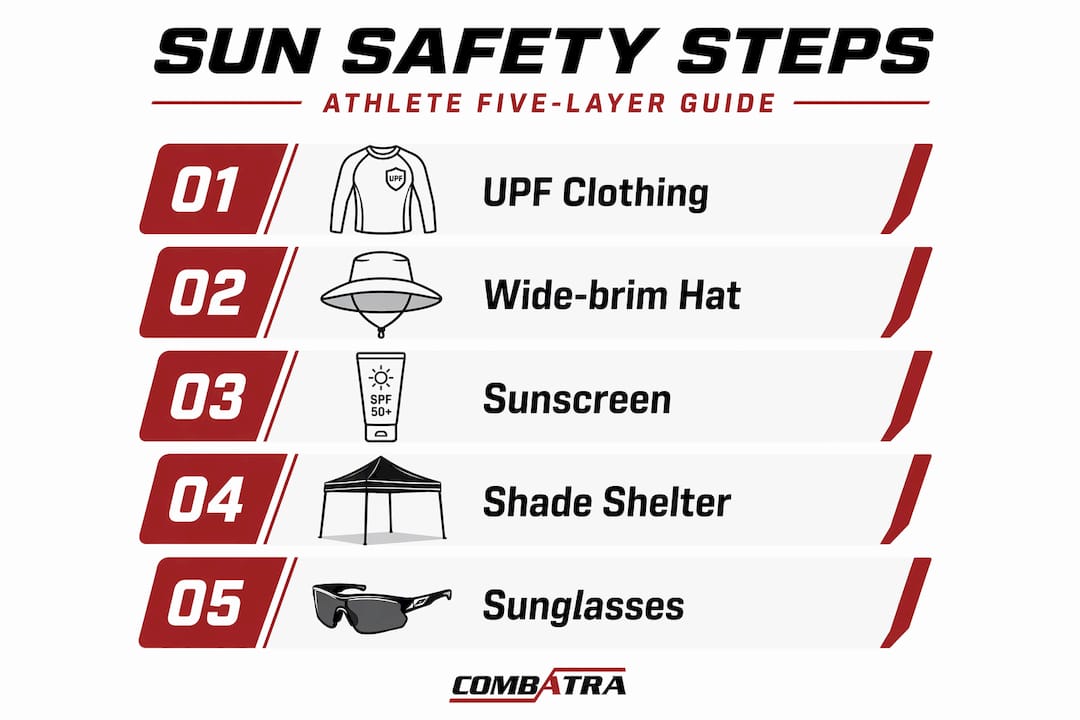
No single method fully protects you. The Cancer Council's five-layer sun protection approach is the practical framework every outdoor athlete should build into their routine:
- Slip on UPF-rated clothing that covers as much skin as possible
- Slop on SPF 50+ broad-spectrum sunscreen to all exposed skin
- Slap on a hat that protects the face, ears, and neck
- Seek shade during rest periods and warmup breaks
- Slide on wraparound sunglasses with UV protection
These five steps work together. Remove one, and your protection has a real gap. Athletes sometimes skip the hat because it interferes with their sport, or skip sunglasses because they don't feel sporty. Both are valid concerns, but cycling sunglasses recommendations and sport-specific eyewear have evolved considerably to solve both problems.
The key safety note here is that shade and hats are never enough on their own. Reflected UV from surfaces beneath you travels upward, reaching the underside of your chin, your neck, and your forearms. Shade reduces direct UV, but doesn't eliminate scattered exposure.
Practical athlete example: A BJJ athlete training in an outdoor environment would wear a UPF 50+ rashguard and training shorts, apply sunscreen to face, ears, neck, and hands before the session, wear a cap or buff during warmup, put on UV-blocking wraparound glasses when not actively sparring, and take shade breaks between rounds.
| Protection layer | What it covers | Athletic consideration |
|---|---|---|
| UPF clothing | Torso, arms, legs | Must maintain coverage during movement |
| SPF 50+ sunscreen | All exposed skin | Reapply every 2 hours or after sweating |
| Wide-brim hat | Head, face, ears, neck | Choose sport-appropriate styles |
| Shade | Reduces direct UV | Not a standalone solution |
| UV sunglasses | Eyes and periorbital skin | Wraparound styles recommended |
For strategies that go beyond sunscreen as your primary tool, the sun safety beyond sunscreen guide covers additional practical options.
Checking and troubleshooting your sun safety routine
Even well-planned routines develop gaps. Building a simple self-check habit helps you catch and correct these gaps before they become problems.
Here's a practical post-session review to run regularly:
- Check for pink or tight skin after training. Mild pinkness after outdoor sessions often indicates UV exposure that your protection didn't fully cover. Identify which area was exposed and adjust your routine for the next session.
- Review your clothing coverage during movement. Ask a training partner to check whether your gear shifts significantly when you move. A rashguard that rides up or shorts with a waistband that drops expose skin you thought was covered.
- Assess your sunscreen timing. If you trained for more than two hours, confirm that you reapplied at the halfway mark. If you didn't, that's a gap to address.
- Monitor the UV index for your training window. The Bureau of Meteorology and SunSmart app provide daily and hourly forecasts. Make it a habit to check these the night before outdoor sessions.
- Look at your ears, neck, and hands specifically. These are the most commonly burned areas for athletes because they sit outside both clothing coverage and typical sunscreen application zones.
Research published in BMC Public Health found that many people misunderstand sunscreen reapplication instructions, and that clearer, more specific guidance leads to better application behaviour. Knowing the exact rule (every two hours, or immediately after sweating heavily) is more effective than vague reminders.
For athletes committed to clothing-based protection, understanding why UPF gear outperforms sunscreen for active use helps you prioritise your gear choices correctly. And if you're heading into trail environments, the UV protection guide for hikers provides terrain-specific advice.
Pro Tip: Take a quick photo of your arms and neck immediately after outdoor training. Over time, this creates a visual record of which areas are consistently sun-exposed and helps you identify the gaps your routine hasn't addressed.
The uncomfortable truth about sun safety for athletes
Most sun safety advice is designed for general outdoor activity, not for athletes doing two-hour sessions in the middle of the day. The standard messaging treats sunscreen as a one-time application and a hat as a complete solution. For a parent watching a weekend cricket match, that might be enough. For a serious outdoor athlete, it falls short.
Here's what experience with active, sweating athletes actually shows: sunscreen applied before training is largely ineffective by the end of a 90-minute session unless it's been reapplied. Friction from clothing, repeated towelling, and heavy sweat output strip protection far faster than most people realise. Athletes who think they're protected because they applied SPF 50 at 8am and trained until 11am often have significantly reduced coverage by the end.
The practical implication is that your sun safety routine needs logistics. That means setting a timer for reapplication, keeping sunscreen physically in your kit bag (not at home), and treating reapplication like nutrition, something that happens on a schedule, not when you remember.
Layering protection methods is what genuinely works. A UV sleeve guide for teams shows how arm coverage as part of your standard kit removes the need to apply and reapply sunscreen to your arms entirely. That's one fewer application zone to manage during a session. UPF-rated clothing doesn't wash off, doesn't sweat off, and doesn't require a 20-minute wait time. It works the moment you put it on.
The athletes who consistently avoid sunburn aren't the ones with the best sunscreen. They're the ones who've built protection into their routine so thoroughly that it requires no willpower to maintain. That's the standard worth aiming for.
Stay sun safe with Combatra gear
If this guide has shown you anything, it's that consistent sun protection comes down to having the right gear already in your kit.

At Combatra, we design UPF 50+ apparel specifically for athletes who train hard outdoors, in environments where standard sportswear simply doesn't hold up. Our training shorts and sports bras are built from close-weave, moisture-wicking fabrics that maintain their UPF rating through movement, sweat, and repeated washing. Whether you're training BJJ outdoors, running, or putting in long sessions in the open sun, Combatra gear is designed to work as a foundation layer of your sun protection strategy, covering the large skin surface areas that sunscreen alone can't reliably maintain. Explore the full range to see how purpose-built UV protection fits into your training life.
Frequently asked questions
How can I tell if my sunscreen is still effective after sweating?
If you've sweated heavily or towelled off, reapply sunscreen immediately regardless of the time since your last application. Sweat, swimming, and friction significantly reduce sunscreen effectiveness, even with water-resistant formulas.
Is UV protection necessary on cloudy or cool days in Australia?
Yes, UV radiation can be high even when it's cloudy or cool, so always check the UV index before training. UV conditions remain high for much of the year, including winter months in many Australian locations.
What areas do athletes commonly miss with sunscreen?
Ears, neck, and backs of hands are often missed, so make these part of your routine every application. The TGA's exposure model identifies these gap areas as consistently under-protected in active individuals.
Does shade or a hat fully protect against sunburn?
No; reflected and scattered UV means you must use multiple protection methods rather than relying on shade or hats alone. UV bouncing off the ground, concrete, and water can reach exposed skin even in shaded areas.