

TL;DR:
- Sport and outdoor activities in Australia involve engaging in physical recreation across diverse natural environments while managing UV exposure and local regulations. Rashguards with UPF 50+ protection are essential gear for safety, supporting outdoor athletes and enthusiasts in harsh sun conditions. Adhering to state-specific rules, permits, and safety guidelines is crucial for responsible participation and environmental preservation.
Sport and outdoors in Australia is defined as active participation in physical recreation across the country's diverse natural environments, from coastal surf breaks and inland waterways to alpine trails and remote bushland. For athletes and outdoor enthusiasts, this means navigating a unique set of conditions: intense UV radiation, variable terrain, and state-specific regulations that directly affect how you prepare and what you wear. Rashguards have become a core piece of kit for this environment, offering compression support, sweat management, abrasion resistance, and durability across both combat sports and extended outdoor sessions. Premium options are lab tested to AS 4399:2020 and rated UPF 50+ for sustained sun protection. Whether you train in BJJ, surf before work, or spend weekends hiking national parks, the right gear and knowledge make every session safer and more effective.
What are the most popular sport and outdoors activities in Australia?
Australia's outdoor activity scene is one of the most varied on the planet, shaped by a coastline stretching over 35,000 kilometres, ancient national parks, and a climate that supports year-round recreation. Tourism Australia curates a broad directory of outdoor activities including hiking, camping, surfing, fishing, cycling, and adventure sports, along with a dedicated list of sports events worth travelling for. That breadth reflects genuine participation patterns across the country.
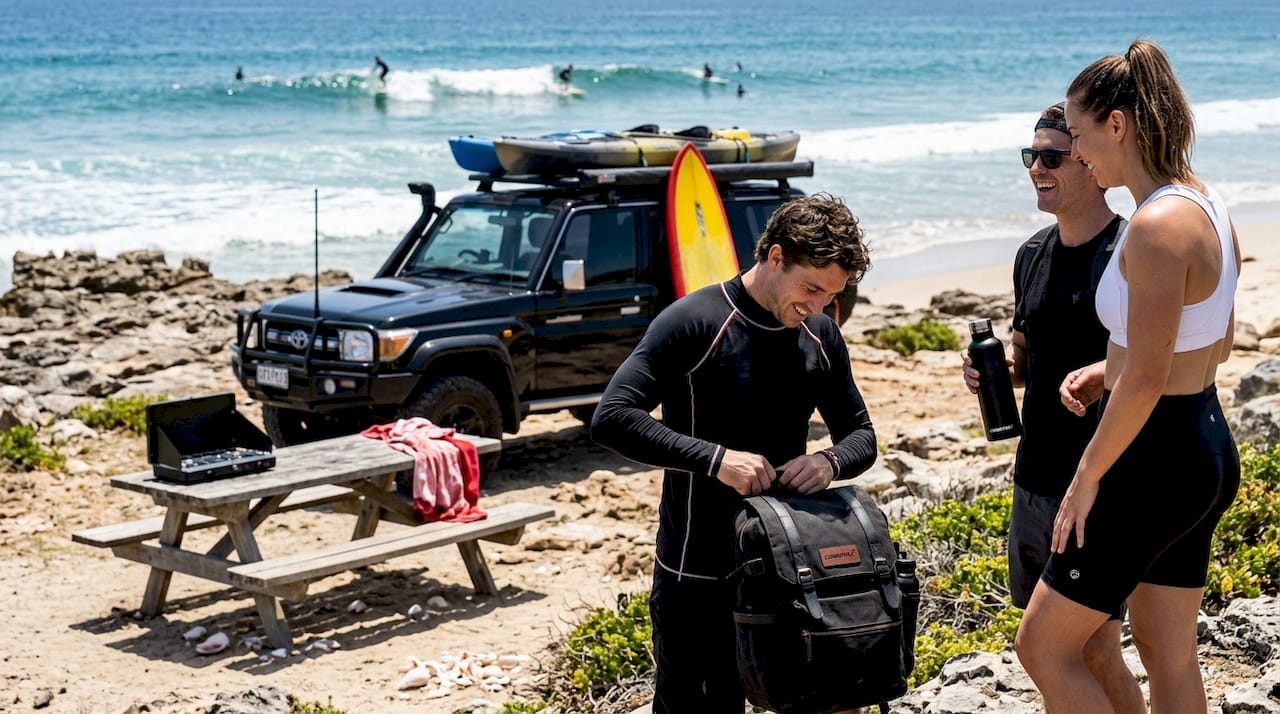
Hiking and bushwalking draw millions of Australians annually to trails in the Blue Mountains, Cradle Mountain in Tasmania, and the Larapinta Trail in the Northern Territory. Surfing is embedded in coastal culture from Bells Beach in Victoria to Snapper Rocks in Queensland. Freshwater and saltwater fishing remain among the most widely practised recreational sports, with the Murray-Darling Basin and the Great Barrier Reef region offering contrasting but equally productive experiences. Cycling, trail running, and adventure sports like rock climbing and white-water kayaking round out the outdoor activities Australia enthusiasts pursue most.
Sports events also drive significant travel within Australia. Notable events include:
- Surf Life Saving Australia national championships held annually on the Gold Coast
- The Sydney to Hobart Yacht Race, one of the world's most demanding offshore races
- Wildflower Marathon in Western Australia's Kings Park
- Noosa Triathlon, attracting thousands of competitors each May
- Cairns IRONMAN, set against the backdrop of tropical North Queensland
- Snowy Mountains Backcountry Festival for ski touring and alpine adventure
Each of these events draws participants who need sport-specific gear suited to Australian conditions, reinforcing why preparation matters as much as fitness.
How to comply with outdoor activity regulations and safety in Australia
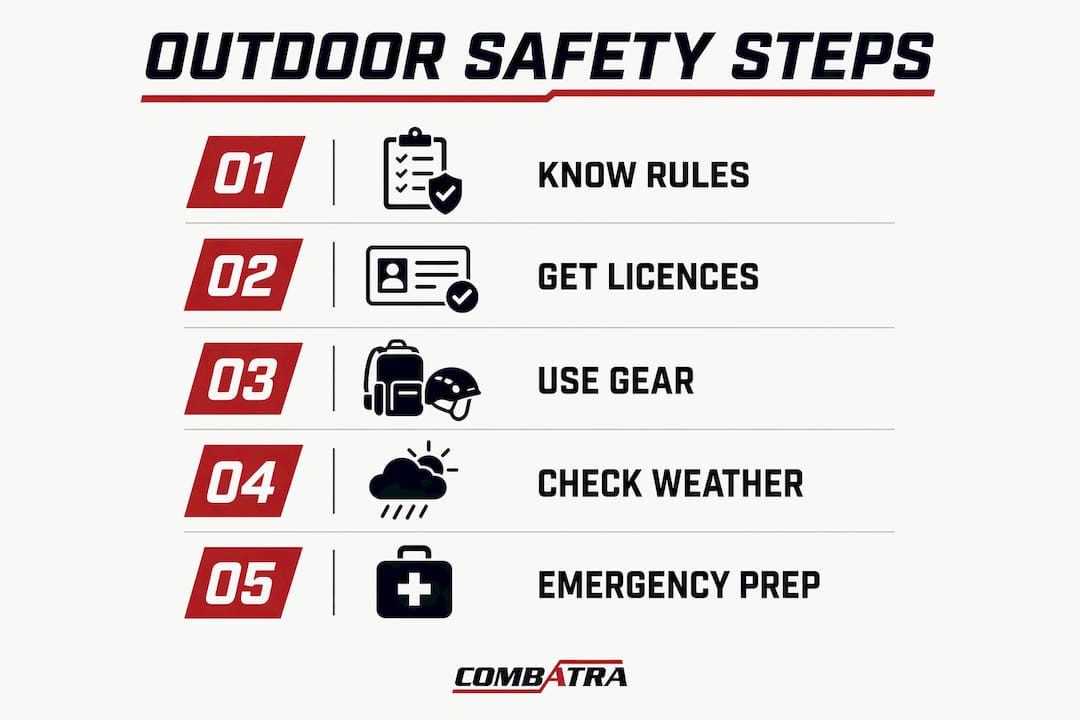
Safety and legal compliance in Australian outdoor sports are not optional considerations. They are the baseline for responsible participation, and the rules vary significantly by state and activity type.
In New South Wales, recreational fishing requires payment of the NSW Recreational Fishing Fee, and you must carry your receipt as proof during any fishing session. This applies to both freshwater and saltwater fishing. Failing to carry proof of payment is a compliance breach, regardless of whether you are fishing casually or competitively.
Rock fishing deserves particular attention. Rock fishing in NSW causes approximately 8 deaths each year, making it one of the most statistically dangerous recreational sports in the state. That figure reflects the combination of unpredictable wave surges, slippery rock platforms, and the tendency for anglers to fish alone. The NSW Government publishes specific safety guidance for rock fishing, and following it is not overcaution. It is the difference between a productive session and a fatality.
For camping and swimming in the Northern Territory, NT Parks require visitors to hold a valid NT Parks Visitor Pass, observe conditional swimming closures, and boil water before consumption at sites like Walker Creek in Litchfield National Park. These protocols exist because remote park environments carry genuine health and safety risks that urban visitors often underestimate.
Key compliance steps before any outdoor activity:
- Check the relevant state government website for licence and permit requirements specific to your activity
- Verify park authority pages for operational rules, not just Tourism Australia listings
- Carry proof of any required fees or permits on your person during the activity
- Review swimming and water safety advisories before entering any natural water body
- Tell someone your itinerary when heading into remote areas
Pro Tip: Park authority websites like NT Parks and NSW National Parks are the authoritative source for current rules and closures. Tourism Australia provides inspiration, but operational details change seasonally and must be confirmed directly with the managing authority.
Which locations are best for hiking, fishing, surfing, and camping?
Australia's geographic diversity means the best location depends entirely on the activity and the season. The table below summarises key sites across activity types, with practical notes on access and requirements.
| Location | Activity | Key features | Access notes |
|---|---|---|---|
| Larapinta Trail, NT | Hiking | 223km through West MacDonnell Ranges, remote and arid | Self-guided or guided; carry all water |
| Blue Mountains, NSW | Hiking and camping | World Heritage listed, accessible from Sydney | National Parks pass required for some areas |
| Walker Creek, Litchfield NP, NT | Camping and swimming | Natural rock pools, monsoon forest | NT Parks Visitor Pass required; boil water |
| Snapper Rocks, QLD | Surfing | World-class point break, consistent swells | Public beach access; seasonal crowds |
| Bells Beach, VIC | Surfing | Iconic reef break, Rip Curl Pro venue | Public access; cold water, wetsuit required |
| Murray River, VIC/NSW | Freshwater fishing | Murray cod, golden perch, extensive waterway | NSW fishing fee required on NSW side |
| Ningaloo Reef, WA | Snorkelling and fishing | Whale shark season March to July | Marine park permits for some activities |
| Cradle Mountain, TAS | Hiking and camping | Alpine terrain, Overland Track | Parks pass and booking required for Overland Track |
For hikers, the Larapinta Trail stands out as one of Australia's most rewarding long-distance walks, but it demands serious preparation. Temperatures exceed 40°C in summer, water sources are limited, and UV exposure is extreme. The best UV protection clothing for this environment combines lightweight construction with UPF 50+ rated fabric.
Surfers heading to Snapper Rocks or Bells Beach face very different conditions. Snapper offers warm subtropical water and long rides, while Bells demands a thick wetsuit and experience with powerful reef breaks. Both sites reward preparation with some of the best waves in the Southern Hemisphere.
Campers at Walker Creek in Litchfield National Park get access to beautiful freshwater pools, but the NT Parks compliance requirements are non-negotiable. Booking ahead, securing your visitor pass, and following water safety instructions are all part of the experience at this site.
What essential gear do outdoor enthusiasts need for Australian adventures?
Gear selection for Australian outdoor activities is shaped by one overriding factor: UV radiation. Australia records some of the highest UV index readings in the world, and standard cotton clothing provides minimal protection. UPF clothing consistently outperforms sunscreen for sustained outdoor activity because it does not wear off, sweat off, or require reapplication. That makes UPF 50+ rated apparel a practical necessity rather than a premium option.
Rashguards and compression wear serve a dual function in this context. In combat sports like BJJ and MMA, they provide compression support, reduce muscle fatigue, manage sweat, and protect skin from mat abrasion. In outdoor settings, those same properties apply during surf sessions, trail runs, and open-water swimming. Combatra's rashguards are designed for both environments, with UPF 50+ protection built into the fabric rather than applied as a coating.
For broader gear planning, INTERSPORT offers one of Australia's most accessible ranges of footwear, clothing, and equipment for outdoor and sporting activities, with click and collect available across major cities. For performance apparel with sun protection credentials, Combatra specialises in gear that meets the demands of both training environments and extended outdoor exposure.
Recommended gear by activity:
- Hiking: Trail shoes or boots with ankle support, moisture-wicking UPF 50+ shirt, sun hat, hydration pack, navigation app or topographic map
- Fishing: UPF 50+ long-sleeve rashguard or sun protection fishing gear, polarised sunglasses, life jacket for boat or rock fishing
- Surfing: Rashguard or wetsuit depending on water temperature, surf leash, reef-safe sunscreen for exposed skin
- Camping: UPF-rated base layers, UV protection for campers, water treatment tablets, first aid kit, permit documentation
Pro Tip: Layer a UPF 50+ rashguard under a lightweight long-sleeve shirt for maximum protection during multi-hour hikes or fishing sessions. This combination covers exposed skin without adding significant weight or restricting movement, and it performs consistently regardless of how much you sweat.
For those new to planning outdoor trips, a beginner's guide to hiking and camping provides a solid framework for gear lists and site selection before your first overnight adventure.
Key takeaways
Sport and outdoors in Australia requires activity-specific preparation, state-level compliance, and UV-rated gear to participate safely and effectively across the country's diverse environments.
| Point | Details |
|---|---|
| UV protection is non-negotiable | UPF 50+ rated apparel outperforms sunscreen for extended outdoor sessions in Australia's high UV environment. |
| State regulations vary by activity | NSW requires a recreational fishing fee and receipt; NT parks require a visitor pass and water safety compliance. |
| Rock fishing carries serious risk | Approximately 8 deaths occur annually in NSW from rock fishing, making safety precautions critical. |
| Location choice drives gear selection | Alpine, coastal, and arid environments each demand different footwear, clothing, and safety equipment. |
| Park authority pages are authoritative | Verify operational rules and closures directly with managing authorities before any trip. |
Why I think most Australians underestimate their outdoor risk
After years of observing how Australians approach outdoor recreation, the pattern I see most often is confidence without preparation. People who would never skip a warm-up before a BJJ session will drive four hours to a remote national park with no permit, no water treatment, and a cotton t-shirt. The environment looks familiar, so the risk feels manageable. It is not.
The UV exposure issue is the one that concerns me most. Australia's UV index regularly reaches 11 or above, which is classified as extreme. At that level, unprotected skin begins to burn in under 10 minutes. Most people fishing, hiking, or surfing are outside for two to six hours. The maths is straightforward, and yet sunscreen remains the default response despite the fact that it degrades with sweat and water exposure. UPF 50+ fabric does not.
The regulatory side is equally underestimated. The NSW recreational fishing fee is not a bureaucratic inconvenience. It funds fish stocking, habitat restoration, and the research that keeps recreational fisheries viable. Carrying your receipt is a two-second habit that keeps you legal and supports the resource you are there to enjoy. The same logic applies to NT Parks visitor passes and Overland Track bookings. These systems exist to protect both the visitor and the environment.
What I have found works best is treating outdoor preparation the same way a serious athlete treats competition prep. You check the conditions, you verify the rules, you select gear that performs under real load, and you do not cut corners on protection. That approach does not take the adventure out of the experience. It keeps you in the field long enough to have more of them.
— McGinnis
Gear up for Australian outdoor sport with Combatra
Combatra builds performance apparel for athletes who train hard and spend real time outdoors. Every product in the range is designed for movement, breathability, and long-duration UV exposure, making it as relevant on a surf break or hiking trail as it is on a BJJ mat.

The UPF 50+ rashguard is Combatra's flagship outdoor training piece, offering compression support, sweat management, and lab-tested sun protection in a single garment. For lower-body coverage, the Aussie Spirit compression shorts deliver the same performance credentials with an Australian design. Both products are customisable with names, logos, and colours, making them ideal for individual athletes and team orders alike. Shop the full range at Combatra and equip yourself for every Australian outdoor condition.
FAQ
What outdoor sports are most popular in Australia?
Hiking, surfing, recreational fishing, camping, and cycling are among the most widely practised outdoor activities in Australia. Tourism Australia also highlights adventure sports events like the Noosa Triathlon and Cairns IRONMAN as major participation draws.
Do I need a licence to fish in NSW?
Yes. Recreational fishing in NSW requires payment of the NSW Recreational Fishing Fee, and you must carry your receipt as proof of compliance during any fishing session, whether in freshwater or saltwater.
What are the best hiking trails in Australia?
The Larapinta Trail in the Northern Territory, the Overland Track in Tasmania, and the Blue Mountains trails in NSW are consistently rated among Australia's best. Each requires advance planning, appropriate permits, and UV-rated clothing given the exposure conditions.
Why does UPF clothing matter for Australian outdoor activities?
UPF 50+ clothing blocks harmful UV rays consistently throughout activity, unlike sunscreen which degrades with sweat and water. For multi-hour outdoor sessions in Australia's extreme UV environment, rated apparel provides reliable protection that sunscreen alone cannot match.
What permits do I need for camping in NT national parks?
Camping at sites like Walker Creek in Litchfield National Park requires a valid NT Parks Visitor Pass. Visitors must also observe any swimming closures and boil water before consumption at designated sites.