
TL;DR:
Choosing a properly fitted BJJ gi significantly improves training comfort, performance, and durability in hot climates.
Accurate measurements of arm length, chest circumference, and height are essential, as brand sizing varies widely.
Knowing how to choose a BJJ gi correctly makes a bigger difference to your training than most practitioners realise. A poor fit distracts you mid-roll, fails IBJJF compliance checks, and wears out faster than it should. Yet most beginners — and even experienced athletes — default to height and weight when sizing, then wonder why their gi sleeves are too short or their jacket pulls tight across the shoulders. Australia’s warm, humid training conditions add another layer to the decision, since heavier weaves can make mat time genuinely uncomfortable through a Queensland summer. This guide gives you a practical, methodical approach to selecting a gi that fits well, performs consistently, and lasts.
Table of Contents
Key takeaways
| Point | Details |
|---|---|
| Measure more than height and weight | Arm length and chest circumference are critical measurements that prevent the most common sizing errors. |
| Weave type affects comfort | Pearl and gold weave gis suit Australia’s warm climate better than heavy single weave options. |
| Brand charts are not universal | An A2 in one brand can differ significantly from another, so always cross-reference your measurements. |
| Rotation extends gi lifespan | Training four or more days per week warrants at least three gis to allow proper drying and hygiene. |
| Shrinkage changes your size | Non-preshrunk gis can shrink by up to 5%, so order one size larger unless the label says preshrunk. |
Features of a good BJJ gi
The fabric and construction of a gi determine how it holds up over months of hard training. Getting familiar with the key features of a good gi before you buy saves you from expensive mistakes.
Weave types explained
The weave refers to how the jacket fabric is constructed, and it directly affects weight, durability, and breathability.
-
Pearl weave is the most common choice for modern gis. It offers a good balance of durability and lightness, and it holds up well to frequent washing. Most competition gis use pearl weave for this reason.
-
Gold weave sits between pearl and single weave in terms of weight. It feels softer than single weave but is slightly heavier than pearl. Good for practitioners who want durability without a stiff feel.
-
Single weave is the lightest option. It is prone to wearing out faster but is popular in warm climates where mat temperatures run high.
-
Double weave is the heaviest and most durable, but uncomfortable in warm environments and rarely used for competition.
For Australian practitioners training through summer or in warmer states, pearl or single weave gis are the practical choice. The extra weight of a double weave is rarely worth the trade-off in comfort.
Construction details that matter
Beyond the weave, look for reinforced stitching at the collar, armpits, and knees of the trousers. These are the stress points where gis fail first. Ripstop fabric in the trousers adds durability without adding weight. Belt loops should be firmly attached, not sewn loosely. Collar construction also matters for grip. A thicker, firmer collar is harder for your training partners to hold, which has a real impact on your defensive game.
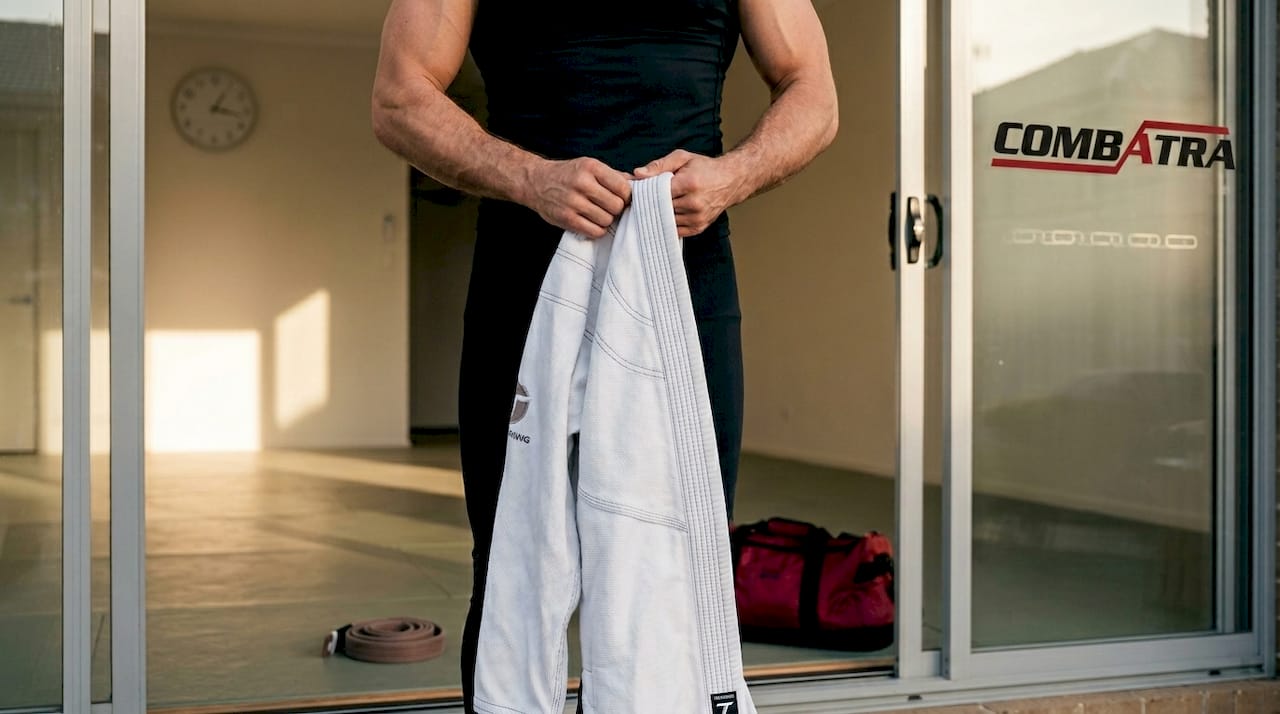
Pro Tip: Check the collar construction before buying. A reinforced rubber or foam collar resists grip faster than a soft, loosely woven one, and that detail alone can influence your defensive performance.
How to measure yourself accurately
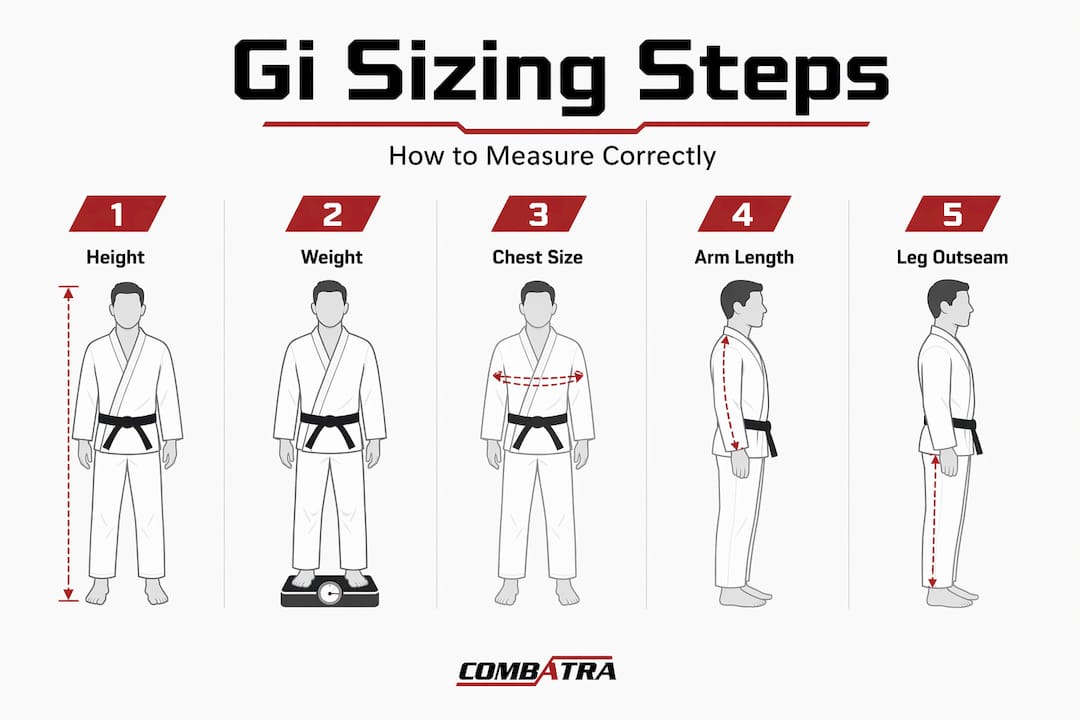
Sizing mistakes mostly stem from relying on height and weight alone without measuring torso and limb dimensions. The fix is straightforward: take five key measurements before you consult any size chart.
What you need
A flexible tape measure and a second person to help. Measuring yourself solo introduces errors, particularly for arm length.
Step-by-step measurements
-
Height. Stand barefoot against a flat wall. Measure from the floor to the top of your head in centimetres.
-
Weight. Weigh yourself in kilograms, ideally in the morning before eating.
-
Chest circumference. Wrap the tape around the widest part of your chest, just under your armpits. Keep it level and snug but not tight.
-
Arm length. Stand with your arm relaxed at your side. Have your helper measure from the centre of your shoulder to your wrist bone. The IBJJF requires sleeve length to sit within 5 cm of the wrist bone, so this measurement is non-negotiable for competition.
-
Outseam (trouser length). Measure from your hip bone down the outside of your leg to your ankle bone. IBJJF rules require trousers to sit within 5 cm of the ankle bone.
Understanding L and H size variants
Some brands offer Long and Husky variants alongside standard sizes. L sizes provide longer sleeves and trousers without widening the torso, which suits taller, lean athletes. H sizes broaden the chest and shoulders without lengthening the gi, which suits shorter, broader athletes. Knowing which dimension is your outlier helps you navigate these variants accurately.
| Measurement | Tool needed | Common sizing impact |
|---|---|---|
| Height | Wall and tape measure | Base size category |
| Weight | Scales | Narrows size range |
| Chest circumference | Flexible tape | Identifies H size need |
| Arm length | Flexible tape with helper | Identifies L size need |
| Outseam | Flexible tape | Competition compliance |
Reading brand size charts
There is no universal BJJ gi sizing standard. An A2 in one brand can differ significantly from an A2 in another, with some brands running generous and others cutting close to their charts. Cross-referencing your five measurements against each brand’s specific chart is the only reliable method.
When your height and weight fall in different size categories on the same chart, favour the measurement that caused issues in past gis. If you have had sleeves too short before, go with the height recommendation. If the jacket has always been too tight across the shoulders, follow the weight recommendation or consider an H size.
Shrinkage is another variable that brands handle differently. Non-preshrunk gis can shrink up to 5% after the first few washes, which means a gi that fits well in the shop may sit above compliance limits after washing. Preshrunk gis fit much closer to their labelled size, making the buying decision more predictable. Always check the product page or contact the brand directly if the shrinkage information is not clearly listed.
Pro Tip: When measuring with a helper improves accuracy, so does reading a brand size chart from Combatra’s own guide before comparing across manufacturers. Australian athletes in particular should factor in brand-specific variances rather than assuming standardised sizing.
For Australian practitioners, it also pays to check whether international brands ship pre-shrunk stock or raw fabric gis to Australia. The distinction matters when you are ordering online without the option to try before you buy.
Matching your gi to your training habits
How often you train should directly influence how many gis you own and what type you prioritise. This is one of the most practical and frequently overlooked aspects of choosing the right gi.
-
Training frequency. Athletes training four or more days per week benefit from rotating at least three gis. A gi needs adequate time to dry fully between sessions. Repeated use of a damp gi accelerates fabric breakdown and creates hygiene problems that affect both you and your training partners.
-
Weight for training versus competition. Lightweight gis (under 1.5 kg) are easier to wear through long training sessions in warm conditions. Heavier midweight gis offer more durability and are preferred by athletes who train intensely and want a gi that lasts years rather than months.
-
Colour compliance. If you plan to compete under IBJJF rules, white, blue, and black are the only approved colours. Buying a coloured gi for competition use is a wasted purchase.
-
Climate considerations. Training in a Queensland or Northern Territory academy through summer is a different experience from training in a Melbourne winter. Lighter weaves and single weave gis genuinely improve comfort in hot, humid environments.
Pro Tip: Never wash your gi in hot water. Cold water and a gentle cycle preserve the fabric and prevent shrinkage that can push a borderline sleeve length outside competition compliance.
For guidance on keeping your gear in top condition, Combatra’s article on gi personalisation and care covers maintenance practices that extend the life of your gi significantly.
Common buying mistakes to avoid
https://blog.combatra.com.au/blog/how-to-personalise-bjj-giEven experienced practitioners fall into predictable traps when selecting a gi. Recognising these errors in advance saves money and frustration.
-
Relying only on height and weight. This is the most common mistake. Without arm length and chest measurements, you are guessing. A gi may fit your torso and still fail competition inspection due to short sleeves.
-
Ignoring brand-specific sizing. Assuming your size transfers directly from one brand to another is risky. Always check the individual brand chart with your measurements in hand.
-
Buying one gi as a beginner. One gi is technically sufficient to start, but it means washing and drying overnight after every session. Buying two gis from the beginning is a practical and cost-effective approach.
-
Buying too many premium gis too soon. On the other side, beginners sometimes invest heavily in multiple premium gis before their body changes with training. Weight and muscle composition shift considerably in the first year of BJJ. Starting with one or two well-fitted mid-range gis is sensible.
-
Overlooking competition rules. If you have any intention of competing, check IBJJF gear requirements before buying. Colour, sleeve length, trouser length, and collar thickness all come under scrutiny at weigh-in.
My honest take on choosing a gi
I spent my first two years in BJJ buying gis based on how they looked in product photos. I ordered by weight, assumed size charts were consistent across brands, and ended up with a drawer full of gis that fit poorly in different ways. A couple were too long in the torso, a couple too tight across the shoulders, and one failed a competition check because the sleeves were borderline after washing.
What actually changed things for me was taking proper measurements and treating each brand as its own sizing system. Once I did that, my gi fit dramatically improved, and I stopped wasting money on replacements.
I have also noticed that practitioners who rotate gis consistently report better training comfort and longer-lasting fabric. Rotating between three gis is not excessive. It is practical hygiene management and good equipment care.
My advice on premium gis: wait until you have been training for at least six months before investing in high-end gear. Your fit preferences, your weight, and your understanding of what you want from a gi will all shift. When you do invest, prioritise fit over brand name. A mid-priced gi that fits perfectly outperforms an expensive one that gaps at the collar every time.
— ZZA
Gear up with Combatra
If this guide has helped you clarify what you are looking for, Combatra makes the next step straightforward. Whether you need to replace worn-out trousers or build a full gi setup from scratch, the range is built for Australian athletes who train seriously.
The plain black gi pants are a durable, competition-ready option suitable for daily training and IBJJF events. For a complete setup, the custom plain black gi lets you personalise your jacket with names, logos, and colours, ideal for academy teams and individual athletes who want gear that reflects their identity. Combatra’s size charts are built to help you apply your measurements directly, taking the guesswork out of ordering online. Browse the full gi range and use the sizing resources to make a confident, informed purchase.
FAQ
How do I accurately measure myself for a BJJ gi?
Measure your height, weight, chest circumference, arm length, and outseam using a flexible tape measure. Measuring with a helper improves accuracy, particularly for arm length, which is critical for competition compliance.
Do BJJ gi sizes differ between brands?
Yes. Brand sizing is not universal, and an A2 in one brand can differ noticeably from another. Always cross-reference your measurements with each brand’s specific size chart rather than assuming your size transfers.
What gi weave suits Australia’s warm climate?
Pearl weave and single weave gis are the best choices for warm Australian training conditions. They offer a good balance of durability and breathability without adding unnecessary weight during hot sessions.
How many gis should I own?
If you train four or more days per week, owning at least three gis allows proper drying time between sessions. Rotating multiple gis also reduces wear on any individual gi and maintains hygiene standards.
What should I check before buying a gi for competition?
Confirm the gi meets IBJJF requirements for colour (white, blue, or black), and that sleeve length and trouser length sit within 5 cm of the wrist and ankle bones respectively. Account for post-wash shrinkage if the gi is not labelled as preshrunk.