
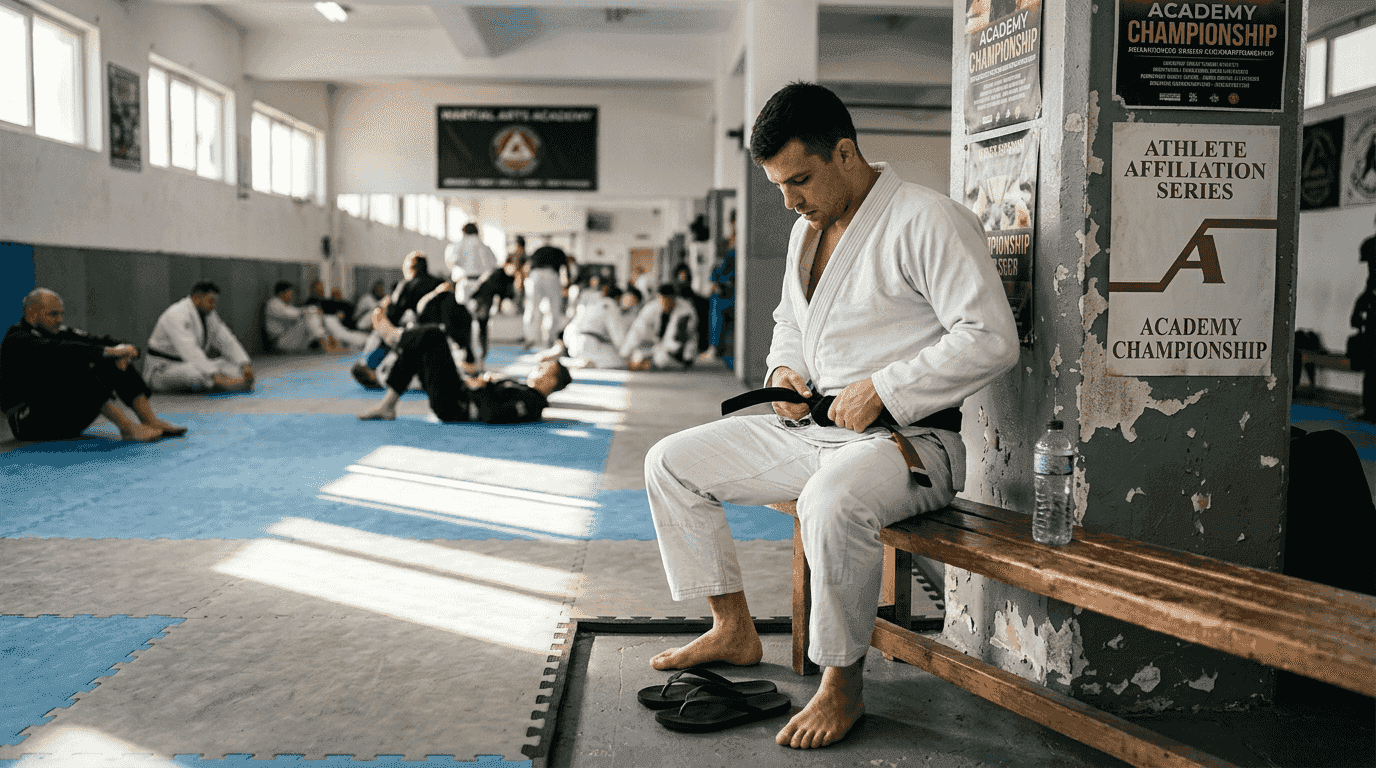
Choosing the right Brazilian Jiu-Jitsu gi can feel overwhelming with countless fabric weaves, weights, and fits available. Whether you train casually or compete at elite levels, selecting a gi that balances durability, comfort, and compliance with competition rules is essential. This guide walks you through fabric types, sizing considerations, and key differences between training and competition gis so you can make an informed decision that supports your unique needs on the mat.
Table of Contents
- Understanding Fabric Types And Weave For Durability And Comfort
- Choosing The Right Gi Fit, Cut, And Size For Optimal Performance
- Selecting Gis For Training Vs. Competition: Key Differences And Top Models
- Maintenance Tips And Common Mistakes When Selecting A BJJ Gi
- Explore Customizable BJJ Gis And Gear At Combatra
- Frequently Asked Questions
Key takeaways
| Point | Details |
|---|---|
| Fabric weave and weight | Single weave gis (250-350gsm) suit beginners and warm climates; double and triple weaves offer maximum durability but feel heavier. |
| Proper fit matters | Sleeves and pants must meet IBJJF length standards to avoid disqualification; consult brand size charts carefully as sizing varies significantly. |
| Training vs. competition | Training gis prioritize durability with heavier fabrics; competition gis use lightweight materials and tailored cuts for enhanced mobility. |
| Preshrunk fabrics | Buying preshrunk gis or sizing up prevents fit issues after washing and maintains compliance with competition measurements. |
| Maintenance extends lifespan | Cold water washing and hang drying preserve fabric integrity and fit; inspect stress points regularly to catch wear before tearing occurs. |
Understanding fabric types and weave for durability and comfort
Fabric choice shapes every aspect of your gi's performance, from how it feels during training to how long it lasts under intense grappling. Single weave gis (250-350gsm) are lightweight and breathable, making them ideal for beginners or warm weather training. However, they offer less resistance to wear and tear compared to heavier options.
Double weave and triple weave gis deliver maximum toughness, with fabric weights ranging from 450 to 650gsm. These heavier constructions withstand aggressive grip fighting and frequent washing cycles. The trade off is increased weight and slower drying times, which can feel restrictive during fast-paced rolls.
Pearl weave has become the modern favorite for BJJ practitioners due to its balance of strength, weight, and comfort. This weave pattern creates a textured surface that dries quickly while maintaining structural integrity through countless training sessions. Ripstop weave offers similar benefits with added tear resistance, making it popular for competition gis where mobility matters.
Material quality elevates performance beyond basic weave patterns. High-grade, long-staple cottons like Egyptian or Pima provide superior breathability and a grip-friendly texture that helps with technique execution. These premium materials resist pilling and maintain their shape better than standard cotton blends.
Your fabric choice should align with training intensity, local climate, and personal comfort preferences. Heavy training in humid environments benefits from lighter weaves, while competitive grapplers in cooler climates might prefer the durability of pearl or double weave constructions.
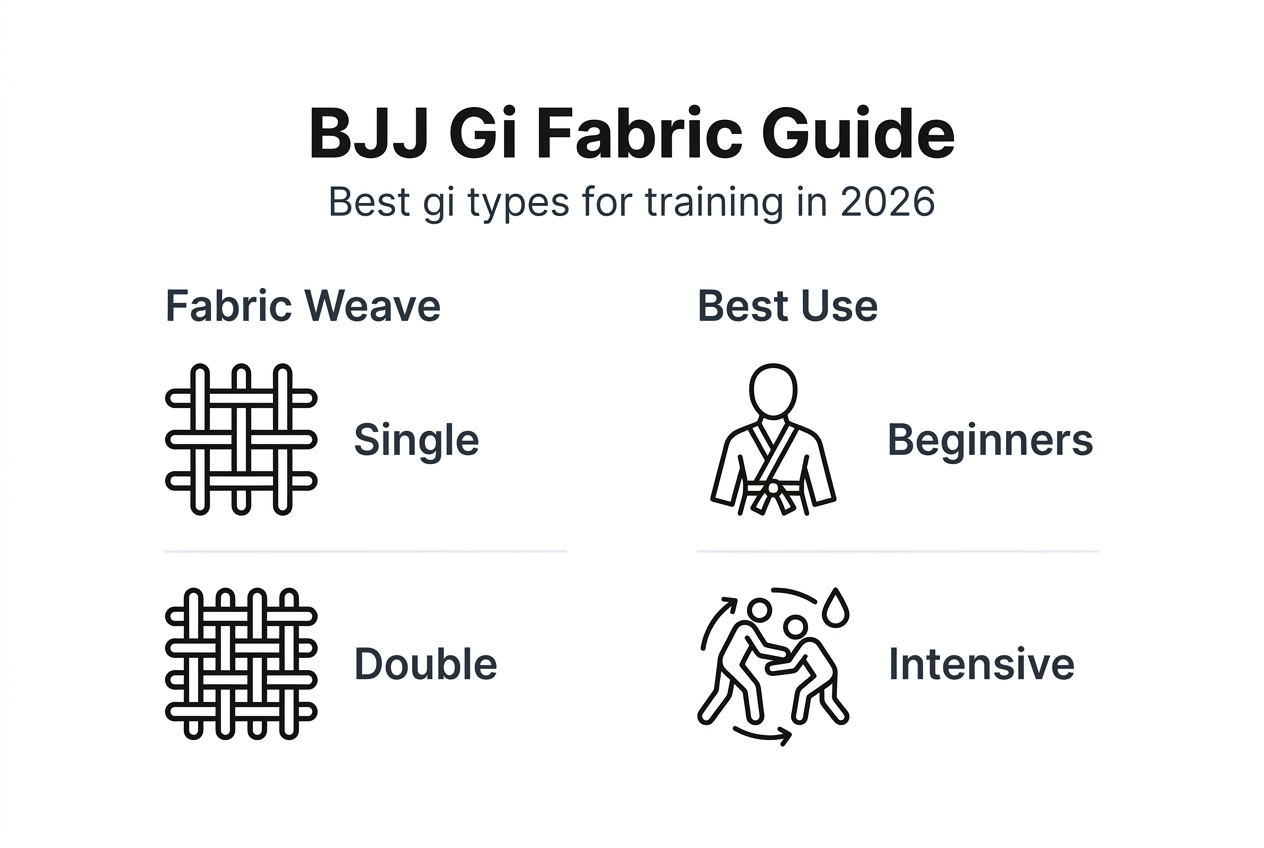
Fabric comparison by training need:
| Weave Type | Weight (gsm) | Best For | Durability | Drying Time |
|---|---|---|---|---|
| Single | 250-350 | Beginners, warm climates | Moderate | Fast |
| Pearl | 400-550 | All-around training | High | Moderate |
| Double | 450-650 | Heavy training | Very High | Slow |
| Ripstop | 350-450 | Competition | High | Fast |
Pro Tip: Test different weaves by borrowing gis from training partners before investing in premium options. What feels comfortable during light drilling might become restrictive during intense sparring sessions.
Choosing the right gi fit, cut, and size for optimal performance
Proper fit determines whether your gi enhances or hinders your performance on the mat. A well-fitted gi allows full range of motion while preventing opponents from easily controlling your sleeves and lapels. Modern cut gis feature more tailored silhouettes, and 68% of IBJJF medalists train daily in these competition-oriented cuts.
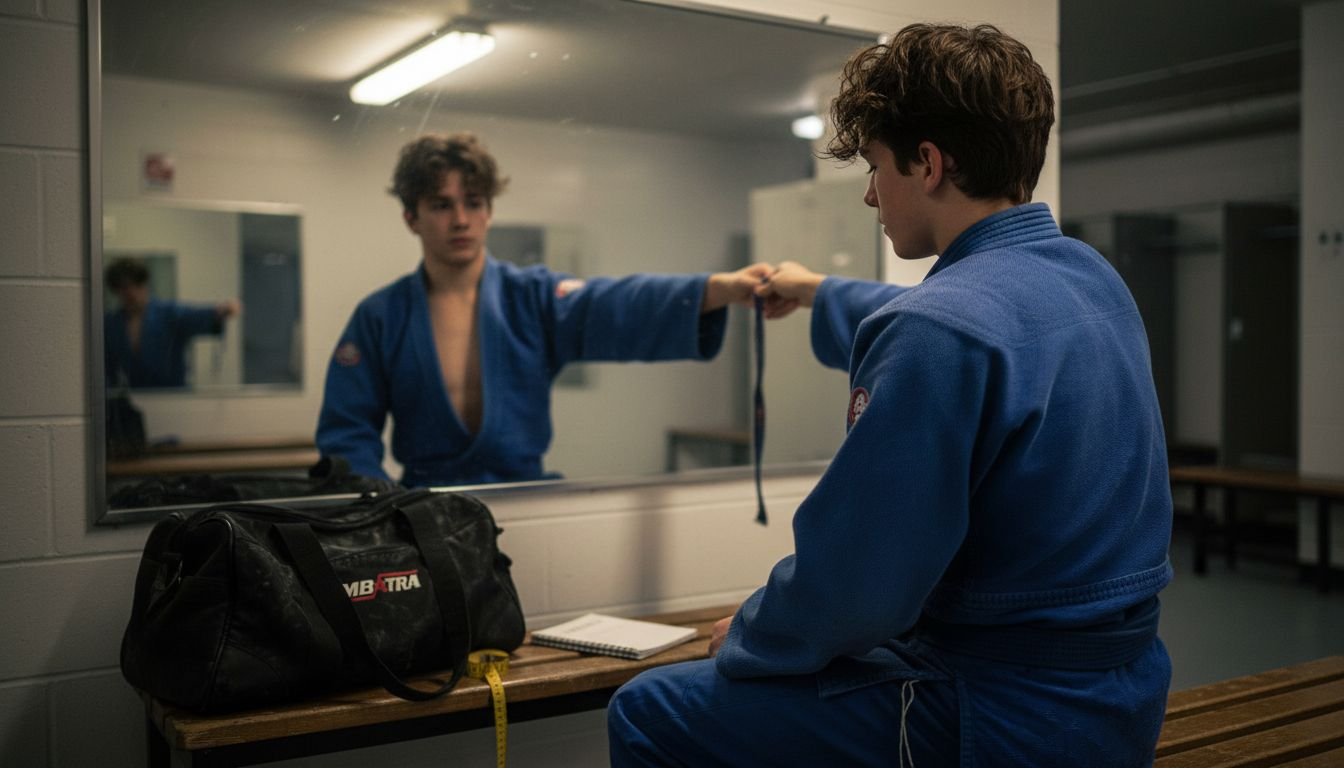
Training gis typically offer roomier cuts for comfort and durability during repetitive movements. Competition gis sacrifice some durability for streamlined fits that reduce grip opportunities and improve agility. Understanding this distinction helps you select the appropriate gi for each situation.
Gi sizing is not standardized across brands, creating confusion for buyers. Variations exist in cut and dimensions, requiring careful measurement and brand chart comparison. One manufacturer's A2 might fit like another's A3, making size charts essential for every purchase.
IBJJF competition rules specify exact sleeve and pant length requirements. Gis that do not comply with these standards can result in disqualification, regardless of how well they perform during training. Sleeves must reach within two thumb-widths of your wrist bone, and pants must extend to within two thumb-widths of your ankle bone.
Preshrunk gis eliminate guesswork around post-wash sizing changes. If your gi isn't preshrunk, buying one size larger provides a safety buffer. Many practitioners keep detailed records of how specific brands shrink after multiple wash cycles to inform future purchases.
Common sizing indicators help address body shape variations:
- L (Long) indicates extended sleeve and pant length for taller athletes
- H (Husky) provides extra room in the chest and waist for stockier builds
- S (Slim) offers a more tailored fit through the torso and limbs
Pro Tip: Measure your current gi after it has been washed and worn multiple times. These real-world measurements provide more accurate data than taking body measurements alone, especially when comparing across brands.
If you want precision beyond standard sizing, explore custom BJJ gi design options that allow you to specify exact measurements. This approach eliminates common fit frustrations and ensures compliance with competition standards. For additional insights on balancing fit with performance needs, review guidance on choosing BJJ gi for performance.
Selecting gis for training vs. competition: key differences and top models
Distinguishing between training and competition gis helps you optimize your investment for specific situations. Training gis prioritize durability with heavier weight fabrics and roomier cuts that withstand daily wear. Competition gis favor lightweight materials and tailored slim fits that enhance mobility and reduce grip opportunities.
The Sanabul Essentials V.2 ($60-80) stands out as a reliable beginner option with solid construction at an accessible price point. Its single weave cotton jacket and reinforced stress points handle frequent training without breaking your budget. The Fuji All Around Gi ($90-120) delivers exceptional durability across all skill levels with its pearl weave construction and triple-stitched seams.
For warm climate training, the Elite Sports Ultra-Light ($60-90) uses a lightweight ripstop weave that dries quickly between sessions. The Hayabusa Lightweight Pearl Weave ($150-180) represents premium durability with reinforced knee panels and antimicrobial treatment that resists odor buildup. The Tatami Estilo 6.0 ($130-160) balances style and performance with its modern cut and moisture-wicking properties.
Your budget, training frequency, and climate should guide your selection. Daily training in humid conditions benefits from multiple lightweight gis that dry overnight. Competitors might invest in one premium competition gi while using heavier training gis for daily drilling.
Training vs. competition gi features:
| Feature | Training Gi | Competition Gi |
|---|---|---|
| Fabric Weight | 450-650gsm | 350-450gsm |
| Cut Style | Roomy, traditional | Slim, tailored |
| Primary Goal | Durability | Mobility |
| Price Range | $60-120 | $100-180 |
| Ideal Use | Daily drilling | Tournament matches |
Top gi models by purpose:
- Budget training: Sanabul Essentials V.2 for durability at entry level pricing
- All-around performer: Fuji All Around Gi combines longevity with moderate weight
- Warm climate: Elite Sports Ultra-Light maximizes breathability and quick drying
- Premium durability: Hayabusa Pearl Weave withstands intense training schedules
- Competition ready: Tatami Estilo 6.0 offers streamlined fit and modern styling
Pro Tip: Purchase your competition gi well before tournament day to ensure proper break-in and verify it meets all rule requirements. New gis often feel stiff and may shrink slightly during initial washes, affecting compliance measurements.
Explore options like the custom white and black BJJ gi for tournament-ready performance with personalization options. If you need replacement pants that match your training gi, consider high-quality BJJ gi pants in black that maintain consistency across your gear.
Maintenance tips and common mistakes when selecting a BJJ gi
Proper care extends your gi's lifespan significantly and maintains its performance characteristics. Washing in cold water and hang drying preserves both fit and fabric integrity, preventing the shrinkage and wear that hot water and machine drying cause. This simple practice keeps your gi competition-ready for years.
Preshrinking the gi or buying preshrunk fabrics minimizes size changes after washing, eliminating the frustration of a perfectly fitted gi becoming too small. Many manufacturers now offer preshrunk options, but always verify before assuming your gi won't change dimensions.
Inspecting key stress points prevents catastrophic failures during training or competition. Most gi failures occur at the collar seam, sleeve cuff, elbow patch, and knee reinforcement. Catching loose stitching early allows for simple repairs rather than complete replacement.
Common selection mistakes undermine even quality gis:
- Ignoring size fluctuations after initial washes leads to ill-fitting gis
- Choosing gis that are too tight restricts movement and accelerates fabric stress
- Selecting overly loose gis provides excessive grip opportunities for opponents
- Failing to verify competition rule compliance before tournament day
- Neglecting to account for brand-specific sizing variations
Tailoring or sizing up provides a safer approach when uncertain about fit. Most tailors can adjust sleeve and pant length affordably, and starting with extra fabric beats trying to stretch a shrunken gi. If you find yourself between sizes, the larger option typically offers more flexibility.
"A gi that fits perfectly in the store might become unwearable after one hot wash cycle. Always plan for some shrinkage unless the manufacturer explicitly guarantees preshrunk fabric."
Pro Tip: Create a maintenance log tracking wash temperatures, drying methods, and any size changes for each gi. This data becomes invaluable when purchasing from the same manufacturer again or troubleshooting fit issues.
For comprehensive guidance on optimizing gi selection for your specific training style and performance goals, explore insights on choosing BJJ gi performance style. This resource helps you balance comfort, durability, and competition requirements effectively.
Explore customizable BJJ gis and gear at Combatra
Now that you understand how to select the perfect gi for your needs, finding a trusted source for high-quality, customizable options becomes your next step. Combatra offers premium BJJ gis tailored to your exact fit and style preferences, eliminating the guesswork from sizing and personalization.
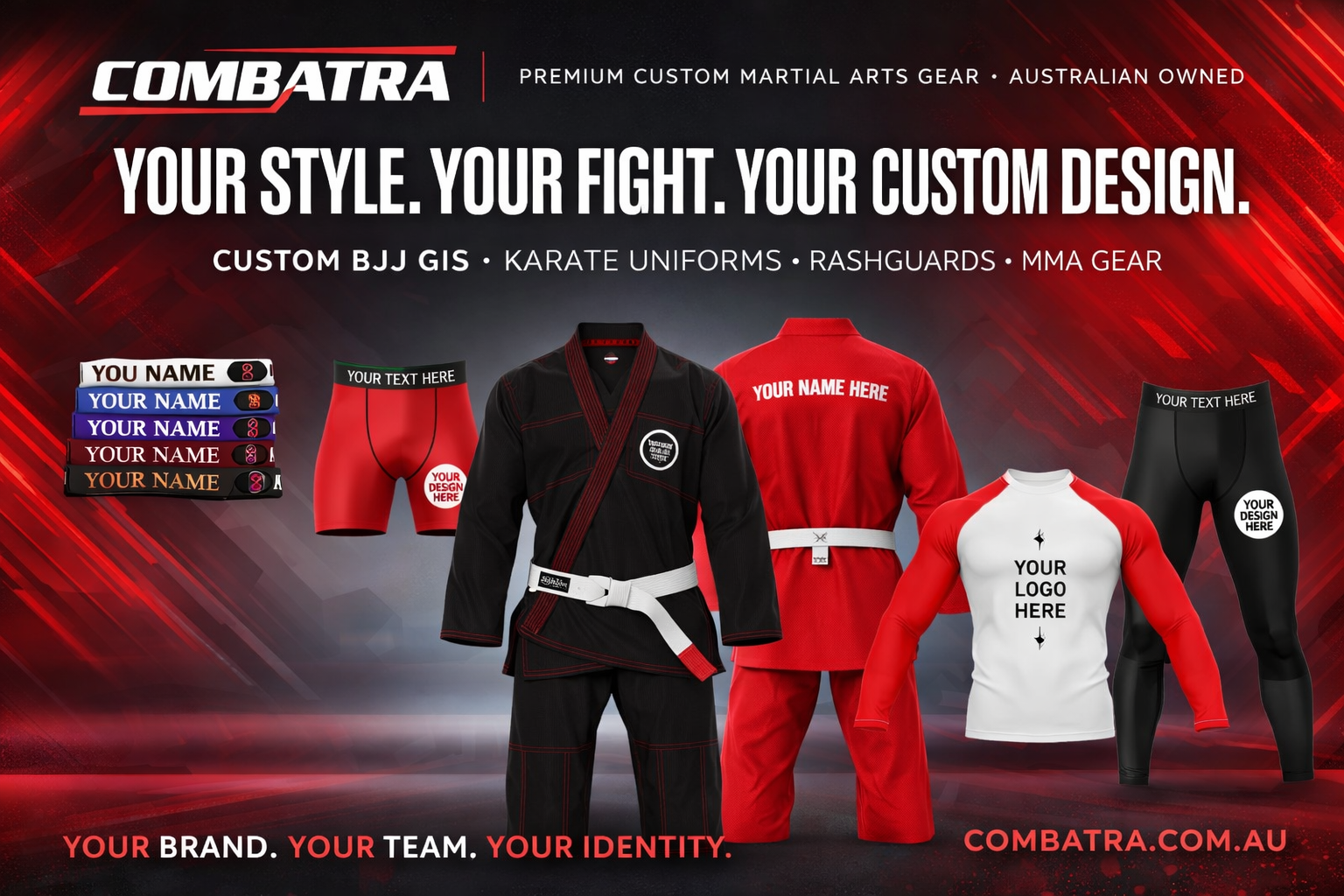
Choose from competition-ready options like the personalized white and black gi or create something unique through custom BJJ gi design that reflects your identity on the mat. Complete your training setup with durable BJJ gi pants in black that maintain consistency across your gear. Every piece combines premium materials with the personalization options that help you stand out while meeting competition standards.
Frequently asked questions
What is the best fabric weave for beginners?
Single weave or pearl weave gis work best for newcomers to BJJ. Single weave gis are light and soft, making them comfortable for warm climates, though they offer less durability during heavy grip fighting. Pearl weave provides better longevity while remaining manageable for beginners learning proper gi care.
How should I size my gi for competition?
Sleeves must reach within two thumb-widths of your wrist bone, and pants must meet similar ankle length requirements under IBJJF standards. Always verify specific competition rules as they update periodically, and consult brand size charts since measurements vary significantly between manufacturers. Consider custom BJJ gi design for precise competition compliance.
Can I use the same gi for training and competition?
While possible, most serious practitioners prefer separate gis for each purpose. Training gis are heavier and more durable but less mobile, while competition gis prioritize lightweight fabrics and tailored fits that enhance movement. Using dedicated gis for each purpose optimizes performance and extends the lifespan of your competition gear.
What maintenance practices help prolong gi lifespan?
Cold water washing and hang drying preserve preshrunk fabric and prevent unwanted shrinkage that affects fit. Inspect collar seams, sleeve cuffs, and knee reinforcements regularly for loose stitching or wear. Air your gi thoroughly between training sessions to prevent bacteria buildup and odor retention that accelerates fabric degradation.