
TL;DR:
- Custom compression wear provides precise, consistent pressure to enhance blood flow, reduce muscle fatigue, and accelerate recovery for athletes. Properly fitted garments with high elastane content and low stress relaxation maintain effectiveness during prolonged use, especially in hot climates, by addressing body shape variations and fabric quality. Wearing compression for 60 to 90 minutes post-training optimizes circulatory benefits and reduces delayed onset muscle soreness.
Custom compression wear is defined as form-fitted athletic garments engineered to deliver precise, graduated pressure to specific muscle groups, improving blood circulation, reducing fatigue, and accelerating recovery. In combat sports like Brazilian Jiu-Jitsu, MMA, and grappling, rashguards and compression garments serve a dual purpose: they protect skin from abrasion during ground work and provide the physiological support that keeps you training harder for longer. For Australian athletes training outdoors or through summer, the stakes are higher still. Australia’s UV index regularly exceeds 11, making UPF-rated gear a genuine safety requirement. Premium rashguards tested to AS 4399:2020 and rated UPF 50+ address both sun protection and performance in a single garment. Understanding why custom compression wear improves performance and comfort starts with the science behind how pressure, fabric, and fit interact.
How custom compression wear improves performance and comfort
Compression garments work by applying external mechanical pressure to soft tissue, which accelerates venous and lymphatic return. This means blood and metabolic waste products move out of working muscles more quickly, and oxygen-rich blood moves in to replace them. The result is reduced muscle fatigue during training and faster clearance of the compounds that cause soreness afterwards.
Research from the University of Groningen confirms that wearing compression stockings at 23–32 mmHg significantly reduces delayed onset muscle soreness (DOMS) overnight in runners, with DOMS declining at a statistically significant rate (Z=−2.904, p=0.004) compared to a control group. That finding matters because DOMS typically peaks between 24 and 72 hours after intense exercise, which is precisely the window when most athletes need to return to training. Compressing that recovery window gives you more quality sessions per week.
The benefits of compression wear extend beyond circulation. Perceived exertion also improved significantly in the compression condition (f(1,11) = 5.26, p=0.043), meaning athletes felt the effort was more manageable even when the physical workload was identical. Feeling less fatigued is not a minor psychological bonus. It directly supports training consistency, which is the single biggest driver of long-term athletic progress.
Key physiological mechanisms at work include:
-
Venous return acceleration: Graduated pressure from the ankle or wrist upward pushes blood back toward the heart more efficiently.
-
Lymphatic drainage support: Compression assists the lymphatic system in clearing inflammatory byproducts from muscle tissue.
-
Proprioceptive feedback: Snug contact with the skin improves body awareness and joint position sense during dynamic movement.
-
Vibration dampening: Compression reduces micro-vibrations in muscle tissue during impact, which contributes to reduced fatigue over long sessions.
Pro Tip: Wear your compression garment for at least 60 minutes post-training, not just during the session. Post-exercise wear is when the circulatory benefits are most pronounced.
What fabric properties make compression wear actually work?
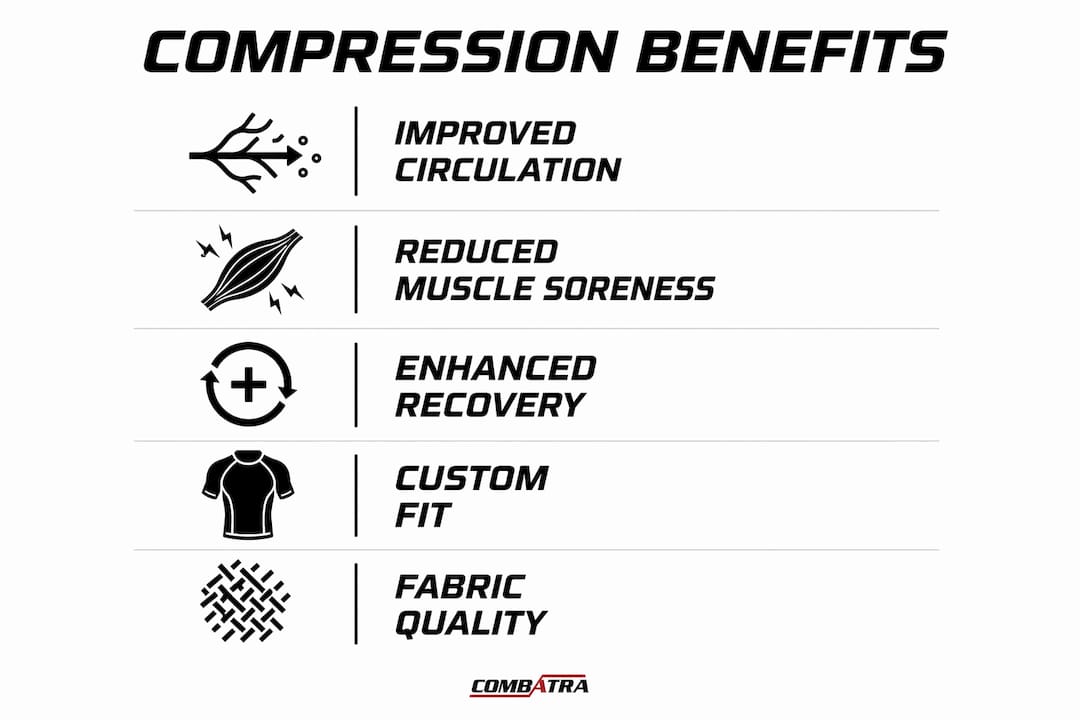
The pressure a compression garment delivers is not fixed. It changes with movement, washing, and time. The engineering of the fabric itself determines whether that pressure stays effective or drifts toward useless.
Elastane content is the primary variable. Fabrics with 31% elastane achieve near-complete recovery of 99.96–100% within one minute after stretching, with minimal stress relaxation. That means the garment returns to its original tension almost instantly after every movement, maintaining consistent pressure throughout a training session. Interlock spacer fabrics show superior mechanical properties for multi-level compression, particularly in torso garments where pressure uniformity across curved surfaces is difficult to achieve.
Stress relaxation is the failure mode that separates premium compression wear from cheap alternatives. When elastic fibres relax under sustained tension, pressure drift reduces the garment’s efficacy over hours of wear. A rashguard that delivers 25 mmHg at the start of a two-hour BJJ session may deliver significantly less by the end if the fabric has poor recovery characteristics. This is not visible to the wearer, which is why many athletes underestimate how much their gear degrades mid-session.
| Fabric property | Effect on compression wear performance |
|---|---|
| High elastane content (30%+) | Maintains consistent pressure; near-complete recovery after stretch |
| Low stress relaxation | Prevents pressure drift during prolonged wear |
| Warp-knit or interlock spacer construction | Improves pressure uniformity across body contours |
| Moisture-wicking fibre blend | Manages sweat without compromising compression tension |
| High tensile strength | Resists deformation through repeated washing and training |
Breathability is the trade-off that Australian athletes feel most acutely. Denser fabrics with higher elastane content tend to trap more heat, which is a real concern during summer training in Queensland or Western Australia. The best custom compression garments balance elastane percentage with open-weave or mesh panel construction to allow airflow without sacrificing pressure retention. For outdoor training, this balance is non-negotiable.
Pro Tip: Check the fabric recovery specification before purchasing. A garment that recovers to 99%+ of original tension within one minute will outperform a cheaper alternative within a single session, not just over months of use.
Why does custom fit outperform off-the-shelf compression?
Standard sizing assumes that athletes with the same waist measurement have the same thigh circumference, calf taper, and torso depth. They do not. Body anatomy varies significantly, and those variations directly affect how compression pressure is distributed across the body.
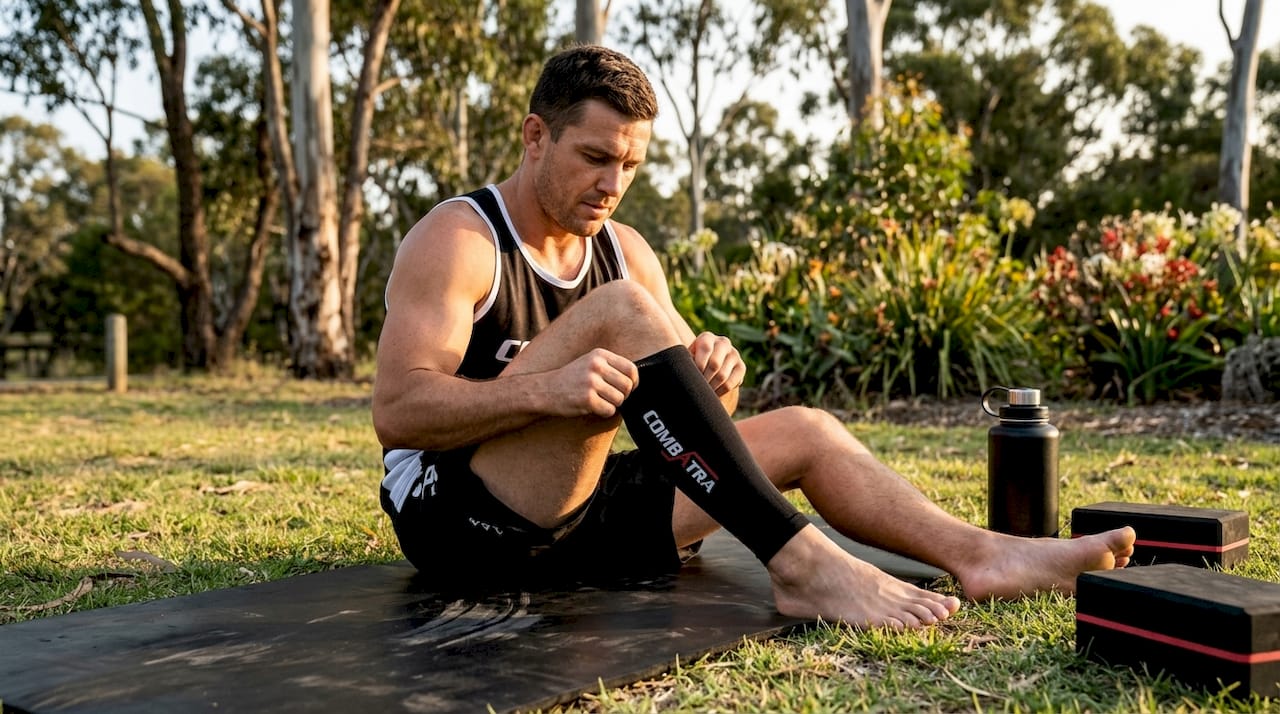
Body concavities and limited surface contact cause pressure gaps in standard compression garments, reducing support in exactly the areas where athletes need it most. The central torso zone is particularly vulnerable because the natural curvature of the abdomen and lower back creates regions where a flat-cut garment simply does not make full contact with the skin. No contact means no compression, regardless of how tight the garment feels at the edges.
The scale of the fit problem in compression wear is well documented. Incorrect fit affects 20%–43% of people wearing compression stockings, compromising the pressure gradient that makes the garment effective. For athletes, the consequences are performance-related rather than clinical, but the mechanism is identical. A garment that fits incorrectly delivers inconsistent pressure, which means inconsistent recovery and inconsistent performance support.
Custom compression garments address this through:
-
Individual pattern cutting: Garment panels are cut to match the athlete’s specific measurements, not a size bracket.
-
Pressure mapping validation: Premium manufacturers use spatial pressure mapping to confirm that target pressure zones are achieved across the full garment surface.
-
Anatomical contouring: Seam placement and panel shaping account for natural body curves, reducing pressure gaps at concave zones.
-
Personalised mmHg targets: Pressure levels are selected based on the athlete’s activity type, not a one-size approach.
For a detailed comparison of custom versus standard options in the Australian market, the differences in pressure consistency and comfort ratings are substantial. Athletes who switch from generic sizing to custom-fitted gear consistently report reduced mid-session discomfort and better recovery between training days.
How to choose and use custom compression wear as an athlete
Selecting the right compression garment starts with understanding pressure ranges. Compression is measured in millimetres of mercury (mmHg), and the appropriate level depends on your activity and the body region being compressed.
-
Light compression (8–15 mmHg): Suitable for everyday wear, travel, and low-intensity training. Provides mild circulatory support without restricting movement.
-
Moderate compression (15–25 mmHg): The standard range for athletic recovery and training support. Appropriate for most BJJ, MMA, and endurance training applications.
-
Firm compression (25–35 mmHg): Used for post-exercise recovery sessions or when managing specific soft tissue conditions. Requires accurate fit to avoid discomfort or restricted circulation.
-
Medical-grade compression (35 mmHg+): Prescribed for clinical conditions. Not appropriate for general athletic use without professional guidance.
Timing matters as much as pressure level. Wearing compression during training supports proprioception and reduces vibration fatigue. Wearing it for 60 to 90 minutes post-training accelerates the circulatory recovery process. Research confirms that compression reduces DOMS most effectively as part of a multimodal recovery approach, meaning compression works best alongside adequate sleep, hydration, and nutrition rather than as a standalone solution.
For Australian athletes training in hot conditions, compression in hot weather requires specific fabric consideration. Choose garments with moisture-wicking blends and ventilation panels for outdoor sessions. Avoid wearing compression garments for more than three to four hours continuously in high heat without a break, as sustained heat retention can negate the circulatory benefits.
Maintenance directly affects pressure retention. Wash comprehttps://blog.combatra.com.au/blog/compression-pants-hot-weather-training-performancession garments in cold water on a gentle cycle and air dry them flat. Heat from dryers degrades elastane fibres, accelerating pressure drift and reducing garment lifespan.
Pro Tip: Have your key measurements taken by a specialist or follow a detailed sizing guide before ordering custom compression. Thigh circumference, calf circumference, and torso length are the three measurements most commonly taken incorrectly with self-measurement.
Key takeaways
Custom compression wear delivers consistent, anatomically precise pressure that generic sizing cannot reliably reproduce, making it the most effective option for athletes who train regularly and recover hard.
| Point | Details |
|---|---|
| Compression reduces DOMS | Research confirms significant overnight DOMS reduction with 23–32 mmHg compression in active athletes. |
| Fabric quality determines efficacy | Fabrics with 31%+ elastane and low stress relaxation maintain pressure throughout long sessions. |
| Custom fit closes pressure gaps | Body concavities cause pressure loss in standard garments; custom patterning corrects this. |
| Incorrect fit is common | Between 20% and 43% of compression garment wearers experience fit errors that compromise pressure delivery. |
| Recovery timing is critical | Post-exercise compression wear for 60–90 minutes maximises circulatory and DOMS-reduction benefits. |
What I have learned from years of watching athletes use compression gear
The most common mistake I see athletes make is treating compression wear as a passive accessory rather than an active training tool. They pull on a generic rashguard because it feels tight and assume the job is done. The research tells a different story. Benefits depend on consistent pressure delivery, pattern precision, material quality, and pressure retention over time. A garment that loses tension halfway through a session is not delivering compression. It is just a tight shirt.
The second thing I have noticed is that athletes undervalue the psychological dimension. Research from the University of Groningen shows that compression reduces perceived exertion in endurance athletes even when objective biomechanical markers do not change. Feeling less fatigued keeps you training. Training consistency is what produces results. That connection between perceived comfort and long-term performance is something the neuroscience of sport takes seriously, and athletes should too.
My honest recommendation is to treat your first custom compression garment as an investment in your training infrastructure, not a clothing purchase. Work with a manufacturer who can provide pressure specifications and fabric recovery data. Ask about elastane percentage and stress relaxation characteristics. If they cannot answer those questions, the garment is not genuinely engineered for compression. It is just fitted activewear with a compression label.
— McGinnis
Gear built for athletes who train seriously
Combatra designs custom compression rashguards and garments specifically for combat sports athletes and outdoor training in the Australian climate. Every garment is built with elastane-rich fabrics for consistent pressure retention, UPF 50+ sun protection for outdoor sessions, and personalised sizing to eliminate the fit gaps that undermine standard compression wear.
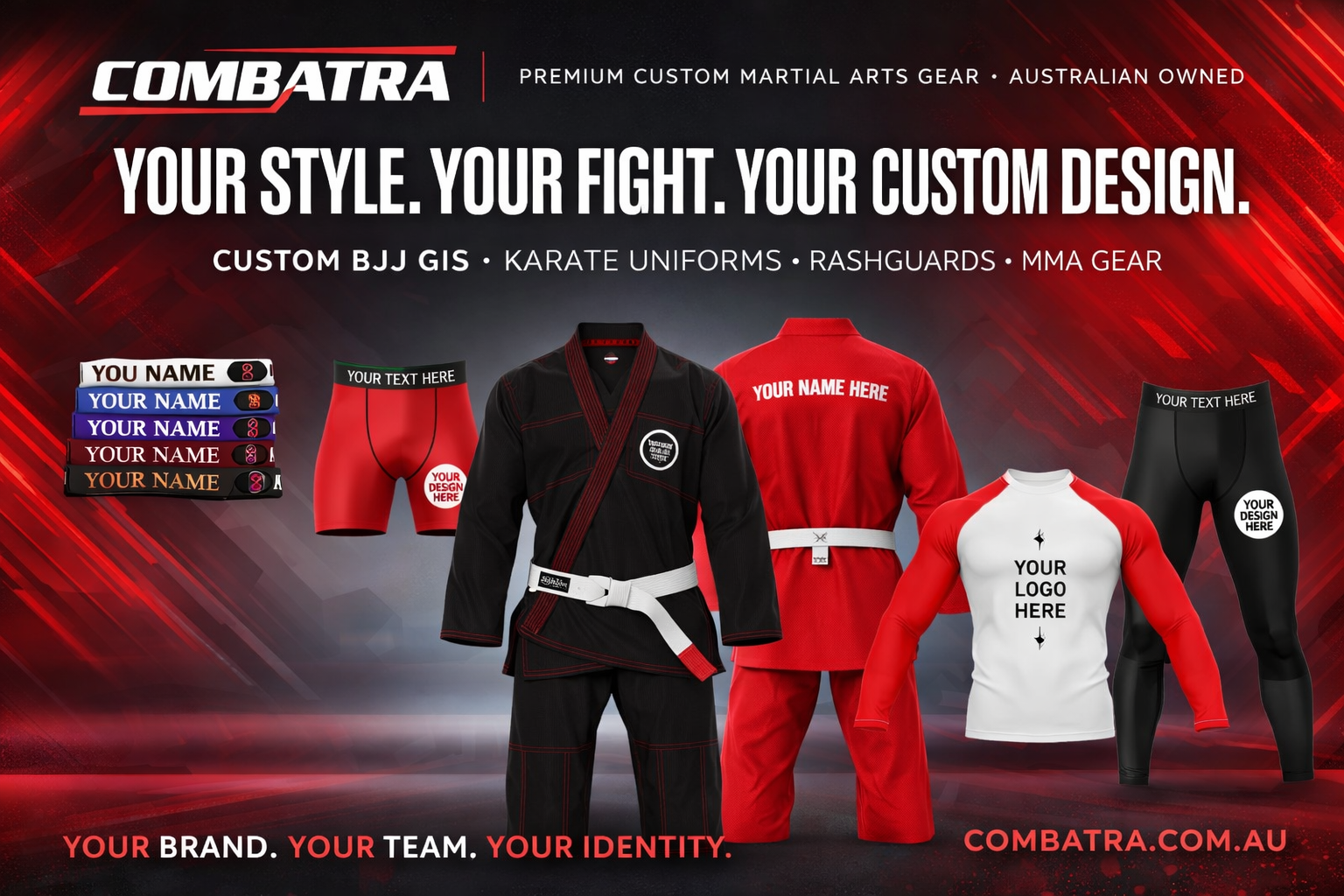
Whether you train BJJ, MMA, or Karate, or you spend long hours outdoors, Combatra’s custom compression rashguard is engineered to deliver real pressure wherhttps://combatra.com.au/collections/personized-rash-guardse your body needs it. You can also explore Combatra’s full range of compression pants for lower-body support that matches the same standard. Every piece can be personalised with your name, academy logo, or team colours.
FAQ
What is the best mmHg range for athletic compression wear?
Moderate compression between 15 and 25 mmHg suits most training and recovery applications for athletes. Firm compression at 25–35 mmHg is appropriate for post-exercise recovery sessions when accurate fit can be confirmed.
How does custom compression wear differ from standard sizes?
Custom compression garments are pattern-cut to individual measurements, which eliminates pressure gaps caused by body concavities. Research shows that incorrect fit affects up to 43% of standard compression garment wearers, compromising the pressure gradient that makes the garment effective.
Does compression wear actually reduce muscle soreness?
Yes. Wearing compression at 23–32 mmHg significantly reduces DOMS overnight in runners, with statistically significant results confirmed by University of Groningen research. The effect is strongest when compression is worn post-exercise as part of a broader recovery routine.
How long should I wear compression after training?
Wear compression for 60 to 90 minutes post-training to maximise circulatory recovery benefits. Avoid continuous wear beyond three to four hours in hot conditions, as heat retention can reduce the circulatory advantage.
Why does fabric quality matter in compression garments?
Fabrics with low stress relaxation and high elastane content maintain their target pressure throughout a session. Poor-quality fabrics experience pressure drift over time, meaning the garment delivers less compression by the end of training than it did at the start.