
TL;DR:
- UPF 50+ clothing blocks 98% of harmful UVA and UVB rays, outperforming standard garments for outdoor protection. It offers reliable, long-lasting coverage that doesn't degrade with sweat or washing, unlike chemical sunscreens. Combining certified UPF apparel with sunscreen ensures comprehensive skin safety during extended outdoor training sessions.
Rashguards do far more than prevent mat burn during training. For Australian combat sports athletes and outdoor enthusiasts, the right rashguard delivers compression support, manages sweat, resists abrasion, and — critically — protects your skin from one of the harshest UV environments on the planet. Most people assume any clothing offers reasonable sun protection. It does not. A standard cotton t-shirt carries a UPF rating of around 5, meaning nearly 20% of UV radiation passes straight through to your skin. The upf clothing benefits of a premium, lab-tested UPF 50+ rashguard go far beyond comfort. This guide breaks down exactly what those benefits are and how to make them work for you.
Table of Contents
- Key takeaways
- UPF clothing benefits explained
- Why UPF clothing outperforms sunscreen alone
- What affects UPF performance in real training conditions
- Choosing and using UPF clothing for training
- Common myths about UPF clothing
- My take on UPF gear for Australian athletes
- Combatra's UPF rashguards for serious athletes
- FAQ
Key takeaways
| Point | Details |
|---|---|
| UPF 50+ blocks 98% of UV | Premium UPF clothing vastly outperforms standard garments in shielding skin from UVA and UVB radiation. |
| Consistent all-day protection | Unlike sunscreen, UPF clothing does not degrade with sweat, movement, or time during training. |
| Inherent UPF lasts longer | Fabrics with UPF built into the fibre structure outlast chemically treated options across repeated washes. |
| Combine UPF with sunscreen | Use UPF clothing on covered areas and apply sunscreen to exposed skin like your face and hands. |
| Verify to Australian standards | Look for garments tested to AS 4399:2020 to confirm genuine UPF ratings before purchasing. |
UPF clothing benefits explained
UPF stands for Ultraviolet Protection Factor. It measures how much UVA and UVB radiation a fabric allows to reach your skin. A garment rated UPF 50+ permits only 1/50th of UV radiation to pass through, which means UPF 50+ blocks 98% of harmful rays. Compare that to an unrated cotton t-shirt, and the difference is stark.
SPF, on the other hand, applies to sunscreen products and measures protection only against UVB rays. UPF is the more complete measure for fabric because it accounts for both UVA and UVB. That distinction matters for anyone spending extended time outdoors, where long-wave UVA radiation causes deeper skin damage even on overcast days.
In Australia, garments claiming sun protection must meet the AS 4399:2020 standard. This standard governs laboratory testing of fabric under controlled UV conditions. When a product carries a verified UPF 50+ rating to AS 4399:2020, you can trust the number. Without that certification, a marketing claim of "UV protection" means very little.
Several factors determine a fabric's UPF rating:
- Weave tightness: Denser weaves leave fewer gaps for UV to penetrate
- Fibre type: Polyester and nylon typically provide higher inherent UPF than cotton
- Colour: Darker and more saturated colours generally absorb more UV radiation
- Weight: Heavier fabrics tend to block more UV, though modern lightweight options perform well with advanced fibre technology
- Moisture content: Wet fabric can lose UPF performance, depending on the construction
Pro Tip: When shopping for UPF clothing in Australia, look for the AS 4399:2020 label on the product page or swing tag. If it is not mentioned, ask the retailer directly or move on.
Why UPF clothing outperforms sunscreen alone
The core advantage of UPF sun protection clothing is reliability. Sunscreen works well when applied correctly and reapplied consistently. In practice, most people miss patches of skin, apply too little, and forget to reapply during extended outdoor sessions. UPF clothing all-day protection remains stable regardless of sweat, movement, or the hours ticking by.
Consider the cost angle as well. Outdoor workers sun protection research shows sunscreen can cost between $240 and $360 per year for consistent daily users, while a quality UPF garment lasts two to three years. For athletes training outdoors regularly, the maths lean firmly toward investing in UPF apparel.
Combining UPF clothing with sunscreen on exposed areas can reduce sunburn risk by up to 90% compared to using sunscreen alone. That figure should reframe how you think about sun safety at training.
There are also important skin health considerations for athletes with sensitive or reactive skin. Chemical sunscreens contain active ingredients that can irritate skin or cause contact dermatitis during heavy exercise. UPF clothing removes that concern entirely for the areas it covers. You sweat without worrying about what is absorbing into your skin.
| Feature | UPF 50+ clothing | Standard sunscreen |
|---|---|---|
| UV coverage | UVA and UVB | Primarily UVB (UVA varies) |
| Reapplication needed | No | Every 2 hours minimum |
| Sweat resistant | Yes (inherent UPF) | Degrades with sweat |
| Coverage consistency | Full fabric coverage | Depends on application |
| Long-term cost | Lower over time | Ongoing annual cost |
| Skin irritation risk | None | Possible with active ingredients |
Wearing UPF 50+ consistently has also been linked to a reduction in melanoma risk by up to 78% compared to unprotected skin. For athletes spending years training outdoors, that is not a minor statistic.
What affects UPF performance in real training conditions
Here is where the conversation gets more detailed. The UPF rating on a label reflects laboratory conditions. Real training introduces variables that matter.
Wetness and stretch are the two biggest factors. When fabric gets wet or is pulled tight, the gaps between fibres widen. UV radiation passes through more easily. Wet and stretched fabrics lose UPF effectiveness, which is precisely why premium rashguards use hydrophobic fibre structures and tighter construction methods. A garment that maintains its opacity when soaked and stretched is genuinely doing its job.
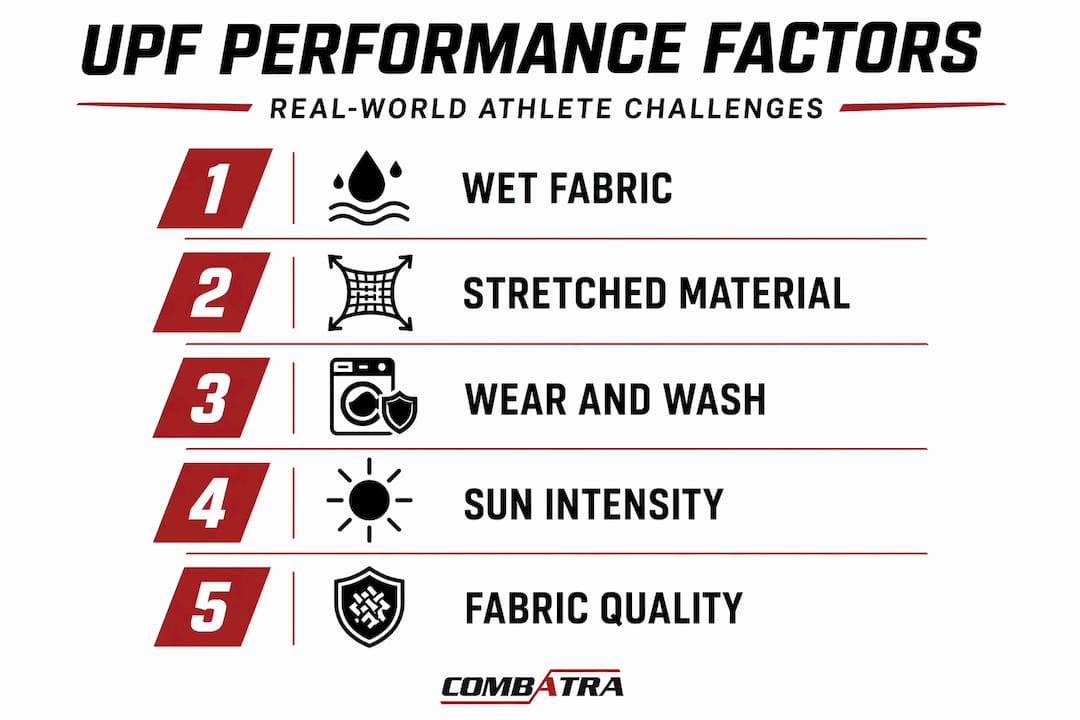
Inherent versus treated UPF is another important distinction. Inherent UPF is built into the fibre itself during manufacturing. Treated UPF relies on a chemical coating applied to the surface. Inherent UPF lasts through washes, while treated coatings can begin to break down after just 20 to 50 wash cycles. If you train hard and wash your gear frequently, a treated-finish garment could leave you with far less protection than the label originally promised.
Chemical coatings and PFAS raise a separate concern. Some water-repellent and stain-resistant finishes in sportswear use per- and polyfluoroalkyl substances. PFAS coatings health risks are amplified during exercise because sweating and heat increase skin absorption. If you are wearing a coated garment through a heavy training session, that is worth factoring into your purchasing decision.
The good news is that modern textile engineering has made it possible to build lightweight, breathable, UV-protective fabrics that perform through intense heat and movement without relying on surface chemical treatments.
- Choose inherent UPF fabrics to maintain protection across the life of the garment
- Avoid garments with PFAS coatings if you train hard and sweat heavily
- Check that fit is snug but not overstretched because excess stretch reduces UPF efficacy during movement
- Follow care instructions carefully, as high-heat drying can damage fibre structure
Pro Tip: If you are unsure whether a rashguard uses inherent or treated UPF, contact the manufacturer. Premium brands with genuine certifications will answer that question without hesitation.
Choosing and using UPF clothing for training
Knowing the benefits of sun protective apparel is one thing. Applying that knowledge when selecting and using your gear is where it counts.
-
Verify the certification. Look for AS 4399:2020 compliance on Australian products. This confirms the UPF rating comes from laboratory testing, not a marketing claim. Spotting quality UV clothing is a skill worth developing before you spend money.
-
Cover large skin areas with UPF clothing. Rashguards, long-sleeve compression tops, and arm sleeves cover the trunk and arms, which represent the largest UV-exposed surface areas during outdoor training. This dramatically reduces how much sunscreen you need to apply overall.
-
Apply sunscreen to every exposed area. Your face, neck, ears, and hands still need protection. UPF clothing and sunscreen work as a team. UPF and sunscreen together consistently outperform either option used alone.
-
Choose breathable, moisture-wicking fabrics for hot conditions. Polyester-spandex blends offer excellent UPF ratings while pulling sweat away from the skin. In Australian summer heat, comfort directly affects how long you keep your gear on. A garment you want to take off is not protecting you.
-
Wash on gentle cycles and air dry where possible. High heat degrades fibre structure over time, particularly in treated-UPF garments. Following wash care guidance preserves your investment and maintains protection across the seasons.
-
Replace garments showing visible wear or stretch. Pilling, thinning fabric, and permanent stretch all reduce UPF performance. Quality rashguards should hold their structure for at least two to three years with proper care.
Common myths about UPF clothing
There are several persistent misunderstandings about the advantages of UPF clothing that are worth addressing directly.
- "Any dark shirt will protect me." Colour influences UPF but does not determine it. A dark, loosely woven cotton shirt can still allow significant UV penetration. Verified UPF rating matters far more than colour alone.
- "UPF clothing replaces sunscreen entirely." UPF clothing covers what it covers. Exposed skin still needs sunscreen. The protection is complementary, not a complete replacement.
- "All rashguards have UV protection." They do not. A rashguard without a tested UPF rating offers the same protection as the fabric it is made from. Without a verified rating, that could be very little.
- "Heavier fabric always means better UPF." Modern lightweight fabrics with tight weave structures and inherent UV-blocking fibres frequently outperform heavier options. Weight alone is not the measure.
- "A regular t-shirt is fine for a couple of hours outside." Standard cotton UPF 5 allows nearly 20% of UV radiation through. Two hours of outdoor training in Australian summer sun is more than enough exposure to cause skin damage and accelerate long-term risk.
Understanding these distinctions gives you a clearer picture of why choosing the right gear matters. It is not about brand loyalty or aesthetics. It is about what is actually protecting your skin.
My take on UPF gear for Australian athletes
I have spent years watching Australian outdoor athletes underestimate sun exposure during training. The attitude tends to be that a session is short, the shirt is on, and the risk is manageable. That framing does not hold up when you look at the cumulative reality of training outdoors across an entire career.
In my experience, the athletes who take UV protection seriously are not the ones who train less. They are the ones who train smarter. A rashguard with a verified UPF 50+ rating is not a luxury. For anyone logging regular hours outdoors in Australia, it is a basic safety standard. The difference between a premium verified garment and a generic rashguard is not visible to the naked eye. But the difference in actual skin protection is significant and well documented.
What I find most reassuring about modern UPF clothing is that you no longer have to choose between performance and protection. Breathable, compression-supporting garments built with inherent UPF are genuinely comfortable to train in. If aesthetics have ever held you back from proper sun protection, that excuse is gone.
My advice is straightforward. Start with a garment that is tested to AS 4399:2020, uses inherent UPF fibres, and fits properly without overstretching. Build from there.
— ZZA
Combatra's UPF rashguards for serious athletes

If you train outdoors regularly, your gear needs to carry its weight on sun protection. Combatra's rashguards are built to UPF 50+ and tested to AS 4399:2020, meaning the protection is verified and reliable. Every garment combines compression support, moisture management, and abrasion resistance with sun protection that holds up through real training conditions. The fabrics use inherent UV-blocking properties rather than surface treatments, so the rating does not wash out over time.
Whether you train in BJJ, MMA, Karate, or outdoor fitness, Combatra offers customisable rashguards suited to individual athletes and team academies. You can personalise with names, logos, and colours without compromising the performance specifications that matter. Explore the full range and find gear that protects you at the level Australian conditions demand.
FAQ
What does UPF 50+ actually mean?
UPF 50+ means the fabric blocks at least 98% of UVA and UVB radiation, allowing only 1/50th of UV rays to reach your skin. It is the standard for verified sun protective clothing in Australia.
Is UPF clothing better than sunscreen for outdoor training?
UPF clothing provides consistent, all-day protection without reapplication, making it more reliable than sunscreen during active training. Using both together reduces sunburn risk by up to 90% compared to sunscreen alone.
How do I know if a UPF garment is genuine?
Look for products tested to the Australian standard AS 4399:2020. This confirms the UPF rating has been verified in a laboratory rather than estimated or marketed without testing.
Does washing reduce UPF protection?
Treated UPF garments can lose protection after 20 to 50 washes as chemical coatings degrade. Garments with inherent UPF built into the fibre structure retain their rating across the life of the garment with proper care.
Can I wear UPF clothing instead of sunscreen?
UPF clothing replaces sunscreen only on the skin it covers. Exposed areas including your face, neck, and hands still require sunscreen. The two work best as a combined protection strategy.