
TL;DR:
- Protecting oneself during outdoor training in Australia is essential due to extreme UV levels that cause rapid skin damage. UPF 50+ rashguards and broad-spectrum sunscreen work best together, with layered protection and proper timing significantly reducing burn risk and long-term health consequences. Using clothing rated to Australian standards, shade, and UV awareness ensures effective sun safety for athletes, minimizing immediate discomfort and future skin cancer danger.
If you train, compete, or simply spend extended time outside in Australia, knowing how to prevent sunburn outdoors is not optional. It is a genuine health priority. Australia's UV levels are among the highest on the planet, and athletes who train in BJJ, MMA, or outdoor fitness disciplines are exposed for longer and more frequently than the average person. Rashguards built for combat sports have evolved to address this directly. The best now integrate compression support, moisture management, abrasion resistance, and lab-tested UPF 50+ sun protection certified under AS 4399:2020, making them one of the most practical tools in any outdoor athlete's kit.
Table of Contents
- Key takeaways
- Understanding sunburn and UV risk for athletes
- Choosing the right sun protection gear
- Step-by-step sun protection for outdoor training
- Common mistakes that lead to sunburn outdoors
- Verifying your sun protection after a session
- My perspective on sun protection for combat athletes
- Gear built for outdoor training with real UV protection
- FAQ
Key takeaways
| Point | Details |
|---|---|
| UV exposure builds fast outdoors | At UV Index 8 to 10, unprotected skin can burn in under 10 minutes during peak hours. |
| UPF 50+ clothing outperforms sunscreen alone | A quality rashguard blocks at least 98% of UV rays, versus only 5 to 10% blocked by a plain cotton tee. |
| Layered protection is the standard | Combining UPF clothing, broad-spectrum sunscreen, and shade gives more consistent results than any single method. |
| Timing and reapplication matter | Apply sunscreen 15 to 30 minutes before going out and reapply every two hours, especially after sweating. |
| The Shadow Rule is a reliable field check | When your shadow is shorter than your body height, UV intensity is high and full protection is non-negotiable. |
Understanding sunburn and UV risk for athletes
Sunburn is caused by ultraviolet radiation, specifically UVA and UVB rays. UVB rays are the primary cause of sunburn and direct DNA damage to skin cells. UVA rays penetrate more deeply and accelerate skin ageing and long-term cellular damage. Both are present year-round in Australia, and both require protection.
The UV Index is the daily measure that quantifies this risk. Protection is recommended at UV Index 3 or above. At levels between 6 and 7, unprotected skin burns in 15 to 25 minutes. At levels 8 to 10, burning can occur in under 10 minutes. Australia regularly reaches UV Index 10 to 14 in summer, placing every outdoor session in the extreme risk category.
One factor many athletes overlook is reflected UV radiation. Surfaces like sand, water, and pavement reflect UV back onto the skin, which means shade does not eliminate your exposure. A BJJ practitioner drilling on a beach, or an MMA athlete training on an outdoor concrete pad, is absorbing UV from multiple directions simultaneously. This reflected load adds up fast.
The consequences extend well beyond the short-term discomfort of red, sore skin. Repeated sunburn accelerates skin ageing and significantly raises skin cancer risk. Every sunburn represents accumulated skin damage that compounds over time. For athletes who train regularly outdoors across a career, this is a serious long-term consideration, not a minor inconvenience.
| UV Index | Burn time (unprotected) | Recommended precautions |
|---|---|---|
| 1 to 2 | More than 60 minutes | Minimal precautions for most skin types |
| 3 to 5 | 30 to 45 minutes | SPF 30+ sunscreen, protective clothing |
| 6 to 7 | 15 to 25 minutes | UPF clothing, hat, sunscreen, limit midday exposure |
| 8 to 10 | Under 15 minutes | Full layered protection, avoid peak hours |
| 11 and above | Under 10 minutes | Maximum protection, seek shade, reschedule if possible |
Choosing the right sun protection gear
Understanding your options before you step outside makes a significant difference. There are two primary tools: topical sunscreen and UV-protective clothing, and they work best together rather than as substitutes for each other.
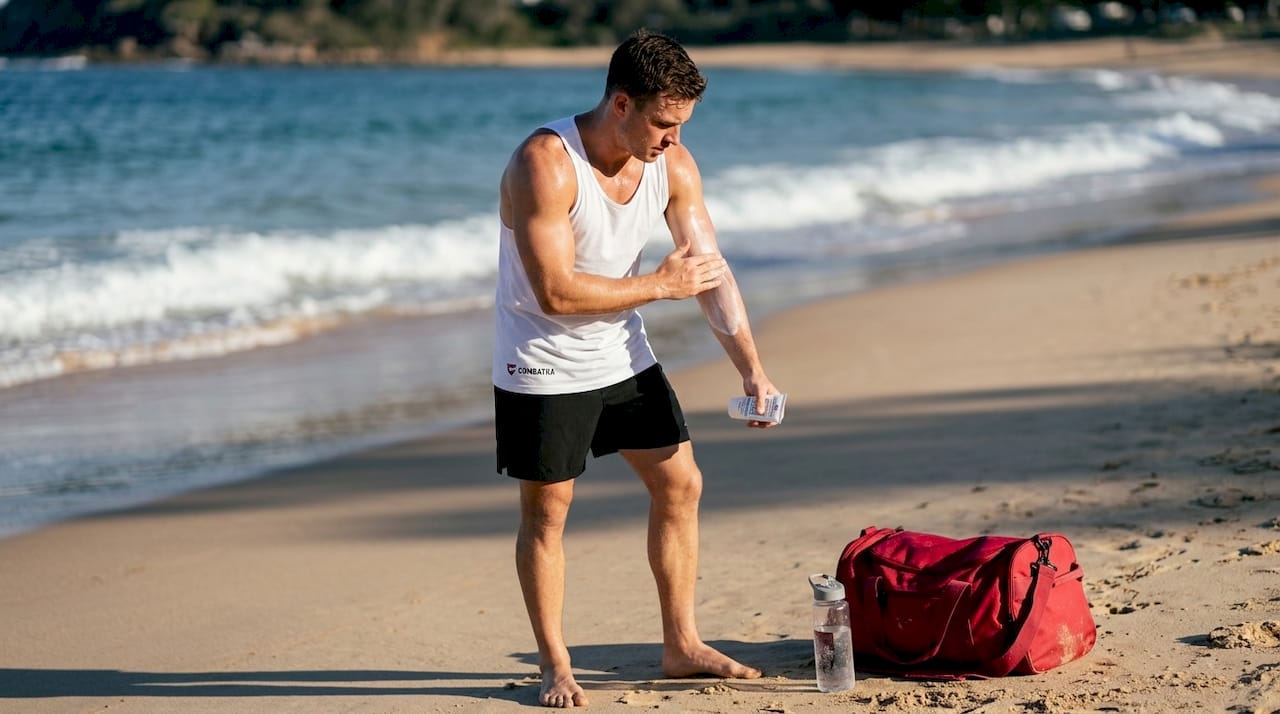
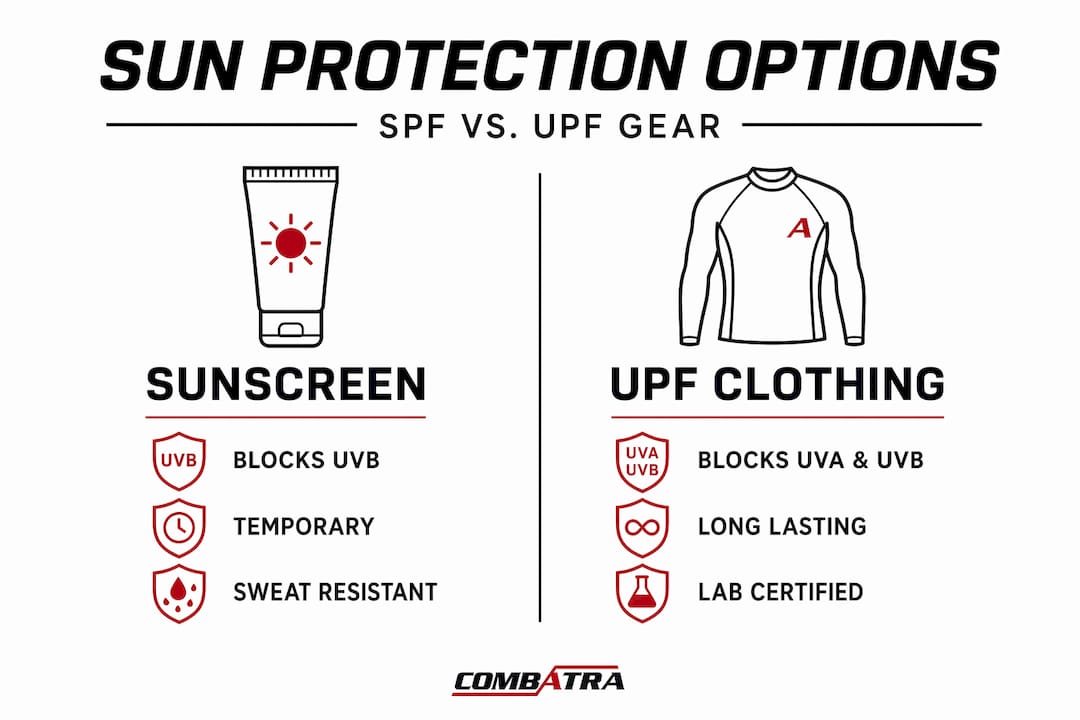
Sunscreen SPF ratings measure protection against UVB rays only. A broad-spectrum label means the product also covers UVA. SPF 30 blocks approximately 97% of UVB rays, while SPF 50 blocks around 98%. The difference sounds small, but it matters for high-duration outdoor training. Always choose a water-resistant, broad-spectrum formulation with at least SPF 30 for any outdoor session.
UPF clothing operates differently. The UPF rating measures how much UV radiation passes through the fabric. UPF 50+ garments block at least 98% of UV rays, and unlike sunscreen, they do not wash off, rub off, or expire. A standard white cotton t-shirt carries a UPF of roughly 5 to 10, which means up to 90% of UV radiation passes straight through it. That is a substantial and underappreciated risk for athletes who assume any clothing offers protection.
Rashguards purpose-built for outdoor training, such as those from Combatra, are lab tested to AS 4399:2020 and rated UPF 50+. Pair them with UV-rated sports clothing for comprehensive upper and lower body protection. A wide-brimmed hat and UV-blocking sunglasses complete the kit by protecting the face, neck, and eyes from both direct and reflected radiation.
Here is a practical comparison of common sun protection options:
| Protection method | UV blocking | Duration | Sweat proof | Best used for |
|---|---|---|---|---|
| SPF 30+ sunscreen | Up to 97% UVB | 2 hours (reapply) | No | Exposed skin areas |
| UPF 50+ rashguard | 98%+ UV | Full session | Yes | Torso, arms coverage |
| Wide-brimmed hat | Variable | Full session | Yes | Face, neck, ears |
| UV-blocking sunglasses | Variable | Full session | Yes | Eyes and surrounding area |
| Cotton t-shirt | 5 to 10% UPF | Full session | No | Not recommended |
Pro Tip: When selecting UPF clothing, check for an explicit lab-tested certification rather than a brand claim. AS 4399:2020 is the Australian standard, and it verifies actual fabric performance under controlled conditions.
Step-by-step sun protection for outdoor training
A clear routine before, during, and after your session removes the guesswork and makes sun protection automatic rather than reactive.
- Check the UV Index before you leave. Your phone's weather app shows the daily UV forecast. If it is 3 or above, full protection is required. If it is 8 or above, consider adjusting your session to before 10 a.m. or after 4 p.m.
- Apply sunscreen 15 to 30 minutes before going outside. This allows the product to bind to the skin properly. Use a generous amount. Most people apply far too little, which drops effective SPF significantly.
- Dress in UPF 50+ clothing. Cover as much skin as possible with lab-rated gear. A rashguard handles the torso and arms. Add leggings or training pants for lower body coverage on longer sessions. For more detail on how this gear performs, see what UPF 50 clothing actually does.
- Add a wide-brimmed hat and UV sunglasses. These protect the face, ears, and eyes, areas that many athletes leave completely exposed.
- Use the Shadow Rule during your session. If your shadow is shorter than your height, UV intensity is at its peak. This typically falls between 10 a.m. and 4 p.m. Use this as a real-time check without needing any app.
- Reapply sunscreen every two hours, or immediately after heavy sweating or water exposure. Water-resistant formulas are not waterproof. Reapplication is the part most athletes skip, and it is where protection breaks down.
- Seek shade during rest intervals. You do not need to be moving to be accumulating UV exposure. Resting in direct sunlight between rounds still adds up.
- After training, cool and moisturise exposed skin. This supports skin recovery even when no visible burn has occurred.
Pro Tip: Set a phone reminder to reapply sunscreen every two hours during long outdoor sessions. It takes less than 30 seconds and makes a measurable difference to your total UV exposure across the day.
Common mistakes that lead to sunburn outdoors
Even experienced athletes make errors that compromise their sun protection. Recognising these patterns gives you a clear path to doing it better.
- Relying solely on sunscreen. Sunscreen is critical but physical barriers are more reliable for all-day protection. Sunscreen washes off, rubs off against training partners, and degrades in heat.
- Thinking cloudy days are safe. Up to 80% of UV radiation passes through cloud cover. Many bad sunburns occur on overcast days because athletes drop their guard.
- Assuming hydration prevents sunburn. Drinking water does not prevent sunburn. Hydration is important for performance and heat management, but it has no effect on UV damage to skin.
- Missing the ears, neck, and tops of feet. These are among the most commonly burned areas on athletes because they are easy to forget when applying sunscreen quickly before a session.
- Using expired or heat-degraded sunscreen. Most sunscreens have a shelf life of two to three years. Heat exposure reduces sunscreen efficacy substantially, and a product left in a hot car or bag is likely underperforming even if it has not reached its expiry date.
- Applying too little sunscreen. Clinical testing uses 2 mg per cm² of skin. Most people apply a quarter to a half of that, which means the actual protection delivered is significantly lower than the SPF number on the bottle.
Athletes in grappling and combat sports face an additional challenge: physical contact wipes sunscreen off exposed skin during training. This is one of the strongest arguments for prioritising UPF-rated garments to cover as much skin as possible, and limiting sunscreen reliance to areas that cannot be covered by clothing.
Verifying your sun protection after a session
After training, a quick self-assessment tells you whether your strategy is working and where to adjust.
Signs your sun protection was effective include skin that feels cool and comfortable to touch, no redness or tenderness developing in the hours after training, and no tightness or peeling in the following days. If you notice early redness, treat it quickly. Cool the skin with a damp cloth, apply an alcohol-free moisturiser, and increase fluid intake. Avoid further sun exposure until the skin has fully recovered.
Know when to seek medical advice. Severe sunburn with blistering, fever, chills, or significant swelling warrants a medical assessment. These are signs of second-degree burns, not a minor inconvenience to wait out.
Consistent sun protection also directly supports training consistency. Sunburn is genuinely painful and can sideline athletes for several days. Cumulative sun damage raises long-term skin cancer risk, which is a health outcome no performance goal should be traded for.
Use this post-session checklist regularly:
- Did you apply sunscreen 15 to 30 minutes before starting?
- Did you reapply every two hours and after heavy sweating?
- Were all exposed skin areas covered, including ears, neck, and feet?
- Did you wear UPF-rated clothing on the torso and arms?
- Did you avoid peak UV hours where possible, or use shade during rest periods?
- Does your skin feel normal and comfortable now?
My perspective on sun protection for combat athletes
I have spent years watching athletes treat sunscreen as an afterthought. A quick spray on the way out the door, or nothing at all because "it is only an hour." That thinking is how skin damage accumulates quietly across a career.
What I have found actually works is putting the clothing first. The brand of sunscreen matters far less than whether you have a properly rated UPF 50+ rashguard covering the largest surface areas of your body. Fabric protection does not degrade mid-session. It does not rub off when you clinch or grapple. It does not require you to remember to reapply it. Once you understand that distinction, your entire approach to outdoor training sun safety shifts.
The counterintuitive part is that this is also a performance conversation, not just a health one. Athletes who recover well train more consistently. Skin that is not repeatedly damaged recovers faster from heat and physical stress. The layered approach, clothing first, sunscreen for the gaps, shade during rest, UV Index checks before you start, is simply the higher-standard version of preparing for a session. Every other part of your kit is tested, fitted, and chosen deliberately. Your sun protection strategy should be no different.
— ZZA
Gear built for outdoor training with real UV protection

Combatra designs rashguards and training apparel specifically for athletes who spend serious time outside. Every rashguard in the Combatra range is lab tested to AS 4399:2020 and rated UPF 50+, which means the protection figure on the label is backed by actual testing, not a marketing estimate. The fabrics are engineered for breathability and long-duration wear, so you stay cool and comfortable across full outdoor sessions without compromising on UV coverage.
Whether you are looking for performance MMA shorts for training in heat, or a full kit for outdoor BJJ and summer conditioning work, Combatra has options built around real conditions. Explore the full range at Combatra and find gear that works as hard as you do.
FAQ
What is the best sunscreen for outdoor activities?
Choose a broad-spectrum, water-resistant sunscreen with at least SPF 30. Apply it 15 to 30 minutes before going outside and reapply every two hours, especially after sweating.
What should you wear to avoid sunburn while training?
UPF 50+ rated clothing, such as rashguards and compression leggings, blocks at least 98% of UV radiation and provides more consistent protection than sunscreen alone during physical activity.
Can you get sunburned on a cloudy day?
Yes. Up to 80% of UV radiation penetrates cloud cover, so protection is still needed on overcast days. Check the UV Index rather than relying on how bright the sky looks.
How do you know when the UV risk is highest outdoors?
Use the Shadow Rule: if your shadow is shorter than your body, UV intensity is high and full protection is required. This generally occurs between 10 a.m. and 4 p.m.
Does drinking water prevent sunburn?
No. Hydration supports performance and helps prevent heat illness, but it has no effect on UV damage. Sunburn is caused by UV radiation, not dehydration.