
TL;DR:
- Choosing a custom rashguard supplier requires verifying fabric composition, certifications, and sublimation quality to ensure durability and sun protection. Reliable suppliers provide transparent documentation, independent lab tests, and perform multiple sampling rounds for quality assurance. Customisation options and in-house production capabilities are essential for consistent branding and garment performance in demanding training environments.
Choosing a custom rashguard supplier requires focusing on fabric quality, certified UV protection, flatlock stitching, and verified manufacturing processes. Rashguards are technical garments engineered for grappling, BJJ, MMA, and high-intensity training. They provide compression support for muscle stabilisation, moisture management to reduce sweat accumulation, and abrasion resistance to prevent mat burns during ground work. Durability is non-negotiable when garments face repeated washing and intense physical stress. In Australia, where UV radiation levels are among the highest in the world, rashguards used in outdoor or summer training must also deliver genuine sun protection. Premium options are lab tested to AS 4399:2020 and rated UPF 50+, meaning they block at least 98% of UV radiation. Understanding what separates a reliable supplier from a poor one protects your investment and your athletes.
What to look for in a custom rashguard supplier: fabric and specifications
The foundation of any quality rashguard is its fabric blend. Professional BJJ rashguards use an 80 to 83% polyester and 17 to 20% spandex blend at 200 to 240 GSM. This combination delivers the abrasion resistance, opacity, and UPF 50+ protection that combat sports demand. The GSM range matters practically. Fabric below 200 GSM tends to be too thin for mat work, while anything above 240 GSM restricts mobility during high-effort grappling.
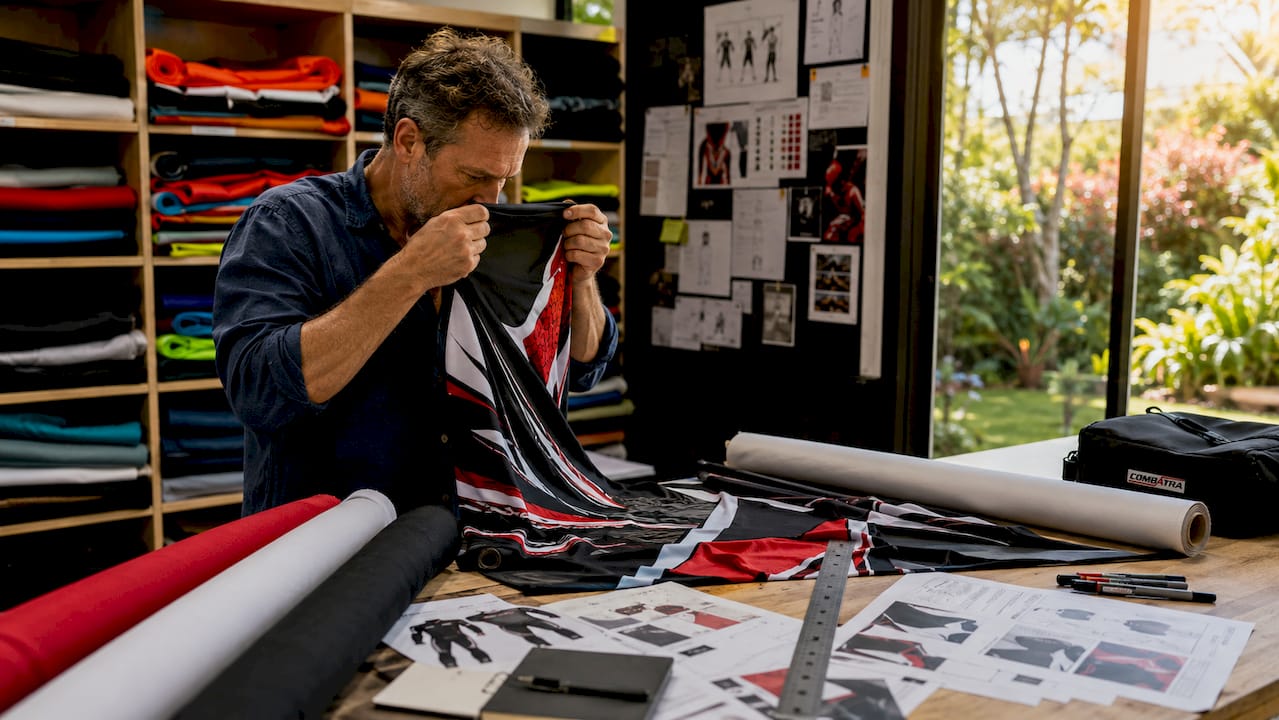
The spandex percentage is equally critical. 17 to 20% spandex provides the shape retention needed to prevent garments from bagging out after intensive sessions. A rashguard that loses its compression fit after ten training sessions is not performing its job. Four-way stretch is the minimum acceptable standard, allowing full range of motion in guard play, takedowns, and clinch work.
Beyond stretch, look for fabrics that are quick-drying, chlorine-resistant for pool or water-based training, and treated for moisture-wicking. Breathability is not a marketing term here. It directly affects how long an athlete can train comfortably without overheating, particularly in Queensland or Northern Territory conditions where ambient temperatures compound UV exposure.
| Fabric property | Performance requirement |
|---|---|
| Polyester/spandex ratio | 80–83% polyester, 17–20% spandex |
| Fabric weight (GSM) | 200–240 GSM for durability and opacity |
| Stretch type | Four-way stretch for full range of motion |
| Moisture management | Wicking and quick-dry treatment |
| UV protection | UPF 50+ verified by lab testing |
Pro Tip: Ask your supplier for the fabric data sheet before ordering samples. A legitimate manufacturer will provide GSM weight, fibre composition, and stretch recovery data without hesitation.
Which certifications confirm rashguard manufacturing quality?
Certifications are the clearest signal of a supplier's commitment to consistent production. ISO 9001 and OEKO-TEX Standard 100 are the two most relevant for rashguard procurement. ISO 9001 confirms that a manufacturer operates a documented quality management system, meaning production errors are tracked and corrected systematically. OEKO-TEX Standard 100 certifies that every component of the fabric, including dyes and finishing agents, is free from harmful substances. For garments worn directly against skin during intense training, this matters.
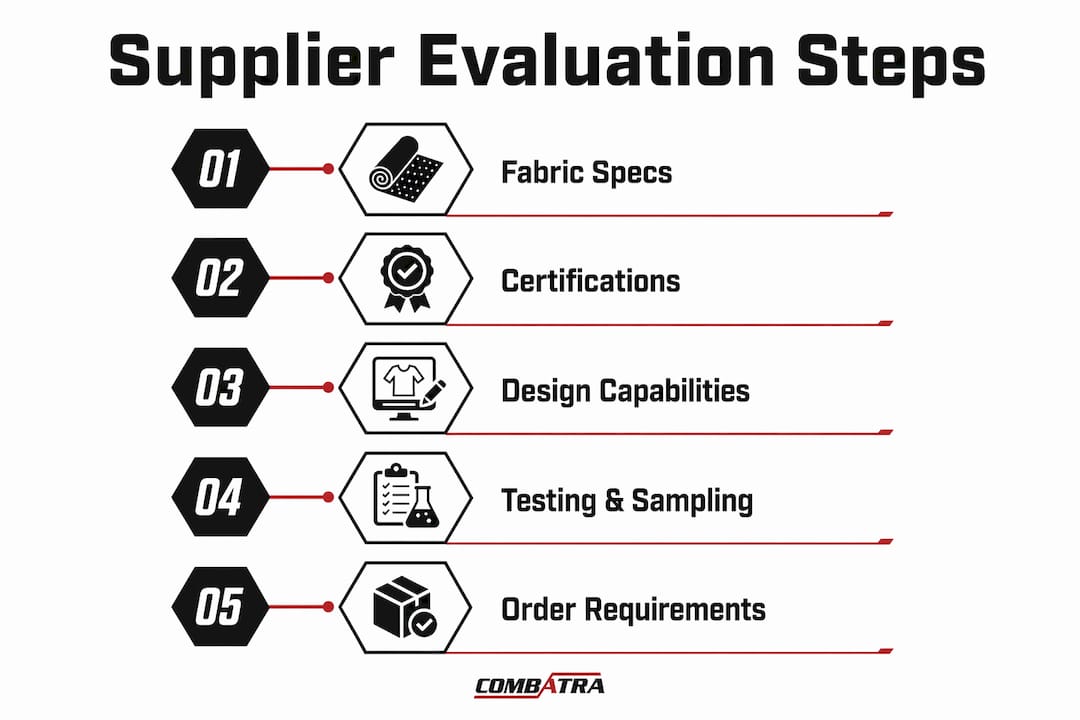
UPF 50+ certification requires independent lab testing, not just a supplier's word. The AATCC 183 test method is the recognised standard for measuring UV transmittance through fabric. Lab testing for UPF 50+ confirms that UV protection maintains effectiveness even after 40 simulated wash cycles. This is the figure that separates genuine sun protection from a marketing claim. Many manufacturers falsely claim UPF 50+ without independent verification, and products without lab testing routinely fail to protect athletes from Australia's harsh sun.
Stitching standards are equally important and often overlooked. Flatlock stitching with 4-needle 6-thread construction is the industry standard for combat sports rashguards. It creates a flat seam that lies against the skin without raised edges, preventing mat burns during extended ground work. The thread type matters too. Soft-stretch nylon thread outperforms polyester in flatlock applications because it flexes with the fabric rather than resisting it, reducing friction and skin irritation over long training sessions.
"Reliable suppliers demonstrate transparency by sharing lab test certifications and sample production details, signalling quality commitment." — B2B Production Guide, Gonuldagi
When evaluating a supplier, request copies of their OEKO-TEX certificate, ISO 9001 registration, and any UPF lab test reports. A supplier unwilling to provide these documents is a supplier worth avoiding.
How to evaluate design and customisation capabilities
Customisation is where many suppliers fall short, particularly for academy teams that need consistent branding across multiple garment sizes and styles. Full sublimation printing is the correct method for custom rashguards. It bonds ink directly into the fabric fibres rather than sitting on top, which means colours do not crack, peel, or fade with washing. The key detail to check is whether the supplier's sublimation process extends to all seam edges. White borders at seam lines indicate incomplete sublimation coverage and are a sign of lower-grade production.
Ink quality determines how long colours remain vivid under training and washing conditions. Premium Italian inks such as Kiian penetrate fibres deeply, preventing colour fading or whitening when the fabric stretches. This is particularly visible on dark backgrounds and fine detail work in logos. Ask your supplier which sublimation inks they use and whether they can provide colour consistency guarantees across production runs.
For academy orders, the following customisation capabilities are the minimum you should expect from a credible vendor:
- Pantone or hex code colour matching for brand consistency across all garment sizes.
- Full artwork proofing with a digital mockup before production begins.
- Custom logo placement options including chest, back, sleeves, and collar.
- Sleeve length variations, including short-sleeve, long-sleeve, and no-sleeve configurations.
- Compliance with IBJJF uniform regulations for competition-legal designs.
Pro Tip: Request a tech pack template from your supplier. Suppliers who work with tech packs understand production tolerances and are far less likely to deliver garments that differ from your approved design.
Design quality also affects athlete performance indirectly. A well-fitted, correctly branded rashguard builds team identity and encourages consistent training attendance. Academy owners who invest in professional custom gear consistently report stronger team cohesion and athlete retention.
What testing and sampling processes confirm supplier reliability?
Physical sampling is the most reliable method for confirming a supplier's production quality before committing to a bulk order. Round one of sampling should test fabric composition, fit, stitching quality, and wash performance. Round two addresses corrections identified in round one. Two rounds are the minimum required for a technically sound production outcome.
When you receive samples, test them against these specific failure points:
- Collar stretch: put the rashguard on and off ten times. The collar should return to its original shape without distortion.
- Sublimation bleed: examine fine lines and logo edges under bright light. Bleed indicates ink saturation problems.
- Seam integrity: pull seams laterally with moderate force. Any separation or thread pulling indicates inadequate stitching tension.
- Colourfastness: wash the sample five to ten times and compare colour depth against the original digital proof.
- UV protection: request the lab test report for the specific fabric batch used in your sample, not a generic certificate.
| Test type | What to check |
|---|---|
| Collar recovery | Returns to original shape after repeated use |
| Sublimation quality | No bleed, no white borders at seams |
| Seam strength | No separation under lateral stress |
| Colourfastness | Consistent colour after 5 to 10 wash cycles |
| UV protection | Batch-specific lab test report provided |
Minimum order quantities also affect your supplier decision. Experienced manufacturers in Pakistan typically set MOQs around 50 pieces for fully custom sublimated rashguards, while many Chinese factories require significantly higher minimums. For academy teams ordering 20 to 30 units, a supplier with a flexible MOQ policy is a practical necessity, not a luxury.
How to avoid common pitfalls when selecting a rashguard vendor
The rashguard market includes many suppliers who present well online but deliver poorly in production. Knowing the warning signs protects your budget and your athletes' training experience.
- Unrealistically low MOQs without true customisation. Suppliers offering fully custom sublimated rashguards at five or ten pieces are typically using stock garments with printed patches, not genuine custom fabrication.
- Generic fabric samples that differ from bulk production. Some suppliers send premium samples but produce bulk orders from lower-grade fabric. Always request that your sample is cut from the same fabric roll as your production order.
- No in-house sublimation capability. Suppliers lacking in-house sublimation frequently produce rashguards with poor colour saturation and seam mismatches that degrade quickly. Outsourced sublimation introduces quality control gaps.
- Unverified UV protection claims. A UPF 50+ label without an independent lab test report is not a guarantee. In Australia's UV environment, this is a genuine health risk for athletes training outdoors.
- Assuming any activewear factory can produce combat sports rashguards. Performance rashguards for BJJ and MMA require specific fabric handling, flatlock stitching expertise, and knowledge of grappling-specific fit requirements. General activewear factories often lack this experience.
Verified references from other academy owners or teams are one of the most reliable indicators of supplier quality. Ask for contact details of existing clients and follow up directly. A supplier confident in their work will provide references without hesitation.
Key takeaways
Selecting a custom rashguard supplier requires verifying fabric specifications, certifications, sublimation quality, and sampling processes before committing to bulk production.
| Point | Details |
|---|---|
| Fabric specification | Confirm 80 to 83% polyester and 17 to 20% spandex at 200 to 240 GSM. |
| Certifications required | Request ISO 9001, OEKO-TEX Standard 100, and batch-specific UPF lab test reports. |
| Sublimation quality | Verify full-coverage sublimation with premium inks and no white seam borders. |
| Sampling process | Complete two sample rounds testing seams, colourfastness, collar recovery, and UV integrity. |
| Supplier red flags | Avoid vendors without in-house sublimation, verified references, or transparent documentation. |
What I have learned about choosing the right supplier
After working closely with academy owners and athletes across Australia, the pattern is consistent. The suppliers who deliver reliable results are not always the ones with the most polished websites or the lowest prices. They are the ones who answer technical questions directly, provide lab test reports without being asked twice, and treat the sampling process as a standard part of production rather than an inconvenience.
Australia's UV environment makes the certification question non-negotiable for me. I have seen athletes train outdoors through summer in rashguards that claimed UPF 50+ but had no independent verification. That is a real risk, not a theoretical one. The AS 4399:2020 standard exists precisely because marketing claims and actual protection are not the same thing.
On seam durability, the difference between flatlock stitching with soft-stretch nylon thread and standard overlock stitching becomes obvious within three months of regular training. Flatlock garments hold their shape and comfort. Standard overlock seams begin to irritate skin and lose structural integrity under the lateral stress of grappling. This is not a minor detail. It is the difference between gear that lasts a season and gear that lasts two years.
My honest advice is to budget for two sample rounds and treat the cost as quality assurance, not an extra expense. The information you gather from a properly tested sample protects every dollar you spend on the bulk order. And if a supplier pushes back on providing samples or lab documentation, that response tells you everything you need to know.
— McGinnis
Combatra custom rashguards for Australian academies
Combatra designs and produces custom rashguards built specifically for the demands of BJJ, MMA, and outdoor training in Australia. Every garment uses lab-tested UPF 50+ fabrics and flatlock stitching with soft-stretch nylon thread for comfort and durability through intensive training cycles.
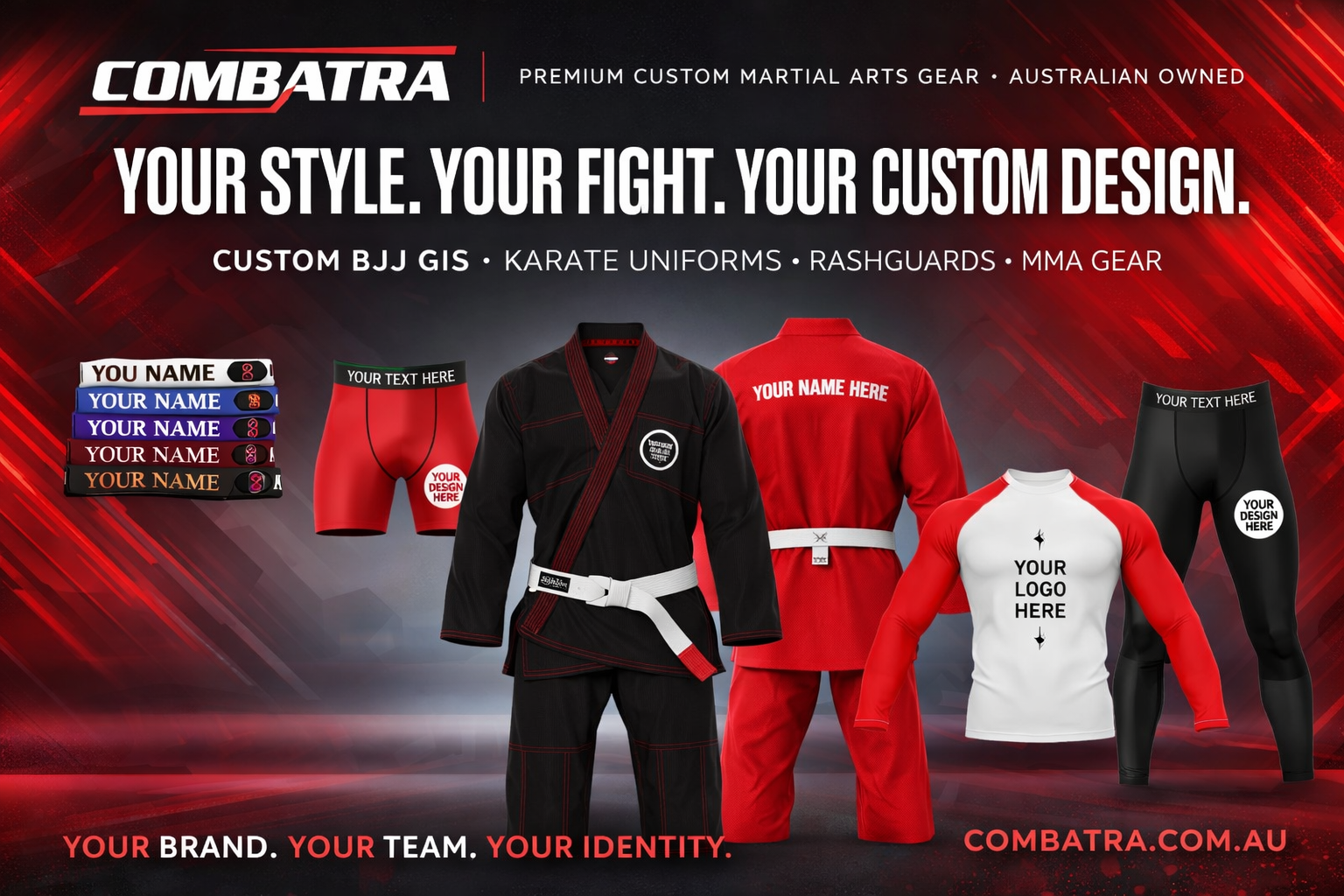
Combatra offers flexible customisation across colours, logos, sizing, and sleeve configurations, with Pantone and hex code matching for consistent team branding. Minimum order quantities are designed to suit academy teams of all sizes, and the design team provides full artwork proofing before production begins. Whether you are outfitting a competition squad or building a training kit for your academy, Combatra's custom compression gear is built to perform under real conditions. Contact Combatra directly to request a sample or discuss your custom order requirements.
FAQ
What fabric blend is best for a custom BJJ rashguard?
The industry standard is 80 to 83% polyester and 17 to 20% spandex at 200 to 240 GSM. This blend provides abrasion resistance, four-way stretch, and UPF 50+ protection for grappling and mat-based training.
How do I verify a supplier's UPF 50+ claims?
Request a batch-specific lab test report using the AATCC 183 test method. A genuine UPF 50+ rating should maintain effectiveness after 40 simulated wash cycles, and the report should reference the specific fabric used in your order.
What stitching standard should a rashguard supplier use?
Flatlock stitching with 4-needle 6-thread construction and soft-stretch nylon thread is the correct standard for combat sports rashguards. It creates a flat seam that prevents mat burns and holds structural integrity under the lateral stress of grappling.
How many sample rounds should I request before bulk production?
Two rounds are the minimum. Round one tests fabric, fit, stitching, and wash performance. Round two corrects any identified issues. Skipping to bulk production after a single sample round increases the risk of receiving garments that differ from your approved specifications.
What is a realistic MOQ for fully custom sublimated rashguards?
Experienced manufacturers typically set MOQs around 50 pieces for fully custom sublimated rashguards. Suppliers offering genuine custom fabrication at five to ten pieces are usually working with stock garments rather than true custom production.