
TL;DR:
- Most athletes rely on sunscreen but often fail to reapply, leading to sunburns. UPF clothing offers consistent, long-lasting UV protection unaffected by sweat or movement. Combining UPF garments with sunscreen on exposed skin provides optimal sun safety for outdoor activities.
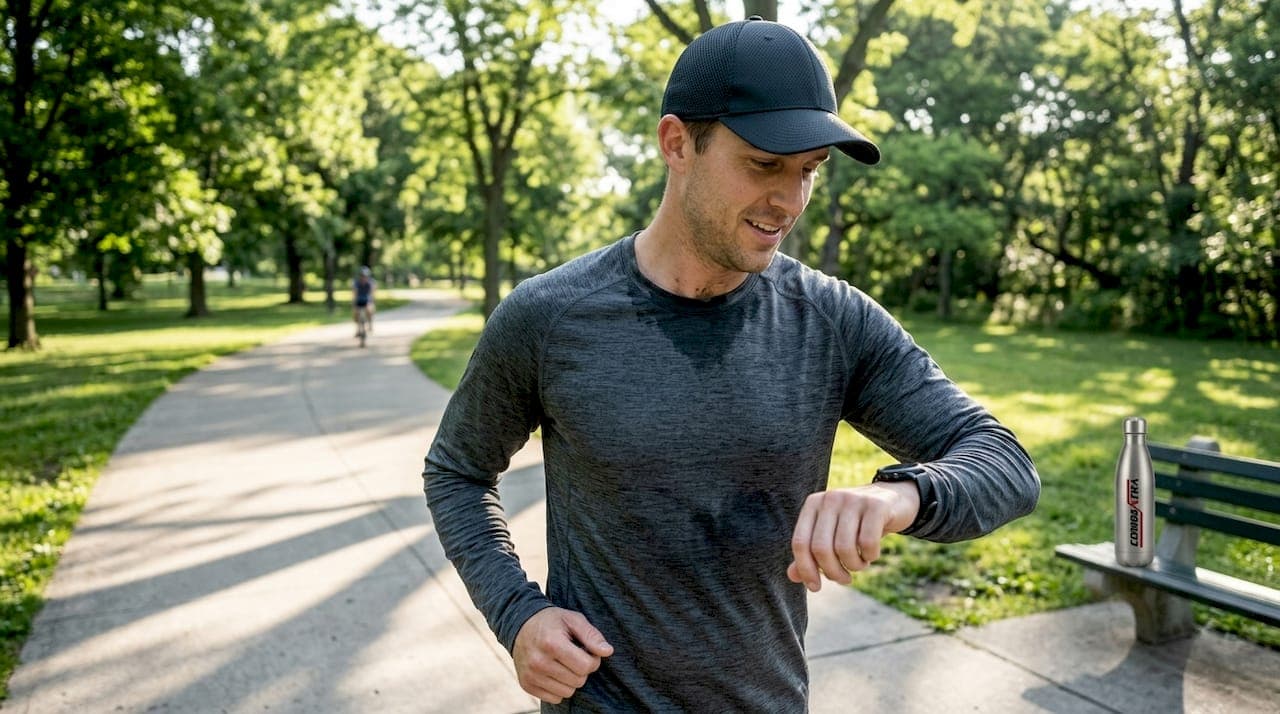
Most active people trust sunscreen to handle UV exposure, but the reality is far less reassuring. 66.5% of trail runners reported getting sunburned in a single season, despite many intending to protect themselves. The problem is not sunscreen itself. It is how athletes actually use it under real conditions. Sweat, movement, missed spots, and skipped reapplications all chip away at that protection fast. UPF clothing works differently. It is built into the fabric, always present, and does not depend on perfect technique. If you spend hours training or competing outdoors, understanding this distinction could genuinely protect your skin and your long-term health.
Table of Contents
-
Why UPF clothing outperforms sunscreen for athletes and outdoors
-
Limitations and best practices: Getting the most from UPF and sunscreen
-
Our perspective: What most athletes get wrong about sun safety
Key Takeaways
| Point | Details |
|---|---|
| UPF gear is more reliable | Unlike sunscreen, UPF clothing protects consistently without the need for reapplication. |
| Better value over time | The upfront investment in UPF clothing saves money compared to seasonal sunscreen purchases. |
| Combine for best coverage | For total UV protection, wear UPF clothing for most coverage and sunscreen on sun-exposed areas. |
| Performance under pressure | UPF clothing stays effective during intense activity, sweating, and even after swimming. |
Understanding UPF vs. sunscreen: How each protects you
Before comparing the two, it helps to understand exactly what each one does.
UPF, or Ultraviolet Protection Factor, measures how much UV radiation a fabric blocks. A UPF 50+ garment blocks over 98% of both UVA and UVB rays. The protection comes from the physical structure of the fabric itself, including weave tightness, fiber type, and sometimes UV-absorbing treatments woven into the material. As UPF clothing explained shows, the barrier is consistent and does not depend on how you put it on.
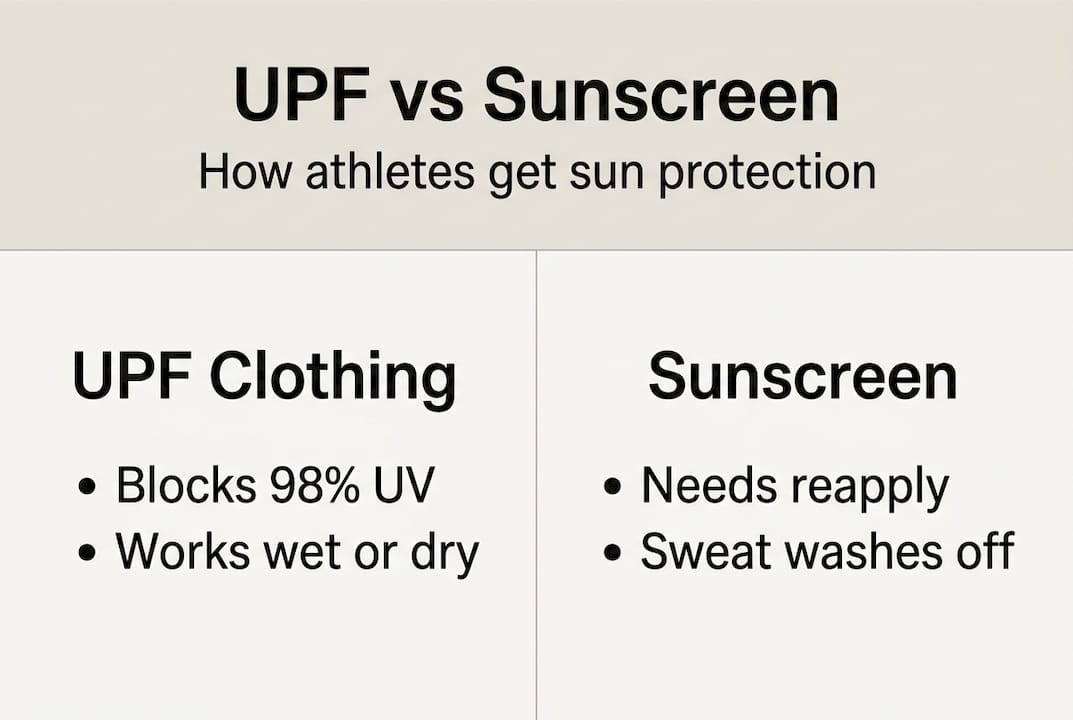
SPF, or Sun Protection Factor, measures how well a sunscreen filters UVB rays specifically. Its effectiveness depends entirely on how much you apply, where you apply it, and how often you reapply. According to UPF protection mechanics, most people apply only 25 to 50% of the recommended amount, which significantly reduces the actual protection they receive.
Here is a direct comparison:
| Feature | UPF clothing | Sunscreen |
|---|---|---|
| Mechanism | Physical fabric barrier | Chemical or physical reaction on skin |
| Durability | Lasts through sweat and movement | Wears off within 1 to 2 hours |
| Coverage | Consistent over covered area | Uneven, depends on application |
| User error risk | Very low | High |
| Reapplication needed | No | Every 1 to 2 hours |
The core difference is reliability. UPF protection is built in. Sunscreen is only as strong as your application, and for athletes, that is a serious weak point.
For those deciding between gear types, understanding compression sleeves vs rashguards can also help you choose the right UPF coverage for your sport.
“UPF protection is built in. Sunscreen is only as strong as your application.”
This distinction matters most when you are mid-session, soaked in sweat, and nowhere near your bag. With UPF clothing, protection does not drop. With sunscreen, it already has.
Why UPF clothing outperforms sunscreen for athletes and outdoors
The science is clear, but the real-world numbers make it even more compelling.
Over 75% of modern polyester athletic tops test at UPF 40 to 50+ in lab conditions. Even accounting for real-world factors like stretch and sweat, that protection holds up far better than sunscreen does during active use. Compare that to the fact that fewer than 25% of NCAA athletes use sunscreen regularly during training.
Here is why UPF clothing simply works better for athletes:
-
No reapplication needed. Once you put it on, the protection is there for the entire session. No mid-run stops, no greasy hands before a match.
-
Unaffected by sweat. Sweating does not wash away UPF protection the way it removes sunscreen from skin.
-
Always on. You cannot forget to apply it. If you are wearing the garment, you are protected.
-
Consistent coverage. No missed patches, no thin spots from rushed application.
-
Performance-ready. Quality UPF 50+ rashguards are designed to move with you, not restrict you.
For outdoor endurance athletes, the gap widens even further. A cyclist spending four hours in direct sun who applies sunscreen once at the start has almost no meaningful protection by hour two. Their UPF-wearing counterpart still has full coverage at hour four. The difference in cumulative UV exposure over a season is significant.
The choice between compression vs loose sun protection also plays a role in how well coverage holds during intense movement. Compression fabrics tend to maintain their weave structure under stretch, which helps preserve UPF ratings during activity.
Stat to know: 66.5% of trail runners experienced sunburn in a season. That is not a sunscreen failure in theory. It is a sunscreen failure in practice.
Pro Tip: Choose darker colors and tightly woven sports fabrics for the best UPF performance. Lighter or loosely woven materials let more UV through, especially when wet or stretched.
For cyclists specifically, the exposure risk is even higher due to long hours and reflective surfaces. Exploring UV protection for cyclists gives a detailed look at how to gear up effectively.
Cost, comfort, and convenience: More reasons UPF gear wins
Superior protection is only part of the story. For most athletes, cost, comfort, and convenience are decisive factors.
Let’s talk money first. A quality UPF shirt typically costs between $60 and $130 and lasts for several years with proper care. Sunscreen, on the other hand, can run $150 to $300 per season for someone training outdoors regularly. As UCSF research on UV cost efficiency highlights, long-term skin protection does not have to be expensive, and UPF clothing is one of the most cost-effective options available.
Here are the practical advantages UPF gear offers the everyday athlete:
-
No mid-session breaks to reapply sunscreen
-
No chemical absorption into the skin through the covered areas
-
No plastic waste from empty sunscreen bottles
-
No greasy residue that affects grip or comfort during training
-
Doubles as performance apparel, meaning you get UV protection and athletic function in one garment
Comfort is another area where UPF gear earns its place. Modern UPF fabrics are lightweight, moisture-wicking, and breathable. They are built for movement. You are not layering on a thick, heavy shirt for protection. You are wearing performance gear that happens to block UV rays.
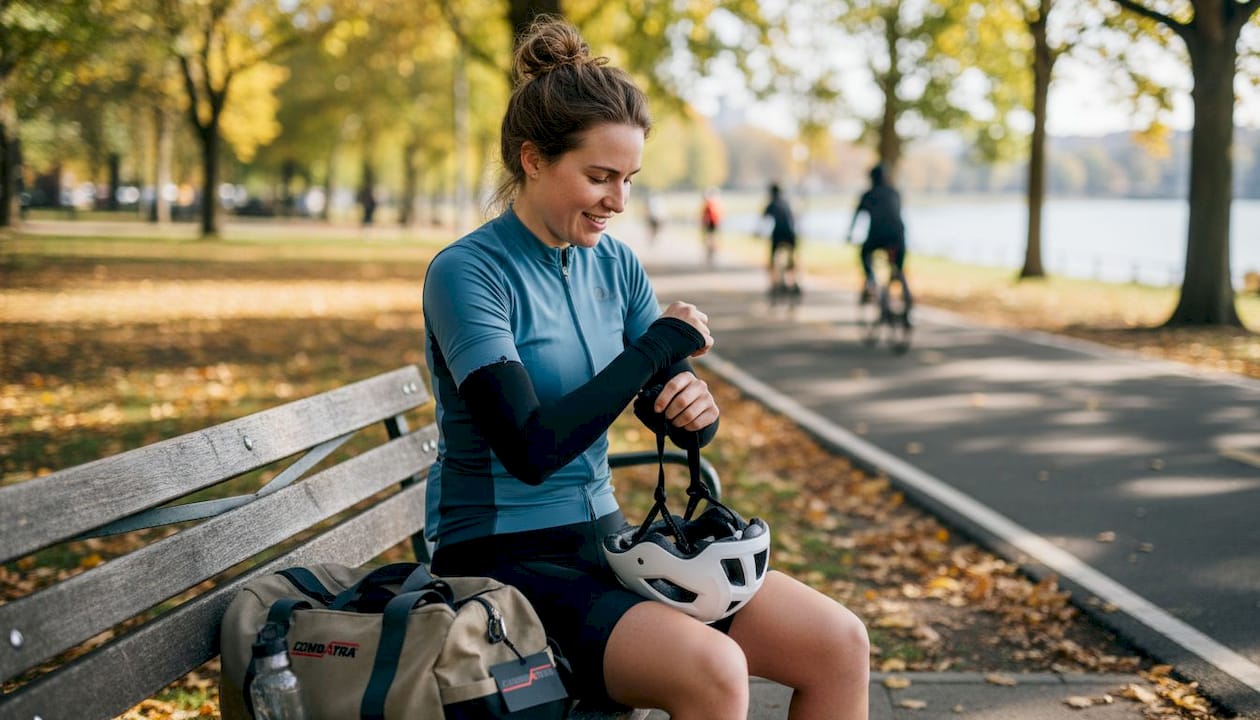
Knowing what to wear running in the sun helps you pick gear that works for your specific activity and climate. And if you want to understand how fabric weight affects both protection and breathability, the guide on GSM in rashguards breaks it down clearly.
Pro Tip: Look for multi-use UPF attire that fits your primary sport. A rashguard that works for both water training and outdoor BJJ gives you more value per dollar and keeps your kit simple.
Limitations and best practices: Getting the most from UPF and sunscreen
No protection is flawless. Here is how to layer your defenses for the greatest safety.
UPF clothing is highly effective, but it has real limits. Fabric stretch, heavy wear, and repeated washing can all reduce a garment’s UPF rating over time. A rashguard that tested at UPF 50+ when new may offer less protection after two years of hard training and regular washing. That does not make it useless, but it is worth knowing.
Altitude and geography also matter. At high elevations or near the equator, UV intensity increases significantly. In those conditions, even excellent UPF clothing benefits from backup protection on exposed skin.
Here is where sunscreen still plays an essential role, even for athletes who wear UPF gear:
-
Face and neck: Most UPF garments do not cover these areas
-
Hands and wrists: Especially for martial artists and climbers
-
Any exposed skin: Ankles, lower legs, and the back of the neck during certain activities
-
High-altitude or equatorial training: Where UV intensity is elevated
The integrated sun protection approach is the current consensus among skin health experts. Use UPF clothing as your primary defense for covered areas, and apply sunscreen to any skin that remains exposed.
“Use UPF for main coverage. Use sunscreen for the unavoidable gaps.”
For martial artists training outdoors, sun protection for martial artists offers sport-specific guidance on combining both strategies effectively.
Pro Tip: Replace worn-out UPF clothing every few seasons. If the fabric looks faded, feels thinner, or has lost its stretch recovery, its UV protection has likely dropped too.
Our perspective: What most athletes get wrong about sun safety
Here is the honest truth. Most serious athletes treat sun protection as an afterthought. They grab sunscreen on the way out the door, apply it once, and move on. Then they wonder why they come home sunburned after a long outdoor session.
The mindset shift that matters is this: UPF clothing is not a luxury add-on. It is performance equipment. You would not train without proper footwear or compete without a mouthguard. Treating your skin as an afterthought while investing heavily in every other aspect of performance is inconsistent.
When you build UPF gear into your standard kit, something changes. You stop worrying about reapplication mid-session. You stop cutting outdoor training short because of sun exposure. You train longer, more confidently, and with one less variable to manage.
Here are the moves that make the biggest difference:
-
Start with UPF as your base layer for any outdoor session longer than 30 minutes
-
Apply sunscreen to exposed skin before you leave, every time
-
Check your UPF gear annually for signs of wear
-
Choose gear rated UPF 50+ from the start, not UPF 15 or 30
As explained UPF clothing details, the difference between UPF ratings is not minor. UPF 50+ blocks over 98% of UV. UPF 15 blocks around 93%. Over a full training season, that gap adds up.
Pro Tip: Treat UPF clothing as essential as your mouthguard or training shoes. It protects something you cannot replace.
Gear up for the sun: Top picks for UV protection
Ready to level up your sun defense? Combatra builds performance apparel with UPF 50+ protection designed for real athletic conditions, not just lab ratings.

Whether you train in BJJ, MMA, or outdoor endurance sports, there is gear built for your activity. The Brazilian Jiu Jitsu Gi Pants offer durable, movement-ready coverage for ground-based training. For upper body protection with a performance fit, the sports bras and camo sports bra combine UPF-rated fabric with athletic support. Every piece is designed for long-duration sun exposure, breathability, and freedom of movement. Explore the full range and find gear that fits how you train.
Frequently asked questions
Does UPF clothing protect better than sunscreen after sweating or swimming?
Yes, UPF clothing continues to block UV rays after sweating or swimming, whereas sunscreen rapidly loses effectiveness unless reapplied. The fabric barrier is not affected by moisture the way chemical sunscreen is.
How often do you need to replace UPF clothing to maintain protection?
Replace UPF clothing every few seasons or when fabrics show visible wear, as repeated washing and stretch can reduce its UV-blocking effectiveness over time.
Is UPF clothing cost-effective compared to buying sunscreen every season?
Yes, UPF clothing is more cost-effective long term. UPF shirts costing $60 to $130 last years, while seasonal sunscreen can cost $150 to $300 annually for active outdoor athletes.
Can you skip sunscreen altogether if you wear UPF clothing?
No. Use sunscreen on exposed areas like the face, neck, and hands alongside your UPF apparel. Combining both gives you complete coverage with no gaps.