
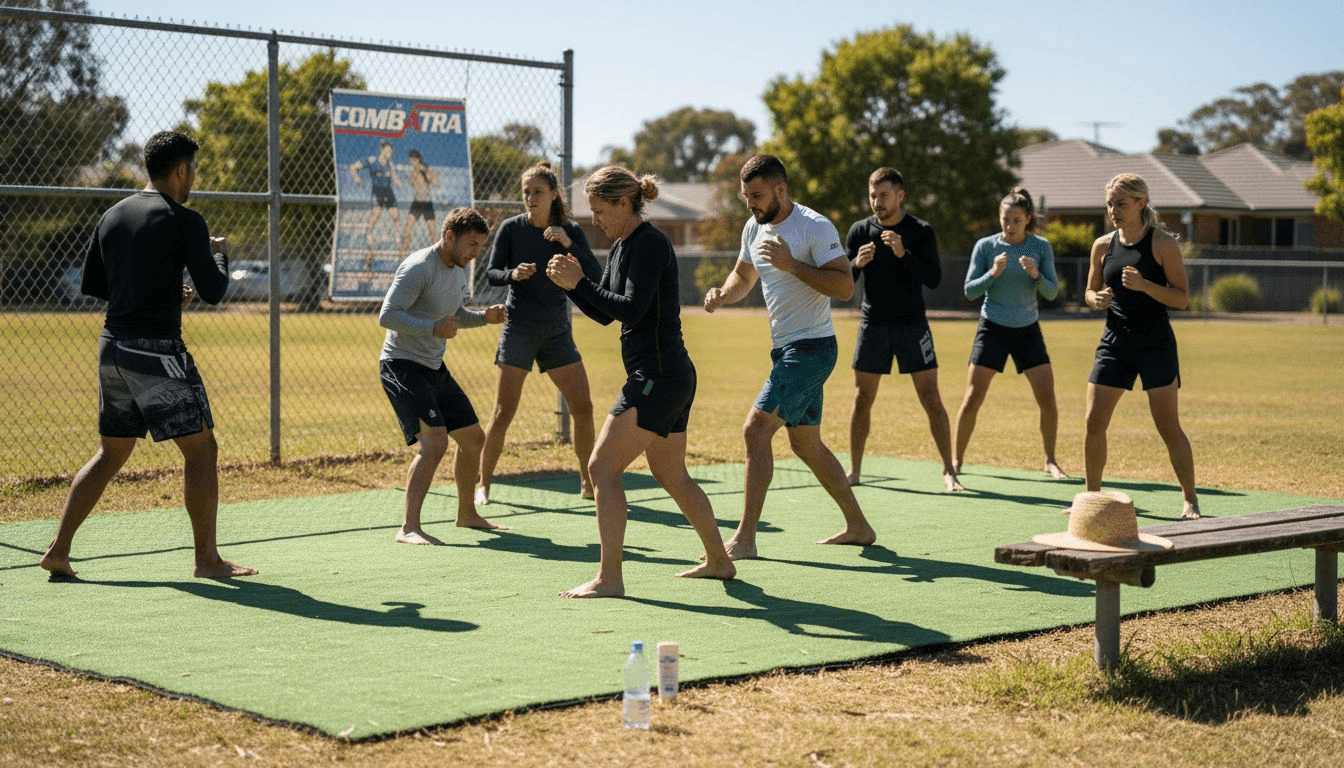
Training outdoors in Australia means facing some of the toughest sun exposure conditions anywhere. Whether you’re rolling at an outdoor dojo or sparring by the beach, the risks from UV radiation are real. UV radiation can cause skin damage even on cloudy days and is particularly strong between 10 AM and 4 PM, making protection a necessity. This guide helps martial artists build a practical defense against sunburn, skin damage, and long-term health issues by understanding their risk and preparing the right gear.
Table of Contents
- Step 1: Assess Sun Exposure Risks For Martial Arts Training
- Step 2: Select And Prepare Effective Sun Protection Gear
- Step 3: Apply Sun Protection Before Outdoor Sessions
- Step 4: Verify Sun Safety During And After Training
Quick Summary
| Key Point | Explanation |
|---|---|
| 1. Assess Your Sun Exposure Risk | Understand your training schedule and location to evaluate UV radiation exposure and implement protection measures accordingly. |
| 2. Choose Proper Sun Protection Gear | Use UPF 50+ rashguards, wide-brimmed hats, and UV-blocking sunglasses tailored to specific training settings for optimal sun safety. |
| 3. Apply Sunscreen Effectively | Apply broad-spectrum SPF 30 or higher sunscreen 20 minutes before training to ensure proper absorption and maximum protection. |
| 4. Monitor Your Skin During Training | Regularly check for signs of sunburn or overheating during sessions to take immediate corrective action like seeking shade. |
| 5. Evaluate and Adjust Your Routine Regularly | After each training session, assess your sun protection strategies and make necessary adjustments based on your exposure experience. |
Step 1: Assess Sun Exposure Risks for Martial Arts Training
Your training schedule and location determine how much UV radiation you're actually facing. This isn't a one-size-fits-all answer, so let's figure out your specific risk level.
Start by looking at when and where you train. Are you outside during summer months? Training at midday or early afternoon? These timing factors matter significantly because UV radiation peaks between 10 AM and 4 PM. If most of your sessions happen during these hours, your exposure risk jumps substantially.
Next, check your training location. Outdoor dojos, beach training, or poolside grappling means direct sun exposure. Even partly shaded areas aren't fully protective because UV radiation penetrates through clouds and bounces off reflective surfaces like sand, water, and concrete.
Understanding the actual threat helps you take this seriously. Here's what you're protecting yourself from:
- Sunburn and immediate skin damage
- Cumulative skin cell damage that builds over years
- Increased skin cancer risk from repeated exposure
- Eye damage and vision problems
- Premature skin aging and wrinkles
Sporting organizations in Australia recommend developing UV protection policies because UV exposure for athletes is genuinely serious and preventable.
Check the daily UV index before training. The UV index tells you how intense the sun's UV radiation is on that specific day. When the UV index hits 3 or higher, you need protection. In Australia, this usually means most days from September through April, and even winter days can surprise you.
Document your typical training pattern for the next week or two. Write down your training times, locations, and whether you're mostly in sun or shade. This real data about your schedule becomes your baseline for choosing the right protection strategy.
Many martial artists underestimate their sun exposure because training feels like work, not sunbathing. But hours spent drilling techniques outdoors or rolling in the sun add up fast. A typical 90-minute BJJ session in direct sun puts you in serious UV territory, especially during Australian summer.
Here's a comparison of UV protection measures for different training environments:
| Setting | Key Exposure Risks | Most Effective Gear |
|---|---|---|
| Outdoor Dojo | Direct sun, reflective surfaces | Rashguard, wide-brim hat, sunglasses |
| Beach Training | Intense sun, sand reflection | UPF sun shirt, sunglasses, SPF 50+ lotion |
| Poolside Grappling | Water reflection, bare skin | Long sleeve rashguard, water-resistant sunscreen |
| Indoor Training | Minimal, window UV possible | Standard rashguard, eye protection optional |
Pro tip: Download a UV index app or check the Bureau of Meteorology daily forecast before each session so you know exactly what level of protection you need that day.
Step 2: Select and Prepare Effective Sun Protection Gear
Now that you understand your sun exposure risks, it's time to build your protection arsenal. The right gear makes training safer and more comfortable during intense Australian sun.
Start with a UV-protective rashguard as your foundation. Rashguards designed for combat sports offer dual benefits: they protect your skin during grappling and provide sun defense simultaneously. Look for UPF 50+ sun protection ratings to ensure maximum UV blocking. When selecting gear, weave density, fabric color, thickness, and stretch all influence protective quality, so prioritize tightly woven fabrics in darker colors.
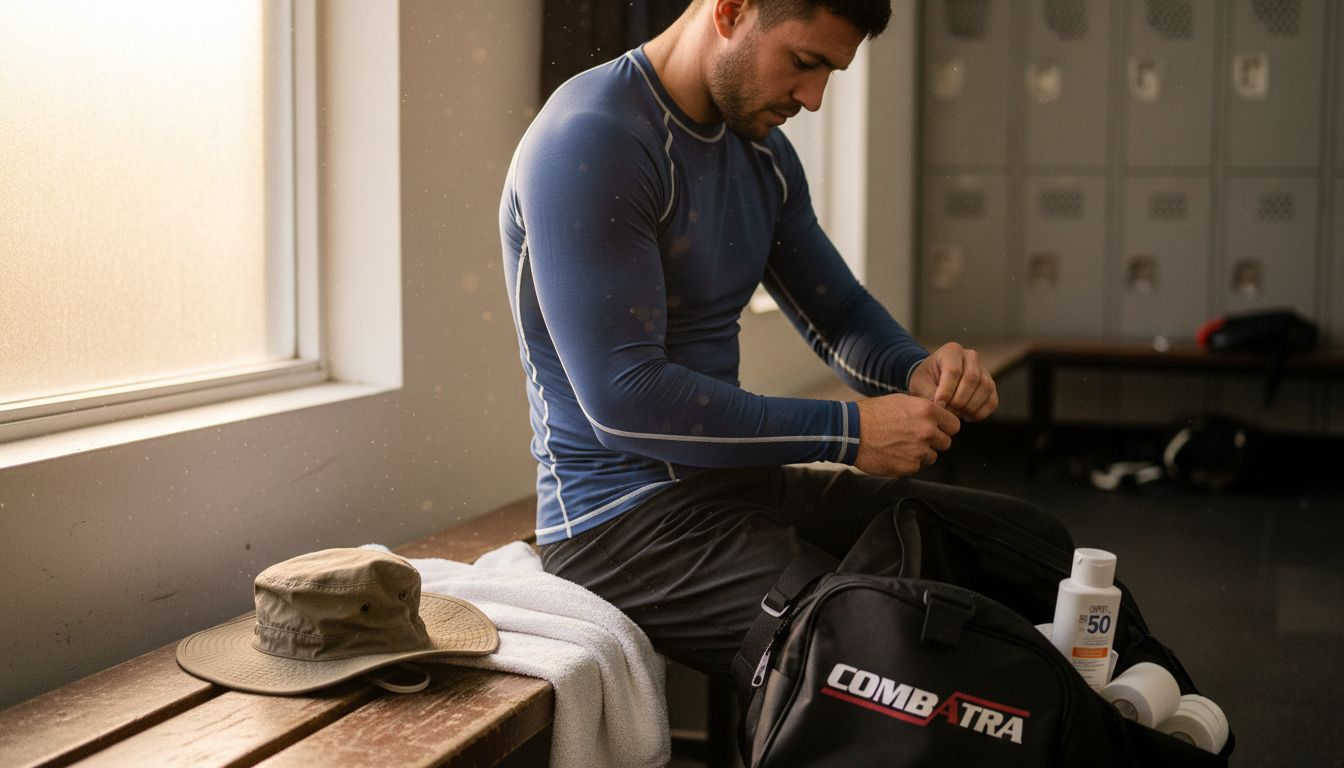
Beyond the rashguard, layer your protection with complementary gear. A well-fitting wide-brimmed hat shields your face, ears, and neck, which are vulnerable to burning. Pair this with UV-blocking sunglasses to protect your eyes from cumulative damage.
Here's your basic sun protection setup for training:
- UPF 50+ rated rashguard covering your torso and arms
- Wide-brimmed hat with at least 7 centimeter brim all around
- UV-protective sunglasses with side coverage
- Lightweight long-sleeve rash top or sun shirt for extra layering
- Reef-safe sunscreen rated SPF 30 or higher for exposed areas
Quality sun protective clothing with a UPF rating of 30 or above offers excellent protection and should cover as much skin as possible during outdoor training.
Before your first training session, test your gear for comfort and fit. A rashguard that rides up or restricts movement defeats its purpose. You'll be grappling, rolling, and moving constantly, so everything must stay in place during intense activity.
Check the care labels and follow washing instructions carefully. Proper maintenance preserves the UV-protective properties of your gear. Most quality rashguards maintain their UPF rating through regular use when cared for correctly.
Store your gear in a dry place away from direct sunlight when not in use. UV exposure degrades fabric over time, so protect your protection gear itself.
Pro tip: Prepare your sun protection gear the night before training so you're not scrambling to find items in the morning, and you'll actually wear everything consistently.
Step 3: Apply Sun Protection Before Outdoor Sessions
Timing matters when applying sun protection. You can't just throw on sunscreen right before you step outside and expect full coverage. Let's get this right so you're actually protected during your training.
Start your preparation about 20 minutes before you head outdoors. This timing isn't random. Sunscreen needs 20 minutes to form a protective barrier on your skin, so applying it right as you're walking out the door leaves you vulnerable during those critical first minutes of exposure.
Apply your sunscreen generously to all exposed skin. Use broad-spectrum SPF 30 or higher for adequate protection, though SPF 50+ offers superior defense during intense outdoor training. Most people apply way too little sunscreen to be effective. You need about one teaspoon for your face, ears, and neck combined.
Here's the application sequence for maximum protection:
- Apply broad-spectrum sunscreen to all exposed skin
- Wait 20 minutes for it to set properly
- Put on your UV-protective rashguard and long sleeves
- Add your wide-brimmed hat and sunglasses
- Head to training fully protected
Don't forget easily missed spots like your ears, the back of your neck, the tops of your feet, and your hair parting line. These areas get burned regularly because people overlook them.
Reapply sunscreen at least every two hours or more frequently if sweating, as sweat and friction reduce its effectiveness during training.
During your training session, plan to reapply sunscreen at your water breaks. BJJ and MMA involve constant movement and sweating, which breaks down sunscreen's protective layer. A 90-minute session absolutely requires midway reapplication if you're training during peak UV hours.
Keep a small sunscreen bottle in your gym bag specifically for reapplication between classes. Quick touch-ups take 30 seconds and dramatically improve your protection level.
If you're training early morning or late afternoon when UV levels are lower, you still need protection but may skip midway reapplication. Always check the UV index for that day to guide your strategy.
Pro tip: Set a phone alarm for your sunscreen reapplication time during longer training sessions so you don't forget when you're focused on drilling techniques.
Step 4: Verify Sun Safety During and After Training
Sun safety doesn't end when you finish your workout. Smart athletes monitor their sun exposure throughout training and check in with themselves afterward to catch any issues early.
During your session, stay aware of how you're feeling physically. Are you getting excessively hot or feeling dizzy? These signs suggest you need to move into shade immediately. Take your water breaks in shaded areas whenever possible, and use that time to reapply sunscreen if needed.
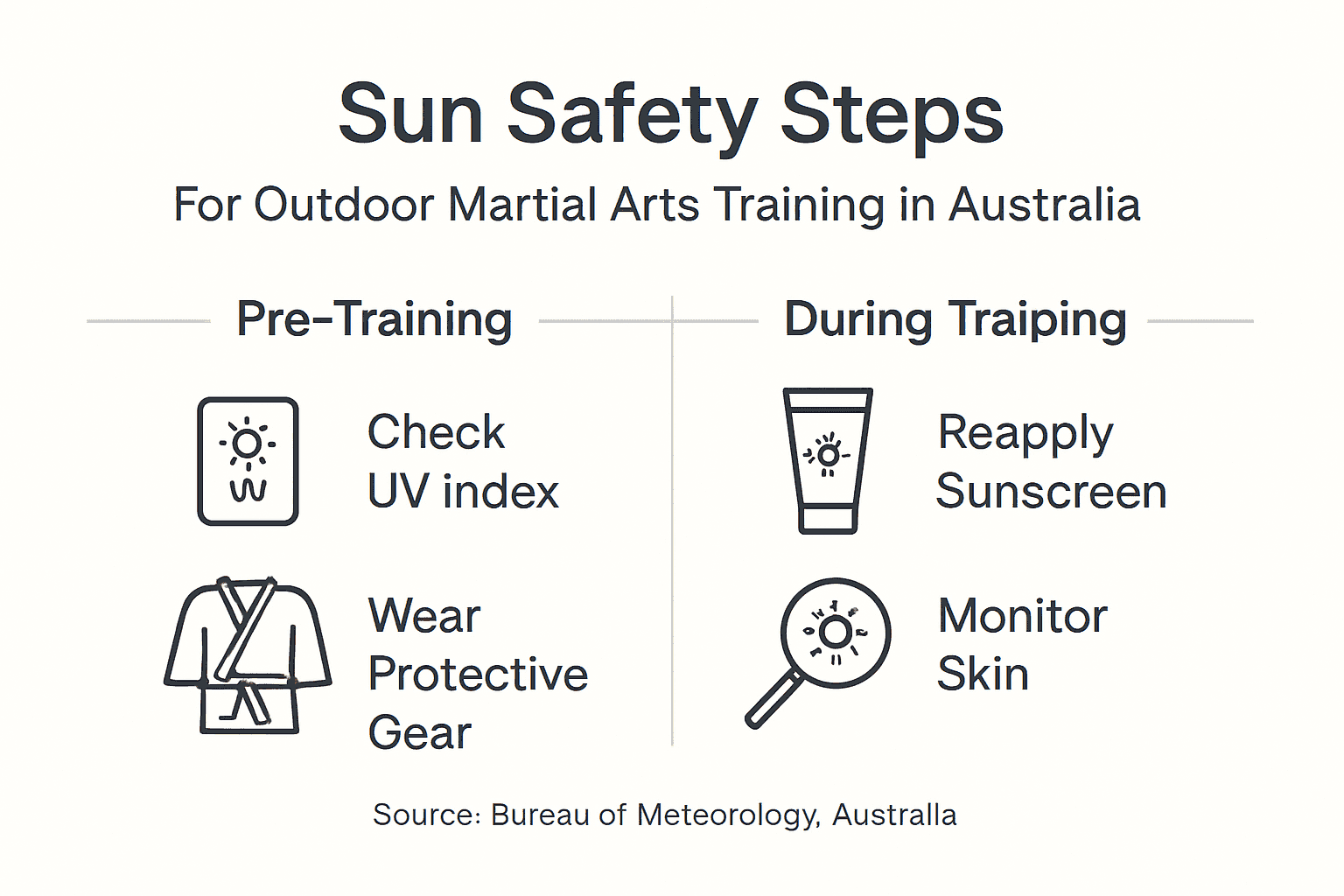
Check your skin regularly while training. If you notice any areas turning uncomfortably red or feeling painfully hot, that's your cue to seek shade. Don't push through sun exposure once your body signals distress. A few minutes in the shade can reset your core temperature and prevent heat-related illness.
Here's what to monitor during outdoor sessions:
- Skin color and temperature on exposed areas
- Overall body temperature and energy levels
- Sweat production and hydration status
- Any signs of discomfort or burning sensation
- Protective gear fit and position
Regular evaluation of sun safety practices after outdoor exposure helps improve your protection strategies and prevents long-term damage.
After training ends, your assessment continues. Shower within a few hours to remove sweat, salt, and sunscreen residue that can irritate skin. Check your entire body for any unusual redness or sensitivity, especially less obvious areas like your scalp and ears.
If you notice sunburn developing, apply cool compresses and drink extra water. Avoid further sun exposure until the burn fades. Sunburn indicates DNA damage to your skin cells, so take it seriously even if it seems mild.
Every few weeks, evaluate your sun protection routine honestly. Is your gear still in good condition? Are you reapplying sunscreen consistently? Are there specific training times or locations where you're getting more exposure than intended? Use these observations to adjust your strategy.
Keep notes on your training sessions, UV index levels, and how your skin responds. This data reveals patterns and helps you identify when you need stronger protection measures.
Here's a summary of sun safety checks to perform after martial arts sessions:
| Checkpoint | Purpose | Follow-up Action |
|---|---|---|
| Inspect for Redness | Detect early sun damage | Cool compress, monitor skin |
| Assess Gear Condition | Ensure effective coverage | Repair or replace as needed |
| Review Routine | Identify gaps in protection | Adjust timing or reapply steps |
| Note Skin Changes | Track long-term effects | Consult dermatologist if needed |
Pro tip: After each outdoor training session, take a photo of your skin using consistent lighting so you can track any changes in tone or texture over several weeks.
Stay Protected and Perform at Your Best with Combatra’s Premium Gear
Training martial arts outdoors in Australia means facing intense sun exposure that can lead to serious skin damage and discomfort. The article highlights key challenges like the need for UPF 50+ rashguards, wide-brimmed hats, and consistent sunscreen application to combat harmful UV radiation during BJJ, MMA, and Karate sessions. Protecting your skin while maintaining unrestricted movement is critical for your safety and peak performance.

Discover Combatra’s range of personalized and premium sun-protective rashguards and training apparel designed to offer superior UPF protection without sacrificing comfort or style. With custom options for names, logos, and patriotic themes, our gear lets you express your identity while shielding yourself from UV damage. Don’t wait until sunburn slows you down. Visit Combatra today and equip yourself with the best in martial arts sun protection. Take control of your training environment and step onto the mat fully prepared.
Frequently Asked Questions
How can I assess my sun exposure risks during martial arts training?
To assess your sun exposure risks, consider your training schedule and location. Document your training times and environments for a week, noting if you are mostly in the sun or shade. This information will help you identify the best sun protection measures.
What type of gear should I wear for sun protection while training outdoors?
Wear a UV-protective rashguard with a UPF 50+ rating as your base layer, along with a wide-brimmed hat and UV-blocking sunglasses. This combination will help protect your skin and eyes from harmful UV rays during outdoor sessions. Ensure everything fits well to allow for movement while training.
How should I apply sunscreen before outdoor martial arts sessions?
Apply broad-spectrum sunscreen generously to all exposed skin about 20 minutes before heading outdoors. Use an SPF of 30 or higher and remember to reapply it every two hours, especially if you are sweating. This step is essential for ensuring you have effective protection throughout your training.
What signs should I look for during training to ensure I'm sun safe?
During training, monitor your skin for any redness or discomfort, and pay attention to how you feel physically. If you start feeling excessively hot or dizzy, seek shade immediately. These signs can help prevent heat-related illnesses and sunburn.
How can I track my sun protection effectiveness over time?
Keep notes on your training sessions, including UV index levels and any changes in your skin after exposure to the sun. Regularly evaluate your sun protection routine to ensure it remains effective. Adjust as needed based on your observations to enhance your sun safety strategy.
What should I do after training to ensure my skin recovers from sun exposure?
After training, shower to remove sweat and sunscreen residue and check your skin for any unusual redness or sensitivity. If you notice any signs of sunburn, apply cool compresses and drink extra water. This will help your skin recover and reduce the risk of long-term damage.