
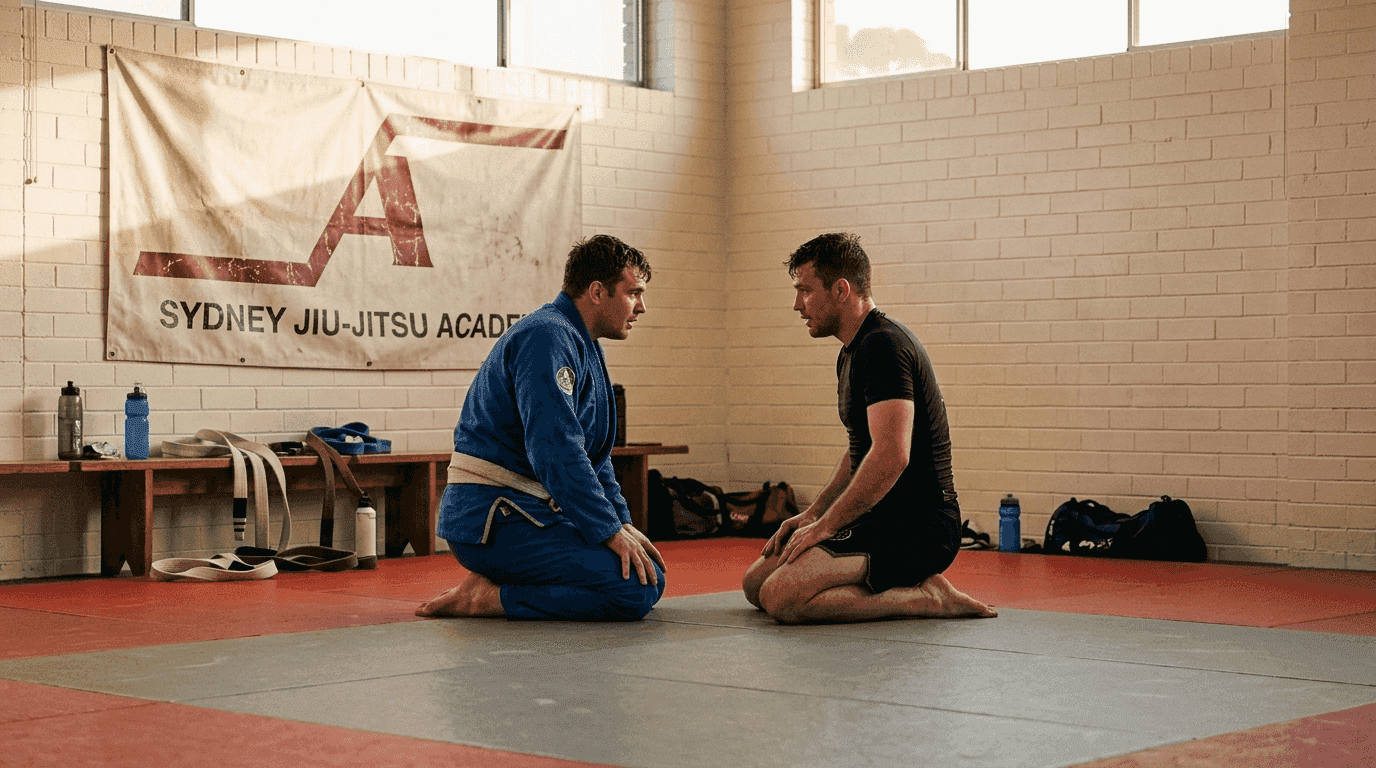
Walking into a Brazilian Jiu-Jitsu gym for the first time, you face an immediate choice: train in the traditional Gi or go straight to No-Gi. Many Australian beginners feel overwhelmed by this decision, unsure which path builds better skills or fits their goals. Both styles offer distinct advantages that shape your BJJ journey differently. This guide breaks down the key differences, costs, and benefits to help you choose confidently and start training with clarity.
Table of Contents
- Understanding Gi Training For Beginners
- The Benefits And Challenges Of Starting With No-Gi BJJ
- Comparing Gi And No-Gi: What Beginners In Australia Should Consider
- Injury Risks And Practical Tips For Beginners Starting BJJ In Australia
- Explore High-Quality BJJ Gear And Apparel At Combatra
- Frequently Asked Questions
Key takeaways
| Point | Details | |-------|---------|| | Gi training slows the pace | Friction and grips allow beginners more time to develop technique and strategic thinking. | | No-Gi develops speed | Faster transitions and athleticism suit those interested in MMA or dynamic grappling. | | Equipment costs differ | Gi uniforms cost $80-$150; No-Gi requires only rashguards and shorts at lower prices. | | Cross-training benefits both | Many athletes train both styles to build well-rounded grappling skills applicable everywhere. | | Choose based on goals | Personal physical traits, local gym options, and training objectives guide your best choice. |
Understanding Gi training for beginners
Gi training develops deeper fundamental understanding due to the slower pace and emphasis on grip fighting, which translates well to No-Gi. The friction created by the uniform fabric gives beginners crucial extra seconds to think through positions and responses. This breathing room helps new practitioners absorb technique without feeling rushed or overwhelmed.
Grip fighting forms the heart of Gi training, teaching you how to control opponents through strategic hand placement on collars, sleeves, and lapels. These skills build fundamental leverage principles that apply across all grappling contexts. Starting with Gi creates strong technical foundations applicable to both Gi and No-Gi situations.
The methodical nature of Gi training emphasizes precision, patience, and strategic thinking over raw athleticism. Beginners benefit from this measured approach because it reinforces proper body mechanics and positional awareness. Understanding what is a Gi in BJJ helps clarify why this uniform becomes such an effective teaching tool for fundamental skills.
Pro Tip: Focus on mastering grip control early to accelerate progress in Gi training. Developing strong grips and understanding grip breaks gives you immediate advantages in positional battles.
Gi training requires purchasing specific equipment, primarily the uniform itself consisting of jacket, pants, and belt. Australian beginners often find gyms offering dedicated beginner Gi classes with supportive atmospheres where instructors emphasize controlled sparring. These environments foster skill development while minimizing injury risk through structured progressions.
Key benefits of starting with Gi include:
- Slower pace allows time for technical problem solving
- Grip fighting teaches fundamental control and leverage
- Strong technical foundation transfers to all grappling styles
- Emphasis on precision over pure athleticism
- Structured beginner programs available at most Australian gyms
The investment in a quality Gi pays dividends through the comprehensive skill foundation it helps build. Many Australian practitioners who started with Gi report feeling more confident when later transitioning to No-Gi because their positional awareness and control principles already existed.
The benefits and challenges of starting with No-Gi BJJ
No-Gi training emphasizes athleticism and speed, which can be beneficial for developing dynamic and reactive grappling styles. Without the friction and grip handles of a Gi, movements happen faster and transitions become more explosive. This pace pushes beginners to develop quick decision making and adaptive responses.
The faster tempo suits athletes with strong cardiovascular fitness and those interested in mixed martial arts applications. Beginners develop reactive grappling instincts through No-Gi because positions change rapidly and require constant adjustment. No-Gi has lower equipment barriers since it requires less gear and fewer initial costs compared to Gi training.
Custom rashguard compression tops and customizable MMA fight shorts provide all the equipment needed to start No-Gi training. This simplicity appeals to beginners who want to test BJJ without major financial commitment upfront. The athletic demands of No-Gi also build functional strength and endurance quickly.
Pro Tip: Building foundational strength and cardio improves performance in No-Gi sessions significantly. Adding conditioning work outside class time helps beginners keep pace with the intense tempo.
No-Gi BJJ emphasizes modern techniques often considered more applicable to MMA and self-defense scenarios. The absence of gi grips means you rely on body locks, underhooks, and wrestling-style controls. Some beginners find this more intuitive since it mirrors how people actually grapple in street situations or combat sports.
However, the faster pace can challenge beginners who need more time processing positions and techniques. Without the friction to slow movements, newer practitioners sometimes struggle keeping up mentally with rapid position changes. Australian BJJ gyms increasingly offer No-Gi beginner classes recognizing this style's growing popularity and accessibility.
No-Gi advantages for beginners include:
- Lower equipment costs with minimal gear needed
- Develops speed, athleticism, and explosive transitions
- Direct application to MMA and self-defense contexts
- Builds reactive grappling instincts quickly
- Growing availability in Australian gyms
- More intuitive body control without gi grips
The style you choose impacts your early BJJ experience substantially. No-Gi offers an athletic, fast-paced introduction that builds different skills compared to Gi's technical, methodical approach.
Comparing Gi and No-Gi: what beginners in Australia should consider
Choice between Gi and No-Gi depends on individual goals, physical attributes, and local academy curriculum. Australian beginners should evaluate several practical factors before committing to either style initially. Cost differences matter significantly when starting out.
Gi training requires purchasing a uniform typically costing $80 to $150 for quality options suitable for regular training. Selecting the perfect BJJ Gi involves considering weave types, fit, and durability. No-Gi needs only athletic wear like rashguards and shorts, usually totaling $50 to $80 for complete outfits.

| Factor | Gi Training | No-Gi Training |
|---|---|---|
| Pace | Slower, methodical | Faster, explosive |
| Primary Skills | Grip fighting, positional control | Speed, transitions, body locks |
| Equipment Cost | $80-$150 for uniform | $50-$80 for rashguard and shorts |
| Physical Demand | Technical precision emphasis | High cardio and athleticism |
| Best For | Building fundamental technique | MMA application, dynamic grappling |
| Class Availability | Widely available in Australia | Growing rapidly in major cities |
Physical traits and personal goals influence which style suits you better initially. Smaller practitioners often prefer Gi because grip advantages can equalize size differences. Larger, more athletic beginners sometimes thrive in No-Gi where speed and power play bigger roles.
Availability of beginner classes varies across Australian gyms. Metropolitan areas like Sydney, Melbourne, and Brisbane offer both Gi and No-Gi beginner programs extensively. Regional areas may have more limited options, making local gym offerings a practical deciding factor. Research gyms near you before choosing a style.
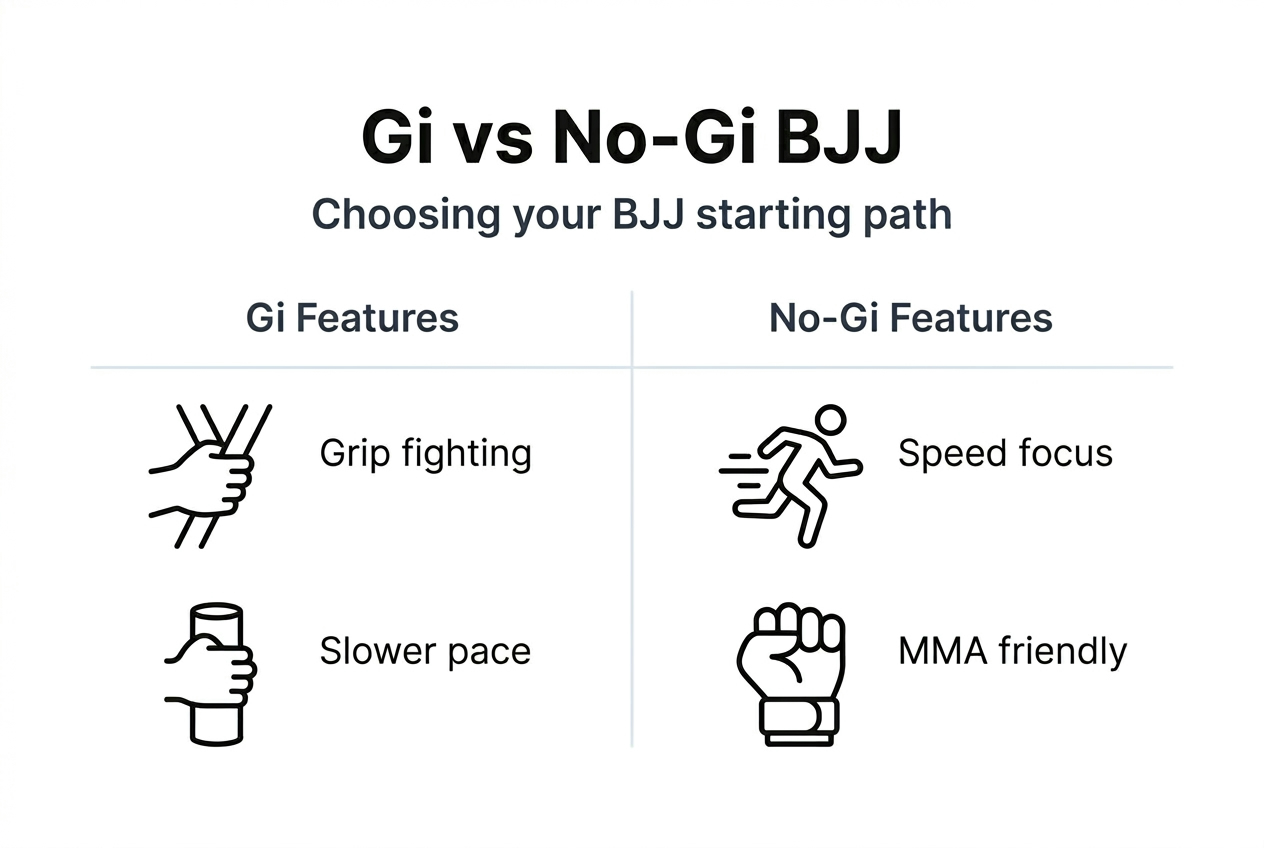
Many experienced athletes train both styles to develop well-rounded skillsets. Cross-training provides balanced grappling abilities applicable in any context. Some Australian gyms structure programs encouraging beginners to sample both before specializing.
Key decision factors include:
- Budget for initial equipment investment
- Personal preference for slower technical vs. faster athletic training
- Long-term goals like competition, self-defense, or MMA
- Local gym schedules and beginner class offerings
- Physical attributes and existing fitness levels
- Interest in traditional martial arts culture vs. modern sport application
Choosing a BJJ Gi for performance and style becomes important if you decide Gi training aligns with your goals. Many beginners start with one style then add the other after six months to one year of consistent training.
Injury risks and practical tips for beginners starting BJJ in Australia
BJJ has a 308 injuries per 1,000 athletes per year incidence rate over three years, with most injuries occurring during sparring and submissions. This relatively high rate primarily involves knees and extremities. Beginners must prioritize safety from day one to avoid setbacks that derail training momentum.
Focusing on technique and controlled training reduces injury risk substantially compared to aggressive rolling. Choose beginner-friendly gyms with supportive atmospheres where instructors emphasize proper progressions. Australian BJJ academies with strong beginner programs structure classes to minimize injury while building skills safely.
"The majority of BJJ injuries happen during live sparring when practitioners push beyond their technical ability or ignore warning signs from their bodies."
Safety practices for beginner BJJ training:
- Always warm up thoroughly before training sessions
- Communicate clearly with training partners about intensity levels
- Tap early when caught in submissions to avoid joint damage
- Take adequate rest between training days for recovery
- Focus on technique over winning during sparring
- Report any pain or discomfort to instructors immediately
Pro Tip: Prioritize gyms with beginner classes emphasizing controlled sparring to minimize injury risk. Academies that separate beginners from advanced students create safer learning environments.
Listening to your body prevents many common BJJ injuries. Never push through sharp pain or joint discomfort during training. Proper rest allows connective tissues to adapt to the new physical demands BJJ places on your body. Most beginners benefit from training two to three times weekly initially rather than diving into daily sessions.
Additional safety considerations include:
- Invest in quality mouthguards for sparring sessions
- Keep fingernails and toenails trimmed short
- Remove all jewelry before training
- Stay hydrated throughout classes
- Learn proper falling and breakfall techniques early
- Understand basic submission mechanics to recognize danger
Good instructor guidance makes enormous difference in injury prevention. Australian gyms with certified black belt instructors who actively supervise beginner classes provide the safest training environments. Research gym reviews and visit facilities before committing to memberships.
Explore high-quality BJJ gear and apparel at Combatra
Starting your BJJ journey requires reliable, comfortable gear that supports your training goals. Whether you choose Gi or No-Gi, having quality equipment enhances every session and marks your progress.
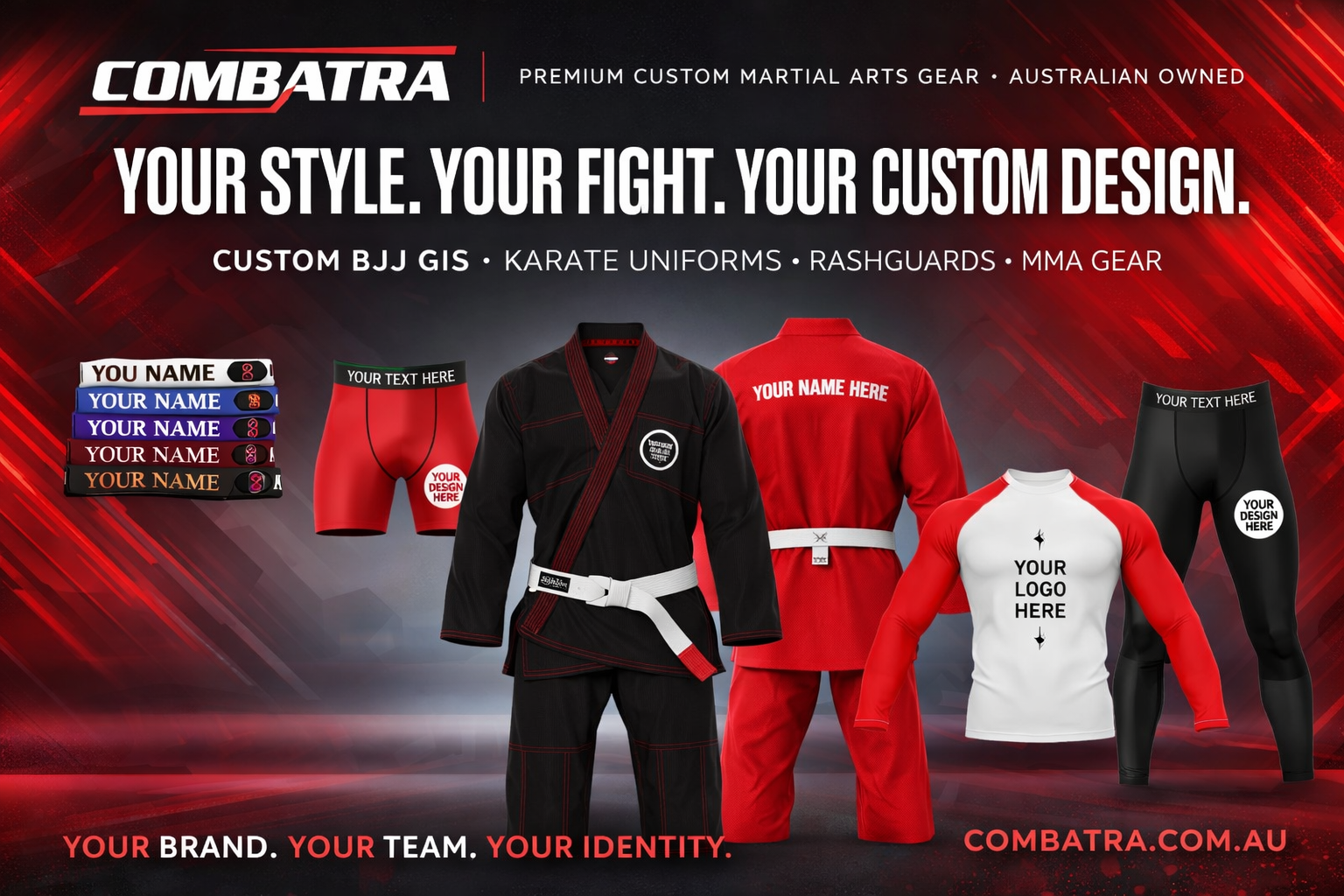
Combatra offers high-quality BJJ belts to signify your advancement through the ranks as you develop skills. Our customizable MMA fight shorts provide durability and comfort ideal for No-Gi training intensity. Build your own rashguard compression tops featuring personalized designs that express your style while delivering performance.
Our products support Australian beginners embarking on their BJJ journey with gear designed for both training demands and personal expression. Explore premium equipment built for comfort, durability, and the unique challenges of grappling sports.
Frequently asked questions
Is Gi training better for beginners than No-Gi?
Gi training often better suits beginners for foundational skills due to grip and control emphasis that slows the pace. The friction allows more time to understand positions and develop technique methodically. No-Gi is faster and more athletic but can overwhelm beginners who need time processing movements.
What equipment do I need to start Gi vs. No-Gi training?
Gi training requires purchasing a specialized kimono uniform costing around $80 to $150 for quality options. Understanding what a Gi is in BJJ helps clarify this essential equipment. No-Gi needs only sportswear like rashguards and shorts, generally less expensive at $50 to $80 total.
How do injury risks compare between Gi and No-Gi for beginners?
Injury rates remain high at 308 per 1,000 athletes annually in both styles, with most occurring during sparring. Beginners should focus on technique and controlled training regardless of style chosen. Good gyms with proper instruction and beginner-focused programs reduce risks substantially in either format.
Can I train both Gi and No-Gi as a beginner?
Yes, many beginners successfully train both styles simultaneously to develop well-rounded grappling skills. Some Australian gyms encourage cross-training from the start. However, focusing on one style initially often helps beginners build solid foundations before adding complexity of learning both rule sets and techniques simultaneously.
Which style is more popular in Australian BJJ gyms?
Gi training remains more widely available across Australian BJJ academies, especially in regional areas. Metropolitan cities increasingly offer extensive No-Gi programs as the style grows in popularity. Check local gym schedules to see which beginner classes fit your availability and preferences best.