
TL;DR:
- UPF 50+ rashguards protect athletes from UV rays and keep them cooler than bare skin.
- Covering skin reduces radiant heat load, decreasing core temperature rise during outdoor training.
- Quality UPF clothing outperforms sunscreen, providing reliable protection without reapplication.
Most athletes assume that less clothing means a cooler body. It feels logical. Strip back the layers, let the breeze hit your skin, and you'll stay comfortable through a tough outdoor session. But when you're training under the Australian sun, that assumption can work against you. Australian UV indexes rank among the highest in the world, and exposed skin heats up fast. Long sleeve rashguards rated UPF 50+ don't just protect you from UV damage. They can actually keep you cooler than bare skin in direct sunlight. Here's the evidence that explains why.
Table of Contents
- Why the right coverage matters in the Australian sun
- How do long sleeve rashguards work to keep you cooler?
- Rashguards vs. sunscreen and other gear: what keeps you coolest?
- Practical tips for choosing and using rashguards in Australia
- The uncomfortable truth: most athletes underestimate the sun's bite
- Gear up for smarter, cooler training with Combatra
- Frequently asked questions
Key Takeaways
| Point | Details |
|---|---|
| UPF rashguards beat sunscreen | Quality UPF 50+ long sleeve rashguards outperform sunscreen for Australian athletes by blocking 98% UV rays and maintaining coverage even in sweaty conditions. |
| Stay cooler with coverage | Contrary to common belief, covering up with breathable UPF rashguards actually keeps your skin cooler compared to exposing it to direct sun. |
| Choose the right gear | Athletes should opt for certified UPF 50+ rashguards with moisture management features for best sun protection and comfort. |
| Sunscreen has limits outdoors | Sunscreen wears off and can miss spots, while rashguards provide consistent protection throughout training. |
Why the right coverage matters in the Australian sun
Australia's UV environment is genuinely extreme. Australian UV conditions sit among the highest globally, and direct skin exposure during outdoor training can rapidly overheat and damage skin. For BJJ and MMA athletes training outdoors, this isn't a minor concern. It's a real performance and health risk.
The common belief is straightforward: more skin exposed means more cooling. Athletes often skip sleeves, wear singlets, or avoid rashguards altogether because they feel restrictive or hot before training even starts. That initial sensation is misleading. What you feel standing still in the sun is very different from what happens to your skin's core temperature during sustained effort.
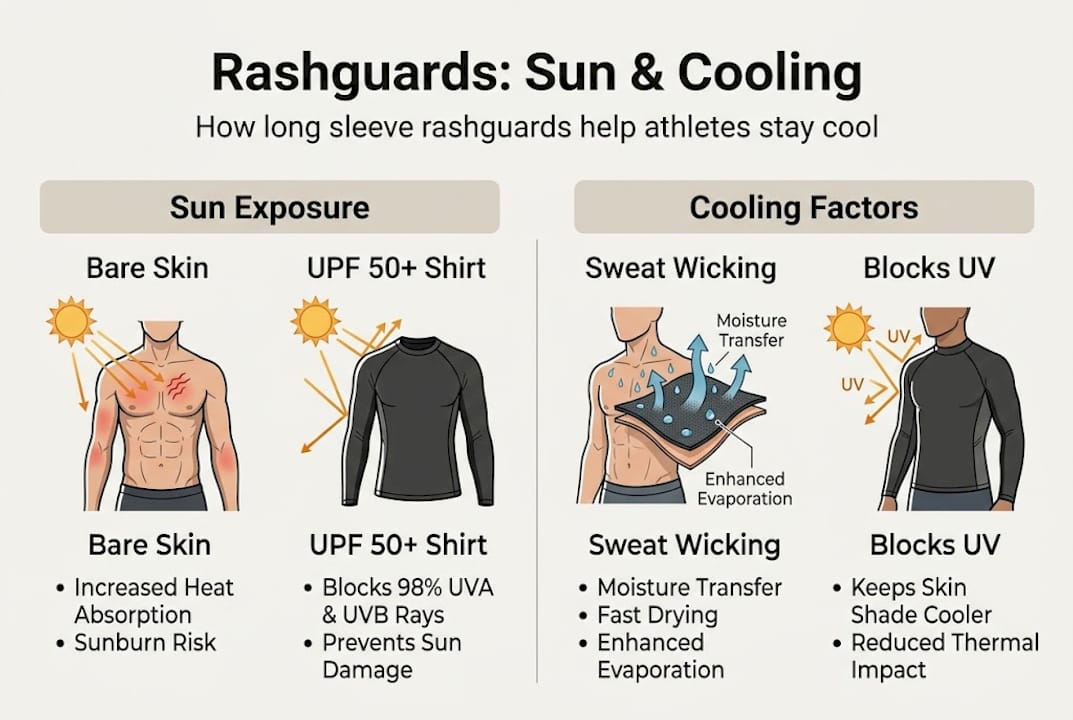
When your skin is exposed to direct sunlight, solar radiation heats the surface directly. Your body then has to work harder to cool that heat load through sweating. Covered skin, by contrast, is shielded from direct radiant heat. The fabric absorbs and reflects solar energy before it reaches your skin. With the right material, that barrier actually reduces the total heat your body has to manage.
For athletes focused on sun protection for martial artists, understanding this distinction is the foundation of smarter gear choices.
Common mistakes athletes make with sun protection:
- Wearing singlets or short sleeves and relying on sunscreen alone
- Choosing rashguards without checking for UPF certification
- Applying sunscreen once and not reapplying during long sessions
- Ignoring UV exposure during cloudy days when UV remains high
- Training between 10am and 3pm without any UV protection strategy
UPF 50+ rashguards block 98% of UV rays, dramatically reducing the solar heat load reaching your skin during outdoor training.
This is the core fact that reframes the entire conversation. It's not just about sunburn prevention. It's about reducing the radiant energy your body has to cope with while you train.
How do long sleeve rashguards work to keep you cooler?
Now that we understand the risks, here's how advanced rashguards shift the equation for serious athletes.
UPF stands for Ultraviolet Protection Factor. It measures how effectively a fabric blocks UV radiation. A UPF 50+ rating means the fabric allows less than 2% of UV rays to pass through. UPF 50+ rashguards block 98% or more of UV rays, preventing direct solar heating of the skin. This is tested against the Australian standard AS 4399:2020, which sets the benchmark for reliable UV protection in performance clothing.
The difference between shade and UPF clothing is worth understanding. Shade reduces UV from above but doesn't protect against reflected UV from surfaces like concrete, sand, or water. UPF clothing wraps the protection around your body regardless of the angle of UV exposure. That's a meaningful advantage for athletes moving through varied environments.
Learn more about how UPF 50+ clothing defends athletes in real training conditions, and get a clear breakdown of UPF 50+ rashguard meaning if you want to dig into the technical detail.
Temperature comparison: exposed skin vs. UPF 50+ rashguard coverage
| Condition | Estimated skin surface temp increase | UV reaching skin |
|---|---|---|
| Bare skin in direct sun | Up to 8°C above ambient | 100% |
| Singlet or plain compression shirt | Up to 5°C above ambient | 30 to 50% |
| UPF 50+ long sleeve rashguard | Up to 1 to 2°C above ambient | Less than 2% |
The numbers make a clear case. Quality moisture-wicking fabric in a UPF rashguard does two things simultaneously: it blocks radiant heat from solar energy, and it draws sweat away from the skin surface to support evaporative cooling. That combination is what makes long sleeves genuinely cooler in real-world training conditions, not just in theory.
Rashguards vs. sunscreen and other gear: what keeps you coolest?
Understanding the science is vital, but how do rashguards stack up against other real-world sun protection options for athletes?
Sunscreen is the default choice for most outdoor athletes. It's familiar, accessible, and effective when applied correctly. The problem is that it rarely stays effective during intense training. Sweat dilutes it. Friction from grappling removes it. Reapplication during a session is impractical. UPF 50+ rashguards offer consistent coverage without reapplication and outperform sunscreen in sweaty conditions.
Scenarios where rashguards outperform sunscreen or singlets:
- Outdoor BJJ drilling sessions lasting more than 45 minutes
- MMA conditioning runs or circuit training in direct sunlight
- Beach or water-based training where sunscreen washes off quickly
- Back-to-back training days where skin needs recovery from UV exposure
- Early morning or late afternoon sessions when UV is still significant but athletes skip protection
Comparison: sun protection options for outdoor athletes
| Option | UV protection | Cooling effect | Durability during training | Reapplication needed |
|---|---|---|---|---|
| UPF 50+ rashguard | Excellent (98% UV blocked) | Good with moisture-wicking fabric | High | No |
| Sunscreen SPF 50+ | Good when fresh | None | Low (sweat, friction) | Every 2 hours |
| Singlet or tank top | Minimal | Moderate | High | N/A |
For athletes exploring staying cool without sunscreen, the rashguard is the most practical solution. And if you've ever worried about rashguards causing overheating in BJJ, the data shows the opposite is true with the right fabric. For a full breakdown, the comparison of UPF clothing vs sunscreen for athletes is worth reading.
Pro Tip: On long outdoor sessions, layer a UPF 50+ rashguard under a lightweight training singlet. The rashguard handles UV, and the singlet adds airflow. You get the cooling benefit of both without compromising protection.
Practical tips for choosing and using rashguards in Australia
With the knowledge of how rashguards outperform the alternatives, it's time to make the best possible choice for your own training.
Not all rashguards are created equal. Rashguards built to AS 4399:2020 deliver reliable sun protection across long training hours. That standard matters because it ensures the UPF rating is tested and verified, not just a marketing claim. Always check that the garment carries a confirmed UPF 50+ rating before you buy.
Key features to look for in a rashguard:
- UPF 50+ certification verified against AS 4399:2020
- Four-way stretch fabric that moves with your body without restricting technique
- Flatlock stitching to prevent chafing during extended wear
- Quick-dry, moisture-wicking material to support evaporative cooling
- Fitted cut that stays in place during grappling or dynamic movement
- Reinforced seams at high-stress points for long-term durability
For more on why the right fit and fabric matter, explore the benefits of rashguards for BJJ and the guide on choosing the best GSM for BJJ rashguards. If you run outdoors as part of your conditioning, the guide on what to wear for running in the sun in Australia is also practical reading.
Mistakes to avoid:
- Buying a plain compression shirt and assuming it offers UV protection
- Wearing a rashguard that's too loose, reducing the UV-blocking efficiency of the fabric
- Leaving a wet rashguard rolled up in a bag after training, which degrades the fabric
- Using fabric softener, which breaks down moisture-wicking properties over time
Pro Tip: Rinse your rashguard in fresh water immediately after saltwater or chlorinated pool sessions. Salt and chlorine break down fibres faster than regular sweat. A quick rinse extends the life of the garment and keeps the UPF rating intact.
Beyond the rashguard itself, combine it with a wide-brim hat, consistent hydration, and planned shade breaks during long outdoor sessions. No single piece of gear covers everything. But a quality UPF rashguard is the centrepiece of any smart outdoor training strategy in Australia.
The uncomfortable truth: most athletes underestimate the sun's bite
There's a persistent culture in combat sports that equates discomfort with toughness. Training in the heat, pushing through, stripping back gear. These instincts aren't wrong in every context, but they become a liability when applied to UV exposure.
The idea that wearing less clothing in the sun is somehow more resilient is outdated. Field tests and dermatological consensus consistently show that UPF long sleeves outperform sunscreen alone for both coverage and cooling. The athletes who've figured this out aren't softer. They're smarter about managing their body's resources during training.
Seasoned outdoor athletes now treat UPF gear the same way they treat proper footwear or a quality mouthguard. It's not optional equipment. It's part of the kit that lets you train consistently without accumulating damage. Skin damage from UV is cumulative. You don't feel it session by session, but it compounds over years of outdoor training.
The practical shift is simple. Prioritise sun protection for martial artists as a performance decision, not just a health one. Less UV load means less physiological stress. Less physiological stress means better output and faster recovery. That's not a soft choice. That's a competitive one.
Gear up for smarter, cooler training with Combatra
You now have the evidence. Long sleeve rashguards with UPF 50+ protection genuinely keep you cooler in the Australian sun by blocking radiant heat before it reaches your skin. The next step is putting that knowledge into practice with gear built specifically for the demands of outdoor combat sports training.

Combatra's range of premium UPF rashguards is designed for BJJ, MMA, and outdoor athletes who need real protection without sacrificing movement or comfort. Pair your rashguard with advanced training shorts built for the same intensity. Explore the full Combatra sports gear collection to find everything you need for smarter, safer outdoor training. Your skin will thank you in ten years.
Frequently asked questions
Will a long sleeve rashguard make you hotter in the sun?
No. A UPF 50+ moisture-wicking rashguard typically keeps you cooler than bare skin in direct sunlight, because it blocks solar heat gain before it reaches your skin rather than letting radiant energy heat you directly.
Is sunscreen just as effective as a UPF 50+ rashguard for athletes?
No. Sunscreen loses effectiveness through sweat, friction, and time, while a UPF 50+ rashguard provides constant, reliable coverage without needing reapplication during training.
How do I choose the best rashguard for Australian conditions?
Look for a confirmed UPF 50+ rating tested to AS 4399:2020, a sport-specific cut, and quick-dry moisture-wicking fabric that supports evaporative cooling during intense sessions.
Do all long sleeve rashguards offer the same sun protection?
No. Only garments with verified UPF 50+ certification provide sufficient UV defence. Plain compression shirts or surf tops may not meet the standard, so check for UPF 50+ before you train outdoors.