
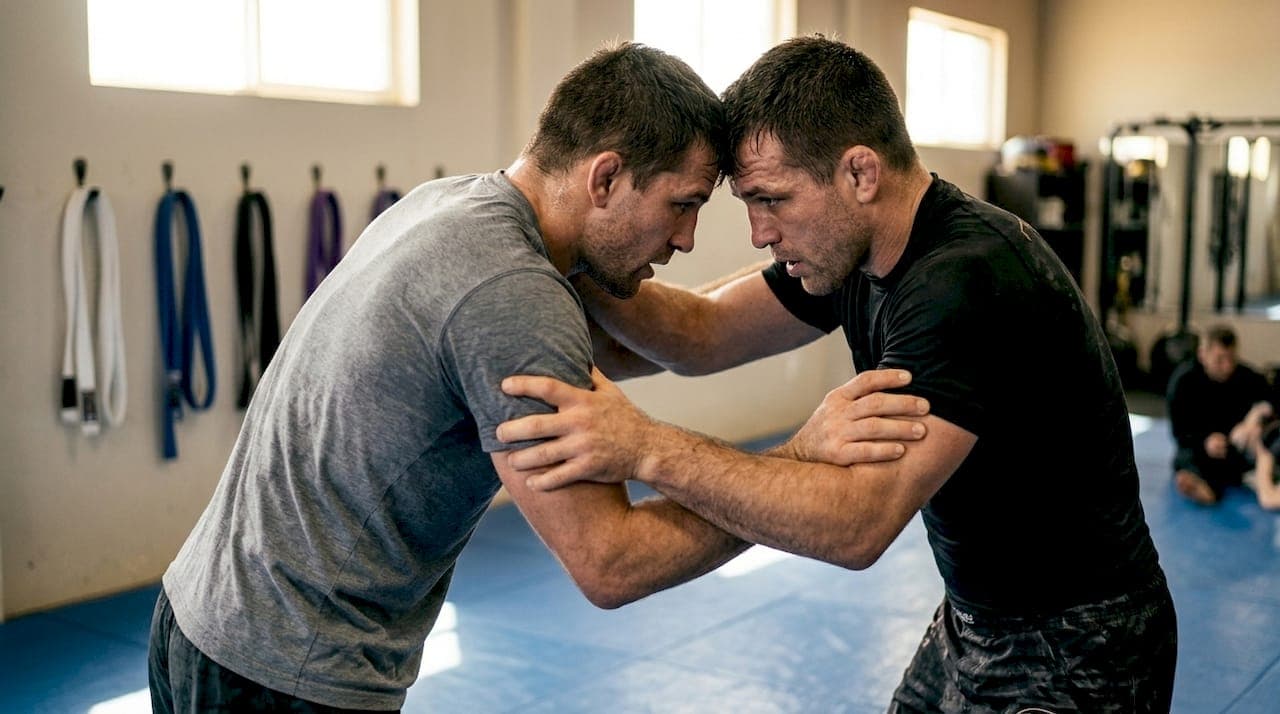
You step onto the mat for no-gi Brazilian Jiu-Jitsu training, and the question hits you: should I wear a rashguard or go without? Many practitioners wonder if training without this protective layer compromises their safety, hygiene, or comfort during intense rolling sessions. The answer involves understanding skin protection, infection risks, and practical training considerations. This article examines the real risks of training no-gi without rashguards, explores when it might be acceptable, and provides actionable strategies to keep you safe and comfortable on the mats regardless of your gear choices.
Table of Contents
- Key takeaways
- Understanding rashguards and their role in no-gi BJJ
- Risks and considerations when training no-gi without a rashguard
- Situations and tips for safely training no-gi without a rashguard
- Choosing the right gear to complement no-gi training safely
- Explore Combatra gear for safer no-gi training
- Frequently asked questions
Key Takeaways
| Point | Details |
|---|---|
| Mat burn protection | Rashguards provide a protective barrier that distributes friction and helps prevent painful mat burns and skin abrasions during grappling. |
| Hygiene barrier | The compression and fabric reduce skin contact with mats and limit exposure to bacteria and fungi that can cause infections. |
| Performance benefits | Quality rashguards wick moisture, support muscles, improve proprioception, and help regulate temperature for better on mat performance. |
| No rashguard risks | Going without rashguards exposes skin to friction injuries and higher infection risk, so extra hygiene and mat cleanliness become essential. |
Understanding rashguards and their role in no-gi BJJ
Rashguards are form-fitting compression garments typically made from polyester, spandex, or nylon blends designed specifically for combat sports. These technical fabrics stretch with your body movements while providing a protective barrier between your skin and training surfaces. Unlike regular athletic shirts, rashguards feature flatlock seams that prevent chafing and reinforced stitching that withstands the pulling and gripping inherent to grappling.
The primary protective function of rashguards centers on preventing mat burns and skin abrasions. When you drill takedowns or escape from bottom positions, your skin repeatedly contacts the mat surface. Without a protective layer, this friction creates painful burns and scrapes that can sideline your training for days. Rashguards act as a second skin, distributing friction across the fabric rather than your epidermis.
Hygiene represents another critical function that many practitioners underestimate. Training mats harbor bacteria, fungi, and other microorganisms despite regular cleaning. Why BJJ athletes wear rashguards relates directly to creating a barrier that minimizes your skin's exposure to these pathogens. The compression fit also reduces the skin-to-skin contact with training partners, lowering transmission risks for conditions like ringworm, staph infections, and impetigo.
Performance benefits extend beyond simple protection. Quality rashguards feature moisture-wicking technology that pulls sweat away from your body, keeping you drier during intense rolling sessions. The compression effect supports muscle groups and improves proprioception, helping you feel body positioning more accurately. Temperature regulation fabrics keep you cool in summer training and warm during winter sessions, maintaining optimal body temperature for peak performance.
Several myths persist about rashguards that deserve clarification. Some believe any tight shirt works equally well, but regular compression shirts lack the durability and antimicrobial treatments found in purpose-built rashguards. Others think rashguards make you more slippery and harder to grip, but the opposite proves true since sweat-soaked skin becomes far more slippery than technical fabric. The role of rashguards in BJJ encompasses protection, hygiene, and performance enhancement simultaneously.
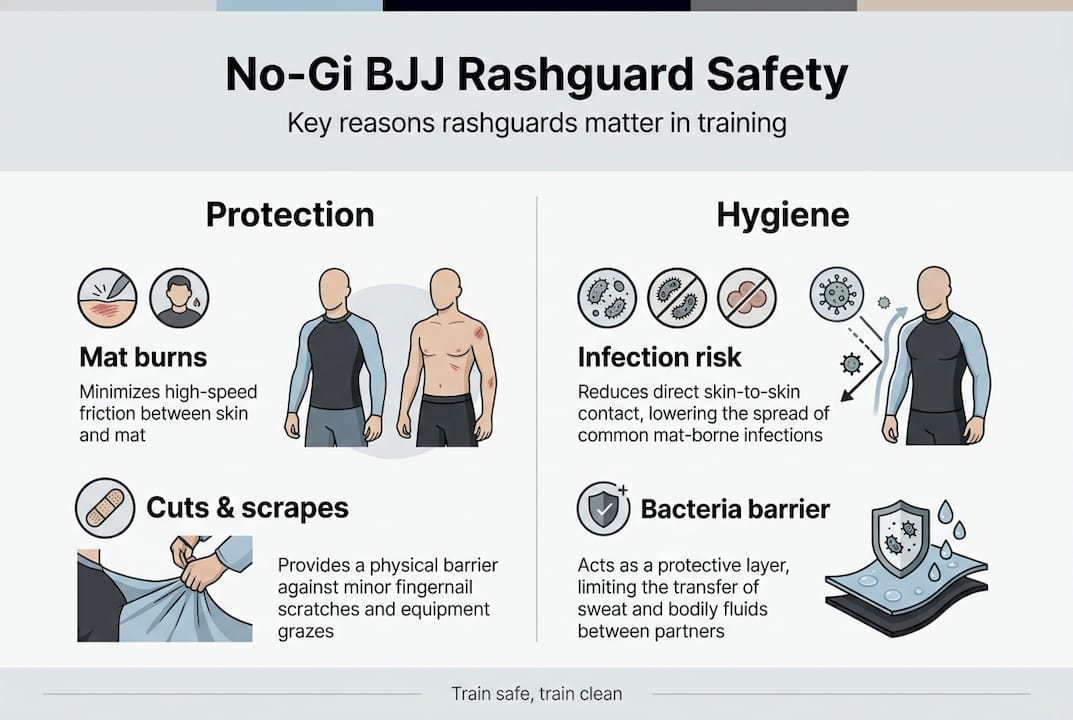
Pro Tip: Choose rashguards that fit snugly without restricting breathing or movement. The fabric should lie flat against your skin with minimal bunching, and sleeves should extend to your wrists without riding up during arm movements. A proper fit maximizes both protective benefits and comfort throughout your training session.
Risks and considerations when training no-gi without a rashguard
Training no-gi without a rashguard exposes you to several concrete safety and hygiene risks that compound over time. The most immediate concern involves skin injuries that occur from mat friction. Mat burns develop when bare skin repeatedly drags across training surfaces during scrambles, creating painful abrasions that sting under the shower and require days to heal. These wounds often appear on shoulders, elbows, knees, and backs where body weight concentrates during ground work.
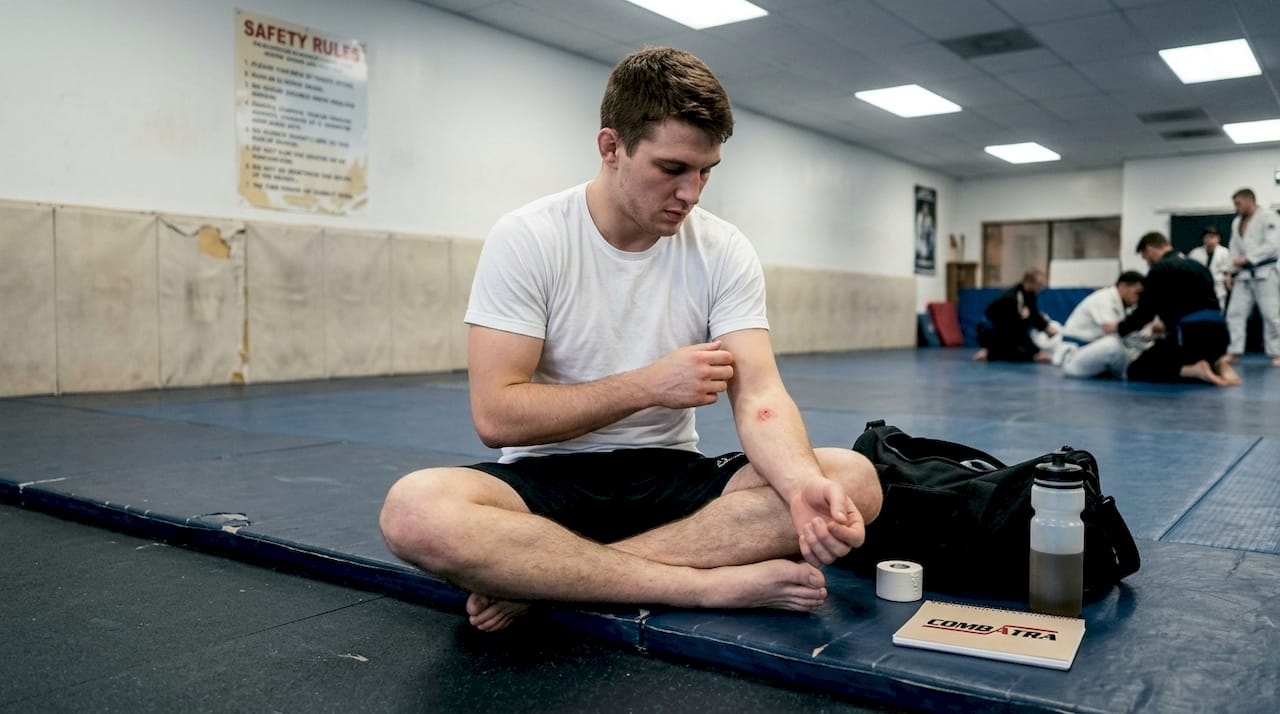
Skin cuts and scrapes present another frequent injury pattern. Your training partner's fingernails, toenails, or even rough calluses can scratch unprotected skin during grips and transitions. While individual scratches seem minor, they create entry points for pathogens. Training without rashguards increases exposure to skin cuts, mat burns, and fungal infections that can develop into serious medical issues requiring treatment.
Bacterial and fungal infections represent the most concerning risk category. Staph infections, including dangerous MRSA strains, thrive in warm, moist environments like training mats. Ringworm spreads rapidly through direct skin contact, creating circular, itchy lesions that require antifungal medication. Impetigo causes crusty sores that ooze fluid and spread quickly to other body areas and training partners. Without a protective barrier, your skin directly contacts these microorganisms with every technique.
Discomfort factors accumulate during training sessions without compression fabric. Sweat pools on bare skin, creating a slippery surface that makes maintaining grips difficult. Skin friction against your training partner generates uncomfortable heat and irritation. Your chest, back, and arms stick to the mat during transitions, requiring extra effort to move smoothly. These discomfort elements distract from technique refinement and reduce training quality.
"Direct skin-to-mat contact without protective gear creates a perfect storm for pathogen transmission. Studies show practitioners training without rashguards experience infection rates three times higher than those using proper protective apparel, with staph and ringworm being the most common culprits."
The cumulative effect of these risks extends beyond individual training sessions. Repeated minor injuries weaken skin integrity over time, making you more susceptible to serious infections. Missing training days due to preventable skin conditions disrupts skill development and conditioning progress. Why use rashguards BJJ benefits become apparent when you calculate the cost of medical treatments, lost training time, and potential transmission to family members versus investing in quality protective gear.
Situations and tips for safely training no-gi without a rashguard
Despite the risks, certain scenarios exist where practitioners train no-gi without rashguards. Understanding these contexts and implementing strict hygiene protocols minimizes potential complications. Some athletes prefer the unrestricted feeling during specific drilling sessions. Others train in extremely hot climates where even technical fabrics feel oppressive. Competition rules in certain organizations permit bare-chested training for male athletes. Financial constraints sometimes limit gear purchases for beginners exploring the sport.
When training without rashguards, follow this essential hygiene and safety checklist:
- Shower immediately before training to remove bacteria and oils from your skin
- Inspect your skin for cuts, scrapes, or infections and cover any wounds with waterproof bandages
- Ensure training mats receive proper sanitation before and after each session
- Limit rolling intensity to reduce friction and impact against mats
- Shower with antibacterial soap within 30 minutes after training ends
- Apply moisturizer to prevent dry, cracked skin that invites infections
- Wash training shorts in hot water with antibacterial detergent after every session
- Monitor your skin daily for signs of infection like redness, swelling, or unusual marks
| Factor | With Rashguard | Without Rashguard |
|---|---|---|
| Skin protection | High barrier against mat burns and abrasions | Direct exposure to friction injuries |
| Infection risk | Minimized through reduced skin contact | Elevated due to direct mat and skin exposure |
| Comfort level | Moisture wicking keeps skin dry and cool | Sweat accumulation causes stickiness |
| Performance | Compression supports muscles and movement | Unrestricted but less protective |
| Hygiene maintenance | Fabric acts as washable barrier | Requires meticulous pre and post-training care |
Implementing a comprehensive skin care routine becomes non-negotiable when training without protective gear. Start by establishing a pre-training protocol that includes thorough showering with antibacterial soap, paying special attention to areas that will contact the mat. Trim fingernails and toenails short to minimize scratching yourself or training partners. Check your entire body for any existing cuts or suspicious marks that could indicate developing infections.
Post-training care proves equally critical. The 30-minute window after training represents your best opportunity to wash away pathogens before they penetrate skin barriers. Use warm water and quality antibacterial soap, scrubbing gently but thoroughly. Pay special attention to areas that experienced the most mat contact. Pat skin dry rather than rubbing to avoid irritating already-stressed skin. Apply a light, non-comedogenic moisturizer to maintain skin barrier integrity.
Pro Tip: Keep a dedicated post-training hygiene kit in your gym bag containing travel-size antibacterial body wash, a clean towel, and moisturizer. This ensures you never skip the crucial post-training shower even when training at unfamiliar locations. Proper hygiene and mat sanitation mitigate risks significantly when combined with vigilant skin monitoring.
Choosing the right gear to complement no-gi training safely
Even if you prefer training without rashguards, selecting appropriate complementary gear enhances safety and comfort significantly. Your gear choices should prioritize skin protection, moisture management, and unrestricted movement while maintaining hygiene standards. The right combination of apparel reduces risks without compromising the training experience you prefer.
Fight shorts designed specifically for grappling represent the foundation of no-gi training attire. These shorts feature reinforced stitching that withstands constant pulling and stretching. Side slits allow full range of motion for kicks and leg movements. The shorter inseam prevents fabric bunching behind knees during guard work. Quality customizable MMA fight shorts use quick-drying materials that wick moisture away from skin, reducing the swampy feeling that develops during intense rolling.
Compression shorts worn under fight shorts provide an additional protective layer for your lower body. These form-fitting garments reduce friction between your thighs and prevent chafing during hip movements. The compression effect supports muscle groups and improves blood circulation during training. Many compression shorts feature antimicrobial treatments that inhibit bacterial growth, adding another hygiene layer even when training bare-chested.
Female practitioners require specialized considerations for no-gi training. Sports bras designed for high-impact activities provide necessary support and coverage during grappling. Look for styles with wide, flat straps that distribute pressure evenly and won't dig into shoulders during partner pressure. Moisture-wicking fabrics keep you dry and comfortable. Some athletes layer a compression tank over their sports bra for additional coverage and protection while maintaining breathability.
Fabric technology matters tremendously in training gear selection. Polyester blends dry quickly and resist odor accumulation better than cotton alternatives. Spandex content between 10-20% provides stretch without losing shape after repeated washing. Flatlock seams prevent irritation at friction points. Antimicrobial treatments embedded in fabric fibers actively fight bacterial growth throughout the garment's lifespan.
Gear pairing strategies optimize both protection and comfort:
- Combine compression shorts with loose fight shorts for layered protection and mobility
- Choose fabrics with UPF ratings if training outdoors to prevent sun damage
- Select darker colors that hide sweat stains and maintain professional appearance
- Invest in multiple sets to ensure clean gear for every training session
- Replace worn gear promptly when fabric thins or seams weaken
The durability of your training gear directly impacts long-term safety and cost-effectiveness. High-quality training shorts and compression gear withstand hundreds of training sessions when properly maintained. Cheap alternatives deteriorate quickly, developing thin spots that provide inadequate protection and requiring frequent replacement. Calculate cost per training session rather than initial purchase price when evaluating gear investments.
Explore Combatra gear for safer no-gi training
Your training gear choices directly impact your safety, comfort, and performance on the mats. Combatra specializes in premium BJJ and MMA apparel engineered specifically for the demands of grappling sports. Our product line addresses the exact concerns discussed throughout this article, offering solutions whether you prefer full rashguard protection or minimal gear approaches.

Our custom rashguard compression tops feature antimicrobial fabric technology, reinforced flatlock seams, and moisture-wicking performance that keeps you protected and comfortable during the most intense rolling sessions. For practitioners who prefer training without rashguards, our custom MMA fight shorts provide maximum mobility with durable construction that withstands constant grappling stress. Female athletes benefit from our handcrafted sports bras designed specifically for high-impact martial arts training. Every Combatra product allows complete customization of colors, logos, and designs, ensuring your gear reflects your personal style while delivering professional-grade protection.
Frequently asked questions
Can I get infections more easily without a rashguard?
Yes, training without a rashguard significantly increases your infection risk. Your bare skin directly contacts mats and training partners, exposing you to bacteria and fungi that cause staph infections, ringworm, and impetigo. BJJ rashguards and infection prevention studies show practitioners using protective gear experience infection rates up to three times lower than those training bare-chested. Implementing strict hygiene protocols reduces but doesn't eliminate this elevated risk.
What are the best alternatives to rashguards in no-gi training?
Compression shirts made from moisture-wicking polyester blends offer similar protection to rashguards. Athletic tank tops provide upper body coverage while allowing more airflow in hot conditions. Some practitioners wear compression shorts with fight shorts for lower body protection while training bare-chested. Whatever alternative you choose, ensure it features antimicrobial fabric treatments and flatlock seams to minimize irritation during grappling movements.
How should I clean my skin and gear after no-gi sessions?
Shower within 30 minutes after training using antibacterial soap, paying special attention to areas that contacted the mat. Scrub gently but thoroughly, then pat dry and apply moisturizer to maintain skin barrier integrity. Wash all training gear in hot water with antibacterial detergent after every session. Never reuse unwashed training clothes, as bacteria multiply rapidly in damp fabric. Air dry gear completely before storing to prevent mildew growth.
Is training no-gi without rashguards common among beginners?
Beginners typically start with full protective gear as they learn proper technique and hygiene practices. Gi vs no-gi BJJ for beginners discussions emphasize building good habits early. Most academies require or strongly recommend rashguards for all students regardless of experience level. Training without rashguards becomes more common among experienced practitioners who understand the risks and maintain strict hygiene protocols.
How do rashguards improve comfort during intense rolling?
Rashguards wick sweat away from your skin, keeping you drier and more comfortable throughout training. The compression fit reduces muscle vibration and supports proper body positioning. Technical fabrics regulate temperature, preventing overheating in summer and maintaining warmth in winter. The smooth surface reduces friction against training partners and mats, allowing smoother transitions and movements. These combined factors let you focus on technique rather than physical discomfort during extended rolling sessions.