
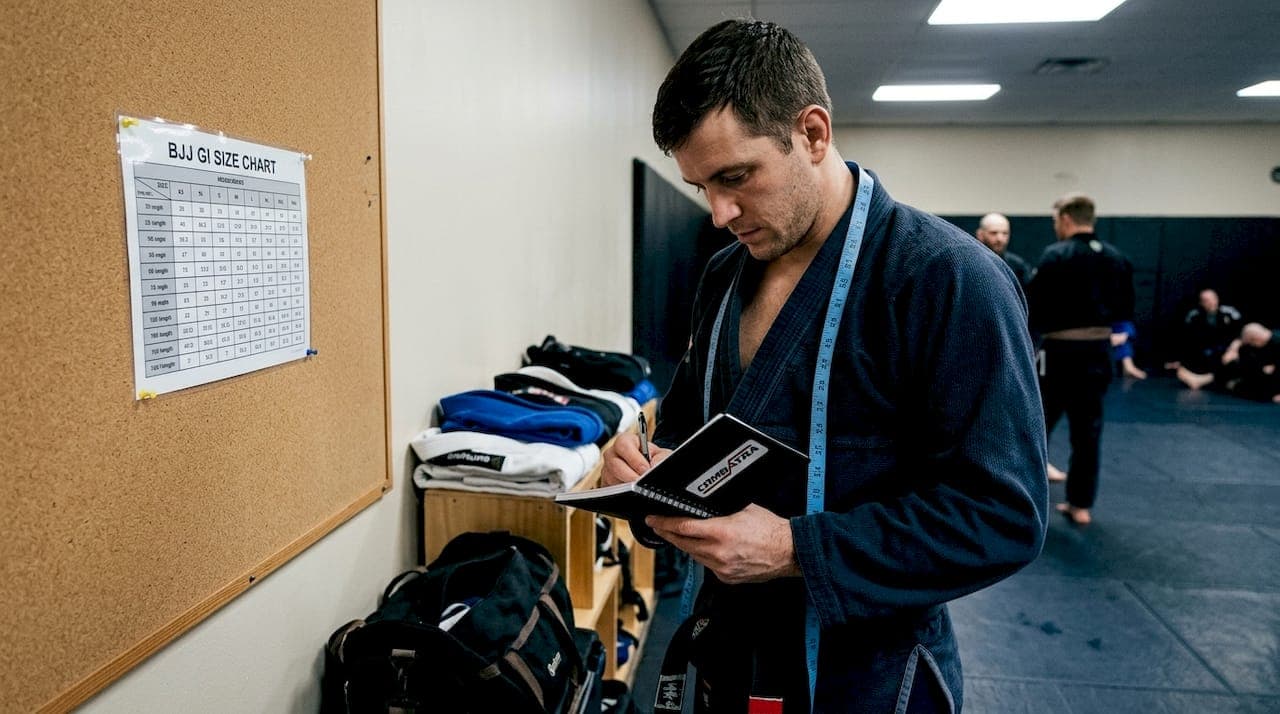
Ordering a custom BJJ gi online should be exciting, not stressful. Yet many practitioners open their package only to find a gi that's too tight in the shoulders or sleeves that drag past their fingertips. The culprit? Misreading or skipping the size chart entirely. Understanding how to interpret these charts correctly means the difference between a gi that enhances your performance and one that sits unused in your closet. This guide breaks down exactly how to read BJJ gi size charts so you get the perfect fit every time.
Table of Contents
- Key takeaways
- Understanding BJJ gi sizing basics
- How to interpret size charts for your body dimensions
- Common sizing challenges and how to avoid them
- Practical tips for choosing and fitting your custom BJJ gi
- Explore our premium custom BJJ gi collection
- FAQ
Key Takeaways
| Point | Details |
|---|---|
| Accurate measurements | Before ordering, measure height, weight, chest, and sleeve length with a soft tape measure and have a partner assist for accuracy. |
| Model specific charts | Always match your measurements to the exact size chart for the gi model you are buying. |
| Balance fit mobility | Choose a size that preserves range of motion without excess fabric that catches or drags. |
| Account for shrinkage | Account for potential shrinkage by sizing up or following pre wash guidance when available. |
| Use reviews | Read user reviews and consider competition versus training fit preferences to select the best size. |
Understanding BJJ gi sizing basics
BJJ gi sizing follows a letter-number system that differs fundamentally from standard clothing sizes. BJJ gis sizing typically ranges from size A0 to A5, with each designation corresponding to specific height and weight ranges. The "A" refers to adult sizing, while the number indicates the scale from smallest to largest.
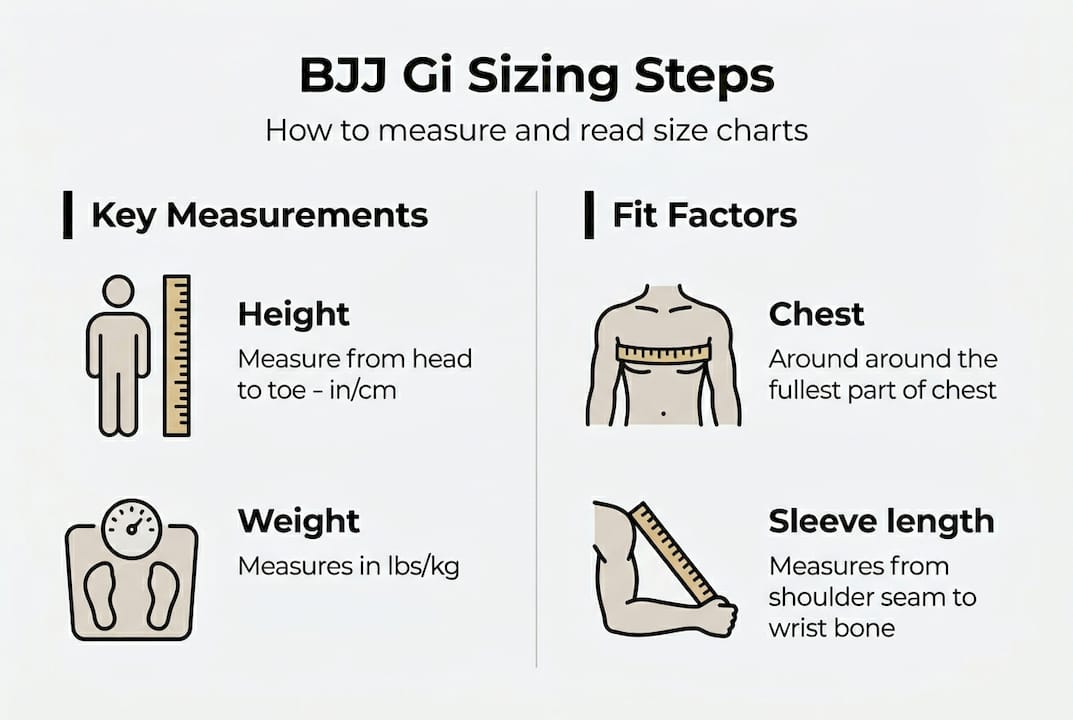
Four measurements matter most when consulting size charts. Height determines jacket and pant length, while weight indicates overall body mass that affects how fabric drapes and fits. Chest circumference influences jacket width and comfort across the shoulders. Sleeve length ensures your arms have full range of motion without excess material bunching at the wrists. Different manufacturers include varying combinations of these measurements on their charts, with some adding waist, inseam, or shoulder width specifications.
The most common sizing mistake is focusing solely on one measurement while ignoring others. A practitioner might choose A2 based on height alone, overlooking that their broader chest requires A3 proportions. Another pitfall involves forgetting to account for shrinkage, which we'll address later. Some buyers also ignore the distinction between competition and training fits, selecting sizes that don't align with their primary use case.
Size labels themselves can be misleading across brands. One company's A2 might fit like another's A3 due to different cut patterns and fabric weights. This inconsistency makes it essential to treat each gi purchase as a fresh sizing decision rather than assuming your size remains constant. BJJ gi training and competition sizing varies based on intended use and personal preference.
Pro Tip: Measure your body in centimeters using a soft fabric tape measure, not a rigid metal one. Take measurements in the morning before training when your body hasn't expanded from exercise or food. Have a training partner assist with hard-to-reach areas like shoulder width and back length for maximum accuracy.
How to interpret size charts for your body dimensions
Reading a size chart effectively requires a systematic approach that matches your measurements to the manufacturer's specifications. Start by gathering your exact body dimensions. Stand barefoot against a wall and have someone mark your height with a pencil, then measure from floor to mark. Weigh yourself on a reliable scale. For chest circumference, wrap the tape measure around the fullest part of your chest, keeping it level across your back. Measure arm length from the center of your neck, across your shoulder, down to your wrist bone.
Once you have these numbers, locate the size chart for your specific gi model. Find where your height intersects with your weight on the chart. Most size charts recommend a range for height and weight, staying within these ranges ensures proper fit. If your measurements fall solidly within one size bracket, that's your starting point.
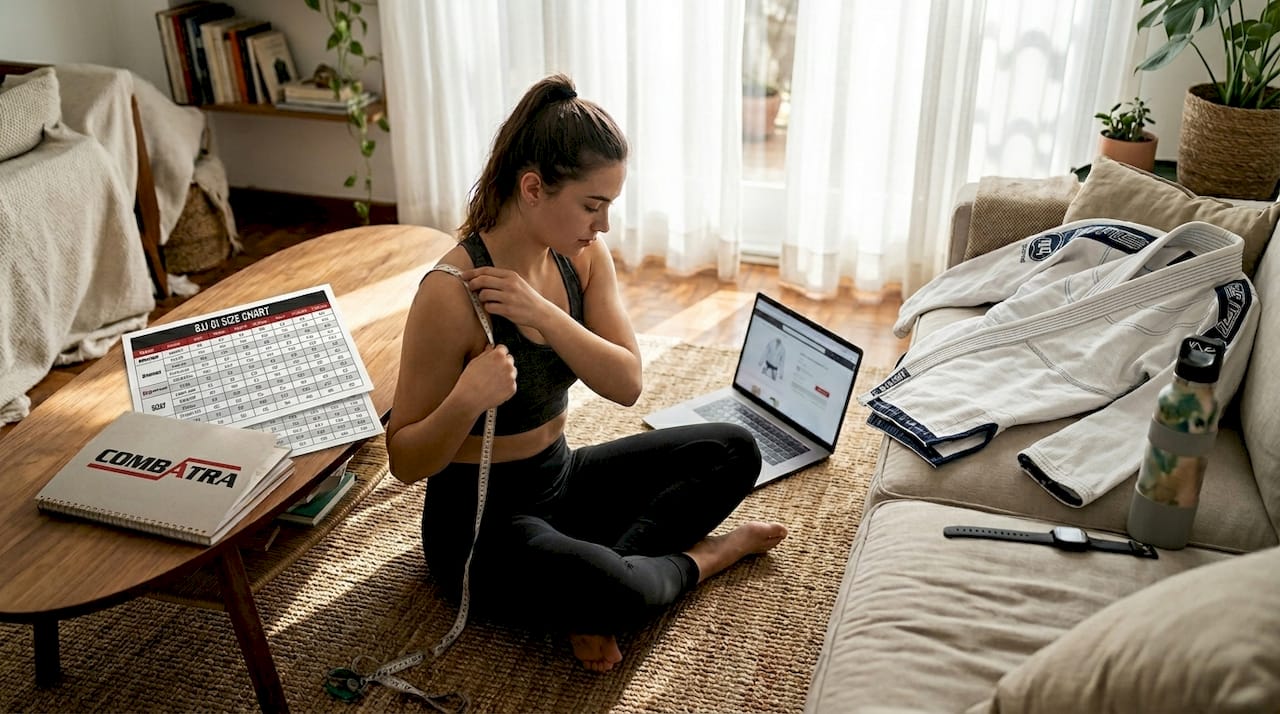
Here's a sample size chart showing typical ranges:
| Size | Height (cm) | Weight (kg) | Chest (cm) |
|---|---|---|---|
| A1 | 163-173 | 59-73 | 91-99 |
| A2 | 170-180 | 70-84 | 97-107 |
| A3 | 178-188 | 82-95 | 104-114 |
| A4 | 185-196 | 93-109 | 112-122 |
Sizing decisions become more nuanced when your measurements span two sizes. If you're 178cm tall and 83kg, you sit at the overlap between A2 and A3. Your decision depends on fit preference and training style. Competition practitioners often size down for a tighter fit that gives opponents less fabric to grip. Training-focused athletes might size up for comfort during long sessions and to accommodate protective gear underneath.
Fabric weight also influences how sizes feel. A heavyweight 550gsm gi in A2 will fit more snugly than a lightweight 350gsm gi in the same size, even if the measurements are identical. The denser weave has less give and stretch. Consider whether you prefer a broken-in, flexible feel or a crisp, structured fit when deciding between borderline sizes.
Pro Tip: If measurements place you between sizes and the manufacturer offers detailed dimension charts showing actual garment measurements (not just body size ranges), compare your current best-fitting gi's measurements to their specs. This gives you a real-world reference point beyond abstract size labels.
Common sizing challenges and how to avoid them
Even experienced practitioners encounter sizing obstacles when purchasing new gis. The most frequent issues include inconsistent sizing standards, unexpected shrinkage, and brand-specific variations that make previous sizing knowledge unreliable. Understanding these challenges helps you navigate size charts with greater confidence.
Brand inconsistency tops the list of sizing frustrations. Variations in gi brands' sizing can cause confusion, making comparative sizing tables helpful when switching between manufacturers. A practitioner who wears A2 in one brand might need A3 in another due to different cut patterns, target demographics, or regional sizing philosophies. European brands often run smaller than American ones, while Brazilian manufacturers may use entirely different measurement systems.
Fabric composition dramatically affects post-purchase fit. Pearl weave gis shrink differently than single weave or gold weave options. Cotton-rich blends contract more aggressively in hot water than cotton-polyester blends. The first wash typically produces the most significant shrinkage, with additional minor contraction over subsequent washes. This variability makes it crucial to check the product description for fabric content and pre-shrinking information.
"The difference between training in a properly fitted gi versus an ill-fitting one isn't just comfort. It directly impacts your technique execution, movement efficiency, and even injury risk during intense rolling sessions."
Several strategies prevent sizing mistakes before they happen:
- Measure yourself fresh for each purchase rather than relying on old measurements, as body composition changes over time
- Read customer reviews specifically mentioning sizing accuracy, noting whether the gi runs true to size, large, or small
- Contact customer service with your exact measurements if you're uncertain, as many companies offer personalized sizing recommendations
- Check return and exchange policies before purchasing, ensuring you can swap sizes if needed
- Consider the gi's intended use, as competition regulations may restrict sizing options
The training versus competition distinction deserves special attention. IBJJF rules specify that gi sleeves must reach no more than 5cm from the wrist when arms are extended, while pants must come within 5cm of the ankle. A looser training gi that feels comfortable might not meet these requirements. Conversely, a competition-legal gi might feel restrictively tight during casual rolling sessions. Choosing BJJ gi for performance and style requires balancing regulatory compliance with personal comfort preferences.
Practical tips for choosing and fitting your custom BJJ gi
Custom gis offer the ultimate sizing solution by allowing precise adjustments beyond standard size brackets. However, they require even more careful measurement and planning than off-the-rack options. Follow this systematic approach to ensure your custom gi fits perfectly.
First, take comprehensive measurements following the manufacturer's specific instructions. Most custom BJJ gi services allow precise size matching and style personalization for optimal fit and performance. Beyond basic height and weight, custom orders often request inseam length, exact sleeve length from shoulder to wrist, shoulder width, and hip circumference. These additional data points enable tailors to create a gi that conforms to your unique proportions rather than forcing you into a predetermined size bracket.
Second, decide on your preferred fit style before finalizing measurements. A competition fit should be snug across the chest and shoulders with minimal excess fabric, while sleeves and pants meet regulation length requirements exactly. Training fits allow more room for movement and comfort, with slightly longer sleeves and pants that accommodate growth or weight fluctuation. If you plan to wear a rashguard or compression gear underneath, add 2-3cm to chest measurements to prevent the gi from feeling restrictive.
Third, account for fabric behavior and shrinkage allowance. Ask the manufacturer whether their gis are pre-shrunk or if you should size up to compensate for initial contraction. Heavy cotton gis typically shrink 3-5%, while pre-shrunk or blended fabrics may shrink only 1-2%. If ordering a 450gsm or heavier gi, consider adding 2-5cm to length measurements to offset shrinkage. Lighter gis under 400gsm generally require less shrinkage allowance.
Fourth, explore customization options that affect fit beyond basic sizing. Some manufacturers offer tapered versus straight-cut pants, affecting how the gi sits on your hips and legs. Reinforced knees add bulk that might require sizing up in the pants while keeping the jacket at your measured size. Extra-long sleeve options benefit taller practitioners with longer arm spans relative to their torso length.
Fifth, leverage customer support resources before committing to custom specifications. Reputable custom gi companies employ sizing specialists who can review your measurements and recommend adjustments based on thousands of previous orders. They can identify when your proportions might benefit from mixing sizes, such as an A2 jacket with A3 pants. This expertise prevents costly mistakes that standard size charts can't address.
Custom sizing delivers multiple performance benefits beyond simple comfort. A properly fitted gi allows full range of motion for technical movements like granby rolls and inversions without fabric bunching or restricting flexibility. Durability improves when the gi fits correctly, as stress points distribute evenly rather than concentrating in areas pulled tight by poor sizing. Confidence increases when you know your gi meets competition standards and won't fail during crucial moments.
Explore our premium custom BJJ gi collection
Now that you understand how to interpret size charts and measure for the perfect fit, it's time to put that knowledge into practice. Combatra specializes in custom BJJ gi design that combines precise sizing with personalized style choices. Our build-your-own platform lets you select fabric weight, color combinations, and embroidery options while ensuring your measurements translate into a gi that fits exactly as intended.
Our collection includes popular models like the Brazilian flag BJJ gi for practitioners who want to honor their art's heritage, and the premium black BJJ gi for those who prefer classic, understated elegance. Each gi comes with detailed sizing guidance and customer support to help you choose confidently. Whether you need a competition-ready fit or a comfortable training gi, our sizing specialists ensure your measurements result in a gi that enhances your performance on the mats.
FAQ
How do I measure myself accurately for a BJJ gi?
Use a soft fabric measuring tape rather than a rigid ruler for body contours. Stand straight against a wall without shoes, and have a training partner help with measurements you can't easily take yourself, like shoulder width and back length. Measure in the morning before eating or training when your body is at its most consistent size. Record all measurements in both centimeters and inches to match whichever system the size chart uses.
What if my measurements fall between two gi sizes?
Consider your primary use case and fit preference when measurements span two sizes. Size down if you compete frequently and need a tighter, regulation-compliant fit with less fabric for opponents to grip. Size up if you prioritize training comfort, plan to wear protective gear underneath, or want room for minor weight fluctuation. Check the manufacturer's shrinkage information, as sizing up might be necessary even for your preferred fit if the gi will contract significantly after washing.
Can gi size vary between brands?
BJJ gi sizing differs widely between brands, consulting brand-specific charts is essential. Each manufacturer uses proprietary sizing standards based on their target market, regional preferences, and cut patterns. An A2 from one company might fit like an A3 from another due to differences in sleeve length, jacket width, or pant cut. Always consult the specific size chart for each gi model you consider, and read customer reviews to learn whether that particular gi runs true to size, large, or small compared to other brands.
How much does gi shrinkage affect sizing?
Cotton gis typically shrink 3-5% during the first few washes, with most contraction occurring after the initial wash in hot water. This translates to roughly 5-8cm of length reduction on a full-size gi. Account for shrinkage by sizing slightly larger if you're between sizes or if the manufacturer indicates the gi is not pre-shrunk. Pre-shrunk gis and cotton-polyester blends shrink minimally, usually only 1-2%, making them more predictable for sizing purposes. Always follow the manufacturer's washing instructions to minimize unexpected shrinkage beyond normal ranges.