
TL;DR:
- Rashguards are compression base layers that support muscles, manage sweat, and protect against abrasion during high-contact training. They help retain body heat in winter through compression, moisture-wicking, and wind chill reduction, but require layering for very cold conditions. Wearing a high-GSM long-sleeve rashguard with appropriate layers enhances warmth, mobility, and sun protection for outdoor and indoor training year-round.
Rashguards are compression base layers designed for combat sports like BJJ, MMA, and grappling, providing muscle support, sweat management, abrasion protection, and durability in high-contact training environments. In Australia, where UV levels remain intense even during winter months, premium rashguards rated UPF 50+ and lab tested to AS 4399:2020 add a critical layer of sun protection for outdoor sessions. The question many athletes ask heading into the cooler months is straightforward: do rashguards help keep you warm during winter training? The short answer is yes, but with important conditions. A rashguard functions as a thermal base layer by compressing muscles, wicking moisture, and reducing wind chill. Its effectiveness depends on the environment, the fabric weight, and how well you layer it with other winter training gear.
How do rashguards help retain body heat during winter training?
Rashguards retain body heat through three primary mechanisms: compression, moisture management, and wind chill reduction. Each works together to keep your core temperature stable during cold-weather sessions.
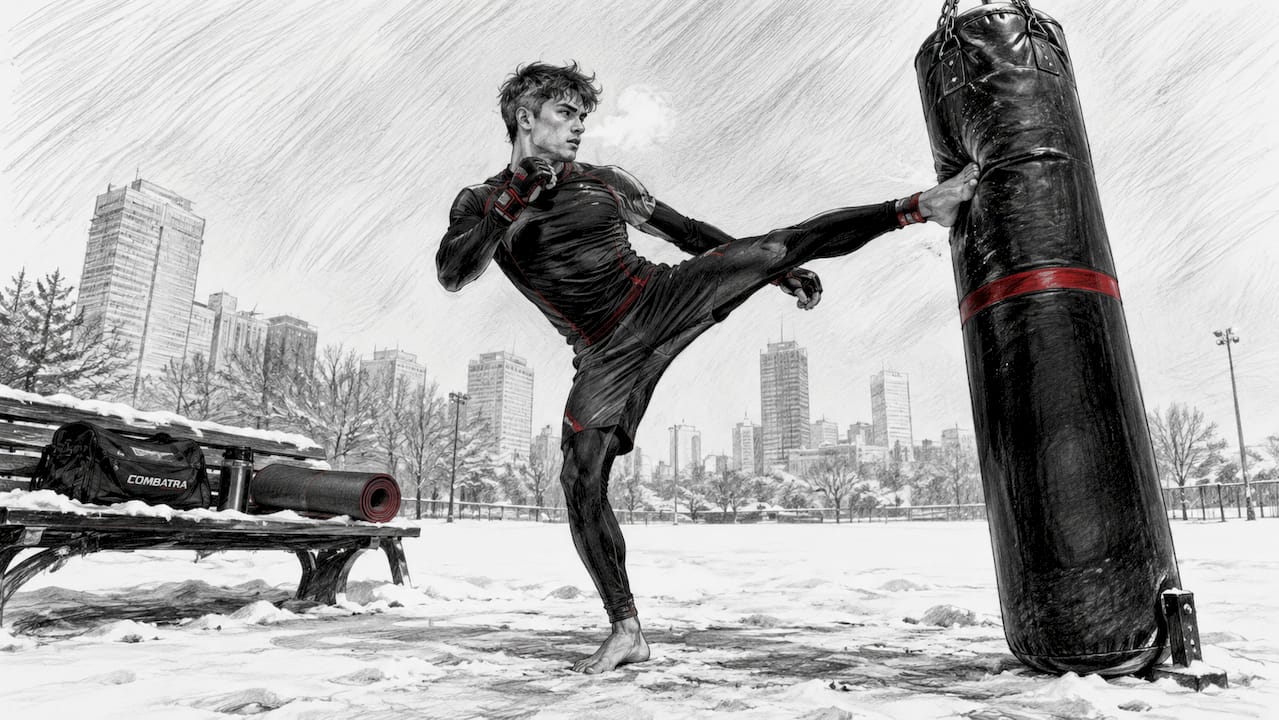
Compression improves blood circulation to working muscles. Better circulation means muscles stay warmer for longer, which also supports performance and reduces injury risk in cold conditions. This is why BJJ and MMA athletes often wear rashguards year-round, not just in summer.
Moisture management is equally important. Sweat left sitting against your skin causes rapid heat loss as it evaporates. A moisture-wicking rashguard pulls sweat away from the skin and disperses it across the fabric surface, keeping you dry and reducing that post-exertion chill that hits when you stop moving.
The close fit of a rashguard also traps a thin layer of warm air between the fabric and your skin. This is the same principle used in thermal base layers across skiing and cycling. It is not thick insulation, but it creates a microclimate that meaningfully slows heat loss during moderate cold.
- Compression supports blood flow and muscle warmth
- Moisture-wicking prevents sweat-driven heat loss
- Close fit traps a thin warm air layer against the skin
- Long sleeve designs reduce exposed skin and wind exposure
- Rashguards form a barrier that reduces wind chill during outdoor training
One clear limitation applies here. Standard rashguards provide warmth via compression and wind chill reduction but lack the insulation reserves needed for long exposure to very cold conditions. In sub-10°C temperatures or cold water below 18°C, a rashguard alone is not sufficient. It needs support from mid and outer layers.
Pro Tip: Choose a long sleeve rashguard for winter training. The additional arm coverage reduces the skin surface exposed to cold air and contributes to better moisture management across the full session.
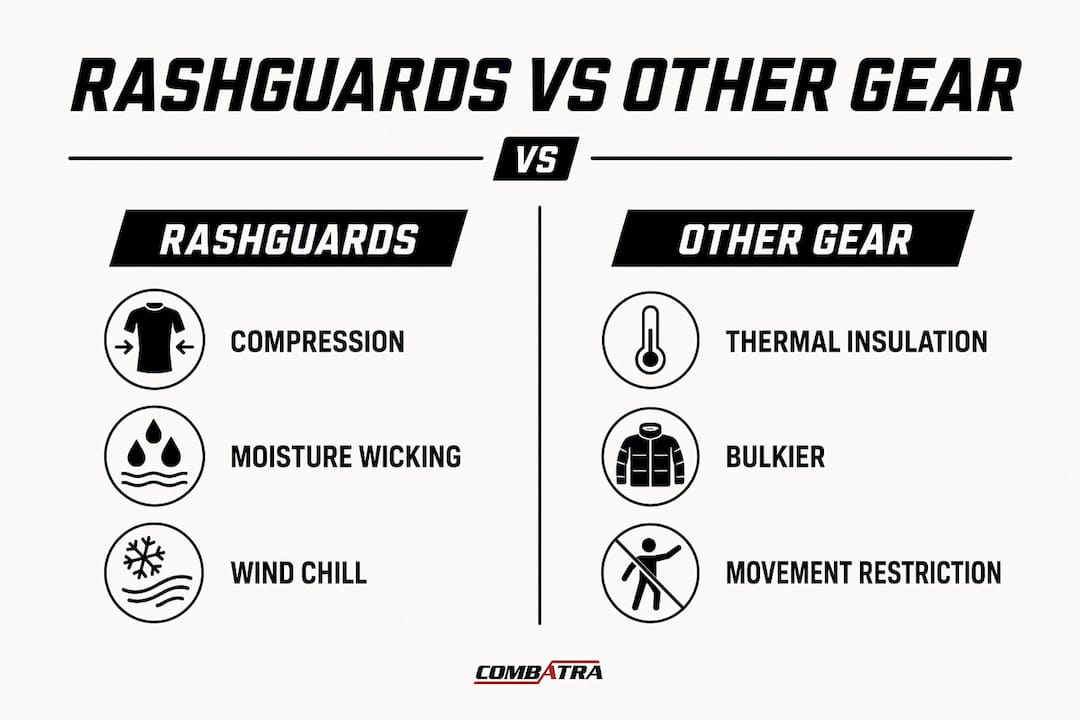
Rashguards vs other winter training gear: how do they compare?
Understanding where rashguards sit in the broader category of winter training gear helps you make smarter layering decisions. The table below compares rashguards against three common alternatives.
| Garment | Insulation | Breathability | Flexibility | Best Use |
|---|---|---|---|---|
| Rashguard | Low to moderate | High | Excellent | Base layer for indoor and mild outdoor training |
| Thermal base layer | Moderate to high | Moderate | Good | Cold outdoor sessions requiring more insulation |
| Compression sleeve | Low | High | Excellent | Targeted limb warmth as a complement to rashguards |
| Neoprene wetsuit | High | Low | Moderate | Cold water sessions below 18°C |
Thermal base layers, such as merino wool or brushed polyester tops, offer more insulation than a standard rashguard. The trade-off is reduced breathability and a bulkier fit that can restrict movement during grappling or ground work. For BJJ athletes, this matters. A rashguard keeps you mobile and dry in a way that a thick thermal top simply cannot.
Compression sleeves are a practical complement to rashguards rather than a replacement. They target limb warmth without adding bulk to the torso. Pairing a rashguard with compression sleeves gives you full-arm coverage and targeted muscle support across the whole session.
Neoprene wetsuits provide superior insulation for cold water but restrict movement significantly. They are the right tool for open water swimming or surfing in cold conditions, not for mat-based combat sports. Rashguards worn under wetsuits in water above 18°C improve thermal comfort and reduce heat loss, making them a useful complement in that context.
The core advantage of a rashguard in winter training is its combination of mobility and moisture management. No other garment matches it on both counts simultaneously.
What material technologies make rashguards effective in the cold?
The thermal performance of a rashguard comes down to fabric construction. Typical rashguards use polyester-spandex blends in the 200–250 GSM range. Higher GSM means denser fabric, which translates to better warmth retention and wind resistance without adding significant bulk.
Here is how the key design features contribute to cold-weather performance:
- Fabric weight (GSM). A 200–250 GSM polyester-spandex blend provides meaningful warmth while remaining light enough for intense training. Lower GSM fabrics are better suited to warm conditions.
- Flatlock seams. Flat seams lie flush against the skin and reduce chafing when a rashguard is worn under a gi, jacket, or thermal shell. This matters more in winter when you are layering multiple garments.
- Long sleeves and high necklines. These design choices increase coverage and reduce the skin area exposed to cold air. A high collar also reduces wind exposure at the neck, which is a significant heat loss point.
- Quick-dry technology. Fabrics that dry rapidly prevent the post-exercise chill that occurs when sweat-saturated clothing cools against the skin. This is particularly relevant during rest periods in outdoor training.
- UPF 50+ rating. Australian sun is intense even in winter, and a UPF 50+ rated rashguard provides skin protection during outdoor sessions year-round. Premium rashguards are lab tested to AS 4399:2020 to verify this rating.
The thermal effectiveness of a rashguard depends on GSM weight, fabric density, and moisture management capabilities. Higher GSM enhances warmth but must be balanced to avoid overheating during intense activity. Getting this balance right is what separates a quality rashguard from a generic compression shirt.
Pro Tip: For winter training, prioritise a rashguard in the 220–250 GSM range with a long sleeve cut. The added fabric density and coverage make a noticeable difference in sessions that mix high-intensity rounds with rest periods in cool air.
How should athletes layer rashguards for winter training?
Layering is the most practical way to get the best thermal performance from a rashguard in winter. Rashguards function best as part of a layered system rather than as a stand-alone cold-weather solution. The right combination depends on your training environment and the ambient temperature.
The core area accounts for 60% of heat loss during exercise. Protecting it with mid-layers like heavyweight hoodies or padded gilets over your rashguard preserves warmth while keeping your limbs free to move. This is best practice for sustained training comfort in Australian gym and outdoor winter conditions.
Layering by temperature range:
- 10–18°C (mild cold): Rashguard as base layer, lightweight hoodie or training jacket over the top. This covers most Australian winter gym conditions.
- Below 10°C (moderate cold): Rashguard plus a mid-weight thermal layer, then a padded gilet or insulated jacket for outdoor sessions. Remove outer layers once you are warmed up.
- Cold water above 18°C: Wear a rashguard under a wetsuit to improve thermal comfort and reduce heat loss at the skin surface.
- Cold water below 18°C: A rashguard alone is not sufficient. Neoprene thickness and thermal accessories become the priority.
Fit is critical when layering. A rashguard that bunches under a gi or jacket creates air pockets that actually increase heat loss rather than reduce it. Proper fit and layering prevent this and maintain both warmth and mobility throughout the session.
Post-training use is worth considering too. Keeping your rashguard on during cool-down and stretching maintains muscle warmth and supports recovery. Removing all layers immediately after intense training in cold conditions accelerates heat loss and increases muscle stiffness.
| Training Environment | Base Layer | Mid Layer | Outer Layer |
|---|---|---|---|
| Indoor gym (10–18°C) | Rashguard | Optional hoodie | None needed |
| Outdoor dry cold (below 10°C) | Rashguard | Thermal top or hoodie | Padded gilet or jacket |
| Cold water (above 18°C) | Rashguard | Wetsuit | None needed |
| Cold water (below 18°C) | Thermal rashguard | Thick neoprene wetsuit | Neoprene accessories |
Key takeaways
Rashguards retain body heat during winter training by compressing muscles, wicking sweat, and reducing wind chill, but they require mid and outer layers to perform effectively in temperatures below 10°C.
| Point | Details |
|---|---|
| Rashguards as base layers | They compress muscles, manage moisture, and trap a thin warm air layer against the skin. |
| Layering is non-negotiable | Below 10°C, add a thermal mid-layer and insulating outer layer over your rashguard. |
| Fabric weight matters | Choose 200–250 GSM polyester-spandex blends for the best balance of warmth and mobility. |
| Long sleeves add coverage | Long sleeve designs reduce exposed skin and wind exposure during cold sessions. |
| UPF 50+ stays relevant in winter | Australian UV levels are significant year-round, making sun protection important even in cooler months. |
The warmth vs mobility trade-off is real
I have trained through enough Australian winters to know that most athletes either overdress or underdress for cold sessions. The ones who overdress end up stripping off layers mid-round and losing focus. The ones who underdress spend the first 20 minutes of every session fighting stiff muscles and poor movement.
A quality rashguard solves a specific part of that problem. It keeps your skin dry, your muscles compressed, and your core temperature stable during the warm-up phase when you are most vulnerable to the cold. What it does not do is replace a proper mid-layer when the temperature drops below 10°C. I have seen athletes treat a rashguard as a complete winter solution and then wonder why they feel cold on the mat. The garment is doing its job. The layering system is incomplete.
The other thing that gets overlooked in Australian conditions is sun protection in winter. Outdoor training in July or August still exposes you to meaningful UV radiation. A UPF 50+ rated rashguard handles that without any extra effort. You get thermal support and skin protection in one garment, which is a genuinely useful combination for anyone training outside year-round.
My advice is straightforward. Invest in a well-constructed rashguard in the 220–250 GSM range with a long sleeve cut. Treat it as your foundation layer. Build your winter training wardrobe around it rather than trying to make a single garment do everything.
— McGinnis
Train warmer this winter with Combatra rashguards
Combatra builds rashguards specifically for athletes who train hard in real conditions, not just ideal ones. Every rashguard in the Combatra range uses compression-grade polyester-spandex fabric with quick-dry technology, designed to manage sweat and retain warmth across full training sessions. All products carry UPF 50+ sun protection, lab tested to AS 4399:2020, making them as useful for outdoor winter sessions as they are for summer mat work.
Whether you train BJJ, MMA, or outdoor sports, Combatra's custom black BJJ rashguard gives you a performance base layer built for the cold. You can also explore the custom black and purple option for team or academy use, with full personalisation available. Find the right foundation for your winter training system at Combatra.
FAQ
Do rashguards actually keep you warm?
Yes. Rashguards retain warmth through compression, moisture management, and a close fit that traps a thin warm air layer against the skin. They are most effective as part of a layered system in temperatures below 15°C.
What GSM rashguard is best for winter training?
A 200–250 GSM polyester-spandex rashguard provides the best balance of warmth and mobility for winter training. Higher GSM adds warmth but can cause overheating during intense activity.
Can i wear a rashguard under a wetsuit in cold water?
Yes. Rashguards worn under wetsuits in water above 18°C improve thermal comfort and reduce heat loss. In water below 18°C, neoprene thickness and thermal accessories become the primary insulation.
Are long sleeve rashguards better for cold weather?
Long sleeve rashguards provide more coverage, reduce the skin surface exposed to cold air, and contribute to better moisture management. They are the recommended choice for winter training sessions.
Do rashguards provide sun protection during outdoor winter training?
UPF 50+ rated rashguards provide meaningful sun protection year-round. Australian UV levels remain significant even in winter, and premium rashguards lab tested to AS 4399:2020 protect skin during outdoor sessions in any season.