
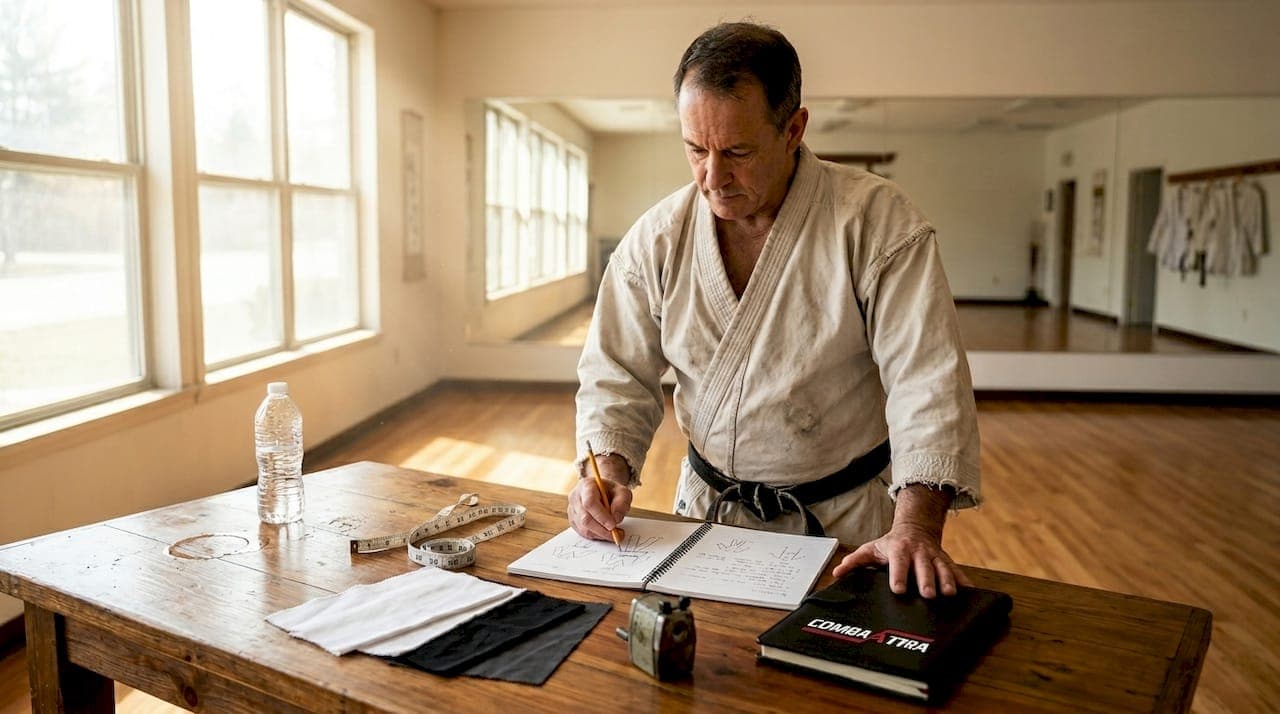
Creating custom karate uniforms that truly represent your dojo's identity is one of the most powerful ways to build unity and pride among your students. Many dojo owners struggle to find the right balance between expressing their unique style and meeting competition requirements. This guide walks you through the essential steps to design durable, compliant, and visually striking custom karate uniforms. You'll discover how to choose materials, place patches correctly, work with manufacturers, and maintain your investment for years of training and competition success.
Table of Contents
- Key takeaways
- Understanding your dojo's identity and uniform needs
- Selecting materials, colors, and patches for durability and compliance
- Step-by-step guide to designing and ordering your custom karate gi
- Maintaining and verifying your custom karate uniforms for longevity and compliance
- Explore Combatra's custom martial arts gear and personalization services
- How to design custom karate uniforms for your dojo - FAQs
Key Takeaways
| Point | Details |
|---|---|
| Patch placement matters | Proper patch placement improves durability and gives the uniform a professional, cohesive appearance. |
| Competition rules constrain design | If you compete in WKF or JKA events you may need plain white gis that meet strict regulations while allowing selective customization. |
| Durable materials matter | Selecting heavyweight fabrics around 14 oz provides longevity and shape retention for traditional styles, while lighter 8 to 10 oz fabrics offer comfort and mobility. |
| Identity informs design | Choosing colors and a distinctive logo that reflect your dojo helps build unity and makes your team instantly recognizable. |
Understanding your dojo's identity and uniform needs
Before you contact any manufacturer or sketch your first design, you need to define what your dojo stands for and how that translates into visual elements. Your uniform is more than fabric and thread. It's a walking representation of your teaching philosophy, discipline standards, and community values.
Start by writing down your dojo's core values. Are you focused on traditional discipline? Modern sport karate? Family-friendly training? Each approach suggests different design choices. A traditional dojo might favor classic white gis with minimal embellishment, while a competition-focused school could embrace bold colors and prominent logos that energize young competitors.
Consider your student demographics carefully. Young children respond to bright colors and fun design elements, while adult practitioners often prefer understated professionalism. If you teach multiple age groups, you might need different uniform options or a versatile design that appeals across generations. Survey your students about their preferences. Their input helps ensure they'll wear the uniforms with pride.
Competition participation significantly impacts your design decisions. If your students regularly compete in WKF or JKA sanctioned events, you'll need plain white gis that meet strict regulations. You can still customize these uniforms, but you'll work within tighter constraints. Dojos focused primarily on training and local demonstrations have much more creative freedom.
Your color scheme and logo are the most visible identity markers. Choose colors that aren't already heavily associated with other local dojos. Your logo should be simple enough to reproduce clearly on fabric while distinctive enough to be recognizable from across the training floor. Test how your logo looks at different sizes before committing to a final design.
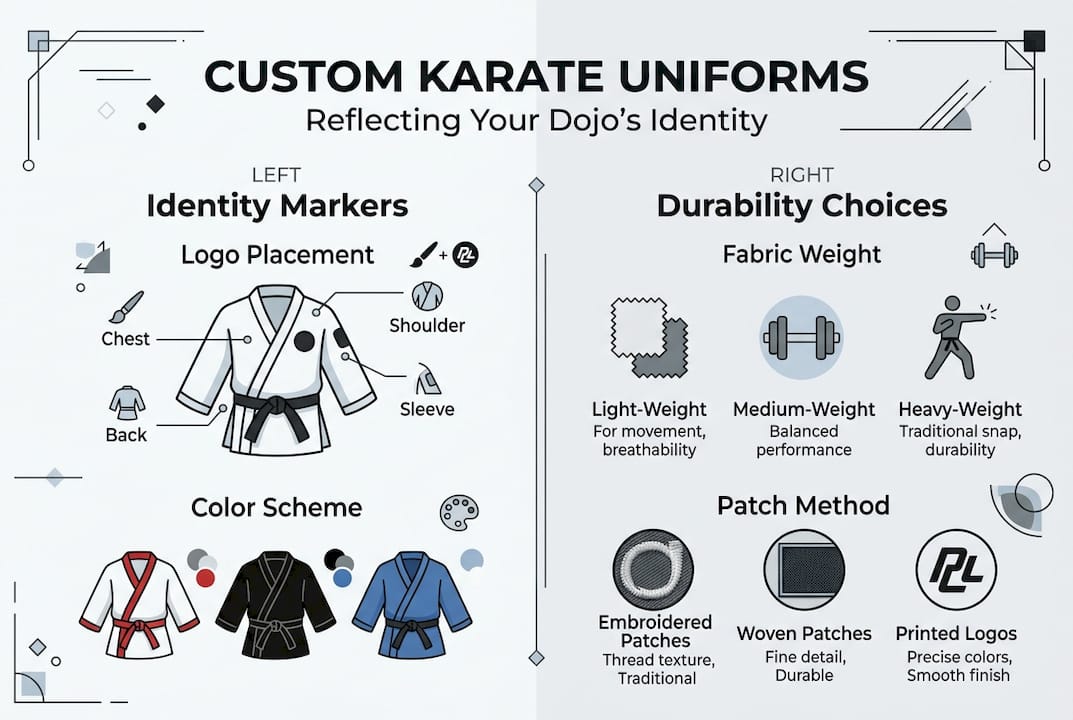
Create a checklist of must-have features. Do you want heavy weight karate uniform options for durability or lighter fabrics for comfort? Will you add student names for personalization? Should belt rank be visible on the uniform itself? Prioritize these elements before moving to material selection. Knowing exactly what you want prevents costly revisions later.
Pro Tip: Create a mood board with photos of uniforms you admire and notes about specific elements you want to incorporate. This visual reference makes communication with manufacturers much clearer and reduces misunderstandings about your vision.
Selecting materials, colors, and patches for durability and compliance
Fabric weight is your first major decision. Heavyweight fabrics around 14 oz offer exceptional durability and a substantial feel that many traditional practitioners prefer. These uniforms withstand years of intense training and maintain their shape through countless washes. The trade-off is reduced breathability and slightly restricted movement, which matters less for kata-focused training but can be noticeable during high-intensity sparring sessions.
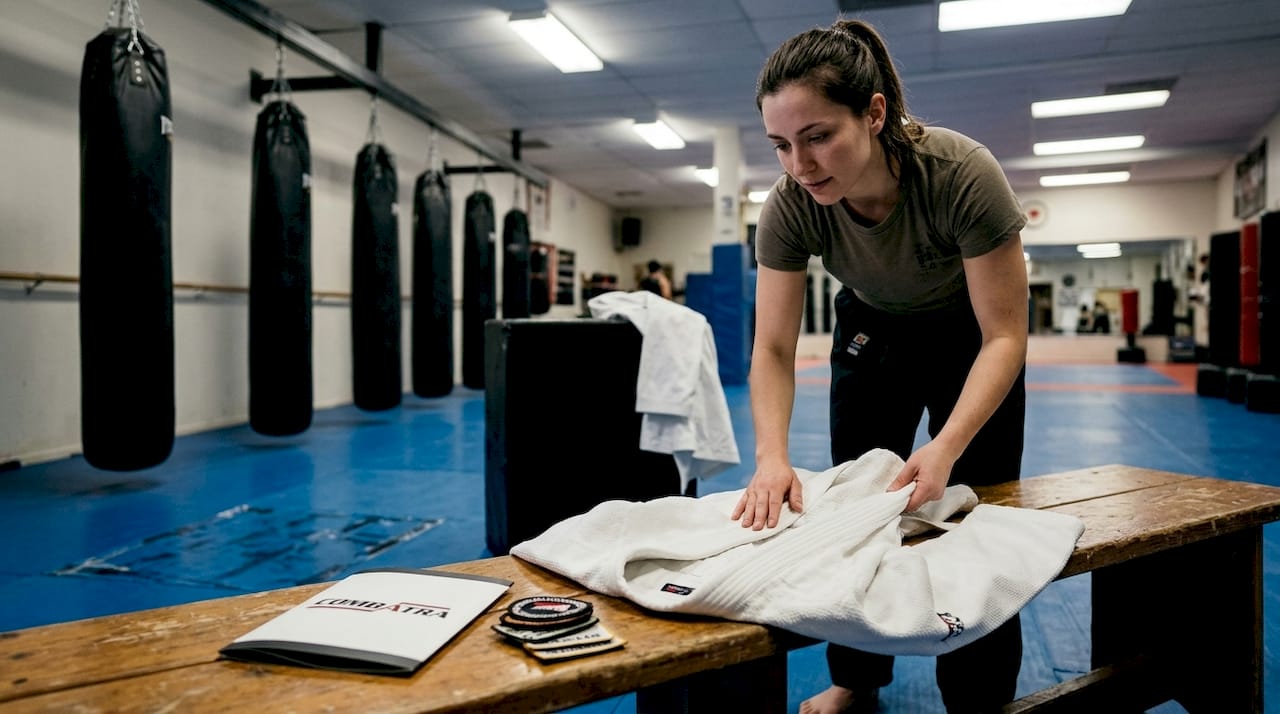
Lightweight fabrics between 8-10 oz provide superior comfort and mobility. Students training in warm climates or focusing on speed-based techniques often prefer these options. However, lighter fabrics show wear faster and may not project the same authoritative presence as heavier alternatives. Many dojos solve this by offering both weights, letting students choose based on their training focus and personal preference.
White remains the standard color for karate uniforms, especially if competition compliance matters to your dojo. White projects cleanliness, discipline, and tradition. It also provides the best backdrop for colored belt displays. Alternative colors like black, blue, or red make powerful statements about your dojo's modern approach and create instant visual recognition. Just verify that your competition organizations allow colored uniforms before investing in a full dojo set.
Sew-on embroidered patches on left chest and right sleeve increase durability and professional look compared to iron-on alternatives. The left chest position is prime real estate for your dojo logo, typically sized between 3-4 inches in diameter. The right upper arm works well for secondary patches like instructor certifications or special achievement markers. Avoid placing patches on the back, as this violates most competition regulations and can interfere with ground techniques.
Patch attachment method matters enormously for longevity. Sew-on patches withstand the stress of training far better than iron-on versions, which peel and crack after repeated washing. Embroidered patches offer the most professional appearance and highest durability, though they cost more than printed alternatives. If budget is tight, prioritize embroidered patches for instructor uniforms and consider printed options for junior students who will outgrow their gis quickly.
Competition compliance requires careful attention to governing body rules. WKF regulations mandate plain white gis with manufacturer logos no larger than 25 square centimeters. JKA rules are similarly strict. If your students compete regularly, design a competition-specific uniform that meets these standards while creating a separate training uniform with more creative freedom. This approach lets you express your dojo identity during daily practice without risking disqualification at tournaments.
| Fabric Weight | Durability Rating | Comfort Level | Best For |
|---|---|---|---|
| 8-10 oz | Moderate | High | Beginners, warm climates, speed training |
| 12 oz | Good | Moderate | All-purpose training and light competition |
| 14 oz+ | Excellent | Lower | Advanced students, demonstrations, traditional training |
Pro Tip: Order fabric swatches from your manufacturer before committing to a full order. Feel the material, test its weight, and wash a sample to see how it holds up. This small investment prevents disappointment when your bulk order arrives.
Step-by-step guide to designing and ordering your custom karate gi
-
Compile your complete design specifications in a single document. Include fabric weight, color choices, exact logo dimensions, patch placement coordinates, and any personalization requirements like student names or rank indicators. Add reference photos showing exactly how you want the finished product to look. The more detailed your specifications, the fewer revision cycles you'll need.
-
Research manufacturers who specialize in martial arts uniforms rather than general sportswear companies. Martial arts specialists understand the unique construction requirements, stress points, and compliance issues that generic uniform makers often miss. Check reviews from other dojo owners and ask for references you can contact directly about quality and service.
-
Request sample uniforms before placing your bulk order. Professional OEM customization is more durable and consistent than DIY painting or embroidery for dojo uniforms. A sample lets you verify fabric quality, assess how patches hold up to washing, and confirm that colors match your expectations. Pay attention to stitching quality at stress points like the collar and sleeve attachments. Weak stitching here leads to premature failure.
-
Prepare your artwork files according to manufacturer specifications. Most require vector format files like AI or EPS for embroidery, with minimum resolution requirements for printed elements. Provide your logo in multiple file formats to ensure compatibility. Include a color reference using Pantone numbers rather than describing colors verbally, as "navy blue" means different things to different people.
-
Submit your bulk order with a detailed size breakdown. Measure your current students and account for growth, especially with younger practitioners. Order a few extra uniforms in common sizes to accommodate new students joining between order cycles. Clearly specify any personalization details like individual names and their exact spelling. Double-check this information, as correcting embroidered names is expensive.
-
Confirm lead times and build in buffer time for unexpected delays. Quality custom uniforms typically require 6-8 weeks from order to delivery, longer during peak seasons. If you need uniforms for a specific competition or belt testing ceremony, place your order at least 10 weeks in advance. Rush orders cost significantly more and may compromise quality.
Common mistakes to avoid include skipping the sample phase to save money, only to receive an entire order that doesn't meet expectations. Ignoring patch durability testing means discovering attachment failures only after students have worn the uniforms for weeks. Not verifying sizing charts against your students' actual measurements results in poor fits that discourage uniform wear. Failing to plan for lead times creates last-minute stress and forces expensive rush orders.
Pro Tip: Establish a relationship with one reliable manufacturer rather than switching suppliers to save a few dollars per uniform. Consistent manufacturing ensures uniform appearance across multiple order cycles and gives you leverage to negotiate better terms as a repeat customer.
Maintaining and verifying your custom karate uniforms for longevity and compliance
Proper washing extends uniform life dramatically. Always wash karate gis in cold water using mild detergent without bleach or fabric softeners. Hot water causes shrinkage and fades colors, while harsh chemicals break down fabric fibers and loosen embroidery threads. Turn uniforms inside out before washing to protect patches and printed elements from abrasion. Wash white and colored uniforms separately to prevent color transfer.
Air drying preserves fabric integrity far better than machine drying. Hang uniforms to dry in a well-ventilated area away from direct sunlight, which can yellow white fabric over time. If you must use a dryer, select the lowest heat setting and remove uniforms while slightly damp to prevent over-drying and excessive shrinkage. Never dry uniforms on high heat, as this damages elastic components and causes permanent fabric distortion.
Inspect uniforms regularly for signs of wear. Check patch edges for loose threads or lifting corners that indicate weakening adhesion. Examine high-stress areas like the collar, sleeve cuffs, and knee regions for fabric thinning or small tears. Address these issues immediately with reinforcement stitching before they expand into major damage requiring uniform replacement. Monthly inspections catch problems early when repairs are simple and inexpensive.
Competition compliance requires plain white gi with no excessive logos; check WKF/JKA rules carefully before tournaments. Practice uniforms can feature bold designs and multiple patches, but competition gis must meet strict regulations. Keep a set of compliant uniforms specifically for tournaments, stored separately from training gear. Verify current rules before each competition season, as governing bodies occasionally update their requirements.
| Fabric Type | Washing Temperature | Drying Method | Special Care |
|---|---|---|---|
| Cotton | Cold | Air dry | Prevent shrinkage with gentle cycle |
| Cotton-Polyester Blend | Cold to warm | Low heat or air dry | Maintains shape better than pure cotton |
| Heavyweight Canvas | Cold | Air dry only | Never machine dry; causes severe shrinkage |
Tournament officials can disqualify competitors for uniform violations even if the athlete is technically skilled. Verify your competition uniforms meet all current regulations well before event day to avoid devastating disqualifications that could have been easily prevented with proper preparation.
Store uniforms properly between training sessions. Hang gis on wide hangers that support the shoulders without creating stress points. Avoid folding uniforms for long-term storage, as this creates permanent creases that look unprofessional. Store in a cool, dry location with good air circulation to prevent mildew growth, especially in humid climates. Keep uniforms away from direct sunlight and heat sources that accelerate fabric degradation.
Maintain separate uniforms for different purposes. Designate specific gis for daily training, demonstrations, competitions, and promotional photos. This separation ensures your competition and presentation uniforms always look pristine while training uniforms absorb the wear of regular practice. The investment in multiple uniforms per student pays off through extended overall uniform life and consistently professional appearance.
Pro Tip: Create a uniform care guide for your students with specific washing instructions and inspection tips. Many uniform problems stem from improper home care rather than manufacturing defects. Educating students about proper maintenance protects your investment and keeps your dojo looking sharp.
Explore Combatra's custom martial arts gear and personalization services
When you're ready to bring your custom uniform vision to life, Combatra offers the quality and customization options dojo owners need. Our custom heavyweight black karate uniform line provides the durability serious practitioners demand, while our lightweight options deliver comfort without sacrificing appearance. Every uniform can be personalized with your dojo logo, student names, and custom patches through our professional uniform personalization services.
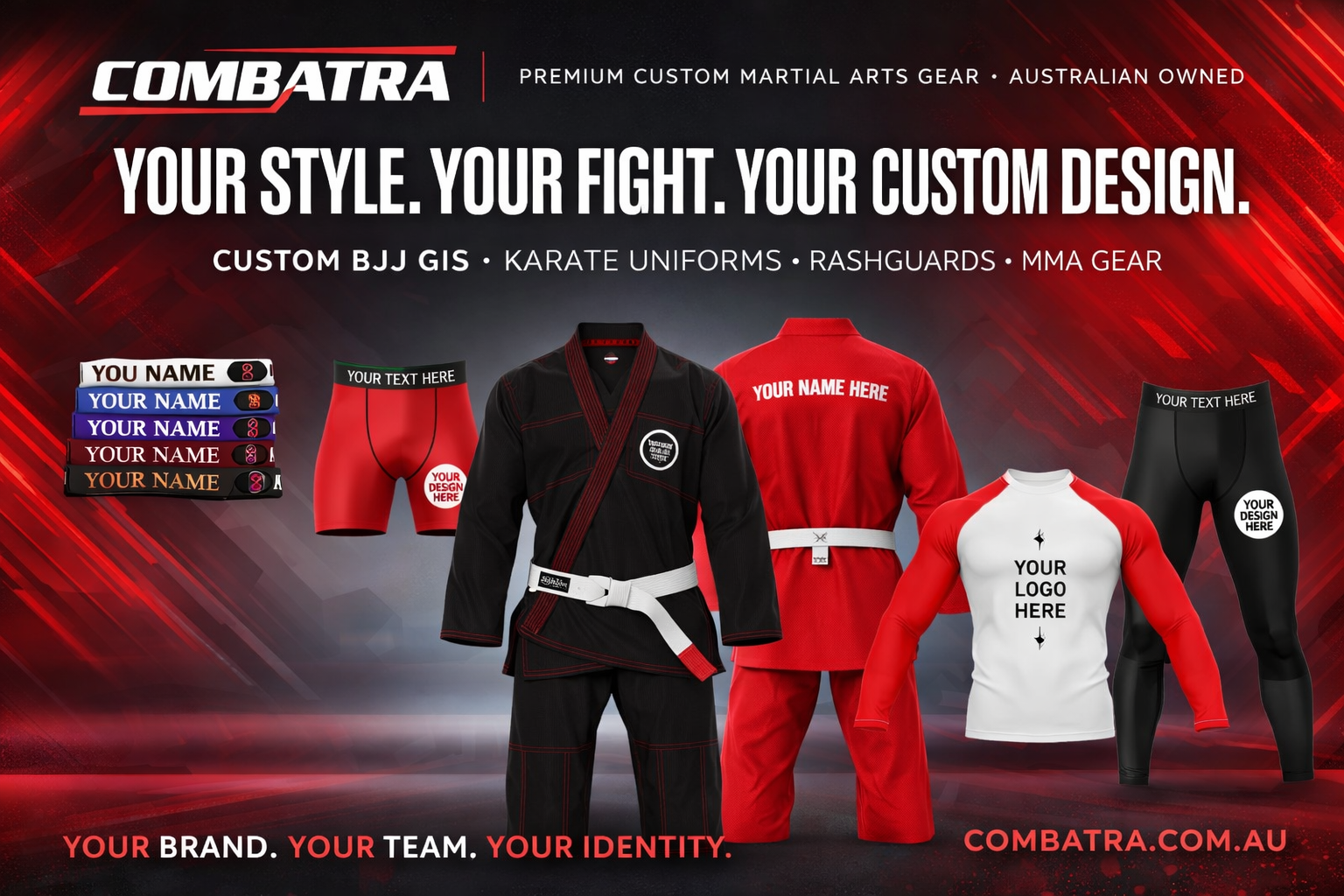
We understand that your uniforms represent more than clothing. They're symbols of the discipline, respect, and excellence you instill in every student. Browse our complete collection at Combatra combat sports gear to discover how professional customization transforms standard uniforms into powerful expressions of your dojo's unique identity and values.
How to design custom karate uniforms for your dojo - FAQs
What are the essential design elements for a custom karate uniform?
The essential elements include fabric weight selection between 8-14 oz based on your training focus, color choice that reflects your dojo identity while considering competition requirements, and strategic patch placement with your logo on the left chest and secondary patches on the right sleeve. You should also decide on personalization options like student names and whether you need separate competition and training uniform designs.
Can I add logos or patches to competition uniforms?
Competition uniforms have strict limitations on logo size and placement depending on the governing body. WKF rules allow manufacturer logos up to 25 square centimeters, while dojo logos must be even smaller or completely absent. JKA regulations are similarly restrictive. Always verify current rules with your specific competition organization before adding any customization to uniforms intended for tournament use.
What fabric weight is best for dojo uniforms?
The best fabric weight depends on your training environment and student preferences. Lightweight 8-10 oz fabrics work well for beginners, warm climates, and speed-focused training with excellent mobility and comfort. Heavyweight 14 oz options provide superior durability and a traditional substantial feel preferred for kata practice and demonstrations. Many dojos offer both weights, letting students choose based on their individual needs and training goals.
How do I ensure the durability of custom patches?
Choose sew-on embroidered patches rather than iron-on alternatives, as stitched patches withstand training stress and repeated washing far better. Place patches in low-stress areas like the left chest and right upper arm rather than locations that experience friction during techniques. Wash uniforms inside out in cold water and air dry to protect patch edges and embroidery threads from premature wear.
What's the turnaround time for ordering custom uniforms?
Quality custom karate uniforms typically require 6-8 weeks from order placement to delivery, with longer lead times during peak seasons or for complex customization requests. Rush orders may be available for additional fees but can compromise quality. Plan your orders at least 10 weeks before you need the uniforms for specific events like competitions or belt testing ceremonies to ensure timely delivery without paying rush charges.