
TL;DR:
- Designing a custom karate gi in Australia involves selecting fabric weight and fit suited to climate, standardising branding placements for team cohesion, and allowing generally eight weeks for production and revisions. Proper planning ensures the uniform meets competition rules, withstands training conditions, and maintains long-term appearance and durability. Focusing on clarity in design, fabric choice, and timely approval minimizes costly errors and enhances team professionalism.
A custom karate gi is defined as a personalised martial arts uniform tailored to a dojo's specific fabric requirements, sizing standards, and branding identity. For Australian practitioners and instructors, designing custom martial arts attire goes well beyond choosing a colour. The right gi affects how athletes move, how they present on the mat, and how long the uniform holds up under repeated training and competition stress. Australia's heat and humidity add another layer of complexity, making fabric selection and breathability as important as logo placement. Providers like Combatra and EVO Sportswear offer structured pathways for clubs to create personalised karate gis that perform under real conditions. This guide walks you through every stage of the process, from initial planning to garment care.
What essentials should you consider before designing a custom karate uniform?
Before you submit a single design file, you need a clear picture of your dojo's actual requirements. Skipping this planning stage is the most common reason orders get delayed or arrive with costly errors.
Start by identifying whether the uniform is primarily for training, competition, or both. Competition gis must often meet World Karate Federation (WKF) specifications, which restrict certain colours and require specific collar widths and sleeve lengths. Training gis carry fewer restrictions, giving you more freedom with design and fabric. Knowing this upfront shapes every decision that follows.
Next, confirm your quantities and size range. Ordering for a junior class of twelve students looks very different from outfitting a full adult competition squad. Collect accurate measurements from every member before approaching a manufacturer. Precision in measurement and fit tailoring improves practitioner mobility and confidence, directly influencing performance in both training and competition settings.
Consider the following before submitting your design brief:
- Dojo branding elements: Gather your logo files in vector format (AI or EPS), your official colour codes (Pantone or CMYK), and any secondary marks such as sponsor logos.
- Colour scheme compliance: Check whether your chosen colours meet any grading or competition body requirements in Australia.
- Quantity thresholds: Many manufacturers offer price breaks at 10, 20, or 50 units. Knowing your order size helps you negotiate.
- Replacement strategy: Decide whether you want a standardised design that can be reordered identically in future seasons.
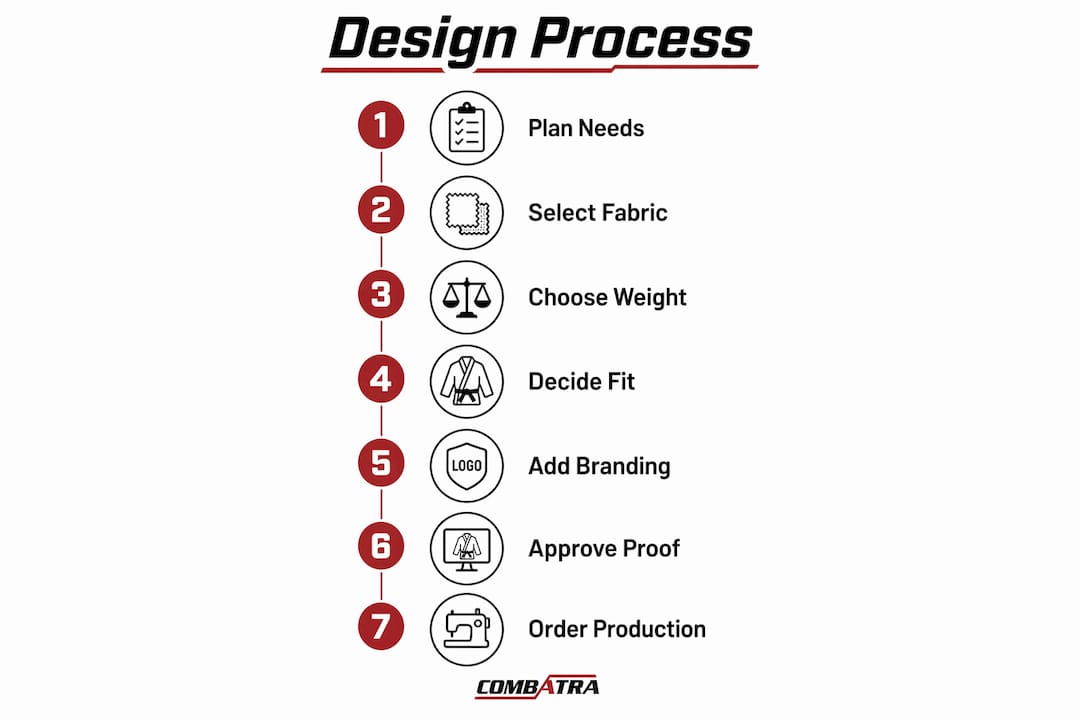
Finally, build your timeline around the production reality. Australian custom karate uniform providers typically follow a five-step process covering design planning, fabric selection, printing method choice, proof approvals, and production and delivery, with three to six weeks turnaround after approval. If you have a state championship in eight weeks, you need to submit your brief today.
Pro Tip: Lock in your design brief at least eight weeks before your target event date. This gives you buffer time for proof revisions without compromising your delivery window.
How to choose the right fabric, weight, and fit for Australian conditions
Fabric choice is the single most consequential decision in the custom gi design process. Get it wrong and you will have athletes overheating in summer or wearing through knees and lapels within a season.
Fabric types compared
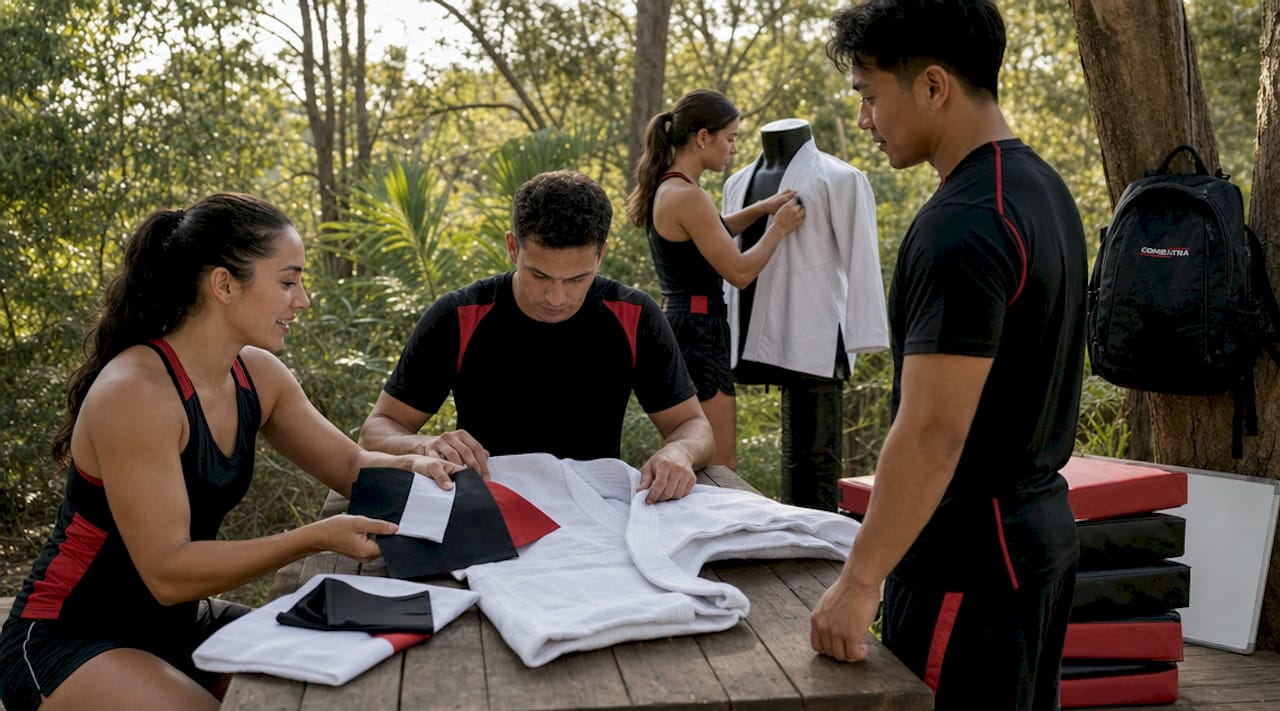
The three main fabric categories for karate gis are cotton, cotton-polyester blends, and synthetic polyester. Each has a distinct performance profile suited to different training environments.
| Fabric type | Breathability | Durability | Best use |
|---|---|---|---|
| 100% cotton | High | Moderate | Traditional training, cooler climates |
| Cotton-poly blend | Moderate | High | Year-round dojo use, competition |
| Synthetic polyester | Moderate | Very high | High-intensity training, outdoor sessions |
Cotton gis feel comfortable and absorb sweat well, but they are heavier when wet and can shrink after washing. Cotton-poly blends offer a practical middle ground, resisting shrinkage while maintaining reasonable breathability. Synthetic polyester gis dry quickly and resist wear, making them well suited to Australia's outdoor training environments.
Understanding gi weight
Karate uniforms vary in weight from lightweight at 8 oz through to heavy at 14 oz, with fabric weight strongly affecting breathability, comfort, and competition suitability under Australian climate conditions. A lightweight 8 oz gi suits warm Queensland summers and fast-paced competition formats where mobility is prioritised. You can see this in Combatra's lightweight 8 oz option, which is designed specifically for practitioners who need freedom of movement in the heat.
Mid-weight gis at 10 oz offer the best balance of durability and breathability, making them suitable for year-round dojo use across most Australian states. Heavy gis at 14 oz are built for durability and grip resistance, which suits advanced practitioners working on grappling components or those in cooler southern states.
Fit and UV protection
Fit style affects both comfort and performance. Traditional loose cuts allow full range of motion and suit practitioners who follow classical kata forms. Tailored cuts reduce excess fabric, which can be an advantage in kumite where opponents can grab lapels and sleeves.
For outdoor training, fabric rated UPF 50+ provides meaningful protection against Australia's high UV exposure. Some premium providers offer lab-tested sun-protective uniforms conforming to AS 4399:2020 standards. This is worth specifying when ordering for clubs that train outdoors during summer months.
Pro Tip: For most Australian dojos, a 10 oz cotton-poly blend in a tailored cut covers the widest range of training and competition needs across all seasons.
What design and branding options exist for personalised karate gis?
Branding transforms a standard gi into a dojo identity marker. Done well, it builds team cohesion and presents your club professionally at competitions and gradings.
The most common placement locations for logos and text are:
- Left chest: Primary dojo logo, typically embroidered for a clean, professional finish.
- Upper back: Larger dojo name or secondary graphic, suited to sublimation printing for full-colour designs.
- Sleeves: Instructor name, rank stripe, or sponsor logo.
- Collar: Dojo name in small text, often embroidered.
- Trouser leg: Student name or number for large squads.
Embroidery offers a premium appearance for logos and names, while sublimation printing delivers vibrant, durable full-colour designs that do not crack or fade over time. Embroidery suits simple, single-colour logos placed on the chest or collar. Sublimation is the better choice for complex, multi-colour artwork on the back panel. Screen printing sits between the two in cost and durability, though it is less common on gis due to the fabric's texture.
When adding player names and numbers, keep font sizes consistent across the squad. A 3 cm font height on the sleeve reads clearly from a distance without overwhelming the design. Sponsor logos require careful placement to avoid competition disqualification. Check your state or national body's uniform rules before committing sponsor branding to a specific panel.
Standardised logo placements on gi chests, backs, and sleeves produce a consistent team identity and simplify replication for replacement orders. This matters practically: when a student needs a replacement gi two years after the original order, standardised placement means the new garment matches the rest of the squad exactly.
How does the ordering and production process work in Australia?
Understanding the production workflow removes uncertainty and helps you plan around competitions and grading cycles. Here is the standard process used by reputable Australian providers:
- Design submission: Supply your logo files in vector format, colour codes, placement specifications, and size breakdown. The more detail you provide here, the fewer revision rounds you will need.
- Proof approval: The manufacturer produces a digital or physical proof showing your design on the gi template. Review every element carefully, including font sizes, colour accuracy, and logo proportions.
- Revision and sign-off: Request any changes at this stage. Once you sign off, the design is locked and changes become costly.
- Production: Manufacturing begins after approval. Custom martial arts uniforms ordered through reputable Australian providers typically take three to six weeks for production after design approval.
- Quality check and delivery: Reputable providers inspect garments before dispatch. Confirm your delivery address and whether you need express shipping for time-sensitive orders.
Using proof approvals before production reduces rework and delays significantly. A single proof revision adds two to five business days to your timeline. Two rounds of revisions can push you past a competition deadline if you have not built in buffer time.
When working with Australian providers, ask specifically about their quality control process and whether they offer size exchanges for production errors. Reputable suppliers will replace garments that do not match the approved proof at no cost to you.
Pro Tip: Print your proof at actual size and hold it against an existing gi before signing off. Colour and proportion issues that look minor on screen become obvious at full scale.
What are the best practices for caring for your custom karate gi?
Proper care extends the life of your gi and protects the quality of embroidery and print work. A well-maintained gi can last three to five years of regular training with consistent care.
Follow these care guidelines to protect your investment:
- Wash in cold water on a gentle cycle. Hot water degrades fabric fibres and causes cotton gis to shrink, which distorts embroidery placement.
- Avoid bleach entirely. Bleach weakens fabric threads and causes sublimation prints to fade unevenly. Use a mild, colour-safe detergent instead.
- Air dry away from direct sunlight. Proper care including air drying away from sunlight preserves fabric integrity and print quality over time. UV exposure from direct sunlight fades colours faster than washing does.
- Store flat or loosely folded in a dry, ventilated space. Avoid compressing gis under heavy equipment, which can crease embroidery permanently.
- Inspect regularly for wear. Check collar edges, sleeve cuffs, and trouser knees after every ten to fifteen sessions. Early repairs to fraying seams prevent small issues from becoming irreparable tears.
Embroidered areas benefit from being turned inside out during washing. This reduces friction on the thread surface and keeps the embroidery looking sharp for longer.
Key takeaways
Designing a custom karate gi in Australia requires matching fabric weight and fit to your climate, standardising branding placements for team cohesion, and building at least eight weeks into your ordering timeline to accommodate proof approvals and production.
| Point | Details |
|---|---|
| Plan before you design | Confirm quantities, sizes, competition rules, and branding assets before approaching a manufacturer. |
| Match fabric to climate | A 10 oz cotton-poly blend suits most Australian conditions; choose 8 oz for hot climates and outdoor training. |
| Standardise branding placements | Consistent logo positions across the squad simplify future replacement orders and build team identity. |
| Allow six to eight weeks | Production takes three to six weeks post-approval; add buffer time for proof revisions. |
| Care protects your investment | Cold wash, air dry away from sunlight, and inspect seams regularly to extend gi lifespan. |
Why I think most dojos underestimate the design phase
After working with martial arts clubs across Australia, the pattern I see most often is instructors rushing the design brief to hit a deadline, then spending more time and money fixing errors than they would have spent planning properly in the first place.
The design phase is not just about aesthetics. It is where you lock in every decision that affects how the gi performs, how it looks on the mat, and whether it meets competition rules. Skipping a proper proof review because you are pressed for time is the single most expensive mistake a dojo manager can make.
I have also seen clubs over-engineer their branding. A clean chest logo and a dojo name on the back reads more professionally than a gi covered in sponsor patches and gradient artwork. Restraint in design almost always produces a better result than complexity.
My strongest recommendation is to design your dojo's uniform as a long-term asset, not a one-off order. Standardise your placements, document your colour codes, and keep your vector files organised. When you need replacement gis in two years, you will thank yourself for the preparation.
— McGinnis
Explore custom karate uniforms from Combatra
Combatra designs and produces custom karate uniforms for Australian dojos, with options across all three weight categories to suit your training environment and competition requirements.
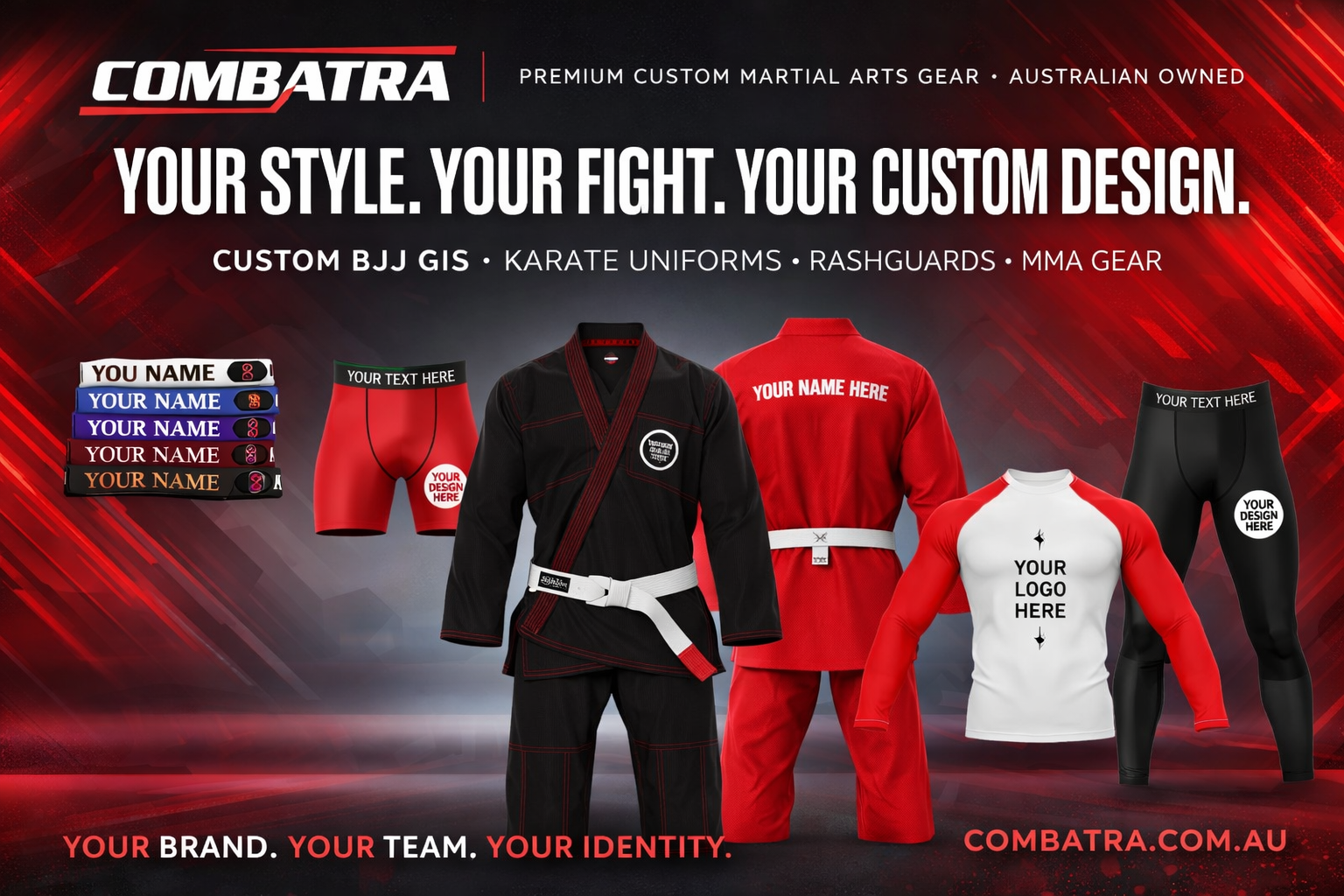
Whether you need a mid-weight 10 oz gi for year-round club training or a heavyweight 14 oz uniform built for durability and grip resistance, Combatra offers premium embroidery and sublimation printing with consistent quality control. All uniforms can be personalised with your dojo logo, student names, and colour scheme. Combatra's team supports you through the design and proof process to make ordering straightforward. Contact Combatra directly to discuss your club's requirements and get a quote tailored to your squad size and timeline.
FAQ
What is a custom karate gi?
A custom karate gi is a personalised martial arts uniform tailored to a specific dojo's fabric weight, fit, colour scheme, and branding requirements. It differs from a standard gi in that it incorporates logos, names, and design elements unique to the club.
How long does it take to order custom karate uniforms in Australia?
Production typically takes three to six weeks after design approval, with additional time required for proof revisions. Planning your order at least eight weeks before your target date is strongly recommended.
What is the best fabric weight for Australian conditions?
A 10 oz cotton-polyester blend suits most Australian dojos year-round, offering a practical balance of breathability and durability. An 8 oz lightweight gi is the better choice for hot climates or outdoor summer training.
Can I add UPF sun protection to a custom karate gi?
Yes. Some Australian providers, including Combatra, offer fabrics rated UPF 50+ and tested to AS 4399:2020 standards, which is particularly relevant for clubs that train outdoors during summer months.
What is the difference between embroidery and sublimation printing on a gi?
Embroidery produces a premium, textured finish suited to simple logos and text on the chest or collar. Sublimation printing delivers vibrant, full-colour designs on larger panels such as the back, and the print does not crack or fade with regular washing.