
TL;DR:
UPF protection drops significantly when fabric is stretched or wet, reducing outdoor safety.
Loose-fitting UPF clothing maintains protection better than compression gear during sweat and movement.
For optimal sun safety and comfort, combine loose UPF layers with sunscreen and proper layering.
Your compression shirt might be doing far less than you think. Many athletes trust their UPF-rated gear and train outdoors without a second thought about sun exposure. But UPF drops from ~85 to 8 when fabric is stretched, and to just 4 when it’s wet with sweat. That’s a staggering loss of protection most athletes never consider. The fit of your clothing matters just as much as the fabric itself. This article breaks down the real-world difference between compression and loose-fit athletic wear for UV defense, comfort, and performance in the heat, so you can make smarter choices for every session.
Table of Contents
Key Takeaways
| Point | Details |
|---|---|
| Loose fit best for UPF | Loose, unstretched clothing keeps its UV-blocking power while tight fits lose protection quickly. |
| Compression loses effectiveness | When stretched with movement or sweat, compression shirts can let through most UV rays. |
| Comfort and airflow matter | Loose clothes improve cooling and feel better during intense training in the heat. |
| Choose for your sport | Opt for compression only when you need support or abrasion resistance; otherwise, favor loose high-UPF gear. |
| Sunscreen complements clothing | Always apply sunscreen to areas not covered by UPF-rated apparel for full sun safety. |
How sun protection works: UPF, fabric, and fit
UPF stands for Ultraviolet Protection Factor. It tells you how much UV radiation a fabric blocks before it reaches your skin. A UPF rating of 50+ means less than 2% of UV rays pass through the material. That sounds excellent on paper, and it is, but only when the fabric is in its ideal condition.
The problem is that real training conditions are rarely ideal. Fabric construction plays a huge role in UV blocking. Tightly woven synthetic fibers, like polyester and nylon, naturally reduce the gaps UV rays can pass through. Darker colors and heavier weights also help. But even the best-rated fabric can become a weak shield once it’s stretched across your body or soaked through with sweat.
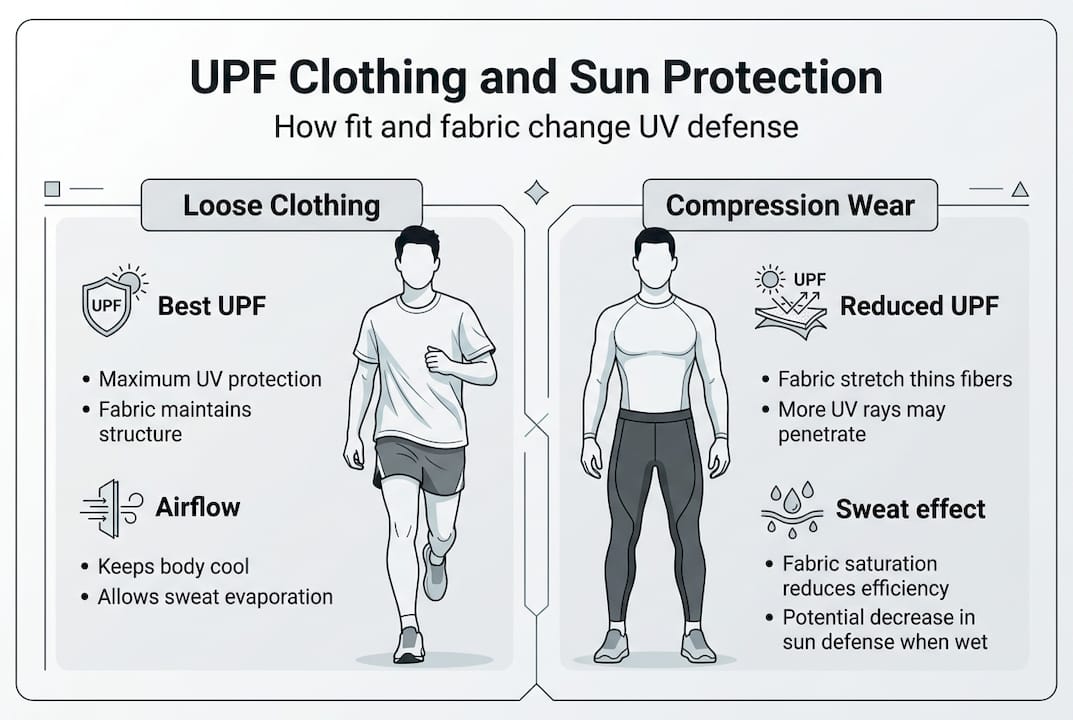
High-UPF clothing blocks nearly all UV rays when unstretched, but loses that effectiveness significantly when the fabric is pulled tight or wet. This is the core issue with compression wear in outdoor environments.
Here’s a quick look at how key fabric factors affect UV protection:
| Factor | Effect on UPF |
|---|---|
| Tight weave | Increases UPF |
| Stretch/tension | Decreases UPF significantly |
| Moisture/sweat | Decreases UPF significantly |
| Dark color | Slightly increases UPF |
| Loose fit | Maintains original UPF rating |
For athletes, the practical takeaway is clear. Choosing sun protection clothing that stays loose and dry is the most reliable way to maintain your rated UV defense throughout a session.
Key factors that affect athletic clothing UPF in real conditions:
-
Fabric type: Polyester and nylon outperform cotton for UV blocking
-
Weave density: Tighter construction means fewer gaps for UV to penetrate
-
Color: Darker shades absorb more UV than lighter ones
-
Fit: Loose garments preserve UPF; stretched ones lose it fast
-
Moisture: Wet fabric, especially cotton, loses significant protection
If you want to understand more about how UPF ratings work in practice, UPF 50 clothing explained walks through what those numbers actually mean for outdoor athletes.
Statistic to know: A fabric rated UPF 85 when flat can drop to an effective UPF of 4 once it’s both stretched and wet. That’s a 95% reduction in protection.
Compression vs loose clothing: UV protection face-off
With sun protection basics in mind, let’s directly compare compression wear against loose-fit sports clothing for UV defense.
Compression shirts are designed to sit tight against the skin. That tension is exactly what makes them effective for muscle support and proprioception (the body’s sense of its own position). But that same tension is what destroys their UV protection during outdoor use.
UPF ratings drop drastically in compression garments when stretched, especially when wet with sweat. A shirt that tests at UPF 50+ in a lab can perform like a thin cotton tee by the time you’re 30 minutes into a hot session.
Loose-fit performance shirts, by contrast, maintain their original UPF rating throughout activity because the fabric isn’t under constant tension. The weave stays intact. UV protection stays intact.
| Clothing type | Lab UPF | Stretched UPF | Wet and stretched UPF |
|---|---|---|---|
| Loose-fit UPF shirt | 50+ | ~45 | ~30 |
| Compression shirt | 50+ | ~8 | ~4 |
The numbers tell a clear story. Here’s how the two types compare across the factors that matter most to outdoor athletes:
-
UV protection at rest: Both perform well when dry and unstretched
-
UV protection during activity: Loose-fit maintains it; compression loses most of it
-
Protection when sweating: Loose-fit holds up better; compression can become nearly transparent to UV
-
Coverage consistency: Loose-fit is reliable across a full session; compression is not
“The fit of your clothing isn’t just a comfort decision. It’s a sun safety decision. A compression shirt soaked in sweat on a summer training day may offer almost no UV protection at all.”
For athletes who want to protect in the sun without sunscreen as their primary strategy, loose-fit UPF clothing is the more dependable choice. If you’re weighing your options between compression sleeves vs rashguards, the fit factor applies there too.https://blog.combatra.com.au/blog/compression-sleeves-vs-rashguards-outdoor-training
You can also get sunburned through clothes more easily than most people realize, particularly with tight, light, or moisture-saturated fabrics.
Heat, comfort, and moisture: Real-world athlete experience
UV defense is only half the equation. Outdoor athletes also need to stay cool and comfortable. So how do these clothing types stack up during tough workouts in the heat?
Loose clothing improves airflow and makes hot-weather training feel less stifling. Tight fits often feel hotter unless the fabric has advanced moisture-wicking properties. This is a consistent finding across athlete experience and research.
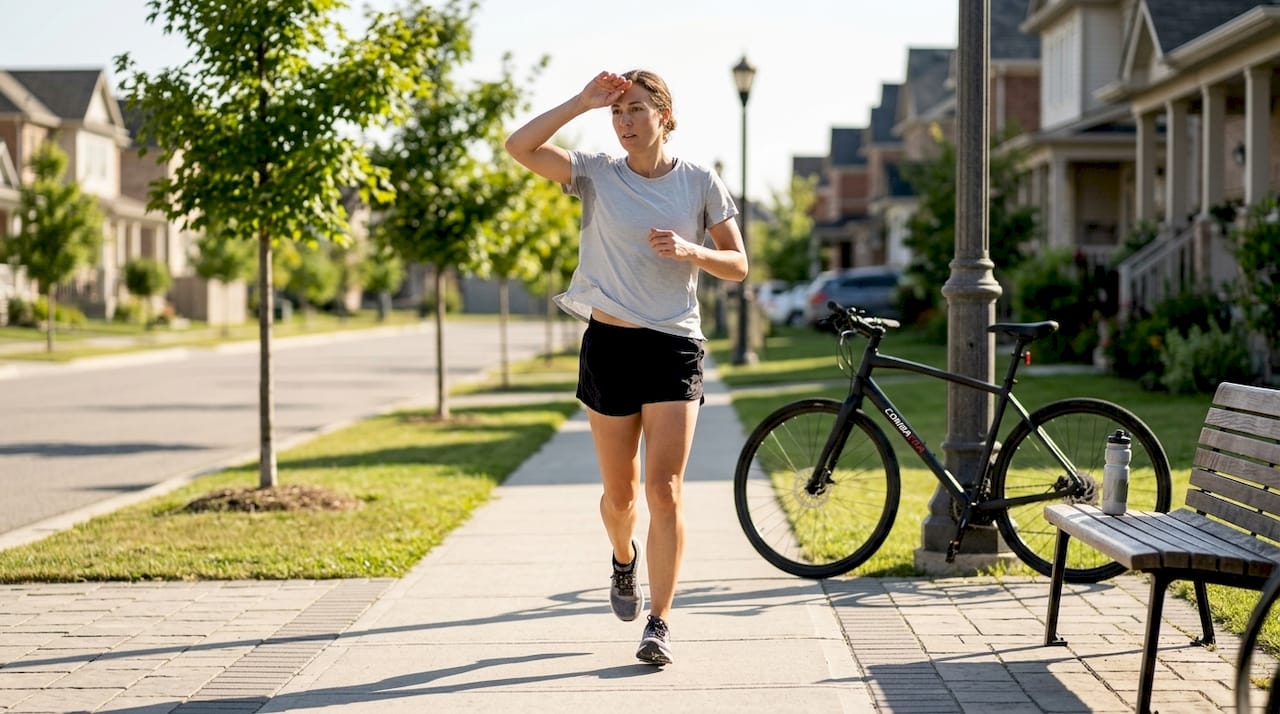
Loose-fit tops create a small air gap between the fabric and your skin. That gap allows sweat to evaporate more efficiently, which is your body’s primary cooling mechanism. When clothing sits directly against the skin, as compression wear does, that evaporative cooling is partially blocked.
Here’s how the two types compare for heat comfort:
-
Airflow: Loose tops allow more air circulation around the body
-
Sweat evaporation: Loose fit supports faster evaporative cooling
-
Skin temperature: Loose tops tend to keep local skin temperature slightly lower
-
Core temperature: Both types show minimal difference in core body cooling
-
Feel during training: Compression can feel restrictive and hot in high humidity
Moisture-wicking synthetics reduce discomfort in compression wear, but they don’t fully compensate for the loss of airflow. If you’re training in direct sun for extended periods, that difference in perceived heat can affect your focus, endurance, and decision-making.
Pro Tip: If you’re doing outdoor endurance work or long-form training, pair a loose UPF shirt with lightweight shorts or pants. You’ll stay cooler and better protected than in a compression-only kit. For running in the sun, loose layers are especially effective.
For activities like hiking in the heat, the same logic applies. Loose, breathable, UPF-rated fabrics consistently outperform tight athletic fits for both comfort and protection.
The bottom line: compression wear has real performance benefits, but comfort in the heat is not one of them. If your session is outdoors and long, loose-fit wins on both UV safety and thermal comfort.
Finding the right fit for outdoor sports and combat training
Comfort and cooling matter, but every athlete’s priorities differ. Here’s how to choose the right gear for your specific training demands.
The first step is to assess what your activity actually requires. Not all sports have the same needs. Open-air endurance training and grappling arts call for very different clothing strategies.
-
Identify your primary need. Is it maximum UV protection, abrasion resistance, muscle support, or a combination? Knowing this helps you prioritize.
-
For endurance and outdoor training, choose loose, UPF 50+ clothing as your base layer. Apply sunscreen on all exposed skin, including hands, neck, and face.
-
For grappling, MMA, or contact drills, wear quality UPF-rated rashguards during activity. Add a loose overshirt during warm-up, rest periods, and cool-down when you’re not actively in contact.
-
Check your gear regularly. Tightness from muscle gain, fabric shrinkage, or general wear can reduce UPF significantly. If your shirt feels snug, it’s working harder against you than for you.
-
Layer strategically. A rashguard under a loose training shirt gives you abrasion protection plus maintained UV coverage during breaks.
Understanding rashguard UPF meaning helps you pick the right product rather than just any UPF-labeled item. And if you train in combat sports, knowing the rashguard benefits in MMA makes a strong case for including them in your kit.
For clothing sun protection studies, the consistent finding is that loose UPF 50+ clothing is ideal for pure sun protection and cooling, while compression is still favored when contact, support, or abrasion resistance is the priority.
Pro Tip: Keep a lightweight loose UPF shirt in your bag for outdoor sessions. Throw it on during warm-up and rest periods, even if you switch to a rashguard for drilling. That habit alone can dramatically reduce your cumulative UV exposure over a training season.
Why most athletes overestimate their shirt’s sun protection
Here’s the honest reality: most athletes look at a UPF 50+ label and consider the job done. They assume that rating holds through every session, every stretch, and every sweat-soaked hour under the sun. It doesn’t.
The label reflects lab conditions. Your training conditions are nothing like a lab. UPF values plummet with stretching and wetting, meaning even modern UV tops can become ineffective mid-session.
We’ve seen athletes invest in premium compression gear from well-known brands, wear it confidently for outdoor training, and still come back with sunburn on their arms and shoulders. The shirt wasn’t defective. It just wasn’t designed for that use case.
The mindset shift needed here is simple but important: treat your UPF rating as a starting point, not a guarantee. Check how your clothing fits right now, not when you bought it. If it’s pulling tight, it’s losing protection. If it’s soaked through, it’s losing more.
For outdoor training in summer heat, choosing top summer rashguards designed for real conditions, and pairing them with loose layers when possible, is the most practical and evidence-backed approach we know.
Gear up for confident sun protection and peak performance
Ready to take action with your new sun safety knowledge? Here are athlete-tested options to keep you protected and focused.
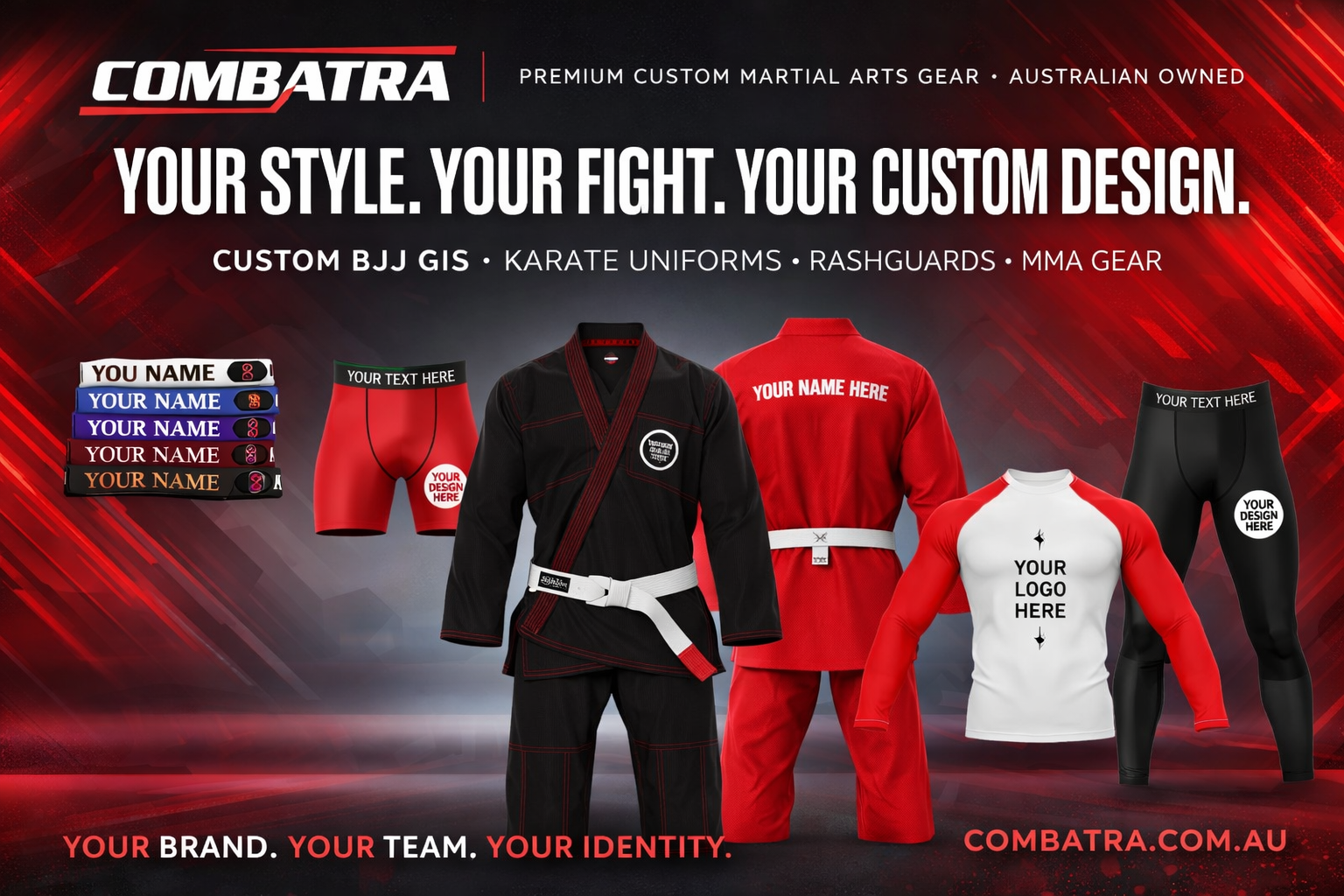
Combatra’s range is built for exactly this challenge. Whether you need a custom rashguard top for contact training or performance MMA shorts that move with you in the heat, every product is rated and tested for real outdoor conditions. For BJJ and grappling athletes, the Brazilian Jiu Jitsu Gi offers durable, structured coverage that holds up session after session. Combine compression gear for contact work with loose-fit UPF layers for warm-up and recovery, and you’ve got a complete sun-safe training kit built for summer.
Frequently asked questions
Can you still get sunburned through compression shirts in hot weather?
Yes. When compression shirts are stretched or wet with sweat, UPF falls from 85 to 8 when stretched and to just 4 when wet, leaving your skin with very little UV defense.
What is the best type of clothing for sun protection while training outdoors?
Loose, UPF 50+ rated shirts and pants offer the highest UV protection and comfort during hot weather training. Loose UPF 50+ tops consistently outperform compression fits for sun safety in real conditions.
Is there a significant cooling difference between compression and loose-fit tops?
Loose-fit tops support better airflow and evaporative cooling during training. Studies show minimal impact on core temperature from clothing type, but perceived heat and skin comfort differ noticeably.
Do rashguards offer enough UV protection for outdoor fighters?
If UPF-rated and unstretched, rashguards provide solid UV defense. However, rashguards lose UPF when stretched, so layering with loose-fit clothing during breaks gives you the most complete protection.
Should I still use sunscreen with UPF clothing?
Absolutely. UPF clothing only protects the skin it covers. Combine clothing and sunscreen for full coverage, especially on exposed areas like the face, neck, and hands.