
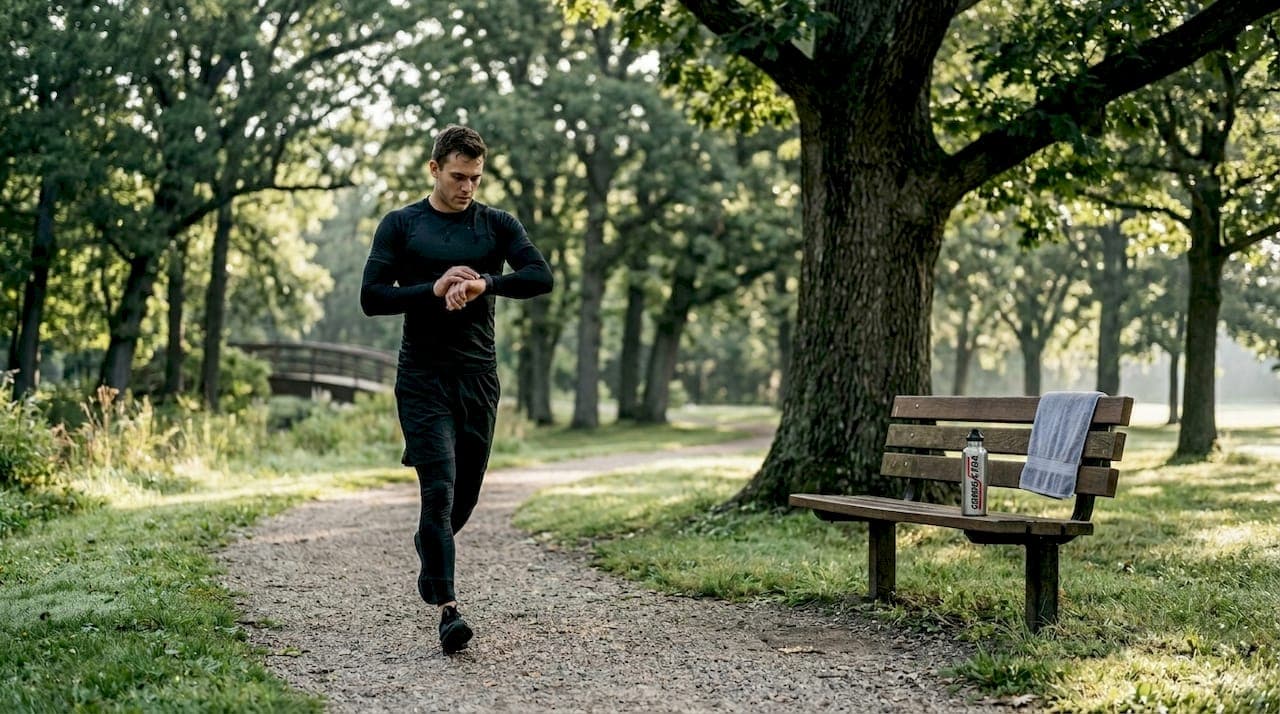
Outdoor training for martial artists and combat athletes throws a curveball that gym sessions never do: you're dealing with sun, rough surfaces, unpredictable weather, and the constant question of what to wear. Compression sleeves and rashguards both promise performance benefits, but the debate between them is messier than most gear guides admit. Empirical studies show mixed results on compression garments, with some showing no significant performance edge but real potential in recovery and specific skill work. This guide cuts through the noise so you can make a confident, practical call for your next outdoor session.
Table of Contents
- Understanding the basics: Compression sleeves and rashguards explained
- Performance and recovery: What the science actually says
- Protection from the elements: Sun, abrasions, and more
- Direct comparison: Compression sleeves vs rashguards for outdoor athletes
- Customizing your outdoor gear strategy
- Upgrade your outdoor training gear with Combatra
- Frequently asked questions
Key Takeaways
| Point | Details |
|---|---|
| No single best choice | Compression sleeves and rashguards both serve unique outdoor training needs. |
| Layering maximizes benefits | Combining sleeves and rashguards boosts muscle support and protection for combat athletes. |
| Science is nuanced | Research shows mixed results, so personal comfort and event demands should guide your choice. |
| Rashguards excel at protection | Long-sleeve rashguards offer superior defense against sun, scrapes, and the elements. |
Understanding the basics: Compression sleeves and rashguards explained
Before you can pick the right tool, you need to know exactly what each one does and why they're not interchangeable.
Compression sleeves are tight-fitting garments that cover a specific body part, most commonly the arms, calves, or thighs. They're built from elastic materials like spandex or nylon blends and work by applying graduated pressure to the muscle. In combat sports, athletes use them to reduce muscle vibration during striking, support joints, and manage swelling after hard sessions.
Rashguards are full upper-body garments, typically long-sleeve or short-sleeve, made from moisture-wicking, stretch fabrics. They were originally designed for water sports but became a staple in BJJ, MMA, and outdoor grappling because they protect skin from mat burns, abrasions, and UV exposure. A rashguard covers far more surface area than a sleeve and serves a broader protective function.
Here's a quick breakdown of how they differ in practice:
- Coverage: Compression sleeves target one muscle group; rashguards cover the torso and arms
- Primary function: Sleeves focus on muscle support and joint compression; rashguards prioritize skin protection and UV defense
- Layering potential: Sleeves can be worn under a rashguard for combined benefits
- Outdoor suitability: Rashguards offer rashguard sun protection that sleeves simply can't match on their own
- Typical use: Sleeves work well for striking arts and recovery; rashguards suit grappling, ground work, and prolonged outdoor exposure
The layering compression under a rashguard approach is a well-known expert recommendation for athletes who want muscle support and full-body protection simultaneously. It's not overkill. For outdoor BJJ or MMA training, it's often the smartest setup you can run.
Performance and recovery: What the science actually says
Here's where things get interesting, and a little humbling for gear enthusiasts.
The honest truth is that compression garments show inconsistent results across performance studies. Some athletes report better endurance, faster recovery, and reduced soreness. Others show no measurable difference compared to wearing standard athletic clothing. The science doesn't give you a clean answer, and that's worth knowing before you spend money expecting a magic fix.
What research does support more consistently is the recovery side of the equation. Compression appears to help reduce delayed onset muscle soreness (DOMS) in some athletes, particularly after high-intensity sessions involving a lot of eccentric muscle work, like sprawls, takedown defense, or heavy bag work. The mechanism is simple: compression reduces fluid buildup and limits the micro-swelling that makes you stiff the next day.
"The psychological benefit of compression gear is real and shouldn't be dismissed. If wearing a sleeve makes you feel more supported and confident in your movement, that translates to better training output, even if the physiological effect is modest."
Rashguards don't claim to boost performance directly. Their value is in keeping you on the mat longer by preventing skin injuries, reducing friction burns, and keeping your body temperature regulated during outdoor sessions.
Pro Tip: If you're unsure whether compression sleeves are helping your performance, run a two-week test. Train with them for one week, without them the next, and track your soreness levels and session quality. Your own data beats any study. You can also explore custom rashguard and compression options to find the fit and coverage that works best for your training style.
Protection from the elements: Sun, abrasions, and more
Outdoor training exposes you to risks that a gym never will. This is where the gap between compression sleeves and rashguards becomes most obvious.
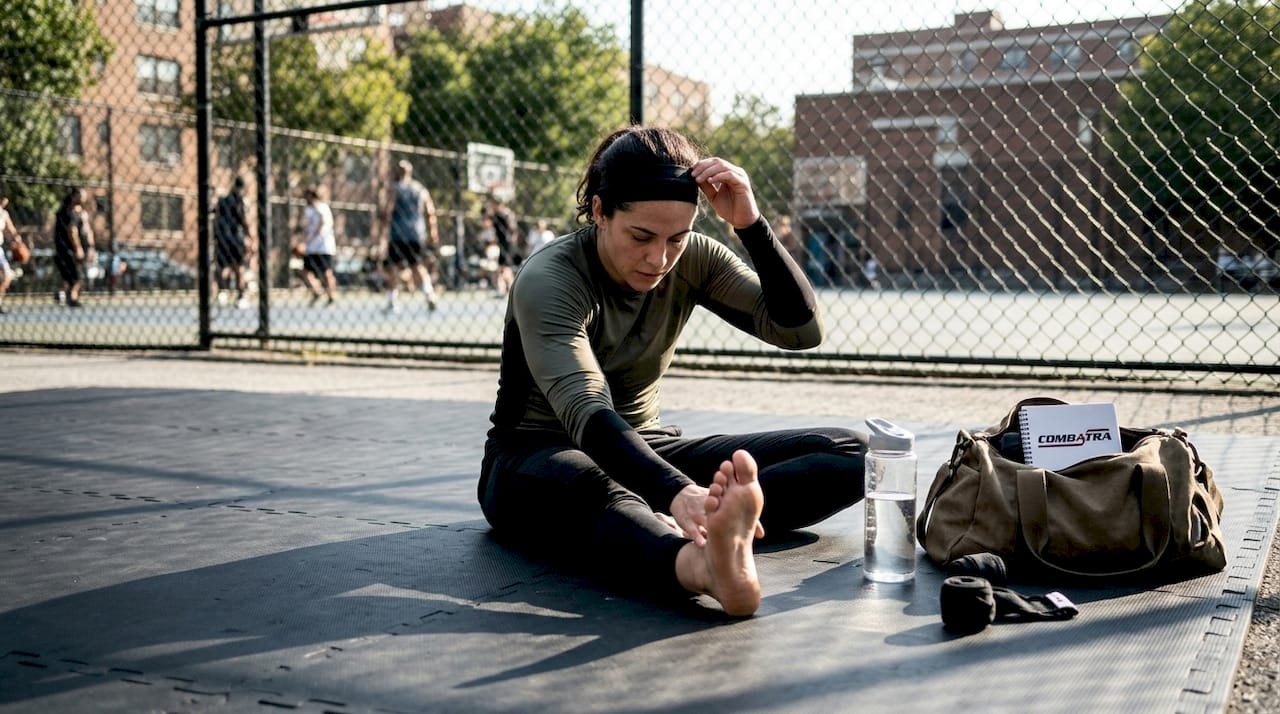
UV exposure is a serious concern for any athlete training outside for more than 30 minutes. Compression sleeves offer some protection on the arms, but they leave your torso, shoulders, and neck completely exposed. A long-sleeve rashguard with a UPF 50+ rating blocks over 98% of UV radiation across your entire upper body. That's a significant difference when you're drilling in direct sunlight for an hour.
Abrasion protection is equally important for grapplers. Outdoor surfaces like concrete, grass, or rough mats are far less forgiving than a padded gym floor. A rashguard acts as a second skin, absorbing friction that would otherwise tear yours. Compression sleeves protect the specific limb they cover, but they don't help when you're taking a takedown on a rough surface and your ribs hit the ground.
Here's what outdoor athletes face and how each option stacks up:
- Sunburn: Rashguards win. Full upper-body UPF coverage vs. arms-only from sleeves
- Rope and mat burns: Rashguards win. Full torso coverage prevents the worst friction injuries
- Joint and muscle support: Compression sleeves win. Targeted pressure where you need it most
- Overheating risk: Worth noting. Check the facts on overheating in long-sleeve rashguards before writing them off in summer
- Insect and environmental exposure: Rashguards win. More coverage means less exposed skin overall
For outdoor combat sports, long-sleeve rashguards offer superior protection compared to sleeves alone. If you're training in an environment with intense sun, rough ground, or both, a rashguard isn't optional. It's essential.
Key stat: Skin cancer is the most common cancer in the United States, and UV exposure during outdoor athletic activity is a major contributing factor. Wearing UPF-rated gear during training is one of the simplest preventive steps you can take.
Direct comparison: Compression sleeves vs rashguards for outdoor athletes
Let's put both options side by side so you can see exactly where each one wins.
| Feature | Compression sleeves | Rashguards |
|---|---|---|
| UV protection | Arms only | Full upper body (UPF 50+) |
| Abrasion defense | Targeted limb | Full torso and arms |
| Muscle support | High (targeted) | Moderate (full body) |
| Mobility | Excellent | Excellent |
| Breathability | High | High (moisture-wicking) |
| Layering option | Yes (under rashguard) | Base layer |
| Best for | Recovery, joint support | Outdoor grappling, sun exposure |
| Ideal conditions | Any weather, post-training | Outdoor, high sun, rough surfaces |
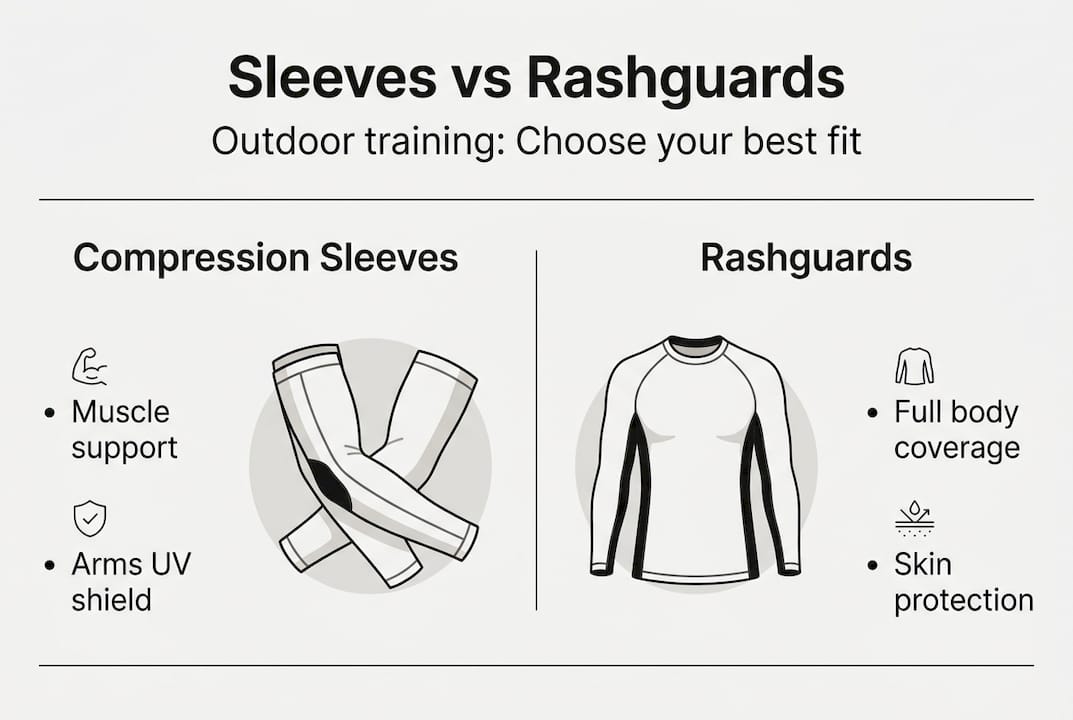
The table makes it clear: these two pieces of gear aren't really competing. They solve different problems. Compression sleeves are a precision tool. Rashguards are a broad-coverage solution.
For outdoor BJJ, MMA, or striking practice, a rashguard is the non-negotiable foundation. Compression sleeves are the upgrade you add on top when you want targeted support for a specific muscle group or joint.
Pro Tip: If you're doing a long outdoor session with both grappling and striking, layer a compression sleeve under your rashguard on your dominant arm. You get joint support where you need it most without sacrificing full-body coverage. A customizable compression rash guard can also give you both functions in a single garment, which simplifies your kit significantly.
The layering approach is a recommended best practice for athletes who want to combine muscle support with skin and UV protection without overcomplicating their gear setup.
Customizing your outdoor gear strategy
Knowing the facts is one thing. Building a system that works for your specific training is another.
Here's a step-by-step approach to dialing in your outdoor gear setup:
- Assess your environment first. Is the surface rough? Is the sun intense? Are you training for more than 45 minutes outdoors? If yes to any of these, a rashguard is your starting point, not optional.
- Identify your injury history. If you have a recurring elbow, knee, or calf issue, add a compression sleeve over that specific area. Don't wear sleeves everywhere just because they exist.
- Test in training, not competition. Wear your new gear setup in a regular session before you commit to it for a tournament or event. Comfort and mobility need to be confirmed under real conditions.
- Factor in the weather. Hot and humid conditions call for lighter, moisture-wicking fabrics. Cold outdoor sessions may benefit from compression sleeves as an added warmth layer under your rashguard.
- Track your recovery. Scientific evidence on compression is inconsistent for broad performance gains, but individual athletes often notice real differences. Keep a simple training log noting soreness and session quality.
- Experiment with style and motivation. Gear you feel good in is gear you'll actually wear consistently. Options like the fans only compression rash guard or a compression rash guard with hand prints let you express your identity while training at full capacity.
Your outdoor gear strategy doesn't need to be complicated. Start with a quality rashguard, add compression sleeves where your body tells you it needs support, and adjust based on real feedback from your own training.
Upgrade your outdoor training gear with Combatra
You now have a clear framework for choosing between compression sleeves and rashguards, and for combining them effectively. The next step is finding gear that actually holds up to outdoor training demands.

At Combatra, we build rashguards and compression gear specifically for serious martial artists and combat athletes. Every piece is designed with performance, protection, and personal expression in mind. Whether you want to start with a customizable black rashguard that you can make your own, build out your kit with custom compression shorts, or design a custom rashguard top from scratch with your name, colors, and logo, we've got the options to match your training style. Gear that fits your game, built for the conditions you actually train in.
Frequently asked questions
Do compression sleeves or rashguards help more with muscle soreness after training?
Compression sleeves may help some athletes reduce post-training muscle soreness, but research on compression garments shows mixed results across different athletes and training types. Rashguards don't directly target soreness but support consistent training by preventing skin injuries.
Which provides better UV protection: sleeves or rashguards?
Long-sleeve rashguards offer superior protection for outdoor athletes, covering the full torso and arms with UPF 50+ ratings that block over 98% of UV radiation. Compression sleeves only protect the specific limb they cover.
Is it worth layering compression sleeves under a rashguard?
Yes. Layering compression under a rashguard is a recommended approach for athletes who want targeted muscle support alongside full-body skin and UV protection during outdoor sessions.
Can wearing a rashguard make you overheat outdoors?
Modern rashguards use moisture-wicking, breathable fabrics that manage heat effectively in most conditions. Your layer choice and fabric weight matter more than the garment type itself in extreme temperatures.