
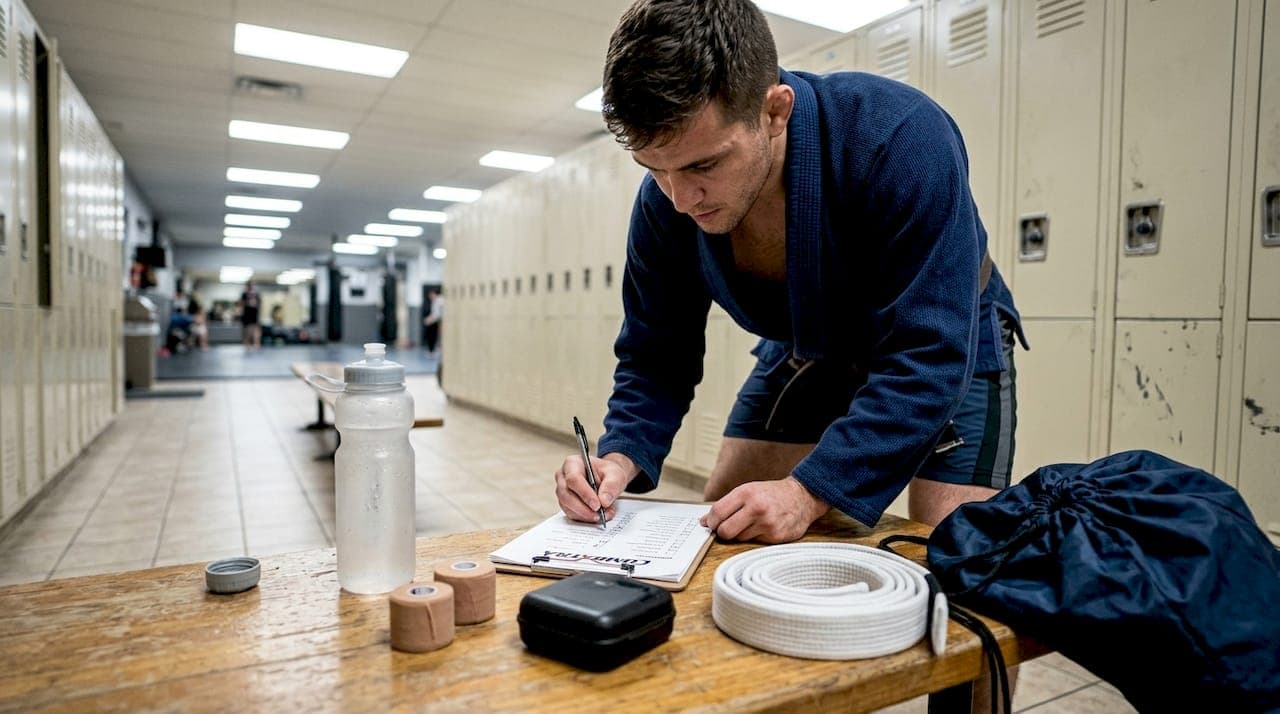
Sorting through BJJ gear advice online can feel like trying to solve a submission you've never seen before. Everyone has an opinion, and the lists never seem to agree. Some say you need five gis before your first class. Others say just show up in shorts. The truth? You need a clear, organized checklist that covers the essentials first, then smart upgrades as you grow. That's exactly what we've built here. Whether you're brand new to the mats or prepping for your first tournament, this guide gives you everything you need to train safely, stay hygienic, and compete with confidence. 🥋
Table of Contents
- How to approach your BJJ gear checklist
- Essential BJJ gear for training: The definitive checklist
- Optional gear upgrades for frequent training
- BJJ competition checklist: Legal requirements and must-haves
- Premium gear brands: What sets them apart?
- Hygiene, protection, and injury prevention essentials
- Gear up with Combatra
- Frequently asked questions
Key Takeaways
| Point | Details |
|---|---|
| Start with the essentials | Focus on a basic set of gear for hygiene and safety before investing in upgrades. |
| Know competition rules | Always check IBJJF gear regulations and bring backups to avoid disqualification. |
| Invest in quality | Premium brands last longer and give better performance, especially for regular practitioners. |
| Prioritize hygiene | Proper cleaning and protective equipment are vital for health and uninterrupted training. |
| Upgrade as you progress | Expand your gear collection with more gis, rashguards, and accessories as your training frequency increases. |
How to approach your BJJ gear checklist
With the promise of clarity, let's start by understanding how to build your BJJ gear list for long-term success.
Not all gear is created equal, and not all gear is urgent. The smartest move is to separate your must-haves from your good-to-haves before you spend a single dollar. This keeps your budget focused and your gym bag from turning into a disaster zone.
Here's a simple breakdown:
Must-haves (start here):
- Gi or no-gi set (rashguard and shorts/spats)
- Mouthguard
- Flip-flops for off-mat areas
- Antibacterial soap and a small towel
- Water bottle
- Finger tape
Good-to-haves (add over time):
- Second or third gi
- Gear bag
- Knee sleeves
- Ear guards
- Premium belt
Understanding the essential gear types before you buy helps you avoid impulse purchases that collect dust. Starting with the basics also means you get to try gear before committing to premium versions. You'll quickly learn what fits your body, your training style, and your budget.
As a general rule, prioritize hygiene and basics over premium gear initially, and upgrade to multiple gis or rashguards once you're training consistently.
Pro Tip: Rotate at least two sets of core equipment if you train three or more times a week. Gear needs time to air dry fully between sessions, and damp gear is a breeding ground for bacteria. Nobody wants that. 😬
Essential BJJ gear for training: The definitive checklist
Now that you know how to prioritize your gear, here's your one-stop checklist for every training session.
Let's go item by item. This is the list you actually need, not the one that tries to sell you everything at once.
- Gi — Your uniform for gi training. Look for a pearl weave construction and a fit that allows full arm and leg movement without excess fabric.
- Rashguard — Worn under the gi or alone for no-gi. Reduces friction burns and helps prevent skin infections.
- Shorts or spats — For no-gi training. Board shorts should have no pockets or metal hardware that could catch fingers.
- Mouthguard — Non-negotiable. Protects your teeth and jaw during sparring.
- Finger tape — Wrap your fingers before drilling and rolling. Your grip will thank you after month two.
- Water bottle — Hydration is performance. Bring more than you think you need.
- Small towel — Wipe sweat between rounds. Keep it in your bag always.
- Flip-flops — Wear them every time you step off the mat. Bare feet on gym floors = ringworm risk.
- Antibacterial soap — Shower immediately after training. This is not optional.
For those training at home or building a home setup, check out these home training essentials to round out your space. And if you're still deciding between gi and no-gi, this breakdown on starting gi vs no-gi will help you choose.
As a baseline, essential BJJ gear for beginners includes a gi or no-gi set, mouthguard, water bottle, finger tape, small towel, flip-flops, and hygiene items like antibacterial soap.
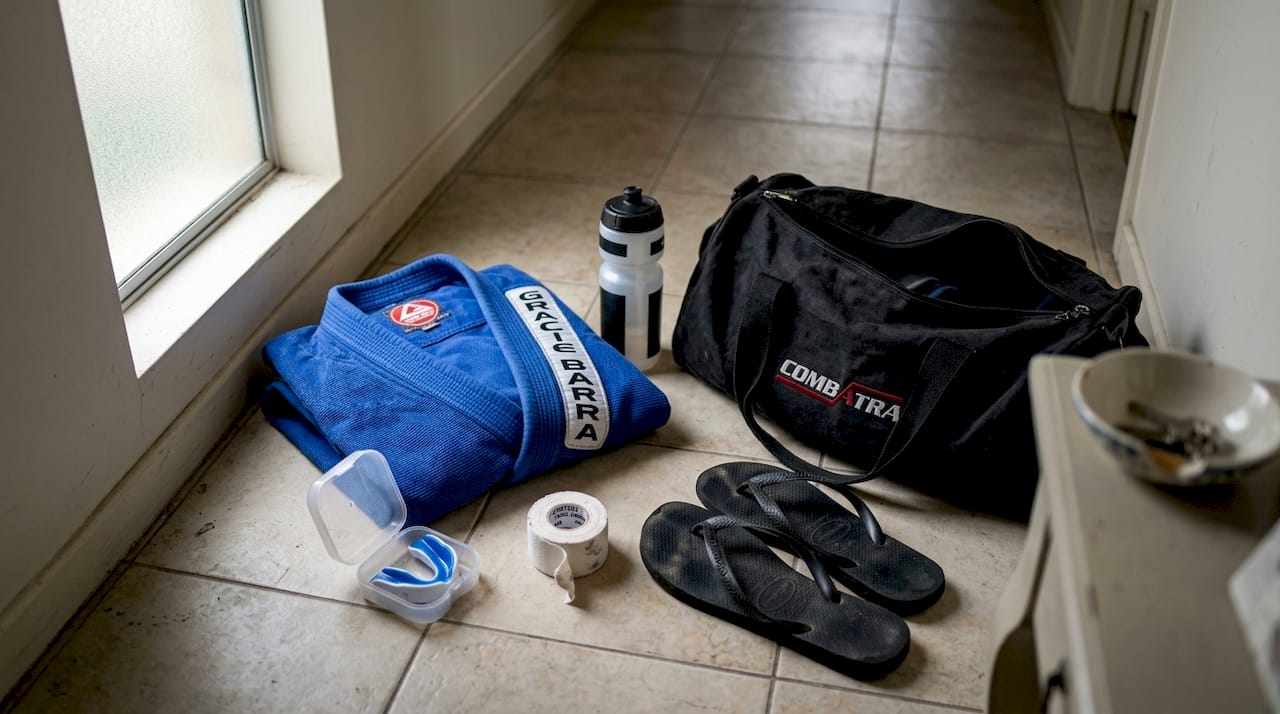
Pro Tip: Don't buy five different brands right away. Borrow or try gear at your gym first. Most academies have loaner gis for new students. Use that time to figure out what you actually like before spending big.
Optional gear upgrades for frequent training
Once you've covered your basics, these optional gear upgrades can further boost your comfort and hygiene for frequent training.
If you're hitting the mats four or five times a week, your single gi is going to struggle to keep up. Here's what to add when you're ready:
- Second or third gi — Allows full drying time between sessions and extends the life of each gi significantly.
- Premium rashguard — Better compression, more durable stitching, and improved moisture management. Worth it after a few months.
- Gear bag — A dedicated BJJ bag with ventilation keeps your gear from smelling like a crime scene.
- Knee sleeves — If you have any prior knee issues, these are a smart investment early.
- Groin protection — Especially useful for sparring with larger training partners.
- Ear guards — Optional, but if you're training frequently, they help prevent cauliflower ear.
The key insight here? Avoid over-buying early on. Loaner gis are common for first classes, and investing in quality brands known for longevity beats buying cheap gear you'll replace in three months.
When you're ready to upgrade your rashguard game, explore the best rashguards for training performance. And if you're part of a team or academy, extra custom rashguards can be a great way to build identity and unity on the mats.
BJJ competition checklist: Legal requirements and must-haves
If you plan to compete, the requirements get stricter. Here's exactly what you need to pass equipment checks on tournament day.
Gi competition checklist (IBJJF rules):
- Gi in solid white, royal blue, or black only
- Cotton or cotton-like material (no synthetic blends)
- Sleeves must fall within 5cm of the wrist
- Pants must reach the ankle
- Clean gi with no tears or rips
- Belt with correct rank bar
- Backup gi in case of damage or disqualification
No-gi competition checklist (IBJJF rules):
- Tight-fitting rashguard in black, white, or with up to 10% of your belt rank color
- Board shorts or spats in black, white, or belt color
- No pockets, zippers, or metal hardware on shorts
- Brief-style undergarments mandatory
- Backup rashguard and shorts
Always inspect your gi the night before competition. Check for tears, confirm the color is solid and compliant, and verify your rank bar is properly attached. A single oversight can mean disqualification before you even step on the mat.
For gi competition, IBJJF gi requirements specify solid colors in white, royal blue, or black, with specific fit measurements and no tears. For no-gi, IBJJF no-gi rules require tight-fitting rashguards in black or white with up to 10% belt rank color, and shorts with no pockets or zippers.
For a full breakdown, check out this tournament checklist and review the competition attire rules before you register.
Premium gear brands: What sets them apart?
Let's break down leading premium options, so you invest in gear that lasts and meets competition standards.
| Brand | Key feature | IBJJF legal | Price range |
|---|---|---|---|
| Fuji All Around | 450gsm pearl weave, durable | Yes | $90 to $110 |
| Origin | USA-made, premium construction | Yes | $130+ |
| Gold BJJ Aeroweave | Lightweight competition gi | Yes | $120 to $150 |
| Hayabusa | Strong stitching, modern fit | Yes | $130 to $160 |
Premium gi brands like Fuji and Origin offer durability and IBJJF legality, with Fuji's All Around gi featuring 450gsm pearl weave construction at $90 to $110, and Origin's USA-made options starting at $130.
When choosing a brand, consider:
- Fit consistency — Does the brand size consistently across their product line?
- Weight — Lighter gis (350gsm and under) are better for competition; heavier gis last longer in training.
- Durability — Check stitching quality at the collar, cuffs, and knees.
- Warranty or return policy — Premium brands usually back their products.
For rashguard options that match your training intensity, explore premium rashguards built for performance.
Pro Tip: Choose a brand with consistent sizing and easy online ordering. Inconsistent sizing across brands is one of the most frustrating parts of buying BJJ gear online. Read reviews from people with a similar body type before committing.
Hygiene, protection, and injury prevention essentials
Finally, don't overlook the hygiene and protective essentials that keep you training consistently. These are non-negotiable.
You can have the best gi on the market, but if your hygiene habits are poor, you're putting yourself and your training partners at risk. Here's what to keep in your bag at all times:
- Antibacterial soap and body wash
- Flip-flops (off-mat use only)
- Clean rashguard for every session
- Finger tape
- Mouthguard
- Knee sleeves (if you have prior issues)
- Ear guards (optional but smart for frequent grapplers)
| Gear | Main protective benefit | Recommended care |
|---|---|---|
| Rashguard | Prevents skin infections and friction burns | Cold wash after every session, hang dry |
| Mouthguard | Protects teeth and jaw | Rinse after use, store in case |
| Finger tape | Supports grip and prevents joint strain | Replace each session |
| Knee sleeves | Reduces strain on prior injuries | Hand wash, air dry |
| Ear guards | Prevents cauliflower ear | Wipe down after use |
Wash your gear after every session, shower post-training with antibacterial soap, wear flip-flops off the mat, and use rashguards to prevent infections. For injury prevention, use finger tape for grips, knee sleeves for prior issues, always wear a mouthguard, and consider ear guards if you train frequently.
For a deeper look at protective gear terms and what they actually mean, this injury prevention gear guide breaks it all down clearly.
Gear up with Combatra
You've got the checklist. Now it's time to fill it with gear that actually performs. At Combatra, we build premium BJJ gear designed for practitioners who take their training seriously, whether you're drilling fundamentals or stepping onto the competition mat for the first time. 💪
From custom-designed gis and rashguards to compression gear and protective equipment, every Combatra product is built with quality and personalization in mind. Want your name, logo, or team colors on your gear? We make that happen. Whether you're outfitting yourself or your whole academy, Combatra has the premium options to match your ambition. Check out our full range and build your perfect BJJ kit today.
Frequently asked questions
What is the minimum BJJ gear I need to start?
All you need to start is a gi (or rashguard and shorts for no-gi), a mouthguard, and hygiene basics like flip-flops and soap. Beginner BJJ gear also includes a water bottle, finger tape, and a small towel.
Do I need an IBJJF-approved gi or rashguard for competition?
Yes, IBJJF rules require gis and rashguards in specific colors and fits. Always check the rulebook before your event because IBJJF gi color and fit rules are strictly enforced at check-in.
Why do BJJ athletes wear rashguards under the gi?
Rashguards reduce friction burns, limit skin infections, and keep you more comfortable during long training sessions. Rashguards prevent infections and support overall hygiene on the mats.
How do I care for my BJJ gear for maximum longevity?
Wash after every use in cold water, hang dry, and use mild detergent. Avoid dryers to prevent shrinking, and air dry your gear after every session to extend its life.
When should I upgrade to premium gear or get a second gi?
Upgrade when you train three or more times a week. Multiple gis for frequent training allow full drying time between sessions and help you maintain better hygiene consistently.