
Selecting your next rashguard can feel like a real challenge when every collar grip and mat burn tests your gear to the limit. Competitive Brazilian Jiu-Jitsu athletes need equipment that matches the intensity of their training, and understanding GSM—the weight of fabric per square meter—makes all the difference. The right GSM balances protection against abrasions with flexibility and breathability, shaping how your rashguard performs in both summer heats and grueling tournaments. Discover how the right GSM rating leads to durability, comfort, and the edge you need on the global BJJ stage.
Table of Contents
- Defining Gsm And Its Role In Rashguards
- Popular Gsm Ranges For Bjj Rashguards
- Performance Factors: Compression, Durability, Comfort
- Upf Ratings, Sun Safety And As 4399:2020 Compliance
- Choosing Optimal Gsm For Competitive Athletes
Key Takeaways
| Point | Details |
|---|---|
| Understanding GSM | GSM (grams per square meter) is crucial as it defines the weight and density of rashguard fabric, impacting durability and flexibility. |
| Choosing the Right GSM | Athletes should select rashguards based on training frequency, climate conditions, and personal comfort preferences to enhance performance. |
| Impact of Higher GSM | Higher GSM fabrics offer better durability and abrasion resistance, making them suitable for intense training while providing compression benefits. |
| Sun Protection Considerations | Rashguards with higher GSM and UPF 50+ ratings are essential for effective UV protection during outdoor training, especially in intense sun conditions. |
Defining GSM and Its Role in Rashguards
GSM stands for grams per square meter, a critical measurement that tells you how heavy and dense your rashguard fabric actually is. Think of it as the backbone of your gear's performance. A higher GSM means thicker, tighter fabric that provides better durability and protection.
In combat sports, fabric weight directly impacts how your rashguard performs on the mat. The weight of fabric per square meter determines the balance between protection from mat abrasions and the flexibility you need for explosive movement and submissions.
How GSM Affects Your Rashguard
Different GSM ratings create distinctly different experiences during training and competition. Here's what you need to know:
- Lightweight (under 200 GSM): Maximum breathability and freedom of movement; best for summer training or athletes who prioritize speed
- Mid-weight (200-250 GSM): Sweet spot for most BJJ athletes; balanced protection, comfort, and performance
- Heavyweight (250+ GSM): Maximum abrasion resistance and durability; preferred for rough mat conditions and intense training
Your training environment matters here. Indoor air-conditioned dojos suit higher GSM options without overheating concerns. Outdoor summer training in Australia's heat demands lower GSM to prevent moisture buildup and discomfort.
GSM and Durability
Rashguards take serious punishment on the mat. Higher GSM fabrics resist fraying, pilling, and tears far better than lightweight alternatives. When you're drilling takedowns repeatedly or rolling hard, that extra fabric density keeps your gear intact season after season.
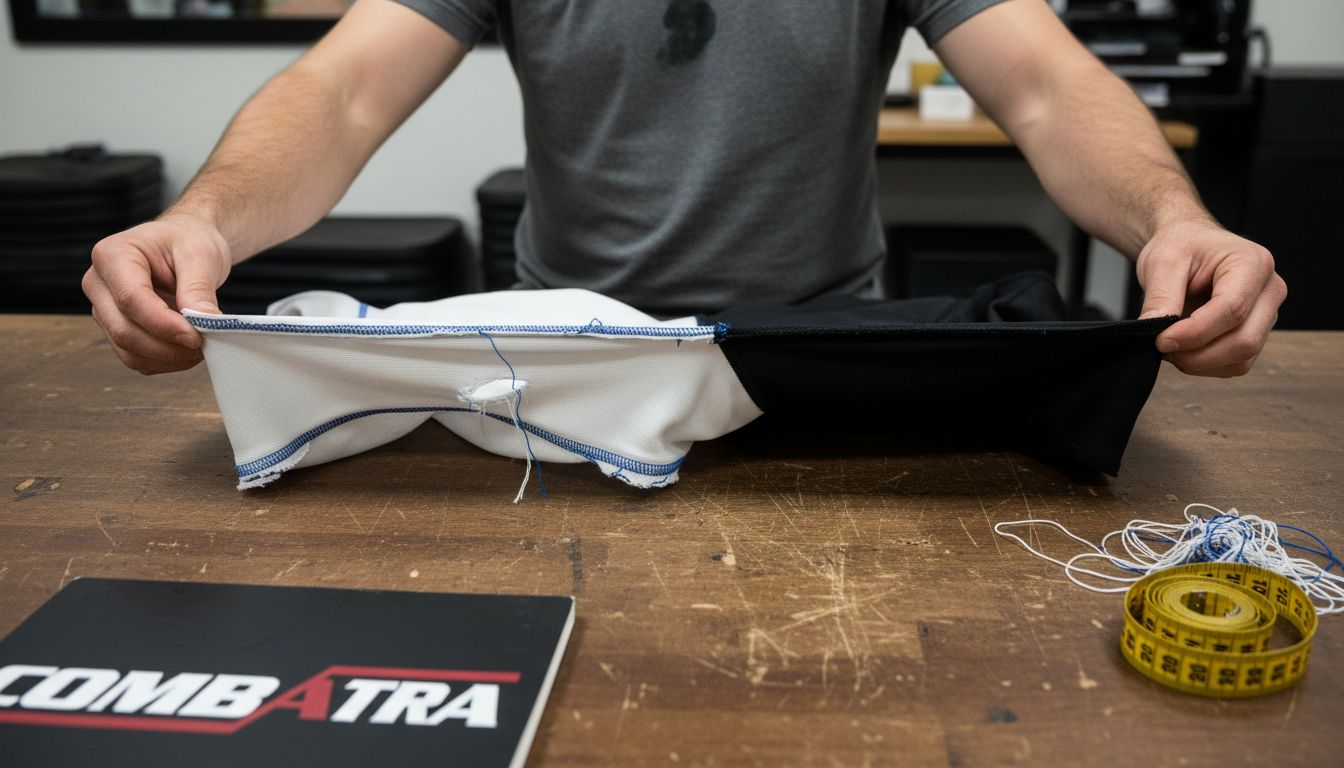
Lower GSM rashguards feel lighter against your skin but wear out faster under constant friction and sweat exposure. The choice depends on whether you prioritize longevity or immediate comfort.
GSM and Sun Protection
Australia's intense UV levels demand serious consideration during outdoor training. While GSM itself doesn't determine UPF (ultraviolet protection factor) ratings, denser fabrics with higher GSM specifications naturally offer improved sun protection.
Premium rashguards often achieve lab-tested UPF 50+ ratings under the Australian Standard AS 4399:2020, providing meaningful defense against skin damage during seaside or outdoor mat sessions.
Finding Your Ideal GSM
The best GSM for you depends on three factors:
- Training frequency – Daily training benefits from durability (240+ GSM); casual sessions work with lighter options
- Climate conditions – Australian heat favors 200-220 GSM; winter training supports 250+ GSM
- Personal comfort – Some athletes love compression; others prefer maximum mobility
Consider also that choosing the right rashguard involves balancing GSM with your specific training goals and body type. Heavier athletes often prefer higher GSM for added support and durability.
Higher GSM doesn't always mean better – it means different. Match your fabric weight to your training style, climate, and performance priorities.
Pro tip: Start with mid-weight rashguards (220-240 GSM) as your baseline, then adjust up or down based on how your skin feels after training sessions and how quickly your gear shows wear.
Popular GSM Ranges for BJJ Rashguards
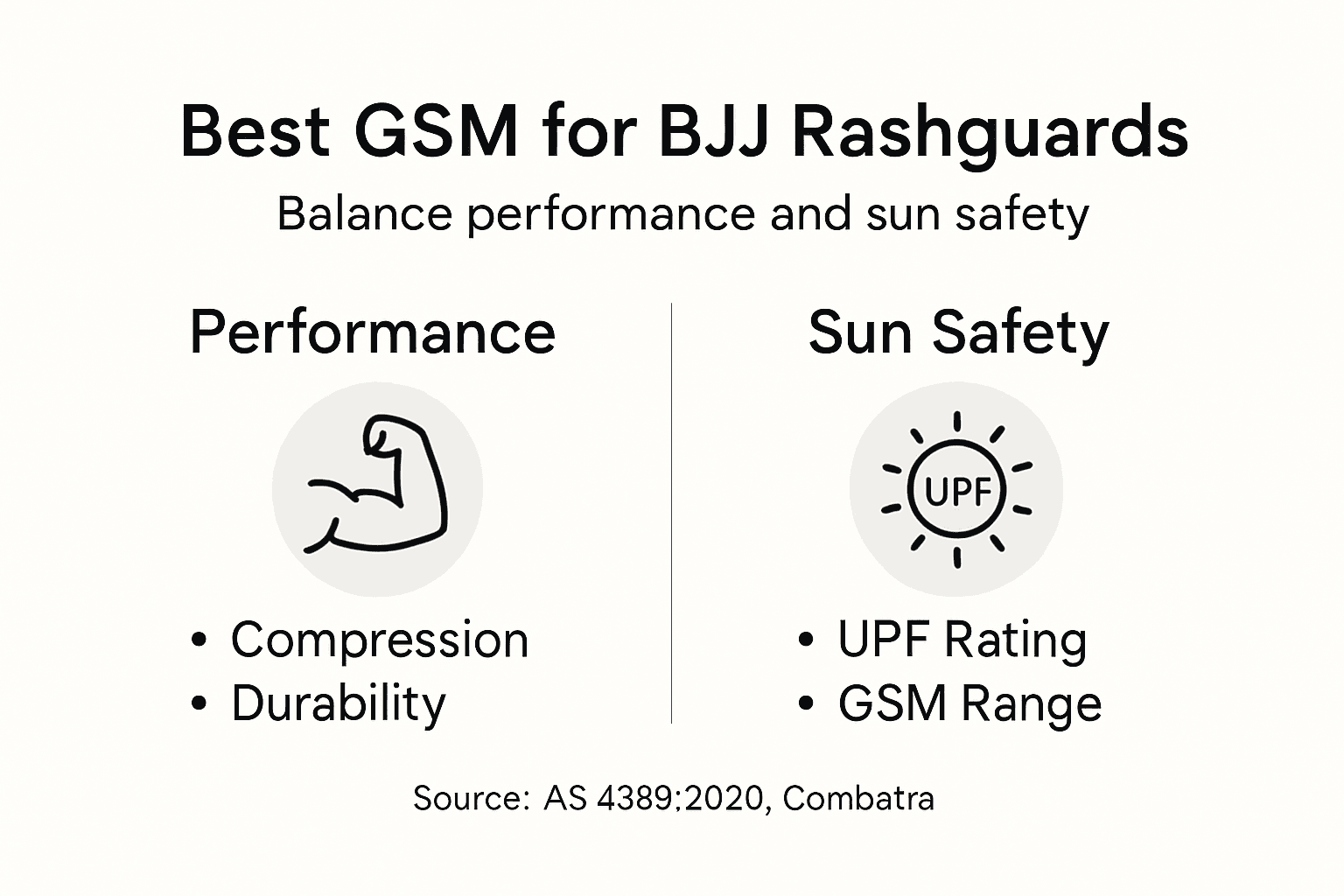
Most competitive BJJ athletes train in rashguards that fall within a specific sweet spot. Most BJJ rashguards range between 180 to 220 GSM, striking the critical balance between durability and the freedom of movement you need on the mat.
This middle ground works because it gives you real protection without sacrificing performance. Too light and your gear tears apart after a few months of hard rolling. Too heavy and you're sweating through submissions instead of executing them smoothly.
Here's a comparison of how GSM weight impacts key performance factors for rashguards:
| GSM Range | Durability | Compression Level | Comfort & Breathability |
|---|---|---|---|
| 180-200 GSM | Lower, less resistant | Gentle, minimal support | Very high, ideal for hot climates |
| 200-220 GSM | Balanced, resists regular wear | Moderate, supports athletes | Good, suitable for most sessions |
| 220-250 GSM | Maximum, very hard-wearing | Firm, strong muscle support | Reduced, can cause heat buildup |
The Lightweight Category: 180-200 GSM
Lightweight rashguards excel in specific training conditions. These fabrics dry quickly and remain breathable even during extended rolling sessions in warm environments.
Athletes choose this range for:
- Summer training camps or outdoor mat work
- High-sweat environments where moisture management matters
- Maximum mobility for fluid grappling exchanges
- Training in Australia's heat without overheating
Lightweight rashguards work well if you train frequently in warm conditions and don't mind replacing gear more often. The trade-off is reduced abrasion resistance compared to heavier options.
The Mid-Weight Sweet Spot: 200-220 GSM
This is where most serious BJJ athletes live. Mid-weight rashguards offer enhanced abrasion resistance without becoming restrictive or uncomfortable during competition or intense training.
You get reasonable durability for training several times per week. The fabric holds up to constant mat friction, collar chokes, and explosive takedowns. At the same time, compression and flexibility remain excellent for executing techniques fluidly.
The Heavyweight Option: 220-250 GSM
Heavier fabrics suit specific scenarios and athlete types. Heavier rashguards near 220-250 GSM provide increased abrasion resistance for gi-less training on rough mats or for athletes training daily at competitive intensity.
Choose this range if you:
- Train multiple times daily
- Compete regularly in high-level tournaments
- Train on older, rougher mats
- Prefer maximum durability over lightweight comfort
Heavyweight rashguards stay intact through serious punishment. The downside is reduced breathability and potentially more heat retention during intense sessions.
GSM and Customization
When selecting custom rashguards for your training needs, consider your training frequency, climate, and mat conditions. Custom options let you dial in the exact GSM that matches your specific situation.
The best GSM isn't universal—it's personal. Match your fabric weight to your training intensity, climate, and how often you can replace gear.
Pro tip: Order rashguards in two different GSM weights—one lightweight for summer and heavy conditioning work, one mid-weight for year-round training—to optimize comfort across all conditions.
Performance Factors: Compression, Durability, Comfort
Three performance pillars determine whether a rashguard actually improves your training or just looks good hanging in your gym bag. Compression, durability, and comfort work together to create gear that performs when it matters most.
Get these factors wrong and you'll feel it immediately during rolls. Your shoulders will chafe, your fabric will tear, or you'll overheat trying to execute submissions. Get them right and you disappear into your training, focusing only on technique.
Compression: Support and Recovery
Compression in rashguards does real work during and after training. The fabric applies gentle, consistent pressure against your muscles, supporting muscle engagement and improving blood circulation throughout grappling sessions.
Effective compression delivers:
- Enhanced muscle stability during explosive movements
- Improved circulation for faster oxygen delivery to working muscles
- Better muscle recovery between intense rolling exchanges
- Reduced muscle fatigue during prolonged training camps
Higher GSM fabrics naturally provide greater compression force against your body. A 240 GSM rashguard delivers noticeably more support than a 180 GSM option, making heavier weights popular with competitors during intense tournament preparation.
Durability: Built to Survive Hard Training
Durability separates gear that lasts from gear you replace every season. Quality polyester-spandex fabric blends and flatlock stitched seams prevent chafing and tearing during intense grappling exchanges.
Look for these durability markers:
- Flatlock seams instead of traditional stitching
- High-quality polyester-spandex blends (typically 85-90% polyester, 10-15% spandex)
- Reinforced collar and sleeve edges
- Double-stitched high-stress areas
A rashguard with poor seam construction will fray and tear after just a few months of regular training. Premium construction extends your gear's lifespan to 18-24 months of heavy use, saving you money long-term.
Comfort: Breathability and Moisture Management
No compression or durability matters if you're constantly uncomfortable during training. Breathable, sweat-wicking materials keep you dry and agile throughout extended sessions.
Comfort factors include:
- Quick-drying synthetic materials that don't trap moisture
- Strategic ventilation in high-heat zones
- Soft hand-feel that resists irritation against skin
- Seamless construction in sensitive areas
Australian summer training demands exceptional moisture management. A rashguard that holds sweat becomes a sauna, reducing mobility and increasing heat stress. Quality wicking fabrics pull sweat away from your skin immediately, maintaining performance even during outdoor mat sessions.
Finding Your Balance
The best rashguard balances all three factors for your specific training style. Competitive athletes often prioritize compression and durability over maximum breathability, while recreational grapplers may prefer comfort and mobility.
The perfect rashguard compresses without restricting, lasts years of hard use, and keeps you comfortable from warm-up through cool-down.
Pro tip: Test a rashguard's compression by wearing it during a full rolling session before committing to multiple purchases—what feels supportive during static movement might feel restrictive during submissions or escapes.
UPF Ratings, Sun Safety and AS 4399:2020 Compliance
Australia's sun is unforgiving. With over 2,000 skin cancer deaths annually and 80% of all cancer diagnoses being skin-related, sun protection isn't optional—it's essential. Your rashguard should defend your skin as hard as it defends your body from mat abrasion.
UPF ratings measure how effectively a fabric blocks ultraviolet radiation. Understanding these numbers helps you choose gear that actually protects you during outdoor training sessions.
Understanding UPF Ratings
The AS 4399:2020 Australian Standard measures Ultraviolet Protection Factor of fabrics with three protection tiers. Each tier represents meaningful differences in sun defense.
UPF protection levels:
- UPF 15: Minimum protection; blocks 93% of UVA and UVB rays
- UPF 30: Good protection; blocks 97% of harmful rays
- UPF 50+: Excellent protection; blocks 98% or more of UVA and UVB rays
Higher numbers mean significantly better protection. A UPF 50+ rashguard blocks nearly twice as much UV radiation as a UPF 15 option during extended outdoor training.
Below is a quick reference for UPF ratings and their real-world training benefits:
| UPF Rating | UV Blocked | Real-World Benefit |
|---|---|---|
| UPF 15 | 93% | Basic sun safety; limited protection |
| UPF 30 | 97% | Good protection for most conditions |
| UPF 50+ | 98%+ | Maximum defense, best for outdoor BJJ |
AS 4399:2020 Compliance
Not every rashguard claiming sun protection actually meets Australian standards. Legitimate compliance requires lab testing against strict specifications outlined in AS 4399:2020.
Compliant rashguards have been:
- Tested by accredited laboratories
- Verified to meet specific UPF performance thresholds
- Labeled with official UPF ratings
- Monitored for consistent quality across batches
When shopping for premium rashguards, look for official AS 4399:2020 certification labels. This tells you the manufacturer invested in proper testing rather than making unsubstantiated claims.
Sun Protection During Training
UPF 50+ rated garments provide all-day sun protection, essential for BJJ athletes training outdoors. Whether you're rolling on summer seaside mats or conducting early morning drills, premium UV protection prevents cumulative skin damage.
Outdoor training risks include:
- Direct UV exposure during sessions
- Reflected rays bouncing off sand or light-colored mats
- Extended sessions during peak UV hours (10am-3pm)
- Inadequate reapplication of liquid sunscreen
A certified UPF 50+ rashguard eliminates these concerns without the constant reapplication burden of sunscreen.
GSM and UV Protection Connection
Higher GSM fabrics naturally provide better UV blocking due to their density. A 240 GSM rashguard typically offers superior sun protection compared to 180 GSM alternatives, though GSM alone doesn't determine UPF rating.
Combining both factors—appropriate GSM weight plus certified UPF 50+ rating—creates optimal protection for Australian conditions.
Premium rashguards tested to AS 4399:2020 and rated UPF 50+ provide reliable defense against Australia's intense UV levels while supporting your performance on the mat.
Pro tip: Check the care label before purchasing—some washing methods reduce UPF effectiveness, so choose rashguards that maintain protection through regular training cycle washing.
Choosing Optimal GSM for Competitive Athletes
Competition demands different gear than casual training. When you're stepping on the mat for a tournament, your rashguard needs to perform under maximum stress—maintaining compression during scrambles, resisting tears from intense pressure, and keeping you confident through final rounds.
The sweet spot for competitive BJJ isn't the same as recreational training. Competition-level athletes need specific GSM characteristics that balance protection with peak performance.
The Competition GSM Standard
Competitive BJJ athletes benefit most from rashguards with GSM in the 200-220 range, striking optimal balance between durability and flexibility. This weight class delivers the compression support and abrasion resistance needed during high-intensity matches.
Why 200-220 GSM works for competition:
- Provides superior durability against constant friction and pressure
- Maintains consistent compression throughout extended matches
- Resists tears during collar chokes and sleeve grips
- Allows sufficient breathability during back-to-back matches
- Supports muscle engagement during explosive movements
Lighter options (180 GSM) sacrifice durability you need when grappling at competition intensity. Heavier rashguards (240+ GSM) may become restrictive during long tournament days with multiple matches.
Match-Specific Performance Demands
Tournament conditions differ significantly from training room scenarios. You're rolling against unfamiliar opponents with different pressure styles, possibly on different mats, and under mental pressure that intensifies physical demands.
Competition-specific challenges include:
- Sustained high-intensity effort without extended rest periods
- Aggressive gripping patterns targeting sleeve and collar areas
- Potential rough mat conditions at different venues
- Multiple matches within single competition days
- Maximum compression demands during scrambles
A 210 GSM rashguard handles these variables better than lighter alternatives, while avoiding the potential overheating risks of heavier fabrics.
Testing Before Competition
Never wear a new rashguard to competition. Train in your competition gear multiple times under intense conditions before tournament day.
Test the rashguard through:
- Multiple full rolling sessions at match intensity
- Hard sparring with aggressive training partners
- Extended tournament simulations (multiple matches consecutively)
- Various environmental conditions (heat, humidity)
This testing reveals compression consistency, chafing issues, and durability under real conditions.
GSM Selection for Your Body Type
Athletes with larger frames often prefer 210-220 GSM for adequate support during intense grappling. Lighter athletes may find 200-210 GSM sufficient while maintaining superior mobility.
Consider also your grappling style. Heavy top pressure specialists benefit from higher GSM compression. Flexible, movement-oriented grapplers may prefer slightly lighter options for unrestricted technique execution.
Competition rashguards at 200-220 GSM deliver the exact balance top athletes need—maximum durability without sacrificing the mobility required to execute your best techniques under pressure.
Pro tip: Bring multiple rashguards to competitions—one for early matches when intensity builds gradually, another fresh one for later matches when fatigue demands maximum compression support.
Find Your Perfect BJJ Rashguard at Combatra for Performance and Sun Safety
Choosing the right GSM for your rashguard is more than just picking a fabric weight. It means balancing compression, durability, and sun protection to match your training intensity, climate, and competition needs. If you want rashguards that withstand hard rolls, provide optimal muscle support, and protect you under Australia’s harsh sun with certified UPF 50+ ratings you need gear that is engineered exactly for these challenges.
Explore Combatra’s premium selection of personalized rashguards designed with the perfect GSM ranges and advanced materials. Customize your rashguard with your name or logo and choose from options that offer that ideal blend of comfort and protection all year round. Don’t compromise on your performance or skin health. Visit Combatra now and take the first step to owning rashguards that keep up with your game and safeguard your training every session. Make your training gear as serious as you are and shop the full range today.
Frequently Asked Questions
What does GSM mean in the context of BJJ rashguards?
GSM stands for grams per square meter, a measurement that indicates the weight and density of the fabric in rashguards. A higher GSM indicates thicker, more durable fabric that offers better protection and abrasion resistance.
How does the GSM of a rashguard affect my training experience?
The GSM rating impacts breathability, comfort, and durability. Lightweight rashguards (under 200 GSM) provide maximum mobility but less durability, while heavyweight options (250+ GSM) offer great protection but may be less breathable during intense sessions. Mid-weight options (200-250 GSM) strike a balance between performance and comfort for most athletes.
What GSM should I choose for outdoor training under intense sun?
For outdoor training, consider rashguards with higher GSM (250+) paired with a UPF rating of 50+ for optimal sun protection. Heavier fabrics naturally provide better UV blocking, which is essential during extended sessions in the sun.
How do I determine the right GSM for my body type and training style?
Athletes with larger frames may prefer 210-220 GSM for added support, while lighter athletes might find 200-210 GSM sufficient. Also, consider your grappling style—heavier grapplers may benefit from higher GSM for compression, while lighter, more flexible grapplers may prefer lighter options for mobility.