
TL;DR:
UPF rating indicates fabric’s UV blocking effectiveness, with UPF 50+ offering over 98% protection.
Arm sleeves provide excellent mobility but may leave shoulder gaps; long sleeves offer seamless coverage.
Consistent use, proper maintenance, and layering are vital for effective long-term sun protection outdoors.
More than 55% of gardeners report skin issues linked to UV exposure, and outdoor athletes face similar risks every time they train under an open sky. Yet many people assume that wearing any long garment is enough to stay safe. The reality is more nuanced. Not all sun-protective clothing is created equal, and the choice between arm sleeves and long sleeves can genuinely affect your skin health over months and years of outdoor activity. This article breaks down the evidence behind each option so you can make an informed, confident decision for your sport, your garden, or your lifestyle.
Table of Contents
Key Takeaways
| Point | Details |
|---|---|
| UPF is essential | Choose UPF 50+ clothing for long sun exposure—fabric type and weave matter for real protection. |
| Arm sleeves offer flexibility | Arm sleeves work well in sports and high-mobility settings and can match long sleeves for UV coverage if fitted properly. |
| Long sleeves maximise coverage | Long sleeves shield more skin and may be better for gardening or extended outdoor work. |
| Personalised approach | Pick sun-safe gear based on activity, exposure, comfort, and garment quality, not just style. |
Understanding UPF and effective sun protection
Before comparing garments, it helps to understand what makes sun-protective clothing actually work. The key measure is UPF, which stands for Ultraviolet Protection Factor. It tells you how much UV radiation a fabric blocks before it reaches your skin. A UPF 50+ rating means the fabric transmits less than 2% of UV rays, blocking more than 98%.
UPF is different from SPF, which you see on sunscreen products. SPF measures protection against UVB rays only, while UPF accounts for both UVA and UVB radiation. This makes UPF a more complete measure for clothing. Understanding UPF 50 clothing is essential before you invest in any sun-protective garment.
Several fabric properties influence how well a garment performs in real conditions:
-
Weave density: Tighter weaves leave fewer gaps for UV rays to pass through. A loosely woven linen shirt may offer very little protection despite covering your skin.
-
Colour: Darker colours generally absorb more UV radiation than lighter shades, offering better protection. Navy, black, and deep green outperform white or pale yellow.
-
Fabric weight: Heavier fabrics tend to block more UV. Sheer or lightweight fabrics can have surprisingly low UPF ratings.
-
Wetness: Contrary to popular belief, wet fabric often improves UV protection because the moisture fills the gaps between fibres. This is relevant for swimmers and sweaty athletes alike.
-
Stretch: Fabrics that stretch significantly under tension, such as those in fitted rashguards, may reduce their UPF if the weave opens up during movement.
Key insight: Research on workwear shows that construction shirts can range from UPF 15 to 115, with averages between 48 and 57. For extreme outdoor exposure of around 44 standard erythemal doses (SED) per day, a UPF of 80 or more is recommended to keep skin dose below 1 SED per day.
This data matters for athletes and outdoor workers because it challenges the assumption that any certified UPF garment will do the job under intense sun. The standard rating is a starting point, not a guaranteed outcome for every situation. When you shop for high-quality UV clothing, always check the certified UPF value, not just the marketing language.
Recommended UPF levels for different exposure types are:
-
UPF 15 to 24: Minimal to moderate sun protection, suited to brief exposure
-
UPF 25 to 39: Good protection for moderate outdoor activity
-
UPF 40 to 50+: Excellent protection for extended outdoor training, gardening, or work
For most athletes and serious outdoor enthusiasts, UPF 50+ is the practical minimum. It gives you reliable protection across a full training session or a long afternoon in the garden.
Arm sleeves versus long sleeves: a direct comparison
Now that we understand UPF, it is time to see how two popular strategies stack up against each other in practice.
Both arm sleeves and long sleeves can carry a UPF 50+ rating. The distinction lies in fit, coverage, and how each garment behaves during real activity.
Coverage and gaps
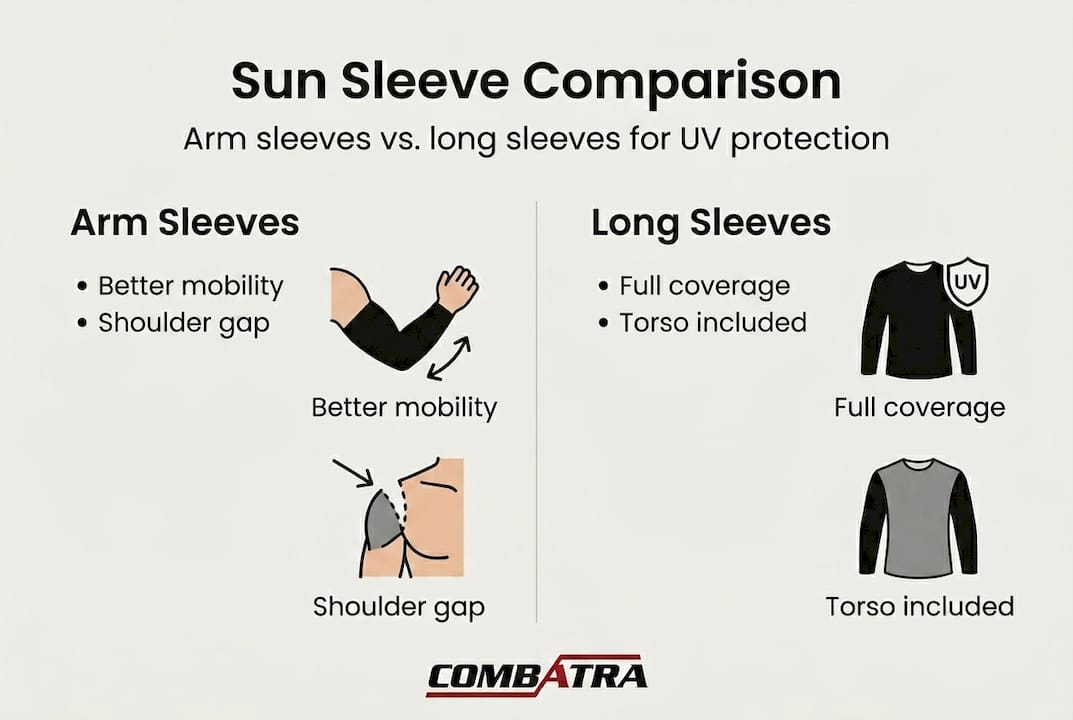
Long sleeves cover the entire arm and connect directly to the torso portion of the garment, which means there are no gaps at the shoulder or upper arm. Arm sleeves, if not worn with a tank top or rashguard, may leave a small gap around the shoulder and upper arm area. This is a practical detail many people overlook when choosing UV arm sleeves for sport.
Mobility and comfort
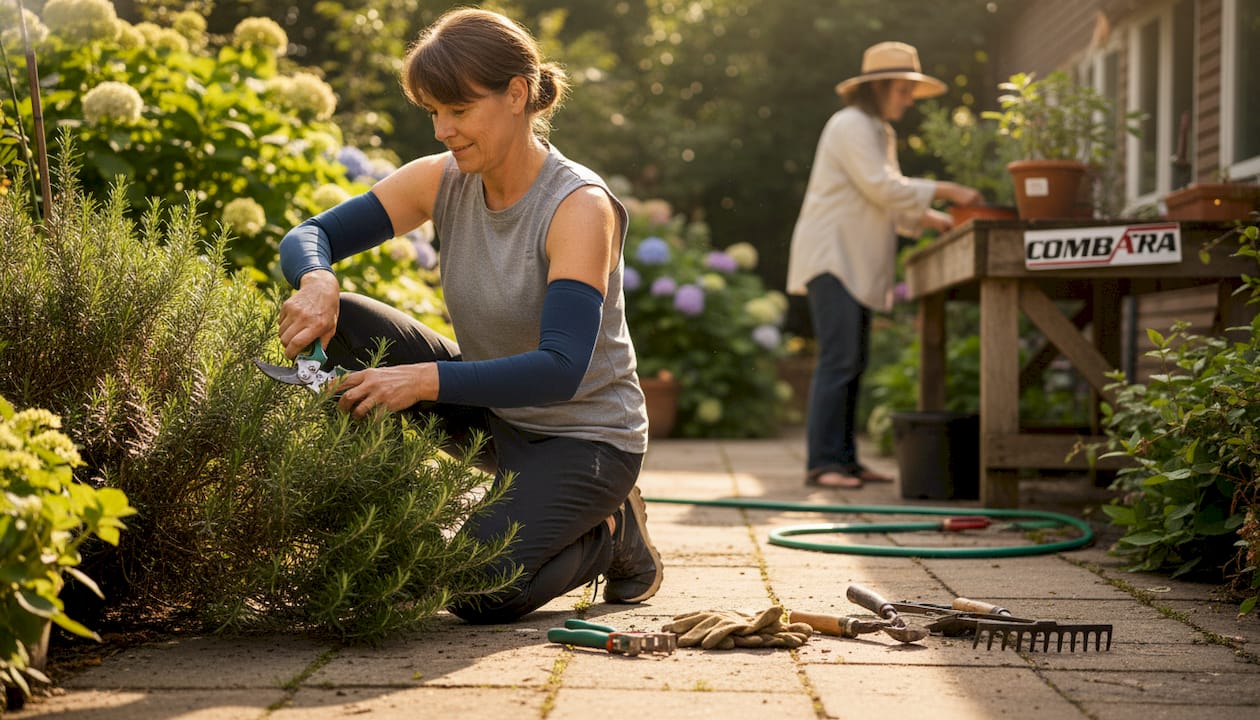
Arm sleeves typically offer a performance advantage in terms of shoulder mobility. Because they are not attached to a body garment, they do not restrict upper arm or shoulder movement. This makes them particularly popular in BJJ, tennis, cycling, and trail running where full arm range is essential. Long sleeves, especially looser styles worn by gardeners, can bunch or restrict movement at the elbow and shoulder during repetitive tasks.
| Feature | Arm sleeves | Long sleeves |
|---|---|---|
| UV coverage | Arms only (gap at shoulder) | Arms and torso (seamless) |
| Shoulder mobility | Excellent | Moderate |
| Breathability | High | Moderate to high |
| Ease of removal | Very easy | Requires removing the top |
| Best for | Sports, cycling, BJJ, trail running | Gardening, construction, hiking |
| Typical UPF rating | Up to 50+ | Up to 50+ |
| Cost | Generally lower | Varies widely |
What real users report
Gardeners who deal with long hours of direct sun report that arm sleeves are praised in reviews for practicality and cooling comfort, while experts still recommend long sleeves and hats for maximum torso and shoulder protection. Athletes, on the other hand, consistently favour arm sleeves for their flexibility and the ability to quickly cool down by sliding them off between sets or rounds.
Pro Tip: If you train or work outdoors for more than two hours at a time, combine arm sleeves with a UPF-rated tank top or rashguard underneath. This closes the shoulder gap and gives you near-full-body coverage without sacrificing mobility.
The best UV protection clothing for workouts often works as a layering system rather than a single garment. Thinking in layers gives you flexibility to adapt to changing conditions throughout the day.
Scenario-based recommendations
-
BJJ and grappling: Arm sleeves over a compression rashguard provide excellent mobility and full arm coverage.
-
Gardening: Long sleeves paired with a wide-brimmed hat address the upper arm and shoulder exposure that sleeves alone may miss.
-
Cycling: Arm sleeves are ideal because they can be removed and stored easily when the weather cools.
-
Hiking and trail running: Long sleeves in a lightweight, breathable fabric protect the torso and arms simultaneously without extra layers.
Factors to consider: activity, exposure and comfort
With the main differences covered, let us dig deeper into the practical factors that determine the best choice for you personally.
1. Assess your UV exposure level
Not all outdoor sessions are equal. A 30-minute walk in the early morning carries far less UV risk than a four-hour gardening session in midsummer. Use the UV index as a guide. On days where the UV index is 8 or above, any uncovered skin accumulates damage quickly.
2. Match the garment to the intensity of your activity
High-intensity activity produces sweat, and sweat can affect how a garment sits and functions. A loose long-sleeved shirt may cling uncomfortably during a run but remain perfectly comfortable for light weeding. Compression-style arm sleeves stay put during vigorous movement, which helps them maintain consistent coverage throughout the session.
3. Care and longevity of your garment
Both arm sleeves and long sleeves degrade over time with washing, stretching, and UV exposure itself. Fabric that has thinned or faded will have a reduced UPF rating, even if it originally carried a UPF 50+ certification. Wash your garments in cold water with gentle detergent, avoid prolonged drying in direct sunlight, and inspect them regularly for signs of wear. Understanding UV protection fabrics helps you make better long-term decisions about care.
4. Consider compression versus loose fit
Research into compression and loose-fitting clothing shows that compression versus loose clothing each has specific advantages depending on the sport and exposure type. Compression garments maintain consistent contact with the skin, which supports stable UPF performance during movement. Loose garments may flap in the wind, creating gaps, but they also allow greater airflow.
5. Know when to upgrade your UPF rating
Standard UPF 50+ performs reliably under typical conditions. However, at high UV exposure levels, such as when 90% of ambient UV is involved, even a UPF 50+ garment may transmit approximately 0.9 SED per day. For outdoor workers or athletes training in extreme summer conditions, stepping up to UPF 80 or higher provides a meaningful additional margin of safety.
Here is a simple priority list for matching UPF to your exposure type:
-
Casual outdoor exercise, UV index below 5: UPF 25 to 40 is adequate.
-
Regular outdoor training, UV index 5 to 7: UPF 50+ is recommended.
-
Long-duration sessions, UV index 8 to 10: UPF 50+ is the minimum; UPF 80+ preferred.
-
Extreme outdoor work, UV index above 10: UPF 80 to 100+ with full coverage including hat and sunscreen for exposed areas.
Pro Tip: Check the UV index the night before your training session or garden work. Most weather apps in Australia include it, and planning your clothing around it takes less than 30 seconds.
Statistic worth knowing: In Australia, the UV index regularly exceeds 10 during summer months in most capital cities. This places everyday outdoor training into the “extreme exposure” category for several months of the year, making proper UPF gear a genuine health priority, not just a preference.
Making your decision: personalised recommendations
With all factors weighed, let us get to what matters most, your individual needs and the scenarios you are most likely to face on any given training day or work session.
Pros and cons at a glance
Arm sleeves:
-
Excellent shoulder mobility
-
Easy to remove and re-apply
-
Ideal for layering with rashguards
-
May leave a gap at the shoulder
-
Works best paired with another UPF garment
Long sleeves:
-
Seamless arm and torso coverage
-
No layering required
-
Better for static or lower-intensity outdoor tasks
-
Can restrict movement during sports
-
Harder to cool down quickly if needed
Takeaways by user type
| User type | Recommended option | Key reason |
|---|---|---|
| BJJ practitioner | Arm sleeves over rashguard | Maximum mobility, full coverage when layered |
| Gardener | Long sleeves with hat | Comprehensive coverage, minimal gaps |
| Cyclist | Arm sleeves | Easy removal, temperature control |
| Trail runner | Lightweight long sleeves | Torso and arm coverage in one garment |
| Construction worker | Long sleeves, UPF 80+ | High exposure, full coverage essential |
A checklist for choosing sun-safe apparel
-
UPF 50+ certification clearly labelled on the garment
-
Fabric is tightly woven and free from visible loose fibres
-
Colour is dark or medium-toned rather than pale or white
-
Fit is snug enough to stay in place during activity without thinning the weave
-
Garment is in good condition with no thinning, fading, or stretched-out areas
When you are assessing whether UV arm sleeves are worth it, the answer largely depends on whether you pair them with other UPF garments. On their own, they protect the arms well. Combined with a UPF rashguard or tank top, they become part of a complete sun-safe system.
Research confirms that UPF certification priorities should focus on fabric weave and density over marketing claims. Darker, tighter fabrics perform better, and wet fabric often boosts protection further. This is valuable information when you are deciding between two similarly priced options at the point of purchase.
Our take: what most people miss about sun protective clothing
Most guides focus on which product to buy. We think the bigger issue is behaviour around the product. You can own the best UPF-rated arm sleeves available, but if you leave them in your kit bag on a hot January afternoon, they offer zero protection.
The athletes we see performing best outdoors over the long term are not necessarily the ones with the most expensive gear. They are the ones who treat sun protection as a consistent habit rather than an afterthought. They check the UV index. They put the sleeves on before they feel hot. They understand that choosing UV clothing is only the first step.https://blog.combatra.com.au/blog/why-athletes-choose-uv-clothing-safer-training
There is also the underestimated issue of garment maintenance. Washing a UPF garment in hot water repeatedly, or leaving it in direct sunlight to dry every session, degrades its protection faster than most people realise. Fit matters too. A sleeve that keeps sliding down your arm is not doing its job, no matter what the label says.
The truth is that the best sun protection system is the one you use consistently and maintain properly. Build the habit. Check the fit. Replace garments when they show wear. That simple routine will serve you far better than any single purchasing decision.
Gear up for sun-safe training
Applying this knowledge starts with having the right gear in your kit. Combatra builds performance apparel with UPF 50+ protection that is designed for real movement, long sessions, and Australian conditions.
Whether you train in BJJ, MMA, or spend long hours outdoors, Combatra’s range covers what you need. Our black BJJ gi pants are built for durability and comfort across full training sessions. For a complete sun-aware training kit, the custom BJJ gi set lets you personalise your coverage gear with your academy’s name, colours, and logo. Every garment is built to perform under pressure and protect your skin while you do it.
Frequently asked questions
Is arm sleeve protection as effective as long sleeves for UV?
Arm sleeves with UPF 50+ offer similar arm protection to long sleeves when properly fitted, but long sleeves cover the torso as well. For extreme daily exposure, UPF 80 or higher is recommended regardless of garment type.
Which offers more comfort for sports: arm sleeves or long sleeves?
Arm sleeves generally provide superior flexibility and temperature control for sports, and user reviews support their practicality for active outdoor tasks. Long sleeves suit lower-intensity or static activities better.
Are there particular fabrics that improve UV protection in sleeves?
Yes. Darker, tightly woven fabrics consistently outperform light or loosely woven ones, and wet fabric often improves UV protection by filling gaps between fibres, regardless of whether you are wearing sleeves or a long-sleeve garment.
How often should sun-protective clothing be replaced?
Replace any sun-protective garment that shows thinning, significant fading, stretched fabric, or visible wear, as these changes reduce the UPF performance the garment was originally rated for.